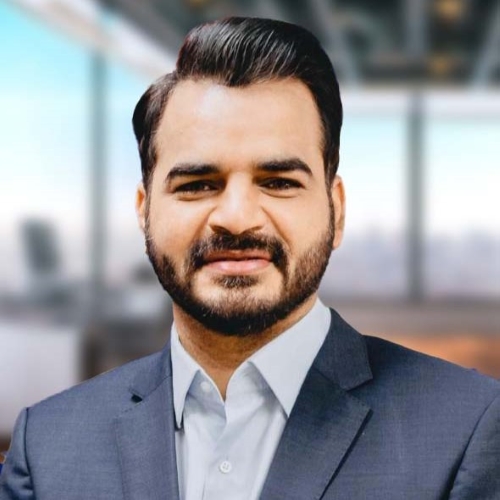
The Man Closing the Digital Gap
Here is the situation. About 85 million people around the world want a smartphone. They have the income to pay for one in installments. But nobody will sell them one that way - because banks won't finance the unbanked, and carriers won't absorb the default risk. The gap is not desire. It is infrastructure.
Asif Jafri looked at that gap and saw a company. He built Kistpay, a Shariah-compliant buy-now-pay-later platform for smartphones and laptops, with Google-enabled device-locking technology baked right into the financing model. If a customer misses payments, the phone locks remotely. No repo agents. No courts. The device is its own collateral. It is elegant and it works.
The business logic is clean. The social impact is significant. And the world noticed. In April 2024, Asif won the IsDB Pitch Competition at the Islamic Development Bank Group Annual Meetings in Riyadh, Saudi Arabia - representing Pakistan on a global stage. One month earlier, he was at the World Bank's Global Digital Summit in Washington D.C., speaking alongside World Bank President Ajay Banga, Google VP Vint Cerf, and Microsoft CEO Satya Nadella. That is not a conference you stumble into.
What got him there? Twenty-seven years of building things - across banking at American Express and Union Bank, consumer goods at Unilever Pakistan, telecoms through a Telenor franchisee, and enterprise software via E.Ocean, the cloud communication platform he co-founded in 2008. He eventually went to Silicon Valley for the Founder Institute's advanced Founder Lab program, came home to Pakistan, and started asking bigger questions.
Erasing gender disparities and promoting economic empowerment through digital and financial inclusion - not just in Pakistan, but globally.
- Asif JafriKistpay is not just a device financing play. The women-focused programs set it apart. In markets where only 26% of women own smartphones, Asif built female-staffed helplines, women-only outlets, and financial literacy training into the business model itself. Not as a CSR footnote - as a core customer segment. By early 2024, Kistpay had reached more than 10,000 women through its empowerment program, with a target of 25,000 by 2026.
The partners speak for themselves. Jazz - Pakistan's largest telecom operator with 75 million subscribers - came on board. GSMA named Kistpay a Top 10 finalist in its SDG Digital GameChange competition. McKinsey selected the company to exhibit at its early-stage investor conference. Mobile World Congress invited Kistpay to participate in the Ministerial program - the world's most important telecom gathering.
Asif brings something unusual to this work: an Electrical Engineering degree plus an MBA, a rare double that lets him understand the technology and the business fluently, without needing a translator between the two. He knows what a device-locking protocol requires at the OS level. He also knows what an investor term sheet requires at the cap table level. That combination has driven Kistpay across six countries: Pakistan, Bangladesh, Mexico, Thailand, Africa, and the UAE.
Building Backwards from the Excluded
Most fintech founders start with a product and look for users. Asif started with a user - the 85 million smartphone-less people in emerging markets - and designed everything backward from their constraints. No credit score? Fine, the device is the collateral. Religious objection to interest? Fine, the model is Shariah-compliant. No branch near you? Fine, the onboarding is mobile-first.
The early years look exactly like you would expect from someone who eventually runs a global fintech: structured, methodical, wide. Cash management at American Express. Consumer sales at Unilever. A telecom franchise. Enterprise software. Each role adding a different layer of how money, people, and technology interact at scale in South Asian markets. By the time he co-founded E.Ocean in 2008 - a platform now considered one of the leading enterprise mobility and cloud communication solutions in the region - he had a mental model of the market that most people take decades to build, if they ever do.
Kistpay is where all of it crystallized. The UNDP noticed. The UN Development Programme collaborated with Kistpay on Digital Inclusion and Sustainable Development in Arab States. Recognition does not come from a good pitch deck alone. It comes from results that institutions can point to without risk.
The aspiration is not modest. Connect the next billion. Eliminate the digital gender gap. Scale a Shariah-compliant financing model across every emerging market where affordability, not desire, is the barrier. These are ambitions that require the kind of resilience that only comes from having spent twenty-seven years learning how markets actually work, not how they look in a case study.
85 million people want a phone. They can afford one in installments. No one will sell it to them. The digital divide is not a wish problem. It is a product problem.
Google-enabled device-locking technology. Missed payment? Phone locks. No repo agents. No courts. The phone is its own collateral. Clean, scalable, brilliant.
6 countries. 10,000+ women empowered. IsDB Champion. World Bank. GSMA. McKinsey. The results speak for themselves. Asif just gets to keep going.
The Wins, On Paper
IsDB Champion 2024
Won the Islamic Development Bank Pitch Competition at Annual Meetings in Riyadh, Saudi Arabia - representing Pakistan on the global Islamic finance stage.
World Bank Global Digital Summit
Invited speaker at the World Bank's Global Digital Summit in Washington D.C., sharing a stage with Ajay Banga, Vint Cerf, and Satya Nadella.
GSMA Top 10 Finalist
Named a Top 10 finalist in GSMA's SDG Digital GameChange competition, recognizing Kistpay's impact on the UN's Sustainable Development Goals.
McKinsey ESIC Selection
Selected to exhibit at McKinsey's Early-Stage Investor Conference (ESIC) in 2022 - the invite-only forum for high-potential emerging ventures.
MWC Ministerial Program
Kistpay selected for the Mobile World Congress Ministerial Program - the world's premier telecom conference, where policy and industry meet.
UNDP Partnership
UN Development Programme collaboration on Digital Inclusion and Sustainable Development in Arab States - global institutional validation of the model.
Twenty-Seven Years in the Making
The Mission Isn't Finished
Kistpay's Women Empowerment Program has a target: 25,000 women reached by 2026. The geographic expansion continues. Bangladesh. Mexico. Thailand. Africa. UAE. Each market with its own affordability barrier. Each market where Asif sees the same solvable problem.
The longer vision is the next billion connected users. Not because it sounds good in a pitch deck. Because the digital divide is measurable, the solution is deployable, and the model is proven. When the World Bank, GSMA, UNDP, McKinsey, and IsDB all independently validate the same approach in the same four-year window, the question is no longer whether this works. The question is how fast it scales.
Asif Jafri is building the answer to that question. Country by country. Device by device. One Shariah-compliant installment at a time.