Ashley Wells Chadash once described business-school students as ducks: serene on the surface, kicking madly below. It was funny because everyone in the room knew the species. Ambitious people become skilled at making exertion look like atmosphere. Chadash's more useful point was that the pose gets in the way. If you admit that you do not understand the leveraged buyout, you can ask the former banker beside you. If you say that you are overwhelmed, the classmate across the table may finally exhale. Candor speeds up learning.
Ten years later, the duck remains a neat emblem for her work. Strategy and operations is waterline business. The launch gets the applause; the operating model gets a spreadsheet, an owner and a recurring meeting. When it works, a large organization appears to glide. Chadash has spent her career among the feet.
Her current assignment is at Stripe, where she leads global Marketing Strategy + Operations and serves as technical advisor to the chief marketing officer. She announced the move in February 2026, three weeks into the job, with the kind of exuberance that makes corporate LinkedIn briefly resemble a group chat. She called Stripe a rocketship, cited its vast payments volume, and immediately added that she was hiring. Arrival and assembly were one thought.
“Too often MBAs are like ducks - we seem to be effortlessly gliding along the surface.”Ashley Wells Chadash, while at Wharton
01The résumé before the résumé
Long before payments infrastructure, Chadash's record pointed toward public life. Her early internships included the Barack Obama campaign, a congressional office, the U.S. Election Assistance Commission, political consulting and the State Department's Office of Western Europe. She studied political science at George Washington University and spent time at Universidad Autónoma de Madrid. The common material was institutional: campaigns, government, policy, people and the mechanisms that turn intention into action.
Deloitte supplied a corporate version of the same puzzle. She joined in 2010, moved from analyst to consultant and completed an assignment with Deloitte China. The work was strategy and operations, a broad label that suited her. Her LinkedIn introduction would later borrow a phrase from executives who had worked with her: “Swiss army knife.” It is not a glamorous object. It is valuable because the right little tool is usually already inside.
02No safety internships
Business school became her deliberate hinge. At Wharton, Chadash pursued three interests during internship recruiting: technology, startups and social impact. The definition was broad enough to alarm the career office. Staff told her they would not recommend her approach to anyone else. She declined to apply for safety options anyway. Every application therefore required real curiosity, and every possible yes was a job she could imagine wanting.
The result was a summer with Google's gTech Strategy & Scaling team in Mountain View. It gave her a first sustained look at the technology industry and an affection for the West Coast. It also clarified what she needed next. Google was enriching, she said, but the particular role was not the right post-MBA launch. Deloitte, this time in San Francisco and focused on technology clients, could offer people management and a wide survey of the sector. She went back.
This is the less-photogenic side of career judgment. A famous logo may be valuable without being destiny. A return can be progress. Chadash chose roles as a sequence of capabilities, not trophies arranged on a shelf.
Wharton was also a laboratory for leadership at human scale. As one of three co-presidents of Wharton Women in Business, Chadash helped lead a community of more than 700 women and a board of over 30. She formally coached 24 first-year MBA students and seven undergraduates. She served as a Leadership Fellow, assisted professor Adam Grant and joined an INSEAD exchange in Fontainebleau. The point, in her telling, was to leave one positive contribution that would last beyond the two-year MBA.
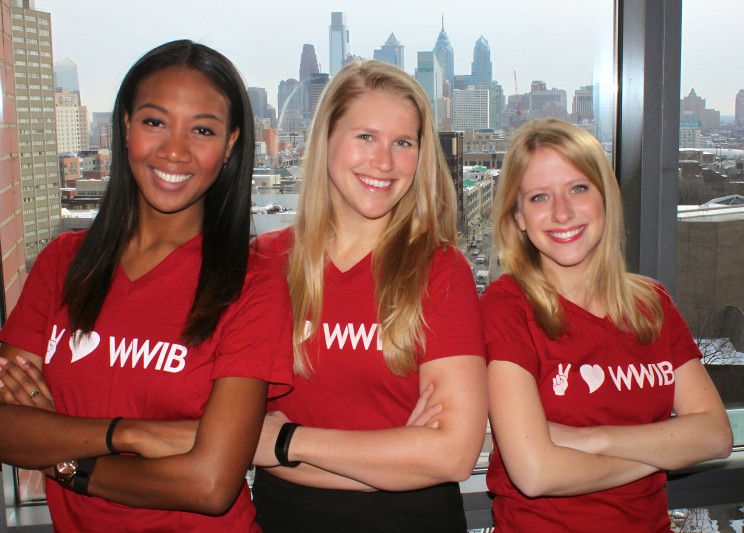
Her community work had started before the MBA. At United Women in Business, she led professional-development programming, recruited speakers, cultivated corporate partnerships and helped deliver free events across several cities. Fifteen events reached more than 1,000 attendees. Here too, the visible event depended on invisible coordination.
03Five views of Adobe
Chadash joined Adobe in late 2018 and stayed seven years. The neat chronology contains a messier education. She began in Digital Media Strategy & Operations, moved into go-to-market management, led transformation and campaign-marketing business operations, then took on portfolio strategy and global expansion. From 2023, she also directed product marketing and marketing for Latin America.
By her count, those five roles crossed product marketing, marketing and go-to-market work. She helped lead two operating-model transformations and had her first real turn owning a profit-and-loss statement. The Latin America business carried a reported $250 million P&L. Chadash wrote about the region with less spreadsheet language: creative people building art and livelihoods, difficult conversations about ethical artificial intelligence, and the importance of keeping human creators at the center.
That balance matters. Operations can become an elaborate way of admiring efficiency. Chadash's public comments keep returning to the people at the far end of the system. At Adobe, they were creators. Inside the company, they were colleagues grinding through quarterly business reviews, launches and campaigns while also living through marriages, babies and moves. In her farewell, she reduced seven years to one clean sentence: “The people make the products.”
Her Latin America role also rewarded an old investment. Chadash speaks Spanish and had studied in Madrid. The political-science graduate, the international consultant and the global marketer had not disappeared into successive jobs. They had accumulated.
“The people make the products.”Ashley Wells Chadash, leaving Adobe after seven years
04A new engine at Stripe
Stripe recruited Chadash into a company whose scale is almost comically abstract. Its infrastructure sits under payments, billing and financial tools used by millions of businesses. Marketing such a company means translating software, money movement and global ambition into a coherent promise. Operating that marketing organization means deciding how teams, plans, budgets, data and decisions will meet.
Her double title captures the two altitudes: Head of Global Marketing Strategy + Ops, and Technical Advisor to the CMO. One part builds the machine; the other stays close to the person steering it. Her early public activity points to the agenda. She has promoted roles focused on making artificial intelligence part of marketing workflows, recruited for global sports-sponsorship operations and supported sales-development hiring centered on smarter account intelligence and agent-assisted outreach.
Then there is golf. In July 2026, Stripe became a Worldwide Partner and the official financial and payments infrastructure partner for the Ryder Cup's 2027 match in Ireland and 2029 match in Minnesota. Chadash said she had worked on the partnership behind the scenes. Her summary of the learning curve was more charming than the press release: it was time to upgrade her putt-putt game and learn a birdie from an eagle.
The joke gives away a habit. Chadash is comfortable being the beginner in the room. At Wharton, that meant asking the banker to explain. At Adobe, it meant moving repeatedly into adjacent disciplines. At Stripe, it can mean learning sports sponsorship while constructing the program that will support it across events and countries. Curiosity, in this version, works as operating equipment rather than decoration.
05The advantage of visible effort
The through-line in Chadash's story is not a particular industry. Politics yielded to consulting, creative software to financial infrastructure. The continuity is her appetite for consequential systems and stretch assignments. As an MBA student, she said she wanted to work where she could be uniquely positioned to make an impact. She also advised applicants not to hedge against themselves. Both ideas survive in her résumé.
But ambition is only half the portrait. The duck metaphor supplies the other half: a suspicion of polished certainty. Chadash's advice was to admit weakness, seek timely feedback and lead with empathy and humility. Those habits sound gentle. In organizations, they are demanding. A leader who can say “I don't know” makes it safer to surface the missing fact before it becomes an expensive surprise. A team that asks for help can move before the water gets rough.
Her work will remain mostly invisible to people who buy a ticket, open Photoshop or complete a payment. That is the bargain of operations. The audience sees the glide. Somewhere below, owners have been assigned, plans reconciled, decisions made, hires opened and dozens of meetings quietly prevented.
Chadash once told MBA students to make one positive impact that would outlast their short time at school. It is a good test for an operator too. The title eventually changes. The meeting cadence gets renamed. The useful system remains, moving without spectacle, while everyone above water wonders why the journey suddenly feels easier.