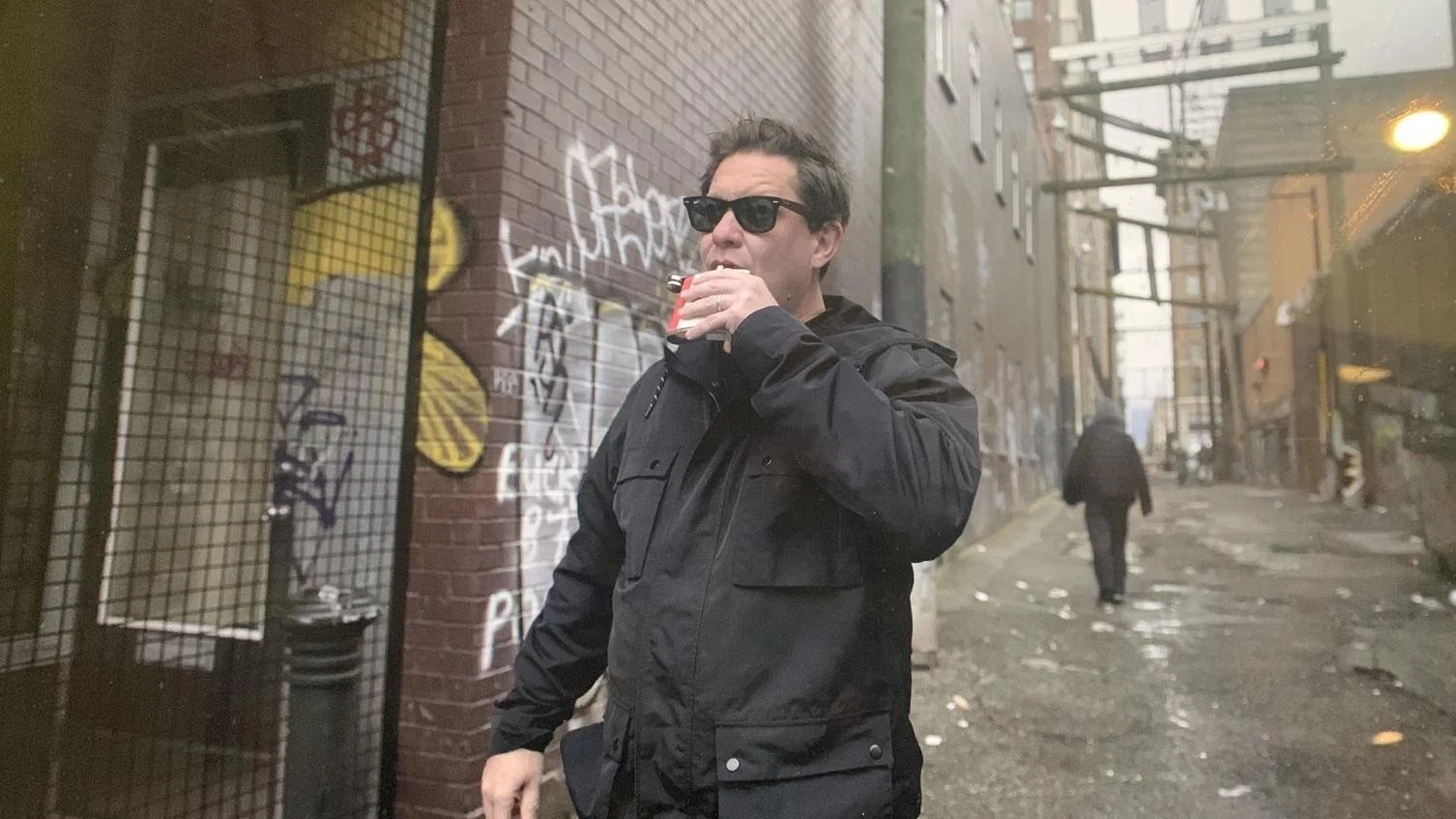
The man who keeps finding the next Elon Musk
In January 2025, Ashlee Vance walked out of Bloomberg after 14 years, turned 47, and immediately started working 18-19 hour days to build something he'd wanted since his mid-20s: a media company that belonged entirely to him. He named it Core Memory. Within four months, a feature story and a YouTube short went viral. The podcast hit all-time highs. He posted about it on X, sounding equal parts relieved and vindicated: "Four months ago, I left an amazing job at a massive media company and was scared for what may come."
That fear, in his telling, is not the interesting part. The interesting part is the wallet - a space monkey design bought on Etsy, stuffed with forgotten currency from a dozen countries he visited for Bloomberg's Hello World, the most-watched video series the network ever produced. He traveled to Chile's Atacama Desert to film astronomers hunting the origins of the universe. He showed up at secret rocket launch sites in the Pacific for his space book. He drove across Silicon Valley so many times that the geography of the place became its own character in his writing. The wallet, like the career, accumulated things he never quite got around to sorting out.
Born in South Africa, raised in Texas, educated in philosophy at Pomona College - none of that is the obvious biography for the person who would write the definitive early account of Elon Musk's life, produce HBO documentaries about the private space race, or turn a biohacker named Bryan Johnson into a household name with a single Bloomberg article. And yet it fits, somehow, when you spend any time with how Vance works. He is not a technologist who writes. He is a curious, occasionally cynical observer of technologists - someone who can describe the spectacle clearly because he has never been inside it.
He studied philosophy because he liked the ideas, not because he knew where it would take him. He ended up at The Register, a British tech publication with a tabloid sensibility and enormous editorial freedom, covering IBM and Intel and robots. He spent five years there before landing at The New York Times, then Bloomberg. When he eventually left Bloomberg, he described it in terms that echoed his memories of The Register: he wanted to build something "run by the writers" again. Thirty years of career and he kept returning to the same north star.
I feel like I was reborn.- Ashlee Vance, on launching Core Memory, 2025
The Musk biography, published in 2015, was written before Tesla became the most valuable car company on earth, before Twitter became X, before Musk became the world's richest man. Vance had to earn the access through persistence - initial rejection, then months of careful cultivation, then 50-plus hours of interviews over approximately a year. The book became a New York Times bestseller immediately. It remains, a decade later, the reference text for understanding what Musk was actually like when he was building things rather than running empires and feuds.
That instinct for the early story - catching someone mid-stride before the canonization sets in - runs through all of Vance's best work. His 2023 book When the Heavens Went on Sale found the private space race when it was still genuinely weird and risky, not yet an asset class. He had front-row access to Astra Space, Firefly Aerospace, Planet Labs, and Rocket Lab. The result was another NYT bestseller, a book that reads like a thriller and doubles as a technical history of how rockets became affordable. It also became the basis for Wild Wild Space on HBO in 2024.
His forthcoming book on OpenAI and Sam Altman follows the same logic. He has exclusive access. He has already sold the film rights, before the manuscript is finished. He sees the story clearly, from the outside in, with a philosophy graduate's appetite for first principles and a tabloid journalist's eye for what makes the reader lean forward.
The Bryan Johnson story is worth dwelling on. Johnson is the tech millionaire spending millions per year to reverse his biological age - blood transfusions from his teenage son, 100 pills per day, an entire medical team living with his data. Vance wrote the original Bloomberg profile. That article made Johnson famous. Johnson then partnered with documentary director Chris Smith. Smith brought Vance in as producer. The result, Don't Die: The Man Who Wants to Live Forever, landed on Netflix on January 1, 2025 - the same month Vance launched Core Memory. The symmetry is probably accidental. The instinct that produced it is not.
There is an anecdote Vance tells about his dream biography subject: David Walsh, a Tasmanian professional gambler who bets approximately one billion dollars a year and used some of those winnings to build MONA - the Museum of Old and New Art in Hobart, Tasmania - which Vance describes as "maybe the coolest, weirdest museum in the world." He has not written that book yet. The presence of that name in his mental queue tells you something about the kind of stories he finds compelling: large, strange, specific, and underreported.
Core Memory, in its early months, covers brains - neuroscience, brain-computer interfaces - alongside energy, AI, transportation, and manufacturing. The podcast launched. The YouTube channel launched. A BCI documentary entered production. Scripted projects about artificial intelligence and a drama series about Elon Musk entered development. Vance built a team of three full-time employees and started pulling 18-hour days. His Substack crossed 31,000 subscribers before the end of the first quarter.
He once described journalism as something that lets a curious person "experience the world in a way that nobody else really does." He meant it as a description. It reads, in 2025, more like a strategy.