A pizza box is an unlikely place to look for a theory of creative work. Art Mandalas helped put one there anyway. When Community developed the identity for Toronto’s Maker Pizza, the packaging included a place for the person making the pizza to sign. The customer would receive dinner with a small indication of who had made it. A box, briefly promoted from container to introduction.
The detail belongs to a career spent moving between a graphic and the world around it. Mandalas is the founder and CEO of Community Agency. Long before that title, the work included flyers for clubs and promoters in Toronto. Later came restaurant identities, developments, physical experiences and advertising for an NBA team. The assignments changed size. People still had to recognise something in them.
The name on the box
In 2015, Shlomo Buchler approached Community to name and develop the visual identity of his new pizza business. He had a space on Cameron Street and the idea of a pizza-making factory. Maker became the name. The identity brought attention to the person producing the food, including that invitation to sign the delivery box.
Mandalas, then Community’s president and creative director, favoured a restrained, functional look. Associate creative director Jenny Vivar helped shape the visual language. The letters of Maker could form a slice; the small dining area sat beside a much larger working operation. Branding reached the package, the room and the relationship between kitchen and customer.
There is a pleasing practicality to the signature. An identity can demand a lengthy explanation, preferably delivered over an expensive lunch. This one had a space on the lid. It made the idea available at the moment someone was most likely to notice the product.
The project also resists an easy habit in writing about founders: assigning every decision to the person at the top. Vivar’s role is part of the account. So is Buchler’s original brief. The useful story sits in the exchange between a client’s ambition, a team’s decisions and the ordinary object the customer eventually receives. Mandalas’s place in that process becomes clearer when the other people remain visible.
An education after dark
Before Community’s broader marketing practice, there was Pulp&Fiber, a print and branding business working with clubs, promoters, restaurants and entrepreneurs. Its early material belonged to Toronto nightlife. Flyers and venue identities were part of the trade, made for people organising places where other people wanted to be.
Think about the assignment built into that kind of object. A flyer must give someone useful information while also suggesting what sort of evening awaits. The practical and the atmospheric share a very small surface. A venue identity has a related burden: it has to feel appropriate before anyone has crossed the threshold.
Those are useful beginnings for a designer interested in more than a logo. The relationship between a place, an audience and an expectation is already present. Looking across Mandalas’s later assignments, that relationship offers a way to follow the career without treating every new discipline as an entirely new departure.
A studio with neighbours
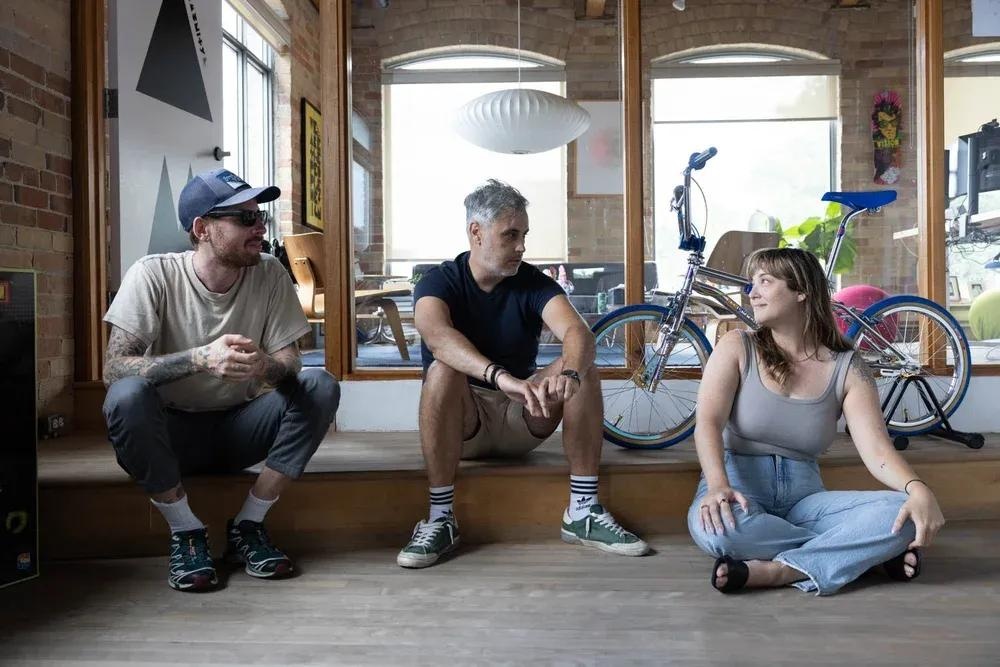
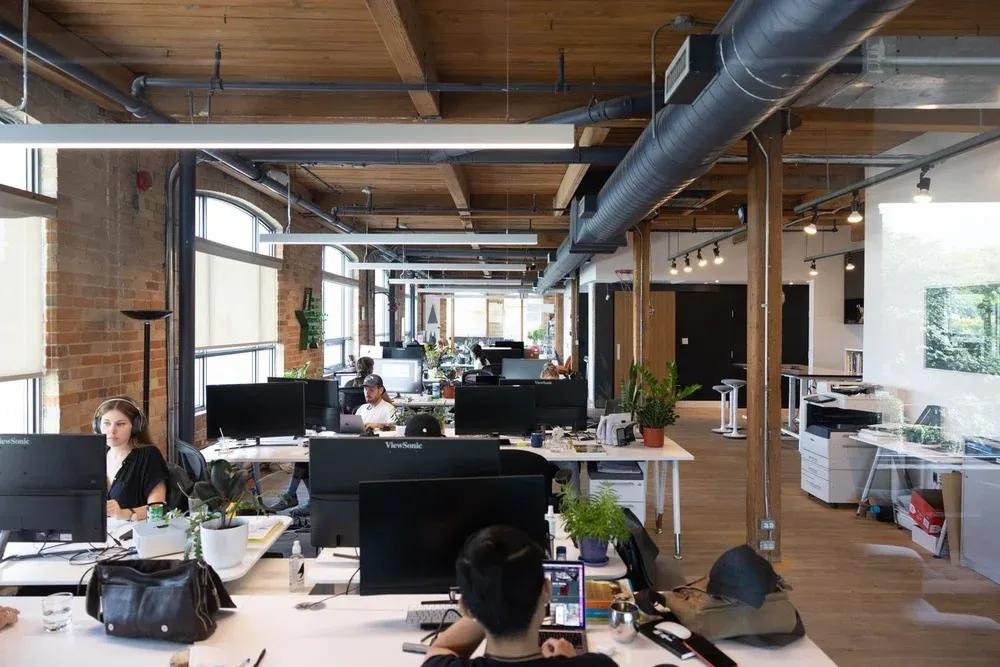
The business’s base provides another piece of continuity. Community has occupied its Richmond Street West studio since 2003. Around Trinity Bellwoods, industrial buildings and auto shops have given way to new residential and retail uses. The agency has remained in the same space while adding capabilities and taking on work beyond Toronto.
Mandalas talks about the neighbourhood through its people and routines. Nearby owner-operated shops matter to him; so does getting to know the people behind their counters. Client conversations have a local setting at Terroni, while Agora supplies meals across the street. The company name has a fairly literal life outside the office.
A creative business can make place sound like an abstraction. Here it has the dimensions of a walk to lunch. That is an appealing scale at which to consider an agency with clients elsewhere: the work can travel, while the working day remains attached to particular windows, streets and conversations.
Detroit gets the microphone
In November 2020, Community’s work reached a different kind of gathering place. The Detroit Pistons launched “D-Up” ahead of the next NBA season. Mandalas was the agency’s founder and chief creative officer. The campaign joined the team’s defensive identity to the character of its city.
Detroit neighbourhoods, local basketball players and Pistons footage shared the screen. Jalen Rose supplied the voice. The longer film moved through the city’s art, music, architecture and automotive identity, giving basketball a setting beyond the court. The campaign invited fans to take pride in where they came from.
“This campaign is about the fans, the city and the thrill of potential.”
Art Mandalas, on “D-Up”, 2020
That choice matters when looking at the work from Mandalas’s earlier Toronto projects. A campaign for a professional team has a different budget, audience and responsibility from a club flyer. Yet both require some understanding of belonging. The creative task includes knowing which details will feel familiar to the people being addressed.
Mandalas also connected the assignment to Community’s experience as an independent agency. Competing for work outside its home market was part of the story he told about the project. The result offers a documented example of the studio’s widening reach, with a city’s identity still central to the creative treatment.
and early print work
November 2020
More disciplines, more collaborators
Mandalas’s professional background spans graphic, environmental, industrial and interior design. His work has included branding venues and developments in Canada and the United States. Those categories cover different materials and different kinds of encounter. A person can hold a graphic, walk through an interior or experience a place without ever thinking about the designer’s categories.
Pulp&Fiber now provides a wider organisational setting for that work. Mandalas leads the independent creative collective, whose agencies include Community, Public/Realm, Pretend and Remote/Control. The list gives a more specific picture of his executive responsibilities: the founder’s role extends across a group of businesses with different identities, alongside the design background that began his career.
Community’s current leadership makes the breadth of the business visible. Jesse Carere leads marketing; Daryn Sutherland is managing director. Ian Berkowitz oversees digital product and marketing, Adam Savoni leads real estate marketing, and Joe Nanni is chief creative officer. David Videka’s remit is experiential marketing, while Lisa Kwong leads public relations.
Kwong also leads PUBLIC/REALM, the full-service PR agency launched within Community’s offering. Its arrival placed another kind of expertise alongside creative, digital, design and experiences. Mandalas described the move as an extension of the group’s work in communicating ideas and shaping brands’ public presence.
Some of that collaborative practice can be seen in “The Wild Abode”, created by Community and Stacklab for the Design Exchange’s EDIT festival. Joseph Nanni and Jeffrey Forrest led a team of designers, engineers and artisans. The installation brought seedlings, wood and lighting into an exploration of forests and construction. The credit belongs to that team; its presence in Community’s work shows how far the studio’s materials could extend beyond paper.
The installation’s materials offered their own account of the subject. Seedlings hung in glass vials; maple plaques traced wood’s journey into homes. Salvaged branches surrounded an existing column. Visitors encountered the argument through things they could see in a room. In a career moving between identity and environment, such projects make the change of scale easy to understand: an idea occupies space, and the audience walks through it.
and artisans
A physical installation for EDIT, led by Joseph Nanni and Jeffrey Forrest.
A tool that let him in
Mandalas has a personal explanation for his interest in changing creative technology. He has described not seeing himself as a traditional artist, then finding an unexpected creative opening through CorelDRAW. Software gave him a means to make work he had not previously imagined making.
“The computer didn’t replace my talent; it revealed it.”
Art Mandalas, 2026
His May 2026 argument about AI grows from that experience. He expects easier technical execution to increase the importance of taste, cultural understanding and direction. These are his predictions about the industry, expressed from the position of someone whose own relationship with making things changed when a tool became available.
The anecdote gives the argument a human scale. There is a difference between discussing creative access as a market trend and remembering a particular program that let you begin. In Mandalas’s account, technology widened the possibilities of his working life. That helps explain the enthusiasm he brings to the next set of tools.
His range of work gives that question a concrete test. A program can help produce an image; a restaurant identity still has to work on a delivery box and in a dining room. A sports film still has to address a particular audience. The projects suggest why he returns to judgment: the result has a destination, and someone on the receiving end has a reason to care about it.
The archive goes out again
For Community’s twenty-fifth anniversary, the agency returned to its beginnings through an experience inside a warehouse. Its history became material for the event, with early nightlife and entertainment work among the first things guests encountered. Flyers originally designed to bring people to one occasion were helping to frame another.
It is a fitting place to leave Mandalas’s story for now. The founder oversees a business with several disciplines, collaborators and kinds of client. At its anniversary, the business still had use for the printed objects from its early years. A club flyer had acquired a second job: reminding a larger company how its work began.