A laptop ought to be easy to count. In one logistics organization described by Arohak, the same Dell machine appeared under several model names: Dell Latitude 7440, Dell Latitude, 7440 Laptop, Dell 7440. Multiply that small confusion across more than 40,000 hardware assets, and inventory becomes a surprisingly philosophical exercise. What, exactly, does the company own?
- Arohak connects enterprise software, data, and everyday workflows.
- Its projects include SAP, ServiceNow, file transfers, and order automation.
- The useful lesson: fix the handoff before expanding the system.
The firm's hardware-management case describes requests arriving through email and spreadsheets, technicians checking shipments manually, and duplicate model records muddying the inventory. Arohak implemented ServiceNow HAM Pro, connected procurement and HR workflows, integrated FedEx tracking, and consolidated model names. It reports an 85% reduction in duplicate model records. The laptop had not changed. The organization's ability to recognize it had.
01 Distance broke the handoff
This is a useful entrance into Arohak's business. Enterprise technology is full of boundaries: between procurement and finance, between a service desk and a warehouse, between a platform installed years ago and the cloud service bought last month. Arohak works across those boundaries, selling consulting, engineering, implementation, and continuing operational support.
Consider another of its published projects. A consumer healthcare enterprise ran a secure, stable file-transfer platform in North America. As operations expanded, partners in Europe and Asia-Pacific experienced latency, large-file timeouts, and missed service commitments. Geography had become a software problem. A working central platform could still be the wrong arrangement for a distributed business.
Arohak's response was a regional architecture: deployments across North America, Europe/Middle East/Africa, and Asia-Pacific, with routing, regional failover, and shared monitoring. Governance remained centralized while transfers happened closer to the users. The company reports 45-65% lower latency for the European and Asia-Pacific regions and a 50% reduction in retransmissions and transfer failures.
Those are Arohak's reported project results, specific to that engagement. The broader point is architectural: adding capacity at headquarters does not necessarily solve a delay thousands of miles away. First locate the friction. Then decide what needs to move.
02 Follow the order, then follow the money
The same habit appears in an order-processing engagement. A consumer healthcare company's staff retrieved purchase orders from different market portals, using separate credentials, downloading files, validating them, preparing SAP formats, and submitting electronic transactions. Each step was manageable. Together, they made a queue.
Arohak built a centralized automation platform deployed across six countries. It handled portal access, order extraction, validation, and submission, with role-based controls and a dashboard for tracking execution. The important detail is the whole route. Automating the download alone would have left employees holding a faster-growing pile of files.
A retail integration project makes the delivery method more visible. Arohak assessed 23 trading partners before migrating webMethods connections to IBM Sterling B2B Integrator. It used reusable mappings, tested transactions and SAP connections, then supported the production transition. The company reports 40% faster partner onboarding and 40% lower support and maintenance costs.
For a buyer, that sequence matters as much as the platform name. Discovery identifies dependencies. Reusable components reduce repeated work. Testing checks whether real transactions survive the move. Production support deals with what happens when the diagrams meet Tuesday morning.
This also explains the business model. Arohak sells the people and engineering required to change and operate enterprise technology. Its managed integration services include round-the-clock monitoring, incident management, upgrades, and optimization. The engagement can continue after launch, because an interface becomes an operational responsibility the moment someone depends on it.
03 The climb into AI
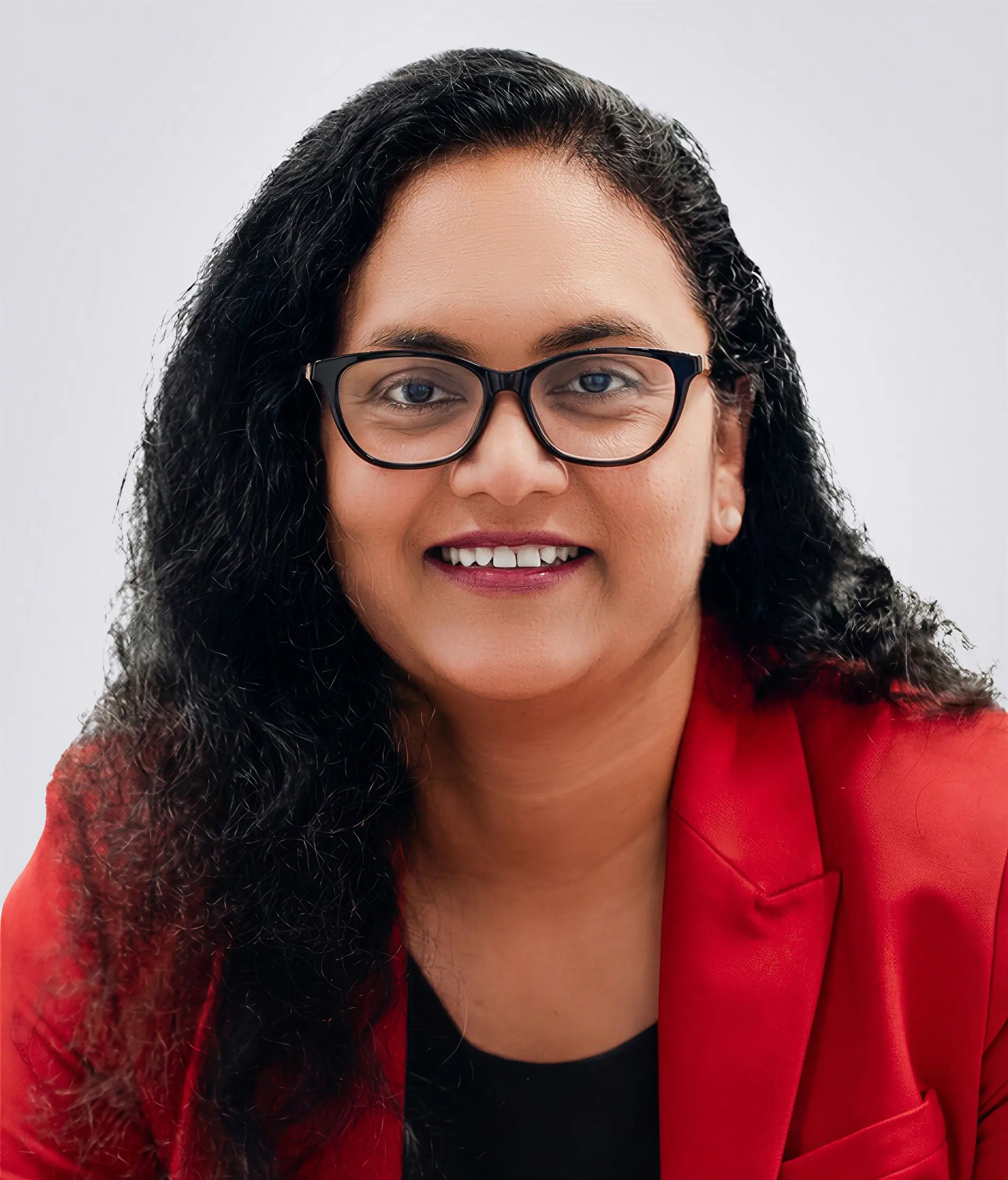
Surekha Reddy Pailla founded Arohak in 2016. The women-owned company's name means “Ascending,” according to its own account. Its stated culture emphasizes employee growth, inclusion, and collaboration. An Inc. profile records three consecutive Inc. 5000 appearances from 2023 through 2025. In April 2026, EY named Pailla a New Jersey award finalist.
Growth has included a change in emphasis. In its 2024 anniversary message, Arohak described a foundation in integration, ERP, and full-stack development, followed by investment in AI, machine learning, natural-language processing, and large language models. The same message acknowledged financial challenges that year. It is an unusually useful pairing: an expanding technical ambition alongside an admission that expansion has pressures.
Today its intelligence offering includes AI planning, generative AI integration, domain-specific applications, and retrieval-augmented generation, which brings relevant information into a model's response process. Cloud engineering and application modernization sit alongside that work. The market position suggested by this portfolio is an implementation partner for businesses with existing systems and complicated dependencies.
“Calm execution replaces chaos.”
Ravi Anumolu / CIO & CTO, Arohak
The frontier is moving again. In October 2026, Arohak said it showcased a quantum-inspired optimization concept pilot with partner Quanfluence for Andhra Pradesh's 112 emergency services. A concept pilot is an experiment, with a different evidentiary weight from a running enterprise deployment. It adds an exploratory edge to an otherwise practical portfolio.
04 Start with the queue
The cases suggest a purchasing lesson. Choose one workflow, identify where information waits, establish a baseline, and decide who will own the result after launch. For a hardware process, that could mean clean model identities and reliable shipment updates. For orders, it means tracing the transaction all the way into the receiving system.
That approach requires access, permissions, consistent records, and someone able to resolve process disagreements. A new platform cannot supply those decisions by itself. Arohak's most persuasive examples make the work inspectable: a regional transfer, a normalized asset, an order submitted without another manual handoff. Sometimes the technology improvement worth buying is the one an employee no longer has to think about.
Arohak website ↗ · Project stories ↗ · Brand refresh film ↗
LinkedIn ↗ · X ↗ · Instagram ↗ · Facebook ↗