In September 2017, Coralogix was the kind of startup that makes for a brief meeting and a long silence. Three years after it began, the company had no meaningful revenue, five employees and about $100,000 in the bank. Its board considered whether the polite thing was to close and return what remained. There was so little left, Ariel Assaraf later recalled, that returning it hardly seemed to matter.
The following month brought the company's first dollar of revenue. It was less a victory lap than permission to keep walking. Coralogix had begun as a lighter, cheaper version of the log-analysis products already on the market, then evolved into a machine-learning layer that sat on top of them. Customers could see the cleverness. They could also see another invoice, another integration and another piece of infrastructure that did not remove the original problem. The product was an answer in search of sufficient discomfort.
Assaraf, one of four co-founders and then the product leader, had encountered the discomfort years earlier. In Israel's Unit 8200, he learned what scale and data analysis meant when the information carried operational consequences. At Verint, he worked across quality architecture, automation and integration on large software deployments. Finding a fault, fixing it and shipping the next version was laborious. Logs were supposed to explain what software had done. At volume, they became another thing that needed explaining.
The useful courage of changing your mind
The standard founder story rewards stubbornness. Coralogix survived through a more discriminating vice: stubbornness about the problem, flexibility about nearly everything else. When its early approach failed, the team changed the leadership, the product and the market. Assaraf became CEO in 2019. The company stopped being an accessory to larger platforms and began selling a replacement. Most importantly, it rebuilt the technical sequence.
Product chief to CEO
Batch to streaming
Add-on to replacement
Traditional observability systems commonly ingest telemetry, index it, store it and only then extract meaning. Coralogix put analysis in the stream, before storage. Known problems could trigger immediate alerts; data that did not require expensive indexing could remain accessible in a customer's cloud for later investigation. The reversal sounds almost impolite in its simplicity. Why pay to arrange every item in the attic before knowing which boxes anyone will open?
“We changed the product. We revamped the entire thing. It was streaming. It wasn't batch.”Ariel Assaraf on the Coralogix pivot
Assaraf has a restaurant analogy for the architecture. Real-time detection is fast food: frequent, predictable and best served at once. A complex investigation into an unknown failure is closer to a Michelin meal: infrequent, unhurried and expensive. Put both in one kitchen and someone receives either a two-hour burger or fries at tasting-menu prices. Coralogix separated the kitchens.
A founder assembled from adjacent rooms
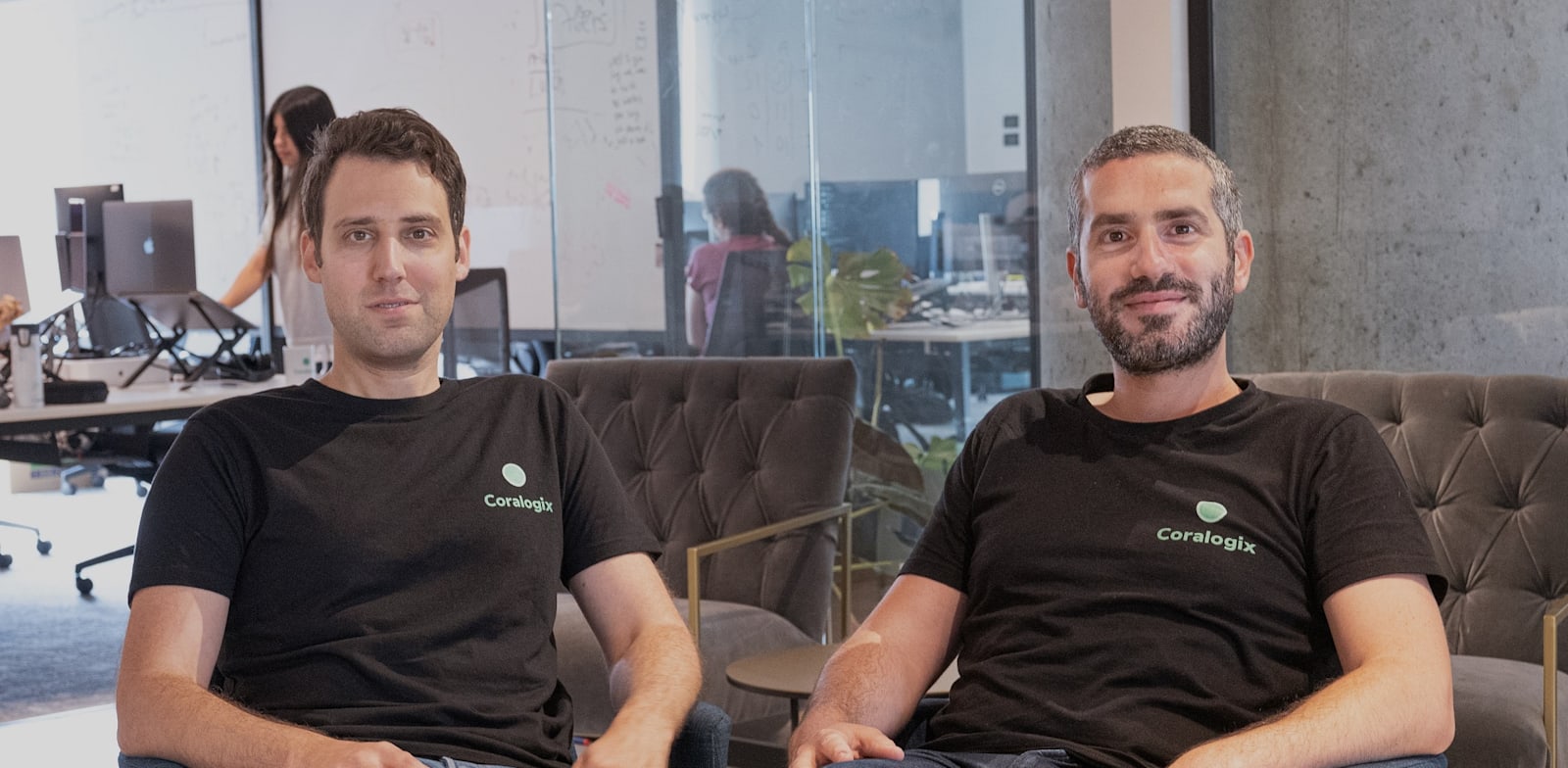
Coralogix itself began through proximity. Assaraf left his post with a friend. His roommate had just completed graduate work in neuroscience and machine learning and joined as another co-founder. The founding team eventually included Assaraf, Yoni Farin, Lior Redlus and Guy Kroupp. The arrangement joined intelligence experience, engineering and machine learning before those ingredients became a familiar pitch-deck recipe.
Assaraf studied economics and mathematics at the Open University of Israel while building his technical career. The pairing suits his later role. Observability is partly a computer-science problem and partly a problem of bills. Data tends to grow faster than company revenue. A platform can see everything and become unaffordable, or control the bill by discarding the very history an engineer will need next Tuesday. His sales argument has therefore remained concrete: performance, support and cost are not separate virtues when the customer must live with all three.
He is unusually candid about the company's fallow years. In one interview he described the first three or four years as “basically doing nothing,” a verdict that would cause most corporate communications teams to reach for the smelling salts. The bluntness is useful. It distinguishes activity from progress. It also explains the managerial style that followed: meet customers, locate actual pain, and decline to manufacture urgency where none exists.
That habit reaches back to his earliest public writing. Years before the larger funding rounds, Assaraf published practical notes on Java logging, automatic clustering and the education supplied by wearing five jobs at once. The subjects were narrow because the company was narrow. There was no grand theory of autonomous operations yet, only the unglamorous work of making noisy records intelligible and learning which hat should come off next. Even his advice to new DevOps practitioners started with the organization rather than the tool: learn its pain points, then decide where technology helps. The order matters. Coralogix's first product had reversed it.
The numbers eventually acquired more agreeable manners. Coralogix announced a $55 million Series C in 2021. In 2025 it acquired AI-observability company Aporia, formed an AI center and raised a $115 million Series E at a valuation above $1 billion. In June 2026 it announced a $200 million Series F, bringing reported funding to about $550 million. The company said it processed petabytes of production data daily across eight regions for more than 5,000 customers.
When the software becomes a customer
Money is a milestone, not a plot. The more interesting change is who consumes the data. For most of Coralogix's life, the customer at the screen was an engineer moving between alerts, dashboards and queries. Assaraf now argues that AI systems are becoming operational participants. They investigate incidents, suggest causes and perform tasks before a person intervenes. An observability platform must consequently answer a new sort of user, one that is tireless, literal and capable of making a mistake at machine speed.
This gives the old architecture a second use. An agent asked to explain a production failure needs more than a sampled residue. It needs accessible history, fresh signals and the freedom to form a query nobody predicted when a schema was designed. Coralogix's pitch for complete telemetry and customer-controlled, open-format storage now doubles as a pitch for machine reasoning. The foundation stayed put while the interface changed.
Assaraf also draws a clean line between instructing an agent and controlling it. A system prompt can describe a boundary, he said in September 2026, but it cannot enforce one. If software is technically able to cross a line, a company should expect that it eventually might. Enforcement belongs between intention and action, with permissions limited and consequences observed. A response code of 200 only proves the request succeeded. It says nothing about whether success was wise.
“A system prompt can describe a boundary. It cannot enforce one.”On AI agents and operational guardrails, 2026
There is continuity here. Unit 8200 taught him that data mattered beyond a business dashboard. Verint exposed the operational cost of finding faults across sprawling systems. Coralogix learned, painfully, that adding another analytical layer did not remove a customer's burden. AI brings a more theatrical vocabulary, but Assaraf keeps returning to the same modest questions: What happened? Can we see all of it? What can act on what? Who pays for the answer?
More engineers, in stranger places
After meeting more than 200 customers in a year, Assaraf published a contrarian note on the future of engineering. AI, he wrote, may replace coding, but it will not replace engineers. His distinction is between producing syntax and solving problems. If AI makes software easier to create, engineering logic can spread into security, customer success, finance and operations. Smaller teams are not automatically the prize. More people able to redesign more systems may be.
It is a self-interested forecast from the chief executive of an observability company, and still an instructive one. More software creates more behavior to understand. More autonomous software creates more behavior to constrain. The work migrates from typing every instruction to deciding what should happen, verifying what did happen and intervening when the two disagree. Those are engineering habits even when the person practicing them does not sit in engineering.
His public style contains a similar mixture of precision and provocation. He praises competitors' decisions while attacking the economics of their model. He talks about customer support response times as an expensive management choice whose return appears across retention and satisfaction. He is willing to tell a prospect that there may be no problem to solve. Such lines are hardly rebellious in isolation. Together they describe an operator who treats credibility as a commercial instrument: concede what is good, name what is costly, and resist the false comfort of a sale that will not last.
Assaraf has said he wants Coralogix to join the generation of Israeli companies that mature beyond startup success into enduring, public-scale enterprises. That ambition is no longer fanciful, though public markets have a fine record of curing romance. His more personal measure is practical: lower the cost of observability enough that companies can put the savings elsewhere, including keeping people employed. It is not the customary poetry of logs. That may be why it lands.
The company that once had barely enough money to close properly now sells a way to preserve information without going broke on it. Its CEO arrived there by discarding an elegant first answer, changing his own job and reversing the order in which an industry performed its chores. In a field devoted to finding signals in noise, Ariel Assaraf's career has produced one dependable signal: when the evidence changes, the expensive move is pretending the plan has not.