ai-observability
(33)
The Agent Got a Badge. Who Gave It the Keys?
Guild.ai wants AI agents to work like accountable colleagues: named, permissioned, observable and easy to stop. Its bet is that the next enterprise AI bottleneck is control, not cleverness.
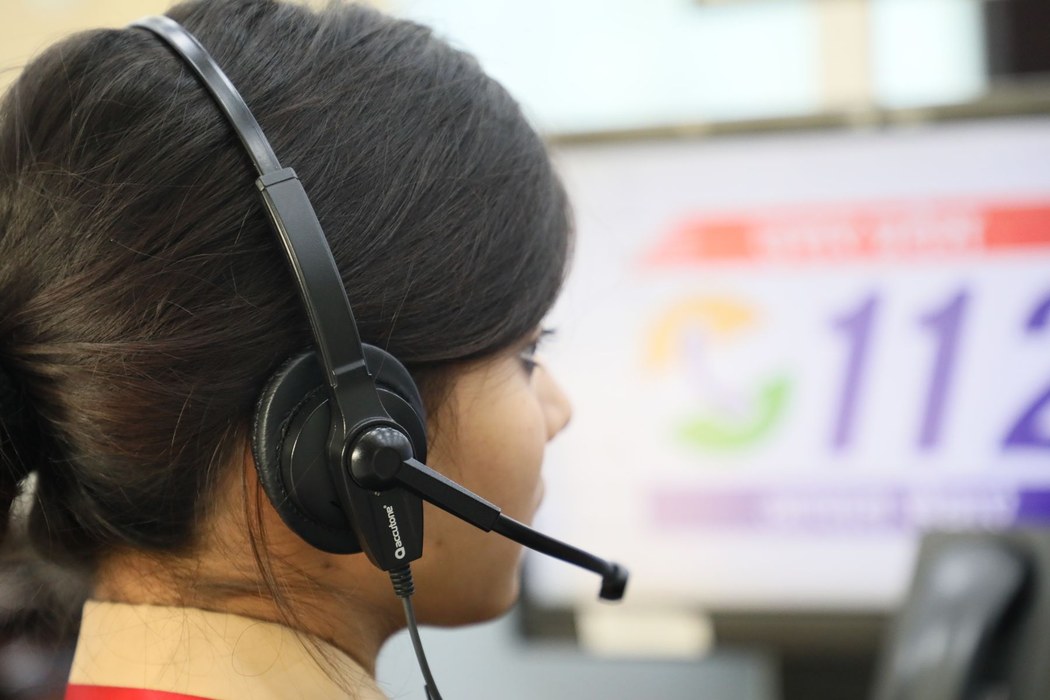
Your AI Agent Is Failing Quietly
The most dangerous contact-center failures do not crash. They complete the wrong task, lose the customer, and report success—unless you instrument the system to see what the dashboard misses.
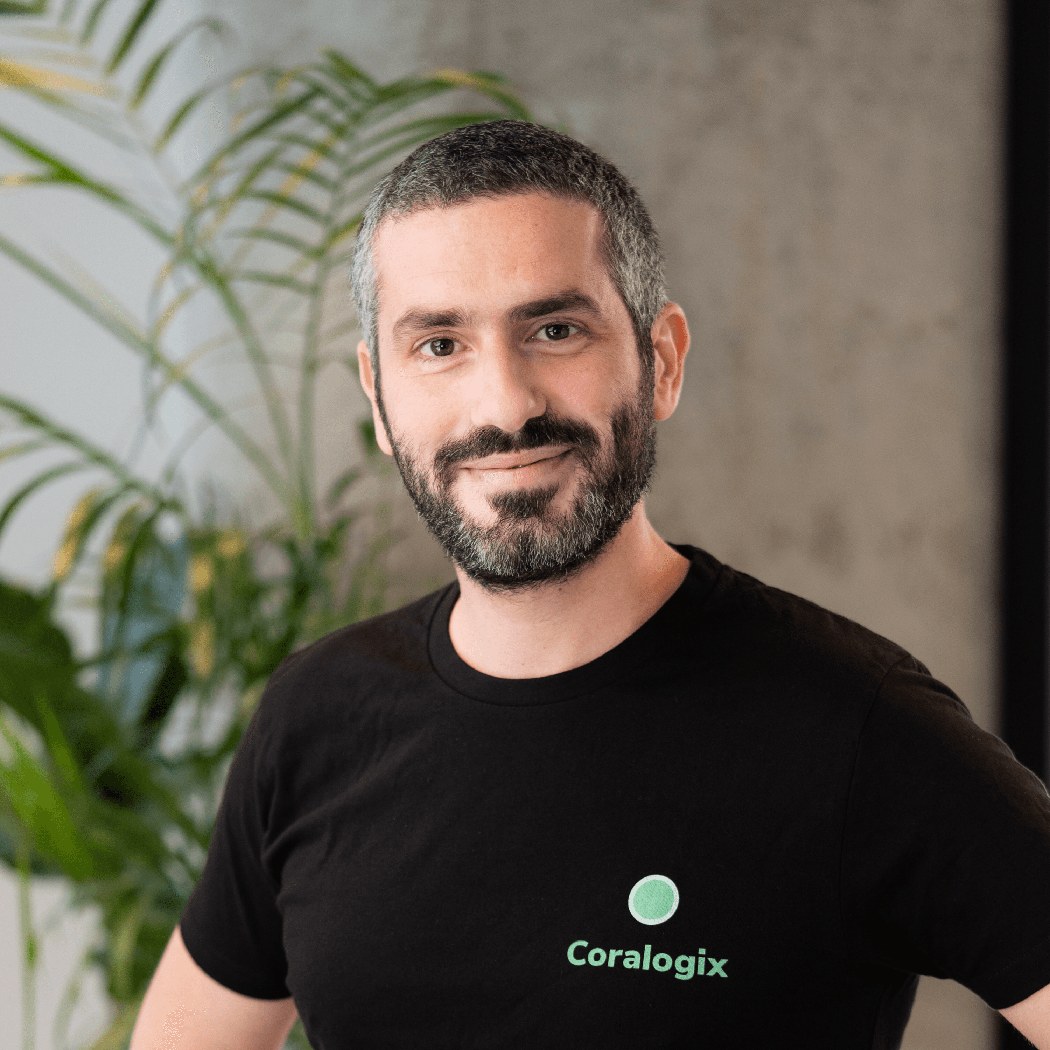
Ariel Assaraf Bet the Company on Looking Before Storing
Coralogix nearly ran out of road before its co-founder reversed the usual order of data analysis. Now Ariel Assaraf is applying that survival lesson to a noisier problem: how humans and AI agents understand what software is actually doing.

Kirti Dewan Makes the Black Box Legible
With an engineer’s appetite for systems and a marketer’s ear for plain speech, Fiddler AI’s chief marketing officer is helping enterprises talk about what their models and agents are actually doing.
Wayne Jin Makes Invisible Software Matter
After Google Cloud, GitHub, AppDynamics, and Grafana, the computer-science graduate has taken on a peculiar marketing assignment: make companies care about the failures they cannot yet see.

Brooke Cunningham Made Marketing Answer to the Spreadsheet
The LogicMonitor CMO has spent 27 years turning partner ecosystems into growth engines. Her latest move is to make AI useful, measurable and still unmistakably human.

Coralogix Wants to Kill the Observability Tax - Without Throwing Away the Data
The $1.6 billion observability company made a contrarian bet: analyze telemetry before storage, leave the archive in the customer's cloud, and stop charging as if every log line deserves a penthouse. AI may turn that cost argument into infrastructure strategy.

Julie Neumann Learned to Sell Software by First Learning to Find the Story
Before Julie Neumann marketed observability, she wrote poems, covered stories and trained herself to notice the telling detail. Now she is turning that editorial instinct toward a technical problem with human stakes: how to trust what software does in production when AI is writing more of it.

Honeycomb Bet Engineers Would Rather Ask Better Questions Than Stare at More Dashboards
Born from the production chaos at Parse, Honeycomb built an observability business around a stubborn idea: keep the context, query it fast, and let engineers investigate the failure they did not know to predict. Ten years later, that architecture is becoming the evidence layer for AI agents too.

Jeffrey Ip Is Building the Test Suite for AI's Unreliable Era
After engineering systems for Microsoft and YouTube, Jeffrey Ip chose a messier problem: proving that AI software works before users discover that it doesn't.
James Zammit Is Teaching Voice AI to Survive Tuesday
After two startups arrived early and one finance product made precision non-negotiable, the Roark co-founder found his problem in the gap between a polished demo and an ordinary production call.
Oximy
Oximy is the system of record for how enterprises use AI. It sits at the network layer to discover every AI tool employees touch (sanctioned or not), track spend across teams and vendors, and protect sensitive data - then adds a company-controlled AI workspace and a routing layer that sends each request to the best model by cost, quality, and latency. Founded in 2025 by Naman Ambavi and part of Y Combinator's W26 batch, Oximy already processes millions of requests a day for customers in financial services and healthcare.

Arthur
Arthur is a New York-based AI governance and observability company that gives enterprises a single control plane to discover, monitor, evaluate, and govern the AI models and autonomous agents running across their organization. Founded in 2018 by a team out of Capital One and academia, Arthur started with machine-learning monitoring - catching model drift, bias, and performance decay in production - and has since expanded into real-time guardrails, LLM evaluation, and agentic AI governance. Its open-source Arthur Engine and its Agent Discovery & Governance platform help security, compliance, and ML teams ship AI they can trust in regulated industries like finance, insurance, healthcare, and government.
Axoniq
Axoniq is a Dutch-founded enterprise software company that builds the backend infrastructure for event-sourced systems and, increasingly, for enterprise AI. Born from the open-source Axon Framework created by Allard Buijze in 2009, the company provides an event-sourcing platform - Axon Framework, Axon Server, and an agent runtime - that gives applications a complete, replayable memory of every decision they make. That memory is the foundation for auditability, explainability, and observability that regulated industries need before they trust AI in production. Axoniq's tools are downloaded 70 million+ times and used by more than 65,000 organizations worldwide.

Grafana Labs
Grafana Labs is the company behind Grafana, the widely used open-source dashboarding and observability platform. Founded in 2014 to commercialize Torkel Odegaard's visualization tool, it has grown into a full-stack observability vendor built on a 'big tent' philosophy - letting teams unify metrics, logs, traces and profiles from any source without ripping out existing tools. Its LGTM stack (Loki, Grafana, Tempo, Mimir) plus Grafana Cloud and Grafana Enterprise now serve more than 7,000 paying organizations, including roughly 70% of the Fortune 50, with the business surpassing $400M in annual recurring revenue and a $6B valuation.
Kloudfuse
Kloudfuse is a Cupertino-based observability company that unifies metrics, logs, traces, real user monitoring, continuous profiling, and LLM monitoring into a single observability data lake that runs inside a customer's own cloud (VPC) rather than a vendor SaaS. Founded in 2022 by veterans of Springpath, Nicira, VMware, and Cisco, it pitches an OpenTelemetry-native, AI/ML-powered platform that gives enterprises data ownership and 60-80% cost savings versus incumbents like Datadog. It launched out of stealth in November 2023 with $23M in funding and is used by companies including GE HealthCare, Zscaler, Tata 1mg, and Automation Anywhere.

HoneyHive
HoneyHive is a New York-based AI observability and evaluation platform that helps engineering teams ship reliable AI agents. Built OpenTelemetry-native, it unifies distributed tracing, offline experiments, real-time monitoring, and human-in-the-loop annotation into a single continuous-improvement loop so teams can see not just what an agent output, but how it got there and where it went wrong. Founded in 2022 by Columbia roommates Mohak Sharma and Dhruv Singh, HoneyHive is used in production by enterprises including Commonwealth Bank, NVIDIA, MongoDB, and Pinecone, and raised $7.4M in total seed funding led by Insight Partners.

Raindrop
Raindrop is a San Francisco applied-AI company building the monitoring and observability platform for AI agents - often described as 'Sentry for AI agents.' It traces production agent runs, automatically detects silent failures like hallucinations, loops, and broken tools, and uses small custom models to surface behavioral signals such as user frustration. Founded in 2023 by Zubin Koticha, Alexis Gauba, and Ben Hylak, the company raised a $15M seed round led by Lightspeed in December 2025 and counts Replit, Speak, Clay, Framer, and AngelList among its customers.
Openlayer
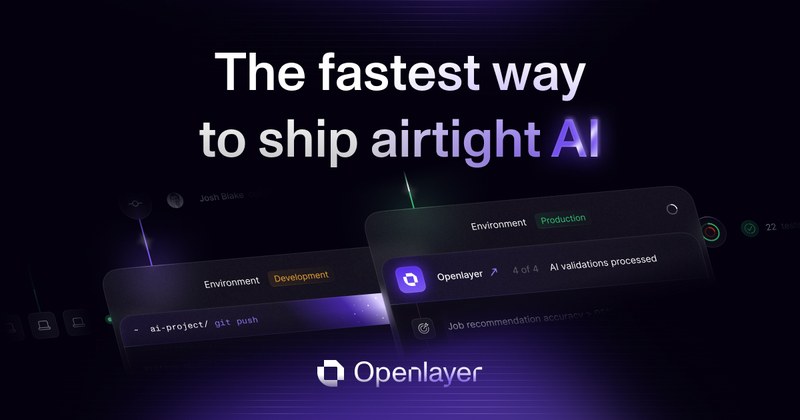
Openlayer is an AI governance and observability platform that helps enterprise teams test, monitor, and trust their machine learning and LLM systems across the full lifecycle - from prototype to production. Founded by ex-Apple, Amazon and Harvard alumni and backed by Y Combinator and Race Capital, the company raised a $14.5M Series A in May 2025.

Mohak Sharma
Mohak Sharma is the co-founder and CEO of HoneyHive, a New York-based AI observability and evaluation platform that helps companies ship reliable AI agents to production. Built OpenTelemetry-native, HoneyHive lets engineering teams trace, test, and monitor multi-step AI pipelines and answer the deceptively hard question of what their agents are doing and why. Sharma started the company in 2022 with his former Columbia roommate Dhruv Singh, and by 2025 had raised $7.4M in total funding, including a $5.5M seed led by Insight Partners, while serving Fortune 100 customers in insurance and banking.
Monte Carlo
Monte Carlo is the data and AI observability company that pioneered the 'data observability' category. Its platform helps enterprises detect, resolve, and prevent data and AI quality issues - what the company calls 'data downtime' - by monitoring data pipelines end to end, mapping lineage, surfacing anomalies, and tracing root causes. Founded in 2019 by Barr Moses and Lior Gavish, Monte Carlo serves 400+ enterprises including PepsiCo, Cisco, Nasdaq, and Comcast, and has raised $236M at a valuation of roughly $1.6B.
Mainak Mazumdar
Mainak Mazumdar is Chief Business Officer at Fiddler AI, the AI observability and trust company, where he leads sales, customer success and partnerships. A data scientist by training with a Ph.D. from Brown, he spent two decades remaking how the media and advertising industries measure audiences - as Chief Data Officer at Nielsen (where he launched NielsenOne), Chief Research and Analytics Officer at Fox, and a leader at DoubleClick/Google, GfK and Simulmedia. His 2020 TED Talk, 'How bad data keeps us from good AI,' argued that biased data, not algorithms, is the root of unfair AI. He holds more than 15 U.S. patents and has served on the U.S. Census Scientific Advisory Committee.
Vellum
Vellum is a New York-based AI development platform that helps companies build, evaluate, deploy, and monitor production-grade LLM applications and AI agents. Founded in early 2023 by three engineers who kept hitting the same wall - prototypes that demo well but break in production - Vellum gives teams a workflow builder, an evaluation suite, version-controlled deployments, and live monitoring so they can move AI from proof-of-concept to reliable production systems. The platform works with more than 150 companies including Drata, Redfin, Swisscom, and Headspace, and raised a $20M Series A led by Leaders Fund in July 2025.

Zubin Koticha
Zubin Koticha is the CEO and cofounder of Raindrop, a San Francisco startup building observability and alerting for AI agents, often described as 'Sentry for AI.' Before Raindrop, he cofounded Opyn, the DeFi options platform that pioneered the power perpetual (Squeeth), crossed $15B+ in volume, and was acquired by Coinbase. A UC Berkeley alum who taught himself to code there, he pairs a fascination with esoteric financial derivatives with bachata, deadlifting, and obscure geography trivia.
Dynamo AI
Dynamo AI is a San Francisco-based enterprise AI security and governance company that helps regulated organizations deploy generative and agentic AI safely. Born out of MIT CSAIL research, its platform - spanning DynamoEval, DynamoGuard, and AgentWarden - tests AI systems for vulnerabilities, applies real-time, customizable guardrails against threats like prompt injection, data leakage, and hallucinations, and produces the compliance documentation enterprises need to meet regulations such as the EU AI Act.

New Relic
New Relic is a San Francisco-based, AI-powered observability platform that gives engineering teams a single place to see everything running in their software - from application code and infrastructure to logs, user experience, and AI models. Founded in 2008 by Lew Cirne, it helped popularize application performance monitoring (APM) and later coined much of the modern 'observability' category. After going public in 2014 and being taken private in a $6.5 billion deal in 2023, New Relic now serves thousands of companies with usage-based, consumption pricing and a strong bet on AI and agentic observability.
Arize AI
Arize AI builds the observability layer for AI - a platform engineers use to trace, evaluate, and debug models, agents, and LLMs running in production. Its open-source Phoenix library and enterprise platform are used by companies like Uber, DoorDash, Instacart, Reddit, Booking.com, and Duolingo to make AI systems work in the real world.

Braintrust
Braintrust is the end-to-end developer platform for shipping AI products. It connects evaluations, observability, prompt iteration, and an agentic optimizer (Loop) into one workflow so engineering teams can measure, debug, and improve LLM applications in production. Teams at Notion, Stripe, Vercel, Airtable, Instacart, Zapier, Ramp, Dropbox, Cloudflare and BILL use it to ship AI that doesn't silently regress.
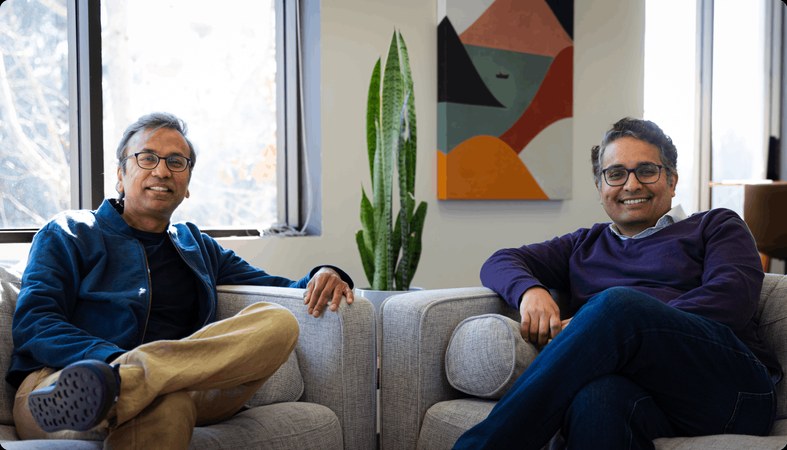
Fiddler AI
Fiddler AI is a Palo Alto-based enterprise AI platform that operates as a control plane for compound AI systems and autonomous agents, providing real-time observability, security, governance, and guardrails for ML models and LLMs in production.
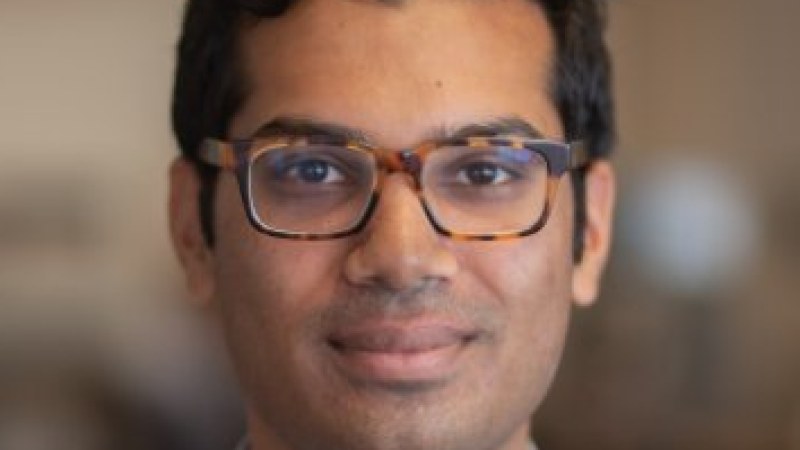
Ankur Goyal
Ankur Goyal is the Founder & CEO of Braintrust, a San Francisco-based AI evaluation and observability platform that helps engineering teams ship reliable AI products. Previously VP of Engineering at SingleStore (MemSQL) and founder of Impira (acquired by Figma in 2022), Goyal brings over a decade of distributed systems and ML infrastructure experience to the challenge of making AI applications production-ready. Braintrust has raised $121M in total funding, including an $80M Series B at an $800M valuation in February 2026, backed by ICONIQ Capital, Andreessen Horowitz, and a roster of elite angels including Greg Brockman and Elad Gil.