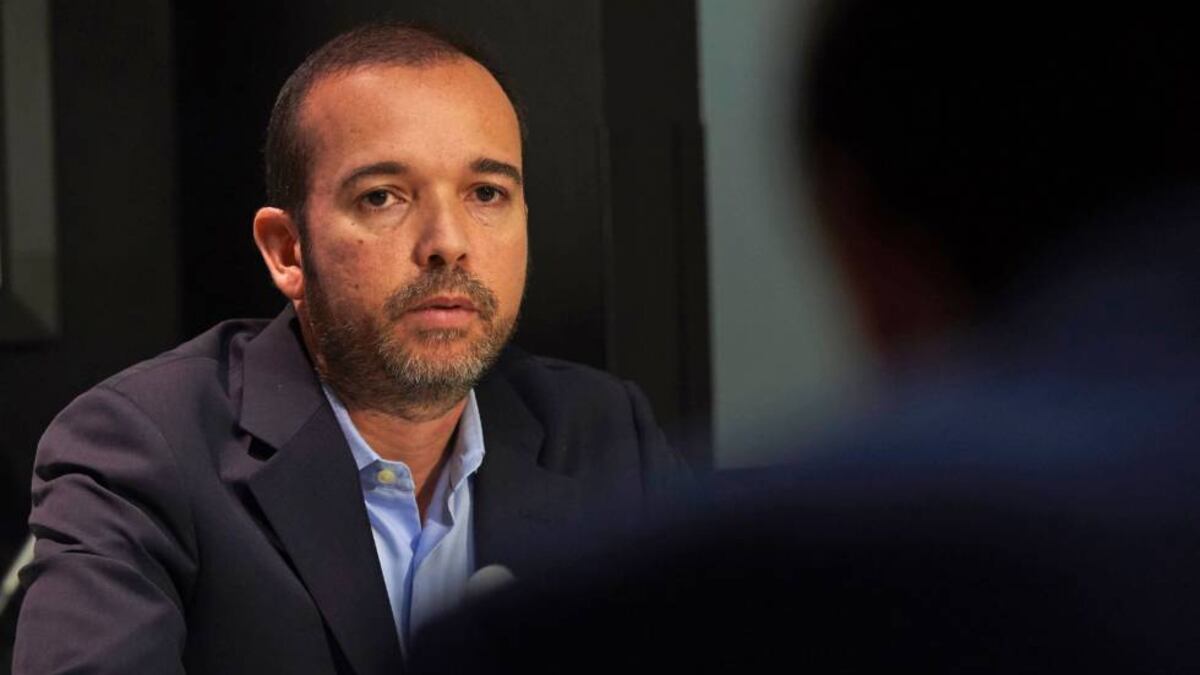
A supplier usually hopes its customers will announce good numbers. On August 2, 2017, Antonio Mugica appeared at a press conference in London to say that one of his customers had announced numbers he could not accept. The subject was turnout in Venezuela’s election for a National Constituent Assembly. The discrepancy, he said, was at least a million votes.
Smartmatic had supplied election technology in Venezuela since 2004. Mugica was its co-founder and chief executive, an engineer making an unusually consequential distinction: the figures announced by the authorities differed from the participation recorded by the system. A machine could preserve evidence. It could hardly insist on reading the evening bulletin.
He said automation had made the discrepancy detectable. He declined to say directly whether it changed the election’s outcome. That limit mattered. His claim concerned participation, and the scale of the gap was itself sufficient to make the appearance extraordinary. A business built around elections was publicly challenging an election authority it had served for thirteen years.
A dining room in the path of history
Mugica’s route to that microphone began with a different sort of public argument. In 2000 he was developing his startup from the dining room of his father’s vacation house in Palm Beach County, Florida. The business concerned networks that allowed physical devices to communicate. Outside the dining room, the US presidential election had made Palm Beach a place where the mechanics of recording a choice suddenly interested everyone.
A partner suggested that the security of their network might be useful for voting. The disputed election helped redirect the business. Florida supplied both an address and a problem.
Mugica had grown up in Caracas, fascinated by the film WarGames and by access to computer systems. He later described experimenting with breaking into networks for the challenge. He studied engineering at Universidad Simón Bolívar and formed the venture with fellow Venezuelans Alfredo José Anzola and Roger Piñate. Smartmatic was founded in Boca Raton in 2000.
The company’s early election work put it into Venezuela’s 2004 presidential recall referendum. Its subsequent history reached across countries with different rules, voting habits and administrative demands. That is a revealing setting for an engineer: a vote may look like a simple input, but the institution around it supplies an impressive number of complications.
In 2014 Mugica and former UN deputy secretary-general Lord Mark Malloch-Brown launched SGO, a London holding company with Smartmatic at its core. Mugica served as CEO; Malloch-Brown became chairman. The board brought together election technology, international affairs and business experience, including Sir Nigel Knowles and entrepreneur David Giampaolo.
SGO’s ambitions extended into identity verification, biometrics, citizen participation and other technology ventures. Oxford’s Programme on Democracy & Technology later listed Mugica as a strategic advisor and described investments in Airlabs and Folio. The advisory connection places him among people studying the relationship between technology and democracy, a relationship his company encounters through contracts, equipment and public scrutiny.
The useful stubbornness of a paper record
The evidence of Mugica’s engineering work sits in documents considerably less dramatic than a press conference. US patent 9,092,922, granted in July 2015, names him alongside Eduardo Correia and Roger Pinate. It concerns voter information initialization and the consolidation of vote data. The language has the glamour of a filing cabinet. The problem is worth opening the drawer for.
Election authorities may use machines of different types, generations or manufacturers. Information must be gathered and transmitted without losing the integrity of the count. The patent describes ways to handle that work, including voter authorization and data consolidation. Behind the public image of a voting machine is a chain of smaller tasks, each capable of making the larger task awkward.
Mugica has also put his argument into writing. In The Case for Election Technology, he makes the case for digital tools in elections and government interaction. His interests include participation and engagement as well as the machinery used on election day. It is an expansive ambition, but its practical questions remain stubbornly specific: who can use the system, what record remains, and what happens when someone disputes it?
The evidence test
- 01Make the choiceCan the voter use the system?
- 02Inspect the recordCan the voter check what was recorded?
- 03Check the countCan the process be independently examined?
An editorial guide to the questions in Mugica’s auditability argument.
Los Angeles County gave those questions a large, concrete setting. In 2018 it selected Smartmatic to help manufacture and implement its publicly owned Voting Solutions for All People system. The work put touchscreen ballot-marking devices in front of voters, with paper records they could review. The county’s project belonged to the county; Smartmatic supplied part of the technology and implementation.
The first deployment in the March 2020 primary had difficulties. Voters encountered long waits, and there were reports of paper jams and machines out of service. Mugica publicly acknowledged areas needing improvement while defending the scale of the undertaking. For voters, the test arrived in minutes spent waiting and the experience of getting a ballot completed. A design’s intentions offer limited consolation in a queue.
Smartmatic’s role in the November 2020 US election was confined to Los Angeles County. Its supplied system did not count, tabulate or store votes. Those boundaries became central when claims of a nationwide conspiracy spread after the election. Understanding what equipment actually did required a degree of precision rarely rewarded by a television argument.
A dragon in the bibliography
There is another Mugica bibliography. In 2010 he published Húkiti-Túkiti-Tá, a children’s book written in verse. It received a Moonbeam gold medal in the Spanish-language category in 2011. Its protagonist is a young wizard baker confronting a bullying dragon. Even election procurement has some competition for troublesome characters.
Mugica also plays and composes music. The creative activity sits comfortably beside an engineering career in his own account of his interests. Company biographies describe his involvement in product ideas and strategic planning, as well as his support for the Smartmatic Foundation. The book was dedicated to his children.
“Creating good technology is also art”
Antonio Mugica
His father collected art, an influence Mugica carried into his own modern and contemporary collection. He has named Picasso, Basquiat and Banksy among his enthusiasms. He likes encountering art unexpectedly in London. Asked about balancing work and life, he brought Leonardo da Vinci into the answer and rejected the premise. On administration, his enthusiasm cooled: he wished he could delegate more of it. Even a creative view of business has paperwork.
The company in the courtroom
After the 2020 election, Mugica’s company demanded retractions from outlets that had aired false claims about its role. Litigation followed. A supplier accustomed to explaining systems to election officials now had to argue about broadcasts, reputation and commercial damage. Smartmatic’s lawsuit against Fox sought $2.7 billion. Fox has defended its coverage, including on First Amendment grounds.
Other disputes reached settlements. Smartmatic resolved its case against One America News in April 2024 on confidential terms. Newsmax’s September 2024 settlement included approximately $40 million and a stock warrant, details disclosed the following year. These outcomes were part of a continuing effort to obtain remedies for the election claims.
A separate case has put the company’s own conduct under scrutiny. In October 2025, US prosecutors charged parent company SGO in an alleged Philippine bribery and money-laundering scheme linked to election contracts. Former executives, including Piñate, had previously been charged. Mugica was not among the individual defendants named in that announcement. The allegations concern procurement and payments connected with the Philippines’ 2016 election.
Smartmatic sought dismissal in March 2026, alleging political retaliation; Piñate has pleaded not guilty. Charges establish accusations, and the company’s response establishes its position. Both belong in the account of the business Mugica leads. Neither supplies a shortcut to a finding about a different election.
In May 2026, a New York appellate ruling allowed further discovery about the criminal allegations’ effect on Smartmatic’s business while declining to halt the Fox action. In September, Smartmatic reported that the judge set deadlines for additional discovery that autumn. The legal work continued alongside the ordinary business of developing and supporting election systems.
The future still needs a receipt
Mugica’s optimism predates those cases. At a London event in June 2017, he predicted greater involvement in public decisions: “In the future we will see a lot more participation”. The timing is striking. Within weeks, he would be publicly disputing the participation figure announced for an election using his company’s technology.
A more recent milestone is narrower, and easier to pin down. On November 26, 2025, the US Election Assistance Commission certified Smartmatic’s VSR1 2.1 against the VVSG 2.0 guidelines. The certificate applies to the evaluated version and configuration. For a business whose claims are often debated in sweeping terms, that specificity is useful: a particular system, a defined standard, a dated decision.
The evaluation took place at an accredited voting system testing laboratory, with Pro V&V named on the certificate. Its scope identifies the components included in the review. That gives election officials something concrete to inspect alongside product claims, deployment experience and their own rules for approving equipment. The paperwork is part of the product’s public accountability.
Across Mugica’s career, the distance between building a system and securing belief in it has repeatedly become visible. A voter has to operate a device. An administrator has to run an election. A company has to answer for its work. The public has to be able to ask questions. The million-vote statement in London remains a revealing scene because the supplier was asking one of those questions himself, with a client’s announcement on the other side of it.
Continue reading & watching