Early in Antithesis’s life, its machines kept crashing. A failure every few thousand machine-hours hardly sounded like an emergency. Customers might wait a little longer for test results. Add retries, some engineers argued, and carry on.
Others saw a more expensive problem. An unexplained crash gave every future crash an alibi. How would anyone distinguish a new defect from the familiar mystery? The company building a tool for catching elusive bugs was learning how easily an elusive bug could change a team’s habits.
- The job: find failures in running software systems.
- The difference: replay the whole failing execution.
- The buyers: teams building databases, trading systems, blockchains, and other infrastructure.
The bug that became an alibi
The first suspect was a networking protocol. Instrumentation produced no answer. Eventually, a spreadsheet revealed a curious rhythm: crashes at multiples of thirty minutes, plus an eight-minute offset. FreeBSD maintainer Colin Percival helped trace the problem to network-interface resets triggered by DHCP renewals.
After the fix, other failures became visible. They had been hiding behind the original explanation. The lesson was uncomfortable: a rare bug could cost more in lost diagnostic discipline than in interrupted service.
A laboratory with a rewind button
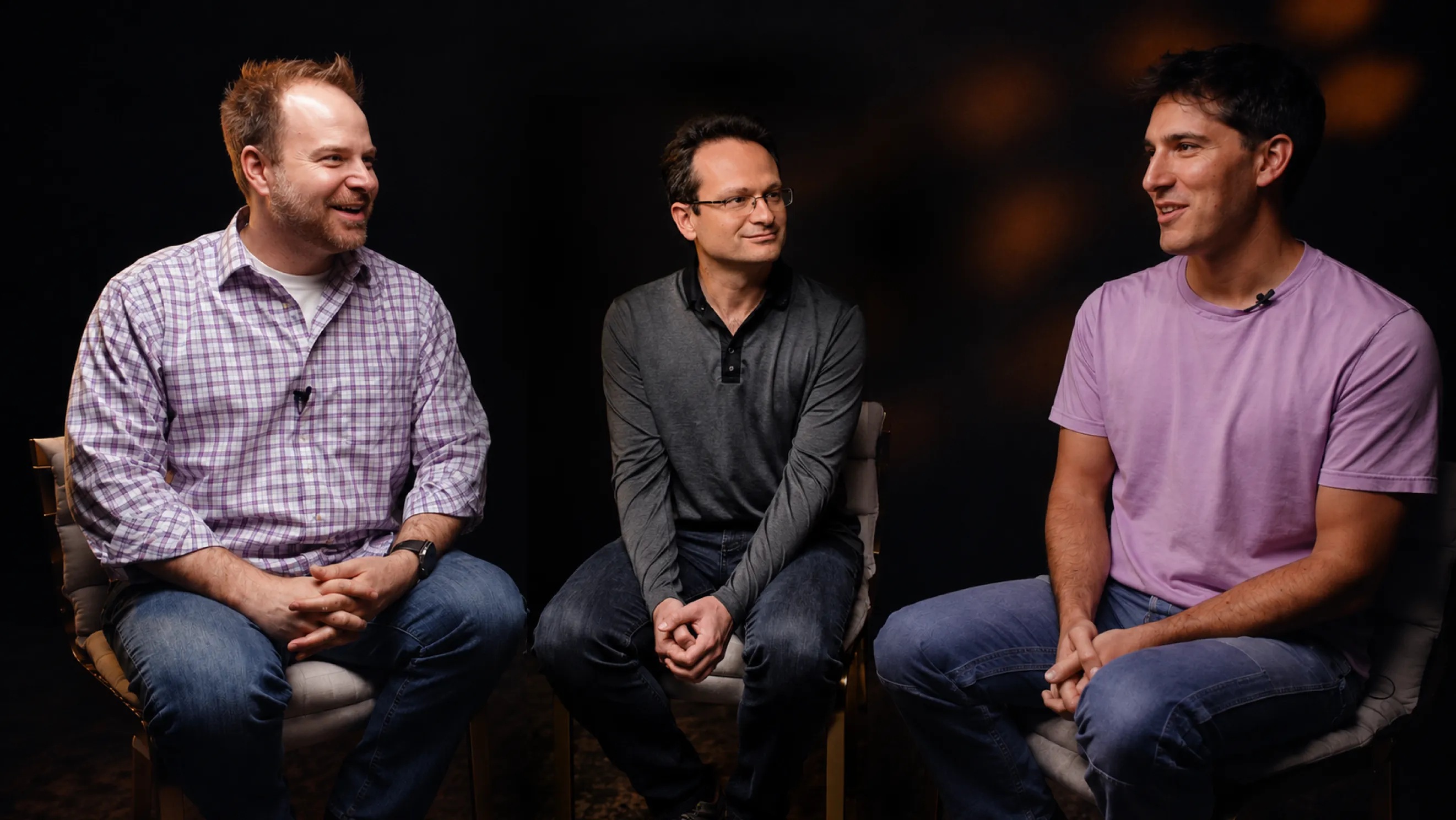
Antithesis grew out of an earlier attempt to control that uncertainty. At FoundationDB, the team used deterministic simulation to test a distributed database. Apple acquired FoundationDB in 2015. In 2018, Will Wilson and Dave Scherer started Antithesis to bring that approach to other software.
The challenge is that real computers are troublesome experimental subjects. Threads run in different orders. Networks delay messages. A failure disappears when an engineer adds logging. Antithesis puts the system inside a controlled environment, using a custom hypervisor to make its execution repeatable.
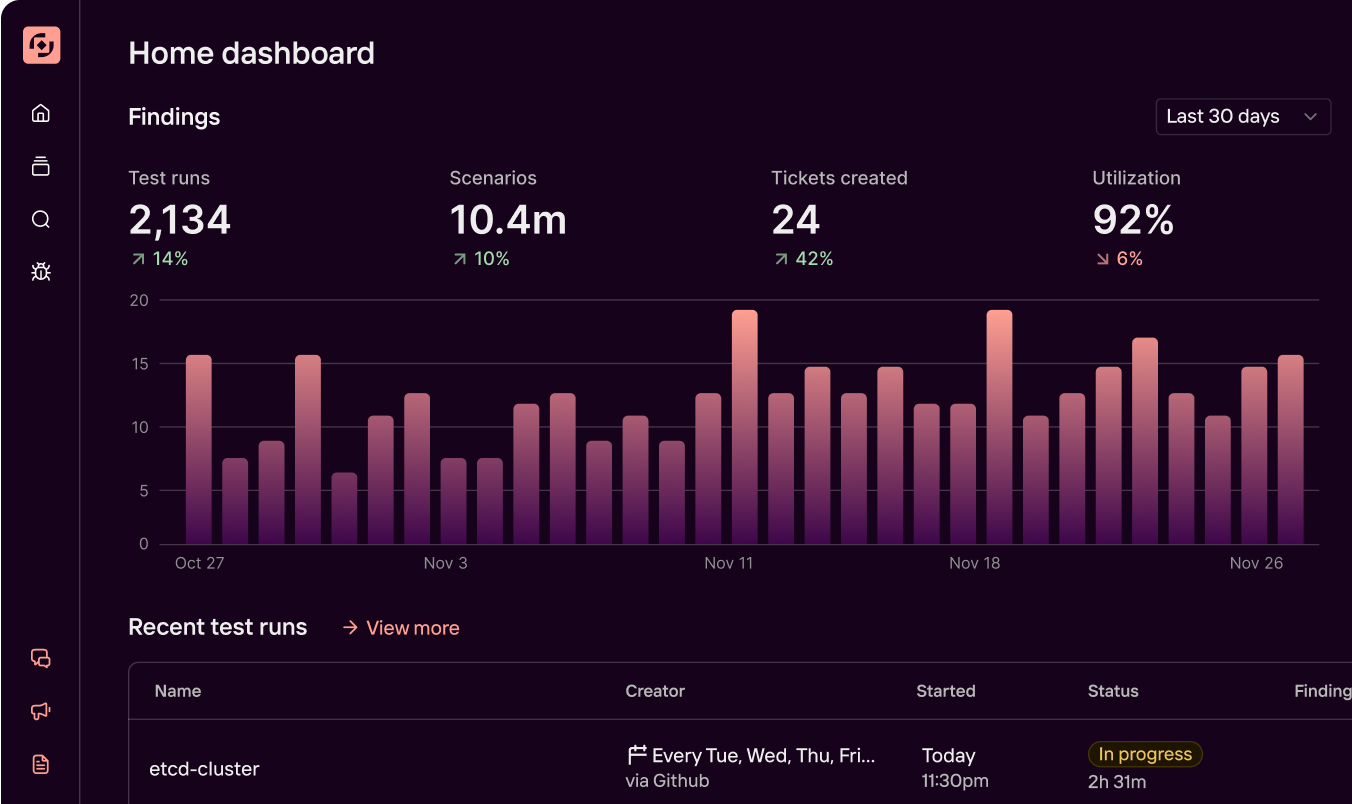
Customers supply containerized software, dependencies, workloads, and properties describing acceptable behavior. The platform varies inputs and injects faults involving scheduling, clocks, networks, and storage. Feedback guides exploration toward interesting behavior. A discovered failure comes with an execution engineers can revisit.
This puts Antithesis in a particular corner of the developer-tools market. Static analysis examines code. Conventional test cases check scenarios someone chose. Chaos experiments introduce adversity into running systems. Antithesis combines active exploration with control over execution and replay. Its advantage matters most when several ordinary events, arriving in an unusual order, produce something nobody intended.
The Multiverse Debugger adds another possibility: branch from a past state, inspect files, run commands, or try a destructive experiment without sacrificing the original reproduction. The engineer gets another attempt at asking the right question.
The message that should not disappear
Consider NATS, the messaging system stewarded by Synadia. Its engineers already used unit tests, integration tests, benchmarks, operational exercises, and fault injection. Thousands of testing hours had built confidence. Their first Antithesis experiment reported data loss.
The path was painfully specific. A replica restarted, failed during recovery, and lost its stored state. Still carrying its old identity, it later helped elect an outdated leader. Previously committed messages could be overwritten. Ordinary recovery mechanisms had tended to conceal the underlying problem during earlier chaos testing.
Antithesis assembled the combination without understanding NATS or its consensus protocol. Synadia’s account makes the distinction concrete: searching combinations can expose a sequence that individually sensible tests never happen to produce. The existing testing layers still had jobs to do.
“It makes development much more linear”
Marco Primi · NATS case study
The bill includes your assumptions
This is commercial software sold through negotiated agreements, including AWS Marketplace Private Offers. The cost also includes engineering attention: packaging a useful environment, defining properties, and deciding what a failure means.
A practical starting point is one important subsystem and one promise: acknowledged messages remain available, perhaps, or a ledger’s entries balance. Datadog’s Intake team described moving toward invariants early in design. That habit is available to any team, whatever testing tools it buys.
Teams can bring dependencies such as Postgres and Kafka into the same simulated setup. That makes the subject of the experiment the interaction between components, including components the customer did not write. Getting that environment right is part of the work: a conveniently simplified deployment may remove precisely the interaction worth investigating.
There are boundaries. The current product specifies containerized x86 software, orchestrated with Docker Compose or Kubernetes. External dependencies must enter the test environment or be mocked. A mock can reproduce only the behavior it represents. Weak properties leave important failures unrecognized, and surviving explored scenarios does not prove every possible execution correct.
For a team whose main problem is visual polish, this may be more machinery than the task needs. For a team investigating a timing-dependent data-loss bug, controlling the entire execution directly addresses the work consuming its time.
When the customer writes the cheque
Led by Jane Street, already an Antithesis customer.
Jane Street’s investment followed Antithesis’s $47 million seed announcement in 2024 and a $30 million round in February 2025. Wilson wrote that product understanding and compatible incentives helped persuade him to accept a customer as the lead investor.

The company was also changing internally. Wilson described moving from a research culture toward the needs of a growing business. Customers joining as employees brought experience of using the product without insider knowledge. His launch retrospective supplied another correction: a public presence had shortened sales cycles and changed recruiting.
That practical dependence on other people’s work also shows up in its spending. In October 2025, Antithesis reported $110,000 in direct support for open-source projects, including Nix, FreeBSD, and Kurtosis. The hypervisor itself grew from FreeBSD’s bhyve. Reliability here rests on maintained foundations as well as experiments.
By September 2026, Datadog’s published case described using Antithesis during prototype development after early runs surfaced JVM crashes and protocol problems. In October, Antithesis opened programmable Multiverse Debugger access to agents, letting them inspect failing runs and test proposed fixes.
The agent can return to a particular moment, run a command in a new branch, and examine its output. A developer reviewing the result can inspect an actual failing execution and the tested change. That is a more useful review conversation than simply asking whether generated code looks plausible.
The underlying wager remains straightforward. Software teams spend time interpreting failures they cannot reliably summon. Make the failure repeatable, and that time becomes an investigation with evidence. The next crash has to explain itself.
Step inside the laboratory
Website ↗ Product tour ↗ Documentation ↗ News & blog ↗
LinkedIn ↗ X ↗ GitHub ↗ YouTube ↗
WATCH THE CUSTOMERS