Before Anthony Rotio was helping marketers ask artificial intelligence for a customer audience, he had another audience in mind: people who wanted better pizza from a home oven. He invented a device called Pizza Shelf. It is an unusually useful detail in a software executive’s biography. You can spend a long time discussing the virtues of a platform. A pizza eventually has to come out of the oven.
His cooking also found its way into the seasonal news cycle. In 2016, Rotio posted a pumpkin-spice pizza on Instagram, bringing pumpkin, ricotta, sage and autumn’s most determined flavour trend into the same conversation. He made it for his wife, a fan of fall. Domestic diplomacy sometimes requires cheese.
Today he is co-founder and co-CEO of GrowthLoop, a marketing software company built around the data enterprises already hold in their cloud warehouses. The vocabulary has changed considerably. His work now involves audiences, AI agents, partnerships and experiments. But the pizza offers a good place to begin: a specific problem, an invention, and a result that someone else can judge.
Number 30, before the job titles
Rotio came to Harvard from New Jersey. His football biography lists Hope as his hometown and Lawrenceville as his school. Earlier, at Belvidere, he had earned recognition in both football and baseball, along with the school’s physics award and Principal’s Leadership Award. There were already several possible directions available to him.
At Harvard, he wore number 30. He appeared in eight games in 2007, mainly on special teams, then all ten games in both 2008 and 2009. The record includes tackles against opponents such as Princeton and Yale, and a caught pass against Brown. By his senior season, the roster listed him at linebacker.
These are modest, precise details. They make a more convincing introduction than a retrospective claim that every college tackle somehow anticipated enterprise software. Football was something he actually did, alongside the computer science he studied. His LinkedIn education dates run from 2007 to 2011; he earned a bachelor’s degree in computer science.
The two subjects would later meet in his professional work. In April 2025 he appeared in a Snowflake webinar about AI in sports, including how GrowthLoop could help teams bring fragmented fan data together. Someone who once appeared on a team roster was now discussing how teams could understand the people buying tickets and following them.
- 2007-2011Harvard: computer science and football
- Before GrowthLoopMarketing and owned retail at AB InBev
- 2016Pizza Shelf and a seasonal pizza experiment
- April 2026Appointed GrowthLoop co-CEO with Tameem Iftikhar
A computer scientist goes into the beer business
His next substantial chapter was at Anheuser-Busch InBev. Rotio served as a marketing director and led its owned retail business unit. His remit included a $100 million owned retail business and responsibility for its profit and loss. He also worked on U.S. marketing for brands including Budweiser, Bud Light, Michelob Ultra and Stella Artois.
That is a consequential detour for someone trained in computer science. A program can be checked against its instructions. A commercial operation brings customers, employees, brands and deadlines into the calculation. A technically elegant answer still has to work for people who are trying to sell something before the quarter ends.
Rotio has described his move to GrowthLoop as a return to his computer science roots. The appeal included the prospect of applying generative AI to enterprise data. His beer-industry experience gave that return a practical subject: the work required to get a marketing idea out of someone’s head and into a customer-facing campaign.
It also helps explain why his public work crosses functions. Marketing needs a usable audience. Technical teams need dependable data and control over access. The person responsible for the business wants to know whether the effort paid off. Rotio’s career has put him on more than one side of that discussion.
The audience is there. Getting to it takes work.
GrowthLoop’s starting proposition is straightforward enough to describe without a glossary: let marketers work with customer information where the enterprise already stores it. A customer data platform, or CDP, helps businesses organise and use that information. GrowthLoop’s composable approach puts a marketing layer over a company’s data cloud.
In 2024, Rotio co-authored a Snowflake article with Jim Warner and Lee Hammond about a joint quick-start offering from Snowflake, Hakkoda and GrowthLoop. It described a route for building audiences and activating campaigns through existing marketing tools, using the data cloud as the shared foundation.
The interesting word here is “existing.” A business has already paid for systems, trained staff and accumulated habits. An additional tool earns its place by reducing the amount of work between those systems. A grand replacement plan can sound excellent in a meeting and become considerably less charming when it arrives on everyone’s calendar.
Rotio’s 2024 discussion of first-party data addressed the same practical concern. He described governance controls that let data owners decide which tables and datasets business users could activate. Ease of use and permission to use information have to coexist. A convenient interface cannot, by itself, settle who should have access.
Watch him ask the software a question
In GrowthLoop’s May 2025 “Meet the Growth Agents” demonstrations, Rotio presents the product through ordinary marketing requests. In the Audience Agent episode, he describes sales falling off in the Pacific Northwest and asks for audiences that deserve more attention there.
The demonstration routes the request through a Supervisor Agent to an Audience Agent. The audience work uses information connected from the warehouse. The terminology is futuristic; the request is familiar. A region is underperforming. Which customers should the team consider?
In the Insights Agent episode, he asks the system to find something in current campaigns that could improve engagement. The software examines connected campaign data and proposes a path from an observed problem toward a marketing action. These are product demonstrations, rather than independent proof of performance, but they show how Rotio chooses to explain the work.
He starts with a business question. That matters in a field where a screen can quickly fill with impressive machinery. An audience builder becomes easier to understand when the presenter has something concrete to ask of it. The viewer can then judge whether the answer would help with an actual afternoon’s work.
Give the next decision something to learn from.
Conceptual workflow - not a chart of measured product performance.
A campaign should leave a memory
By 2026, Rotio’s public argument had moved beyond making audiences faster. In a February conversation with Phil Gamache and Darrell Alfonso, he discussed causal context graphs and how marketing systems could retain what they learned. His own description of the conversation stressed defining success and measuring causal impact.
A campaign result raises a deceptively difficult question: how much happened because of the campaign? Customers may have bought anyway. A busy dashboard can describe activity in considerable detail while leaving that question unresolved. The difference matters whenever a team has to decide what to repeat.
GrowthLoop’s Causal Context Graph is intended to preserve the circumstances of a decision, the action taken and its incremental outcome. Rotio describes it as a way to make experimental evidence reusable. The ambition is to give the next decision access to more than a remembered verdict that last quarter’s campaign went well.
In an October interview, he also acknowledged a weakness in his own architectural camp: openness alone would not win. Marketers wanted a complete workflow and often fewer tools. He rejected opaque autonomous systems and emphasised human control at the decision boundary. That is a useful constraint on a product story otherwise full of agents.
“Human control remains at the decision boundary.”
Anthony Rotio
Two CEOs, two responsibilities
On April 9, 2026, GrowthLoop appointed Rotio and fellow co-founder Tameem Iftikhar as co-CEOs. Rotio’s responsibility was commercial expansion; Iftikhar’s was product and AI innovation. Outgoing CEO Chris O’Neill remained on the board, while co-founder David Joosten became executive chairman.
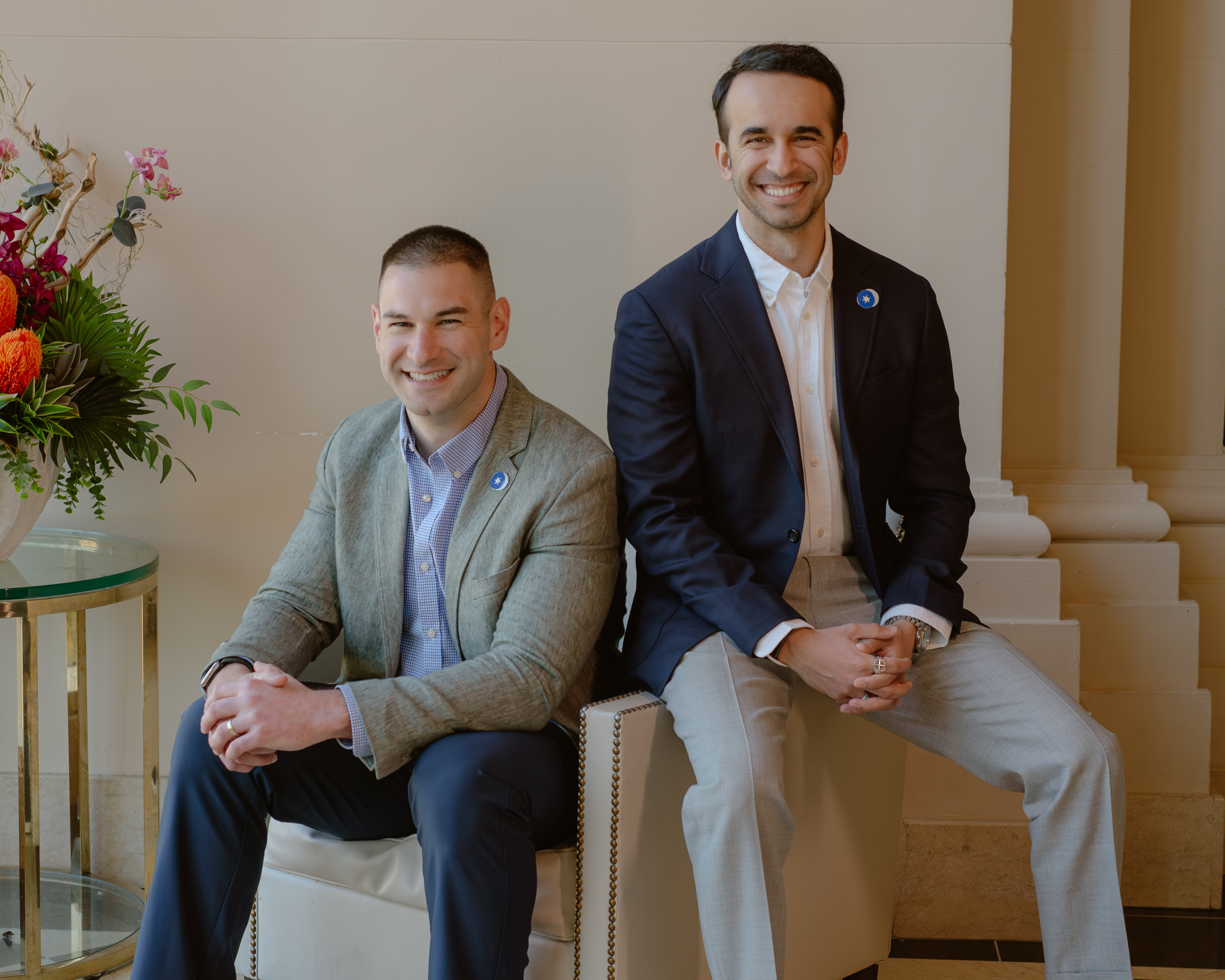
The arrangement returned the company to a shared leadership model. Rotio had helped build co-selling relationships with Google Cloud and Snowflake; his new role placed distribution at the centre of his remit. For a software company, a working product and a route into enterprise buying decisions are both necessary pieces of the job.
There is an appealingly practical division in the announcement. One co-founder concentrates on getting the technology into more businesses. The other concentrates on what those businesses will be able to do with it. Whether the arrangement works will be decided through execution, rather than the symmetry of the titles.
The next campaign cannot wait forever
The commercial problem became concrete again in June 2026, when Gopuff and GrowthLoop announced work on custom audience segmentation for Gopuff and BevMo! advertising partners. The promised capabilities included faster activation and greater visibility into campaign metrics. Retail media gave Rotio’s concern about delays a specific setting.
Then, on September 30, GrowthLoop released its Commerce Media Investment Index. In that company-published survey, 86% of advertisers said slow audience fulfilment could lead them to reduce spending or leave a network partner. Another 85% said they would pay a premium for same-day fulfilment. These are reported preferences, rather than observed gains, but they underline the cost of waiting.
Self-reported responses from the Commerce Media Investment Index, published September 30, 2026.
The distance between an idea and a result has followed Rotio through several occupations. At GrowthLoop, he is trying to shorten it while preserving enough evidence to decide what comes next. That is a demanding brief for a co-CEO. His earlier invention had a more agreeable testing environment: dinner. The pizza either pleased the people at the table or sent its inventor back to the oven.