The fire was taking its time. Anthony Anzalone had purchased an authenticated copy of Banksy's Morons (White) for $95,000 and assembled an audience of roughly 50,000 people online to watch him destroy it. The plan was neat, if deliberately scandalous: photograph the print, mint the image as an NFT, then remove the physical object from circulation. A transfer of value from paper to pixels, staged as a bonfire. Yet paper, that ancient store of value, declined to follow the script.
For around 15 minutes, Anzalone struggled to make the print catch. The comments became a second performance. One viewer joked that the kid had never burned down the establishment before. Anzalone later admitted that lighter fluid would have helped, but using it on a Banksy felt disrespectful. This was a curious courtesy to extend while incinerating the thing.
Eventually the work burned. The NFT sold for about $380,000 in cryptocurrency. The pseudonym Burnt Banksy entered the cultural bloodstream, attached to a masked figure in black who had converted an argument about ownership into an image that television could understand. Outrage travels quickly. Nuance usually takes a connecting flight.
A finance student finds the fuse
The masked persona had a conventional résumé behind it. Anzalone studied finance at New York University from 2016 to 2020. His early experience included investment-banking internships in New York and San Francisco. He also mined Ethereum while at NYU, an early practical education in a system that treated money as software and incentives as architecture.
Buying the Banksy was itself less cinematic than the finished stunt. Anzalone has recalled imagining a $95,000 cash payment, complete with a briefcase handcuffed to his wrist. The gallery explained that a wire transfer would do. The print then spent about four months in a friend's apartment, a space he remembered as roughly 400 square feet, while the group planned the burn. The glamorous frontier of digital art briefly resembled a storage problem in New York.
The performance had a philosophical claim. Anzalone said the group saw the act as transferring the work into the NFT space. Critics saw destruction, publicity or both. He leaned into the argument with plans for a decentralized auction house and a pop-up called Not an Art Gallery. The proposed auction product would lower the barriers imposed by established gatekeepers. Even amid the mischief, his recurring instinct was already visible: find a cumbersome ritual, then remove it.
“Art is whatever you want it to be.”Anthony Anzalone, 2021
He enjoyed the joke, but he also wanted the joke to build something. The NFT performance became Burnt, and Burnt's direction shifted from a marketplace toward infrastructure. Around 2022, the team began building XION, a Layer 1 blockchain designed around consumer adoption. By April 2024, XION announced a $25 million funding round from investors including Multicoin, Animoca Brands, Laser Digital, Arrington Capital and others. The round brought its disclosed total to $36 million.
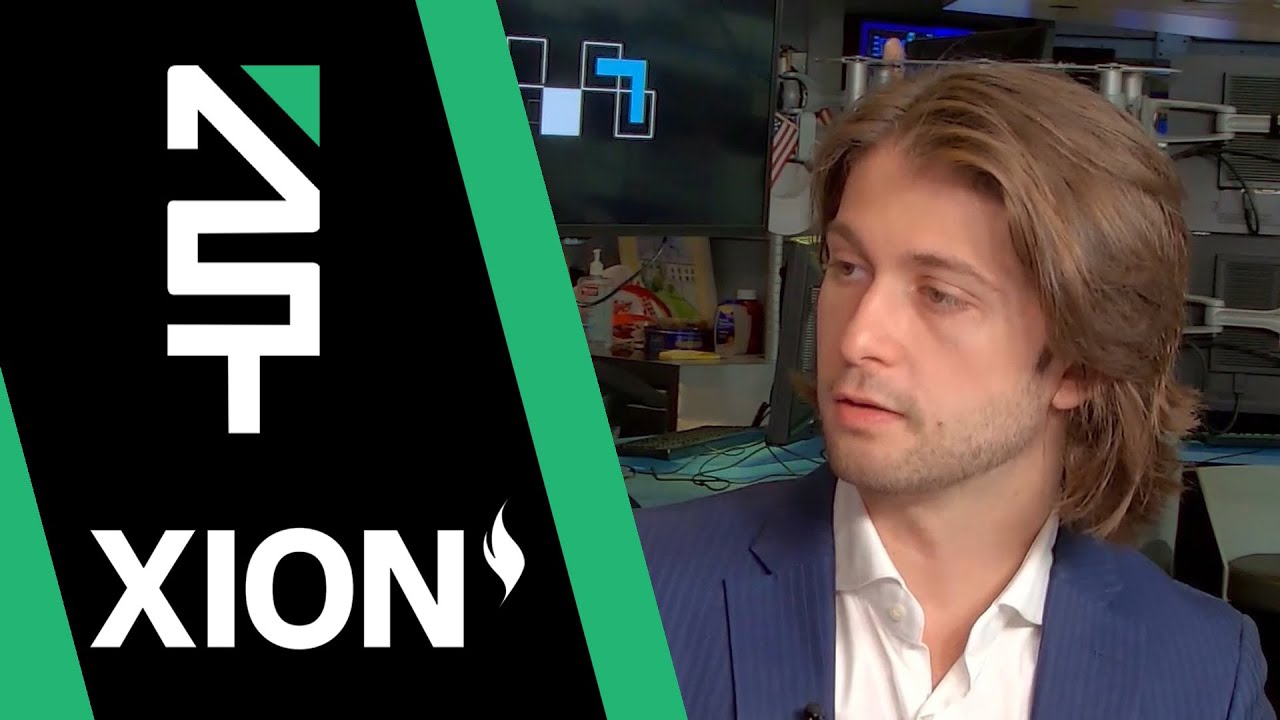
The product is the vanishing act
XION tried to hide the ordinary hazards of entering crypto. Users could sign in with an email or biometrics. They would not need to safeguard a seed phrase or keep a gas token handy. Accounts, fees and interoperability were handled closer to the protocol. The ambition sounded almost impolite in an industry fond of explaining its machinery: a person could receive the benefit without learning the catechism.
The mainnet launched in December 2024. In interviews the following year, Anzalone reported between 60,000 and 100,000 daily active users and described campaigns involving brands such as Uber, Amazon, BMW and Lego. Forbes later reported more than 100,000 daily users and noted Nike among the brands using the platform. Those figures came with a change in sales language. Anzalone said that teams did not lead by telling a prospective customer they were a blockchain company. They spoke to marketing and innovation groups about outcomes.
His public vocabulary grew cheerfully blunt. Layer labels mattered less than whether the experience worked. Tokenizing an object meant little without a useful result. Blockchain, he wrote, was an enabling layer rather than the product. The ideal interaction was almost comically ordinary: “Imagine just sending a link. That's it.”
This is the useful contradiction in Anzalone's career. His arrival depended on maximal spectacle. His product philosophy depends on minimal ceremony. One put the mechanism center stage; the other wants it offstage, quietly doing the work. He used fire to make digital ownership visible, then spent years trying to make digital infrastructure unobtrusive.
From owning pixels to proving facts
In June 2026, XION became Verona. The rebrand moved the project's public emphasis toward an intelligence and verification layer for AI agents. The premise begins with a gap between fluency and fact. Software can draft a letter or plan a purchase, but acting on a person's income, employment, credentials or eligibility requires information that has been verified and permissioned.
Verona's proposed model is to verify a fact at its source, allow the user to control it, and let an authorized agent reuse the resulting proof without exposing the underlying record. Anzalone offered the plainest possible privacy test: no one, including your agent, should see your pay stub. The network would let software know that a relevant claim has been established while the intimate paperwork remains out of view.
The category changed, but the old obsession remained intact. Burnt Banksy asked whether a digital representation could inherit authenticity after a physical work disappeared. Verona asks whether a verified claim can remain useful after the source document disappears from the transaction. Both projects concern the journey of trust from one container to another.
The rebrand also clarified a larger aspiration. Anzalone now speaks about building an internet people can believe in, particularly as generated media and automated agents blur the boundary between plausible and true. Verona positions verification as infrastructure that can support agents rather than merely defend against them. The company says its goal is to let facts be proven once, reused and kept private.
“You need to talk in terms of value. Why would you want to use it unless you get some sort of benefit out of it?”Anthony Anzalone, 2025
Attention is kindling, usefulness is fuel
Anzalone's gift for staging an idea has survived the transition to executive. In 2024, he marked XION's coming mainnet with another performance involving fire. In 2025, he discussed announcing genuine institutional progress on April Fools' Day, delighted by the collision of a serious milestone and an unserious date. His style favors a cultural shortcut: make the technical idea legible through something odd enough to remember.
That instinct has limits, and his own trajectory seems to acknowledge them. Attention can begin a story but cannot operate a network, secure private data or persuade a business to integrate a product. Those tasks belong to teams, standards and the unphotogenic patience of implementation. Anzalone's public work has gradually moved from the image of trust to its plumbing.
The evolution is less a repudiation of the fire than its sequel. A spectacle can force a question into public view. Infrastructure gives people a way to answer it repeatedly. In 2021, the question was whether scarcity and ownership could cross from a physical object into a digital record. In 2026, the question is whether truth can cross between people, companies and agents without dragging private data along behind it.
Recognition followed the transition. Anzalone joined the Forbes 30 Under 30 Finance class of 2026, where his profile emphasized the scale XION had reached and its effort to let ordinary users avoid technical crypto rituals. The honor fixed his real name beside the alias that had once protected it. Burnt Banksy had started as a mask; Anthony Anzalone had become the executive expected to explain customers, architecture and a five-year plan.
There is wit in that reversal. Banksy's own identity remains guarded while the person who burned one of his prints has gradually stepped out from behind a pseudonym. Anzalone's current product argues for selective revelation: prove the part that matters and keep the rest private. His biography has performed a rough version of the same operation. The public can verify the founder, his work and his record. The whole person need not be uploaded along with the proof.
The Banksy stunt will remain the irresistible opening sentence because flames are excellent editors. They remove background detail and leave a sharp silhouette. But Anzalone's more consequential bet is deliberately harder to photograph: a fact is checked, a proof travels, a task gets done, and the machinery stays quiet. After five years spent around the language of burning, his work has arrived at an unexpectedly domestic ambition. He wants the internet to stop asking everyone for one more document.