A neighborhood food festival can look wonderfully effortless from the pavement. Buy a ticket, collect a taste, wander into somewhere new. Anna Hopkins’s account of Taste of North Park involved a less leisurely list: participating restaurants, volunteers, a photographer, music and public relations. In September 2022, she brought those details to a North Park Main Street board meeting. Someone had to make the afternoon happen.
A month later, her report contained a revealing caution. The main corridor had handled roughly 1,000 orders. Before expanding the event, the restaurants needed to be able to handle the existing sample volume. There is a whole philosophy of creative work tucked into that small operational concern. Attracting a crowd is one assignment. Making the afternoon work for the people serving it is another.
Hopkins is the co-founder, CEO and creative director of A7D Creative Group in San Diego. Her work moves between the invitation and the experience it promises: a destination campaign, a restaurant’s identity, the printed things on its tables, the events that bring people through its door. A beautiful invitation still owes the guest a good afternoon.
The neighborhood became the brief
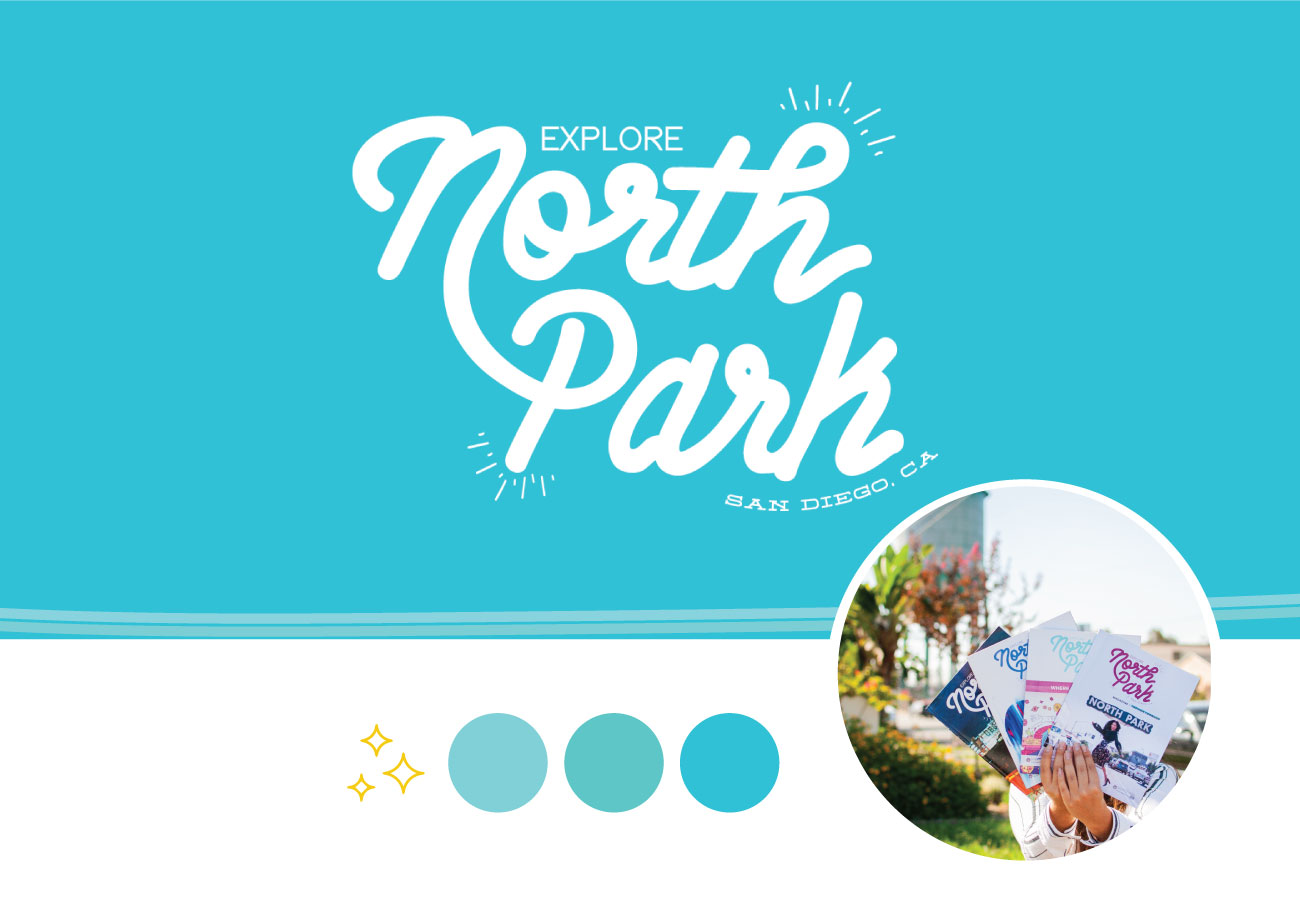
Explore North Park began with a specific ambition of Hopkins’s: give this collection of breweries, restaurants, artists and boutiques an identity as a San Diego destination. The appeal was already there. The assignment was to give those separate attractions a shared way of introducing themselves.
That is an unusually sociable design problem. A restaurant can decide what it wants to be. A neighborhood contains people who have already decided, often quite differently. Its identity has to leave room for the independent shop and the brewery, the visitor’s itinerary and the resident’s ordinary Thursday.
Hopkins conceptualized a tourism brand with room for publications, photography, digital promotion and events. Taste of North Park, Shop Small North Park and the Thursday farmers market sit within that wider destination story. A magazine offers a place to browse; an event offers a date to put in the diary.
The work gives her career a useful point of entry. Here is a creative director whose subject can be an entire neighborhood, and whose responsibilities extend to the practical question of how people will encounter it. The distance between a travel brochure and a restaurant’s serving capacity turns out to be quite short.
Twenty-two years, and plenty of surfaces
A7D was founded in 2004. Hopkins leads it alongside co-founder and president David Gamboa. Its home is North Park, where the company’s creative work and community involvement repeatedly meet. By 2022, Hopkins was featured as creative director and co-founder in San Diego Magazine’s partner-content series, Faces of San Diego.
The range of assignments is part of the story. Hospitality, beverages, retail, tourism and events all give design somewhere physical to go. The screen is one stop. A menu, a shopfront, a glass or a sign can be the place where a customer finally meets the idea.
Hopkins’s connections extend across several of San Diego’s business districts. Her professional work includes support for the Gaslamp Quarter Association, La Jolla Business Association and College Area BID, alongside North Park Main Street. Each district brings a different collection of businesses and visitors. The work asks for local knowledge as well as a recognizable visual language.
At Original 40 Brewing Co., the agency’s work included identity, marketing strategy, menus, a website, glassware, apparel, signage and printed taproom boards. Its creative aim joined references to North Park’s past with the brewery’s contemporary interior. History had to feel comfortable in a room where people were ordering another drink.
Each object asks something slightly different of the same identity. A sign has to work at a distance. A menu gets read close up. A shirt travels. A taproom board changes the moment the beer does. Keeping those objects related is an exercise in attention, repeated across materials and circumstances.
- 01The pagePublications & websites
- 02The tableMenus & glassware
- 03The streetSigns & installations
- 04The gatheringEvents & campaigns
Four settings drawn from A7D’s project work; a guide to the scope, not a measured production sequence.
A hundred restaurants need an invitation
Some assignments multiply that problem. For San Diego Restaurant Week, A7D describes an eight-day celebration involving more than 100 restaurants, with the team leading creative direction and digital marketing. Those numbers describe the dining event. They also explain the communications challenge: many different kitchens have to appear within one recognizable invitation.
Sky Deck at Del Mar Highlands Town Center offers a different arrangement. Nine full-service restaurants, a cocktail bar and a brewer’s deck share a complex of more than 25,000 square feet. A7D collaborated with Citrus PR on its visual strategy, marketing and publicity, with work extending to seasonal events, directories, signs and website management.
There is a useful distinction between those two jobs. Restaurant Week asks people to recognize a temporary occasion across separate places. Sky Deck asks them to understand a shared place with several choices inside. Both require a creative team to think about the visitor’s next decision.
The scale described in A7D’s San Diego Restaurant Week project: an eight-day dining celebration.
Even the electrical box gets a part
In the Gaslamp Quarter, that next decision might be whether to stop walking. A7D’s historical walking-tour work uses electrical boxes along Fifth Avenue as surfaces for old photographs and historical text. The boxes stand near the buildings they describe. A QR code takes the curious visitor to further history online.
An electrical box is a modest piece of street furniture to recruit into cultural life. It has a job already. Now it can offer a small interruption to a walk: look at this photograph, then look at the building. The neighborhood supplies the exhibit and the exhibition space.
The agency’s scope included historical writing, site surveys, large-format printing, installation and a website. That list makes the project legible as work. Someone has to choose the story, check the location, fit the surface and carry the information into the digital version. The pleasant encounter on the pavement depends on all of it.
A scoop, a speaker series, a committee meeting
Community work appears in Hopkins’s career in several forms. A7D contributed concept support, marketing strategy and social media to the first year of Scoop San Diego’s ice cream festival, alongside branding and event materials. An ice cream festival is a cheerful vehicle for bringing people together; its charitable purpose gives the gathering another job.
Her organizational work includes communications for the California Hawaii State Conference of the NAACP. Her communications and publicity volunteer role began in December 2020. A7D also lists her service with AIGA’s San Diego and Tijuana chapter and her participation, with Gamboa, in North Park Main Street’s events and promotions work.
At Mike Allen Sports, the connection becomes more personal and instructional. Hopkins is credited with creative direction behind the launch of the Let’s Talk Youth Sports speaker series and podcast, and with mentoring the organization’s interns. The responsibilities bring younger creatives into the picture alongside clients and neighborhood institutions.
These are different rooms to work in. A nonprofit needs clear messaging. An intern needs guidance. An event needs coordination. Across them, the creative role includes helping other people get their work into a form an audience can understand.
Making room for the next idea
Nosh Brand Consulting gives Hopkins a more direct advisory role. Its services include fractional creative direction, marketing, event planning, small-business mentoring and brand audits. The arrangement offers businesses access to creative guidance without employing a full-time director or commissioning a full agency engagement.
“I help brands, businesses, and organizations navigate the realities of project ownership.”
Anna Hopkins / Nosh Brand Consulting
The phrase has the practicality of someone who expects a project to acquire deadlines, choices and complications. Her consulting work includes helping turn ideas into plans, with support extending to seasonal campaigns and restaurant or bar interiors.
That teaching instinct also appears in A7D’s recruitment language. An archived graphic-designer listing asks applicants for a publication, a campaign across several formats and an explanation of the problem one project was intended to solve. The portfolio has to show the thinking behind the finished object.
The same listing describes a 30-hour working week, usually spread across five six-hour days, with occasional flexibility around events and launches. It invites designers into client meetings, production and presentations. A person joining the studio is expected to understand how the design will be used, as well as how to make it.
It also includes prepress preparation and participation in photo shoots. Those are useful additions to the picture of agency life. An idea can encounter its first practical difficulty in a file being prepared for the printer, long before anyone sees the finished campaign. Learning to notice such details is part of learning to take responsibility for the result.
In June 2026, Hopkins was also listed alongside Eric Padilla of Palatable Promotions as a presenter for the Brea Chamber of Commerce’s Marketing for Fall workshop. The session focused on social media and planning for the fall and holiday selling seasons. The calendar, once again, was part of the creative brief.
The afternoon still has to work
Return to that October report about Taste of North Park. The issue was whether the participating restaurants could comfortably serve the demand before the event grew. It is a small detail with a long reach: the visitor’s experience, the business owner’s workload and the next year’s invitation all meet there.
Hopkins’s work keeps returning to that meeting point. A destination identity needs somewhere worth visiting. A restaurant campaign needs a restaurant ready to receive people. A history project needs a passerby to pause. The creative director can make the invitation attractive. The more interesting responsibility is making it belong to the place.