Amanda Szabo tried sneaking into a hotel pool once. It was an inefficient way to relax. She spent the visit worrying that someone would discover she did not belong there, which rather spoiled the point of borrowing a resort’s atmosphere. She wanted the leisure, with a receipt. She eventually wondered why the hotel could not simply charge her admission.
She was living in San Diego, surrounded by properties whose appeal extended well beyond their bedrooms. A local could admire the surroundings, picture an afternoon by the water, and then encounter a purchasing decision designed for somebody who needed somewhere to sleep. Szabo already had that part covered. The hotel could offer her a room night; what she wanted was a few hours outside.
That small disagreement about what was for sale became ResortPass. Launched in May 2016, the company allowed people to book hotel amenities without an overnight stay. The premise sounds pleasantly obvious once someone has built the booking system. Before that, it required a founder willing to ask hotels to reconsider a familiar boundary: who could arrive as a paying guest, and what exactly that guest could buy.
“Why can’t I just pay to be here?”
Amanda Szabo, recalling the idea
WordPress, then the front door
Szabo came to the problem with a background in design, digital arts and creative services. She had also worked on earlier ventures: TravelShack, a website for booking travel activities, and Weddlock, a software platform for event vendors. Those businesses placed her around the practical business of arranging experiences. A booking makes a promise about a place, a time, and what happens when someone arrives.
Her path into technology included teaching herself to code. For ResortPass, she made the initial website using WordPress. There is something nicely unpretentious about that detail. The proposition involved resort pools and an afternoon of being looked after; its first shop window used software familiar to countless small businesses. She could put the offer online, then go find someone prepared to honor it.
Estancia La Jolla Hotel & Spa became the first hotel partner. Szabo sold door to door, taking the proposal directly to properties. She also handled marketing and customer service. For more than a year, she carried those jobs before her first investor check arrived. When she later recalled the beginning, she thanked Mucker Capital for that early backing and Estancia for being first.
The work gives the origin story some welcome weight. Wanting a better afternoon is easy to understand. Making one available requires conversations with people who have other guests, other commitments, and a business already operating around them. A founder can build a website alone. Getting the first property to appear on it means persuading somebody else to join the experiment.
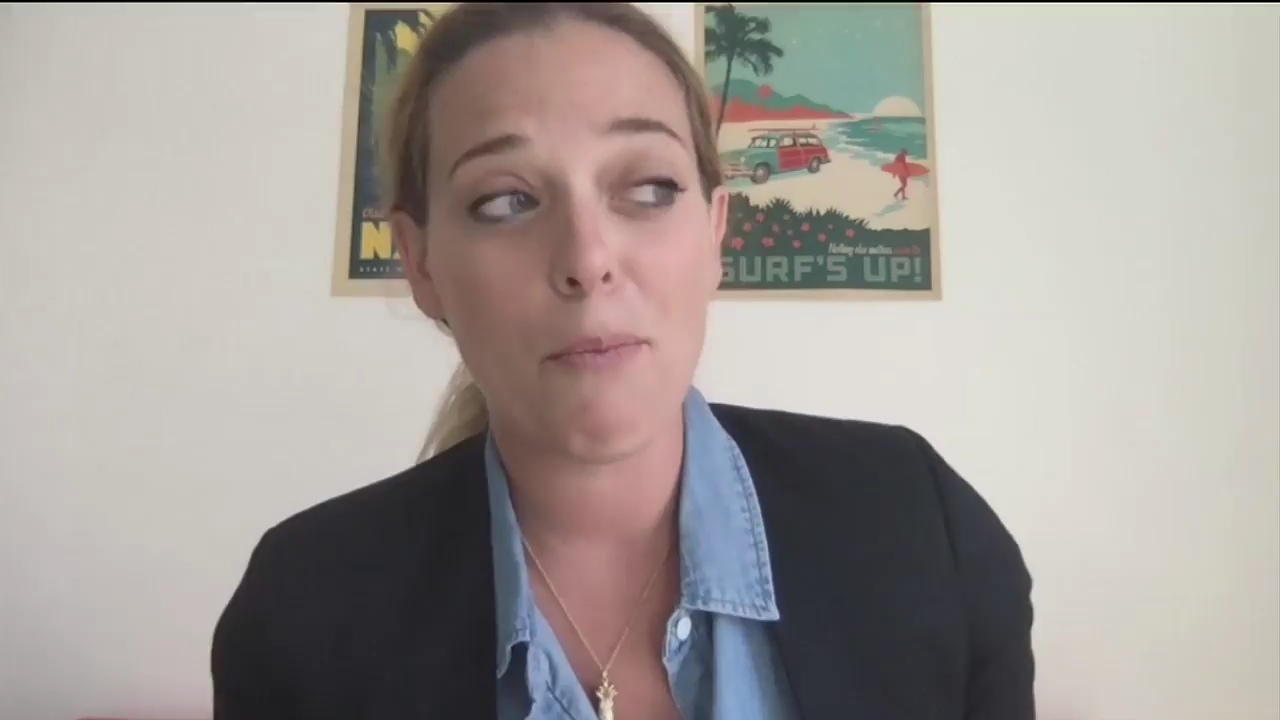
The hotel gets a vote
From the pool chair, the idea was attractive. From the hotel manager’s office, it brought questions. Szabo described hoteliers wanting to understand the kind of guest ResortPass would deliver. A property’s atmosphere was part of what it sold to its existing customers. Opening access to a new group required care, even when there appeared to be space beside the water.
Her response was to work closely with operators and understand their priorities. The platform gave hotels ways to determine availability, adjust pricing and block dates. Those controls made the invitation specific. A hotel could choose when to participate and how much access to offer, rather than commit every afternoon to a new stream of visitors. The appeal of saying yes depended partly on retaining the ability to say when.
Szabo’s argument also rested on a familiar hotel habit. Properties already welcomed people who had no room upstairs: restaurant diners, event guests, meeting attendees. A person coming for a pool or cabana could be understood as another customer purchasing another part of the property. Seen that way, the neighbor had a legitimate reason to enter the lobby.
That is the useful turn in her story. She had experienced the discomfort of arriving without permission, then spent her working time helping hotels make permission manageable. The consumer wanted to feel welcome. The operator wanted to know what was happening. The product had to make those desires compatible before an ordinary afternoon could become something a guest could confidently reserve.
A vacation measured in hours
By September 2017, ResortPass had 40 hotel partners. Its early geography included places where an afternoon outdoors had an obvious audience. In Arizona that August, six properties had signed up. At the Hyatt Regency Scottsdale Resort & Spa at Gainey Ranch, a rooms director described the opportunity in practical terms: bring people to the pool, earn revenue, and introduce the hotel to visitors who had yet to experience it.
That last point helps explain the local customer’s importance. A hotel can be familiar as a building and unfamiliar as an experience. People pass it, know its name, perhaps recommend it to out-of-town visitors, while never having a reason to walk in themselves. Selling a day gives the property a different relationship with its neighborhood. The customer can live close enough to return home for dinner.
The idea traveled to Miami, where ResortPass offered access at six Miami-Dade properties by May 2018. Szabo spoke about changing Americans’ relationship with leisure time. The business carried a modestly subversive suggestion: pleasure could fit into the calendar without requiring the elaborate arrangements associated with going away. There was room for an outing between a normal morning and a normal evening.
The audience also extended beyond locals. Travelers staying in rented homes or at hotels with different facilities could buy access elsewhere. Someone’s accommodation decision no longer had to settle every detail of how they spent the day. Szabo described that mix in 2019, when the service had more than 200 hotels around the country. The nearby resident and the visitor could arrive at the same pool for different reasons.
Her earlier work around weddings had another echo. In 2020 she explained how destination-wedding guests staying in vacation homes could join resort activities for the day. A cabana could bring a group together without requiring everyone to choose the same overnight accommodation. It was a concrete answer to a familiar social complication: wanting to join the occasion while making your own arrangements.
hotel partner at launch
hotel partners
hotel partners, across 24 states
The invitation behind the numbers
Growth gave Szabo more evidence that the initial question had company. By December 2019, she described more than 300 partner hotels across 24 states. The early proposition had moved beyond the first willing property. Each additional partner made the idea easier to encounter, while adding another place whose rules and expectations had to fit the experience being sold.
There is a particular kind of persistence in that work. Her public account moves between making things and explaining them: build the site, approach the hotel, market the offering, answer the customer. The tasks are different, but they revolve around the same promise. A guest who pays should know where to go and what they are entitled to enjoy.
Szabo’s pleasure in the premise comes through in a simpler recollection of her early demand: “I was like, ‘Take my money!’” It is an amusing founder’s complaint. She had money she was prepared to spend and a very specific afternoon in mind. The missing part was a seller with a suitable offer. ResortPass made a transaction out of that mutual possibility.
Her stated ambition reached beyond getting people through a gate. She wanted people to enjoy life more and make room for leisure. That aspiration is easiest to understand at the scale of the original problem. A day off can be difficult to arrange; an afternoon may be within reach. Buying one gives the customer something small enough to plan and substantial enough to anticipate.
Knowing when to hand over the keys
In 2022, Szabo welcomed a change in who would lead the business. Michael Wolf became CEO, and the company announced a $26 million Series B round in November. She would continue as an advisor. Explaining the transition, she said the company’s next phase called for a different set of skills, pointing to Wolf’s experience with marketplace businesses.
The announcement put ResortPass at more than 900 hotel and resort partners, with over 1.6 million guest visits delivered since its inception. The financing included Declaration Partners, 14W and CRV, alongside investors such as Jessica Alba, Gwyneth Paltrow and Brian Kelly. By then, the business had acquired a cast rather larger than a founder knocking on hotel doors.
Szabo’s own account of the handoff was warm toward the people who had helped get it there: employees, investors, hotel partners and customers. She presented Wolf’s arrival as a way for the business to reach the potential she had imagined. It is a useful final detail about her time as chief executive. The company she had started could continue with someone else holding the job.
The later footprint belongs to that continuing company. In May 2026, under Wolf, ResortPass announced an agreement with Marriott International and reported more than 2,700 hotel and spa partners across the United States, Mexico and the Caribbean. A question once posed by a nearby resident had become an offer that could be repeated across many properties.
Still, the most memorable unit in Szabo’s story remains the afternoon. Its requirements are refreshingly concrete: somewhere pleasant to sit, a clear invitation, and the knowledge that nobody is about to ask you to leave. She began as a customer who wanted to pay. The work that followed gave other people a way to arrive, check in, and finally get on with relaxing.
Keep the afternoon going
More from Amanda and the company she founded.
Amanda on LinkedIn ↗Her account of the early days and CEO handoff ↗Watch: the 2018 Deco Drive interview ↗Listen: January 5, 2019, hour one, segment three ↗The 2019 conversation about building ResortPass ↗The company’s May 2026 Marriott announcement ↗Explore ResortPass ↗