A bearing is a modest object with an immodest capacity to become everybody’s problem. It can cost little compared with the machinery around it. Yet its absence can command the attention of people whose job descriptions seem far removed from shopping. This is the territory Anish Popli chose for ProcMart: the purchases that sit outside a manufacturer’s main product, but help keep the place running.
There is an odd mismatch here. A company can be highly accomplished at making what it sells and still spend considerable time chasing the things it needs along the way. Maintenance supplies, electrical items, abrasives, lubricants: each brings its own specifications, sellers, paperwork and delivery questions. A purchase looks small on a spreadsheet. The work surrounding it has other ideas.
Popli’s career has moved through engineering, procurement and business development. Based in New Delhi, he founded ProcMart in 2015. The company’s proposition puts a technology platform and a supplier network between large enterprises and the scattered business of indirect purchasing. His story begins much closer to the factory than to the shopping cart.
Small items. Many moving parts.
The steel town came first
Popli grew up in Bhilai, in the staff quarters of the steel plant where his father worked. Industry was part of the neighbourhood’s daily organisation. Around the plant were smaller businesses: manufacturers, fabricators, packaging firms and logistics operators. The large institution and the enterprises surrounding it belonged to the same local economy, although they occupied quite different positions within it.
What stayed with him was the way small business owners handled credit. Ten days, fifteen days, thirty days: payment terms were negotiated and folded into prices and decisions. He later used that memory to explain his approach to technical debt. A manual workaround, in his telling, carries a daily cost. Sometimes paying that cost temporarily buys enough speed to justify postponing an engineering fix.
It is a revealing comparison. His reference point for a software decision is a trader’s calculation. The question becomes whether a compromise is affordable while the business learns and grows. Bhilai supplied a vocabulary for that judgment long before he was writing about technology. A steel-town education can continue well after school ends.
Learning what a purchase really costs
He studied mechanical engineering at NIT Tiruchirappalli and later attended IIM Lucknow. His LinkedIn profile lists the management programme from 2011 to 2013. At BHEL, he spent four and a half years in project engineering management and took part in ERP implementation. Procurement was both a professional responsibility and a close view of how organisations work.
An enterprise resource planning system promises to make a company legible to itself. The promise is attractive: common records, defined steps, information that travels. Popli encountered the difficulty of making purchasing fit that orderly picture. Finding vendors and following up with them could consume time even when the procedure for choosing a supplier was perfectly clear.
He subsequently became head of business development at Energo Engineering. That move added the commercial side to his understanding of industrial buying. An engineering specification and a customer relationship are different kinds of knowledge; his eventual business needed both. The route to ProcMart involved watching how a transaction could be correct on paper and still exhausting to complete.
The first sale was an act of recognition
In a later account of his early sales conversations, Popli said he began with no experience building or selling software. He did have experience of procurement friction. At BHEL, he had seen fragmented catalogues, inconsistent vendor records and purchase requests waiting for approvals. Those details gave him something useful to say to a prospective customer.
His approach was to describe the customer’s working day: unanswered vendor calls and spreadsheets that inspired little confidence. Recognition preceded persuasion. Someone responsible for a factory’s supplies did not need to be introduced to the inconvenience. A founder who could describe it accurately had at least earned a hearing.
The early company still had to persuade buyers to change established habits. In 2016, Popli described the resistance an unfamiliar idea faces when it first reaches the market. He described talking with procurement professionals before starting and iterating as the business developed. ProcMart initially handled office supplies, then broadened its categories. Its early partners included Pratik Potnis in technology and Saheel in finance. The apparently simple task of buying something was already becoming a team sport.
“Every idea no matter how good faces resistance in the beginning.”Anish Popli, 2016
Less chasing, more knowing
By 2022, Popli described a business that had started on Google Sheets and developed its own cloud platform. It was operating through eleven offices, with a presence in India and Malaysia. Industrial equipment and supplies accounted for roughly eighty percent of revenue in the period he discussed. The office-supply starting point had led deeper into manufacturing.
The practical work included consolidating suppliers, improving catalogues, integrating purchasing systems and managing inventory. A catalogue has limited usefulness if the descriptions are unreliable. Stock visibility offers little comfort if the item cannot arrive when required. The various pieces have to agree with one another, which helps explain why this business involves operations as well as software.
For a buyer, reducing the number of people to chase can be valuable alongside any change in the item’s price. A known specification, a clear order and a visible delivery each remove a small uncertainty. Taken together, they change the texture of a working day. The pleasure is decidedly untheatrical: fewer calls, fewer mysteries, fewer afternoons devoted to finding out what happened.
The supplier who already knows everyone
Popli has written that his competitive reference point is the traditional supplier or operator. Such people know the factory floor, turn up in person and trade on relationships built over years. Their familiarity carries value. A new platform asking to replace that arrangement has to understand what the customer would be giving up.
In his account, availability and trust matter as much as visibility and process. A delivery promise cannot hide behind jargon when a customer needs an item. The familiar supplier may have a less elaborate system, but familiarity itself makes doing business easier. A technology company has to earn a comparable place in the customer’s routine.
This is one of the more interesting features of Popli’s thinking. He gives the incumbent relationship its due. Procurement is full of human judgments about whether somebody will answer, remember a requirement or take responsibility for a mistake. Scaling a platform means carrying those expectations into a larger organisation. The local supplier has set a demanding examination, and the questions are practical.
“Treat his call as mine”
As ProcMart grew, Popli had another bottleneck to confront: his own involvement. He recalled holding regular mentoring sessions with his early team while seeing little change. Work volume eventually pushed him to give colleagues ownership. That meant doing something more consequential than offering advice in private.
He told customers: “Raxit owns this. Treat his call as mine.” The sentence transferred authority where the customer could see it. Popli also acknowledged feeling nervous about whether he was handing over too much, too soon. His distinction between mentoring and sponsorship rests on that exposure: putting one’s reputation behind another person’s decisions.
There is an organisational echo of the procurement problem here. Too many requests waiting for one person can become as cumbersome as too many suppliers waiting for a response. Giving a colleague responsibility only works if others recognise the colleague’s right to act. A founder’s reassurance to a customer can be the missing piece. Authority travels more effectively when somebody makes the introduction.
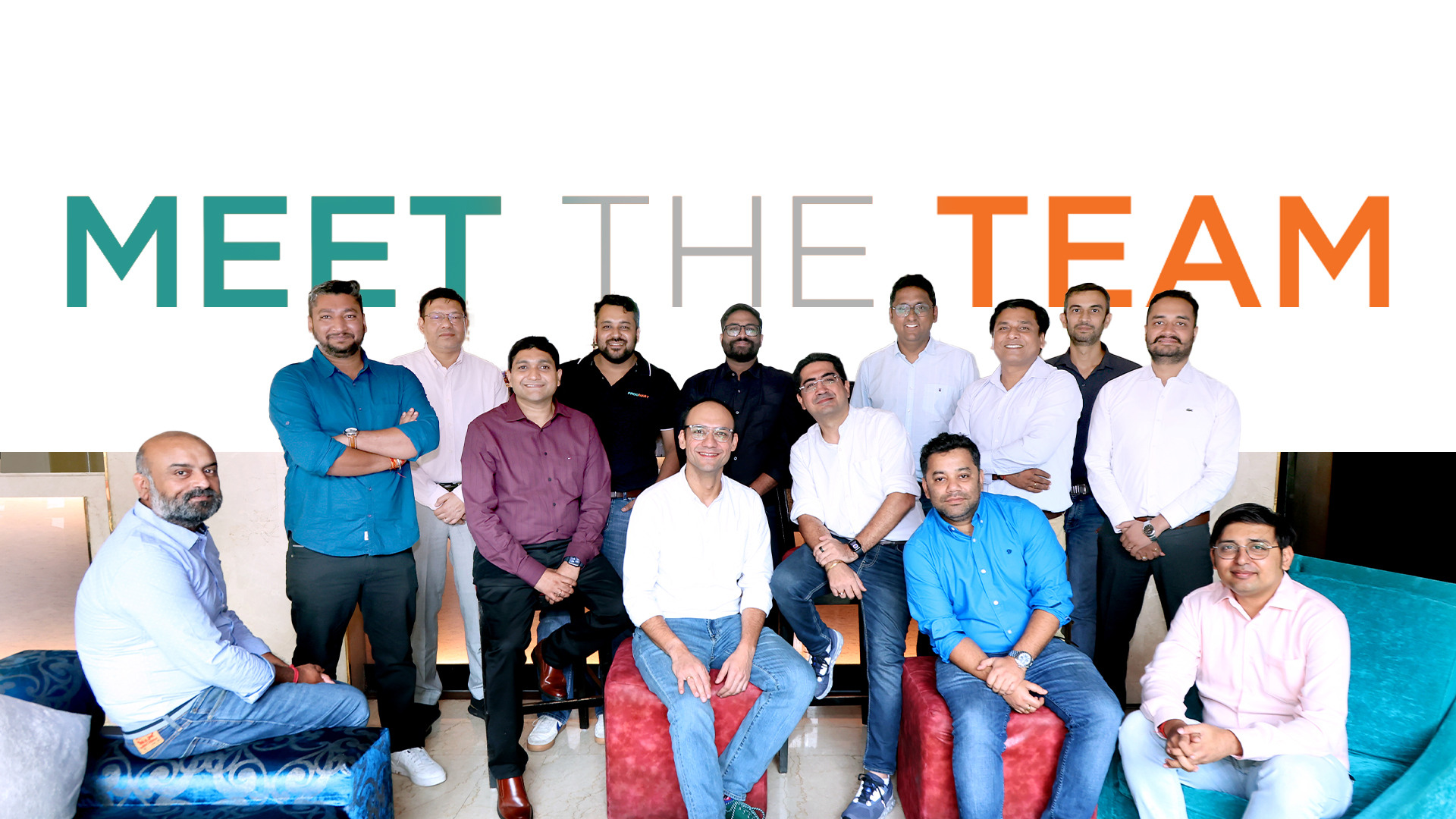
Following the order beyond the marketplace
Popli’s interest in operational details also took the company into biofuel. He described the idea as coming from customers. Market reports and expert interviews provided an initial view, but a visit to a plant in Aurangabad changed the discussion. He found problems with maintenance, storage, cash-flow management and the coordination of supply and demand.
In a November 2024 post, he said the company had gone beyond trading to operating five biofuel plants in Maharashtra, and that the activity contributed five percent of its top line within a year. Those are his figures for that moment. The episode shows a willingness to follow a procurement requirement into the physical work behind the transaction.
It also exposes a tension any platform founder must manage. Every new activity creates an opportunity and adds something to run. The attraction of an overlooked operational problem can be strong precisely because the improvement seems so concrete. Popli’s account locates the decision in a plant visit, where a market category became equipment, storage and cash moving through a real business.
A larger company, a longer view
In April 2024, ProcMart announced a $30 million Series B round involving Fundamentum Partnership, Edelweiss and Paramark Ventures. Its stated plans included broader offerings, technology investment and expansion in India and Southeast Asia. Financing made the next set of choices larger; the everyday requirements of an industrial customer remained specific.
The leadership group grew too. Sachin Jain, who joined in March 2024 as chief financial officer and chief strategy officer, was elevated to co-founder in May 2025. Ashutosh Dhar became chief business officer in August 2025, with responsibility for expansion, customer relationships and operational capacity. Popli’s role now sits within a wider group charged with turning a purchasing proposition into a durable organisation.
His writing in 2026 pushes the argument further upstream. In March, he discussed procurement as a contributor to resilience and business value, with supplier dependencies, risk and sustainability informing decisions. In May, he returned to integrated systems, automation and supplier collaboration. The ambition is to help companies anticipate trouble and make better choices before an urgent order forces their hand.
The thread back to Bhilai remains visible. Popli pays attention to the smaller businesses around large industrial institutions, the cost of waiting and the person who can actually make a decision. ProcMart has travelled a long way from its starting point. The test he has chosen remains wonderfully concrete: does the factory get what it needs, with less trouble than before?
- 2015ProcMart founded
- 2024$30m Series B announced
- 2026Writing about risk, intelligence and supplier collaboration