The coffee shop had a problem familiar to anyone who has ever made a film: it would outlive the shoot. For Angga Dwimas Sasongko, that was an invitation. Making Filosofi Kopi, he had imagined the bar, the little office, the geography of the place so precisely that an existing café would not do. The team built its own. Then the practical details began to suggest a sequel of their own.
The space came with a two-year lease. The coffee equipment had been bought because renting it had proved impossible. During filming, Angga and actors Chicco Jerikho and Rio Dewanto began discussing whether they should keep the place running. The fictional café became a real one. A production expense acquired opening hours.
It is a pleasingly unglamorous origin for a business: the rent was already paid. It also gives Angga’s career a useful point of entry. Films have endings. The relationships, places, and characters created around them may still have work to do. The director who founded Visinema in 2008 would spend the following years exploring that possibility, while learning how much of the company’s future could belong to other people.
The lease was longer than the shoot
Filosofi Kopi, released in 2015, came from Dewi Lestari’s short story. Angga and his wife, producer Anggia Kharisma, were readers of her work. Coffee culture also offered a subject with a growing audience. As he researched the script, Angga found a kinship among farmers, baristas, and filmmakers: each cared intensely about the thing they made. The café allowed that affection to continue after the screening.
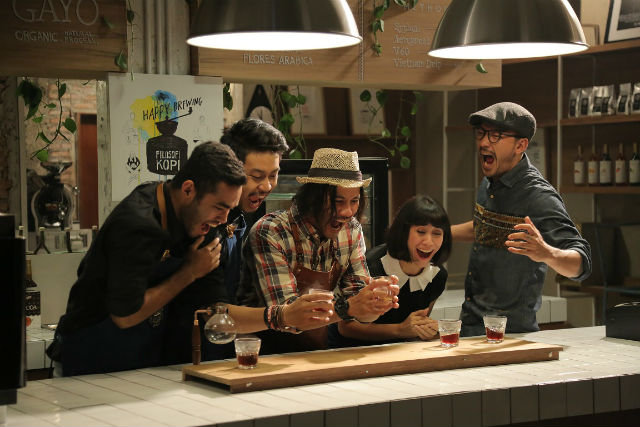
The people around the film noticed a resemblance between their director and its two leads. Ben, played by Chicco, gravitates toward craft. Jody, played by Rio, pays attention to business. During a conversation about the film, Chicco suggested that adding them together would produce Angga. His director acknowledged the resemblance: running Visinema and directing films required him to attend to both.
The joke works because it is affectionate and specific. Making a film requires imagination, but imagination cannot sign a lease. Nor does a spreadsheet explain why an audience should care about a barista. Angga’s collaborators could see both impulses in him. Rio described their relationship as something closer to family than ordinary friendship, a bond that had grown through making things together.
A handycam, then a habit of asking why
Born in Jakarta on January 11, 1985, Angga became interested in films while still at school. His father took him to the cinema. Conversations with friends afterward prompted the thought that he might make something himself. With a handycam and schoolmate Ginatri S. Noer, he made a short called Maya. The equipment was modest; the important new experience was having a story to work on.
University took him into politics. He studied at the University of Indonesia’s Faculty of Social and Political Sciences, while pursuing film workshops and making short films and music videos. He later connected his interest in politics with the questions a director must ask: what motivates people, what they believe, and how firmly an idea rests on research. A camera can record a face. Understanding the person behind it takes more homework.
By 2005, he was working as an assistant director on Hanung Bramantyo’s Catatan Akhir Sekolah. His own feature, Foto, Kotak dan Jendela, followed in 2006. Visinema arrived two years later. Music videos and commercial work belonged to this working education too: filmmaking as something practiced across assignments, with different demands and collaborators, rather than learned once and considered complete.
Recognition came through different kinds of stories. Hari untuk Amanda brought a Best Director nomination at the 2010 Indonesian Film Festival. Cahaya dari Timur: Beta Maluku won the festival’s Best Film award in 2014. Angga described spending four years making the latter with musician Glenn Fredly. He remembered the experience as an education in being a person as well as a director.
His 2016 Letters from Prague extended that interest in people shaped by history. The film earned him Best Director at the Usmar Ismail Awards, and Indonesia selected it as its submission for the 89th Academy Awards. He has linked its origin to research into the country’s hidden history. Political curiosity, in other words, had found an address well beyond the university.
The room gets more chairs
Angga has an impatience with predictable questions. Ahead of a 2019 interview, he half-jokingly asked for something less standard, pointing out that the usual answers were already available on YouTube. It was an efficient piece of editorial direction. By then, a more interesting question concerned the company itself: how could Visinema grow if the ideas continued to come from the same two people?
He identified Love for Sale as a turning point in making Visinema a home for other creators, directors, and producers. Earlier, ideas had come largely from him and Anggia. His involvement in other people’s films became more concentrated around the script before its final draft and the edit. The aim was to offer guidance while allowing the project’s foundation to remain intact.
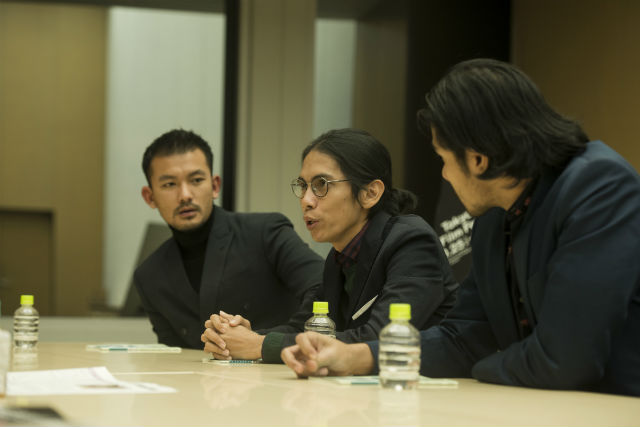
That change is personal even when described in organizational language. A director makes choices about a particular film. A founder also decides whose choices deserve support. The company cannot become a home for other imaginations if every room is already furnished with his own. Angga’s account of the shift makes growth sound like a matter of giving people enough space to work.
Money added another dimension. In February 2020, Visinema announced a US$3.25 million Series A round led by Intudo Ventures. Investment meant more than financing the next production. It connected the studio’s creative decisions with an expanding company’s obligations. The café had offered a small, tangible version of stories becoming businesses; institutional funding required that thinking to operate across a larger organization.
A book helped him think about the transition: Lawrence Levy’s To Pixar and Beyond. Angga has described moving toward a company organized around intellectual property, with income reaching beyond cinema tickets. His stated ambition also reaches beyond his own tenure. He wants Visinema to continue as a place where creators can work after his leadership ends. Founding something and making it durable are different jobs, even when they share an office.
A family audience, a different scale
The arrival of his son, Angkasa Rigel, changed Angga’s life and influenced his thinking about Visinema. He has spoken about family stories as a possible bridge across Indonesia’s sharp divisions. The attraction is easy to understand: people who disagree about much else may still recognize the negotiations of a household. His account gives the company’s interest in family audiences a personal context without reducing every film to autobiography.
He has also had to decide which responses to his work deserve his attention. Angga remembers advice from his friend Alissa Wahid about choosing the right people to listen to when criticism arrives. For someone working in public, that is a practical discipline. A filmmaker needs to hear an audience; a director trying to obey every voice would soon have a very crowded editing room.
At Airlangga University in 2023, Angga discussed Stealing Raden Saleh, his heist film that had drawn 2.3 million viewers. He emphasized collaboration and the mixture of action, history, comedy, and a grounded setting. The film offered another way into Indonesian material: a painting and its history could become part of an entertaining contemporary story. The classroom conversation put the working process in front of students who might make their own films.
Then came a different filmmaker’s project. Ryan Adriandhy directed Jumbo, the animated feature made through Visinema Studios and released in Indonesia on March 31, 2025. Angga’s part was as studio leader and executive producer. Keeping those roles clear matters. The studio’s expansion becomes visible precisely because its founder does not need to be the director of every film it supports.
Jumbo passed this audience milestone. Ryan Adriandhy directed; Angga helped back the project at Visinema.
After the film’s success, Ryan thanked Visinema for welcoming his animation vision in 2019 and thanked Angga for taking a risk on him. His message makes the relationship concrete: someone had to commit before there was a comparable local success at that scale. The eventual audience could be counted. The earlier decision depended on judgment, confidence in a collaborator, and a willingness to wait for the work.
By June 2025, Jumbo had passed ten million Indonesian admissions. International sales followed, carrying its story to audiences outside Indonesia. The plot centers on Don, his friends, and a young ghost named Meri. Friendship and adventure supplied a route into a local animated world. The film gave Visinema’s interest in family storytelling a new form, with another director’s imagination at its center.
“Kita tidak pernah bekerja demi rekor.”Angga Dwimas Sasongko · “We never work for records.” · English translation
Characters with somewhere to go
In September 2026, Angga returned to the question of who gets to create the characters children remember. He argued that Indonesia needs more stories reflecting its identity, and encouraged young creators to see their country as a place that makes those stories. The observation extends the question behind the café: what happens when audiences can keep encountering a fictional world beyond a single visit to the cinema?
His advice about lasting intellectual property stays close to storytelling. Build a world with artistic substance. Give its characters relationships that matter. Make something people can retell and connect to through shared memory. Those instructions ask for patient creative work before expansion into other formats. A character needs a life people care about before a company can sensibly plan where else that life might appear.
Angga also has another film of his own ahead. Ratu Malaka, an action fantasy planned for 2027, grows from a script he began writing in 2016. Its imagined setting draws on cultural, historical, and mystical influences. The long interval is a reminder that the executive still keeps a director’s unfinished work close by. Some stories take years to find their moment.
The café offers a fitting place to leave him. A space built for a film remained useful when the production moved on. Angga’s larger undertaking has a similar ambition: give stories, collaborators, and audiences somewhere to return. The lights go up in the cinema. Somewhere else, someone is still making the coffee.
Keep the conversation going
Visinema’s website · Visinema company profile · Angga on Instagram · Twitter / X · LinkedIn
Watch: Angga on Jumbo and Visinema’s next chapter
Watch: the Filosofi Kopi director interview
The Tokyo conversation about Filosofi Kopi
Angga’s September 2026 conversation on lasting characters
The announced plans for Ratu Malaka