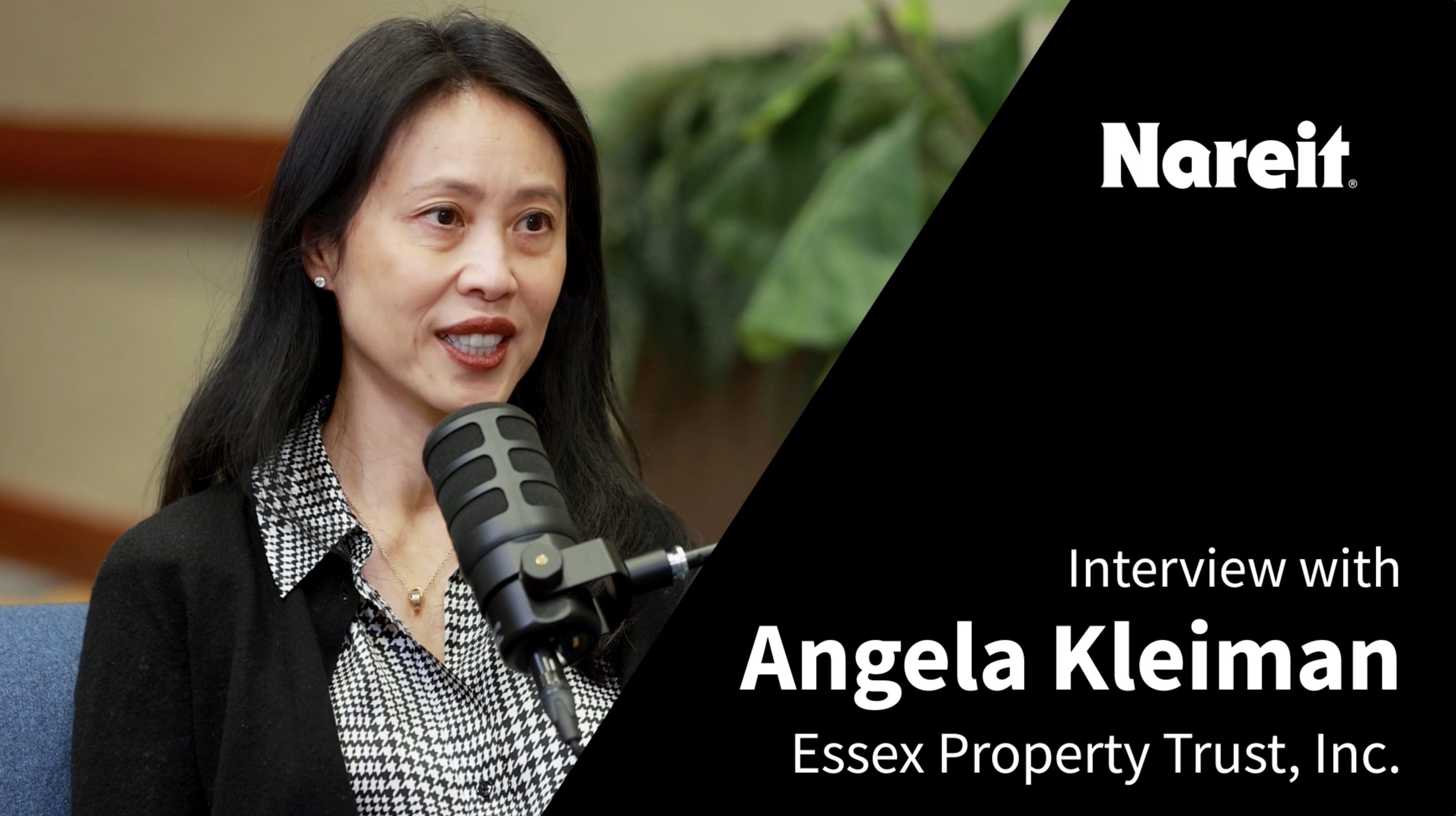
Five miles is a modest distance on a corporate map. For Angela Kleiman, it helps explain how an apartment company can change the way it works. She has described an Essex portfolio in which roughly 80% of communities are within five miles of one another. Buildings that close can be managed in groups. Sales teams can serve several addresses. The space between properties starts to matter almost as much as the properties themselves.
It is an appropriately practical idea for someone who reached the chief executive’s office by taking responsibility for several different parts of the business. Kleiman became president and CEO of Essex Property Trust on April 1, 2023. Before that came private equity, finance, and operations. Her professional story moves between the decisions that put buildings in a portfolio and the daily work that makes those buildings earn their keep.
A career on both sides of the deal
Kleiman began in real estate development management in 1991. She earned a Bachelor of Science from Northwestern University and an MBA from its Kellogg School of Management. Her subsequent career included institutional investment management and investment banking, fields in which the same building can look quite different depending on which responsibility lands on your desk.
At Security Capital, she worked as a senior equity analyst and vice president of investor relations, with responsibility for more than $2 billion in REIT investments and client communications. At J.P. Morgan’s Real Estate & Lodging Investment Banking Group, she advised executives and boards on strategy and capital markets transactions. The work combined evaluating businesses with explaining what their decisions meant to the people supplying the money.
She joined Essex in 2009 to lead its private equity platform. Under her leadership, that business grew from $750 million to $3 billion in gross assets. The platform gave her direct experience with apartment operations, financing, and portfolio management. Those responsibilities would recur in the jobs that followed.
A platform, four times the size
Gross assets under her leadership. Beginning and ending values.
One of those numbers needs particular care. Kleiman was responsible for overall transaction management of the BRE Properties merger, including agreement negotiations, pricing, valuations, and joint venture equity arrangements. When the merger closed on April 1, 2014, the combined company had approximately $16.2 billion in total market capitalization. Calling that figure the price Essex paid would confuse the size of the resulting business with the cost of the transaction.
The deal left Essex with interests in 233 multifamily properties, plus 15 in development. It was a considerable integration assignment. Signing documents could bring the organizations together legally; operating them together was a continuing task. Kleiman’s later move into operations would place that second kind of work squarely within her remit.
Learning the company in three different jobs
In October 2015, she became Essex’s chief financial officer. She held the position through 2020. The company credits her with reshaping its balance sheet and helping secure credit-rating upgrades to BBB+ from S&P and Baa1 from Moody’s. For an owner of long-lived assets, the ability to finance them is part of the operating story, even when the discussion sounds remote from an apartment doorstep.
Her next appointment was announced in December 2020. She would succeed John Burkart as chief operating officer at the start of 2021, while Barb Pak would take over as CFO. Michael Schall, then CEO, described Kleiman as already participating in the company’s major decisions. The promotion formalized a breadth of responsibility that had extended beyond the finance function.
As COO, her responsibilities included property and asset management, technology and data analytics, research, and redevelopment. Those functions sit unusually close to one another in an apartment business. A research conclusion can alter an acquisition decision. A technology choice can change how an employee spends the day. A redevelopment plan eventually meets a resident trying to get home.
- 2009Private equity platform
- 2015Chief financial officer
- 2021Chief operating officer
- 2023President & CEO
Rexford Industrial appointed her an independent director effective December 31, 2021, citing experience across operations, finance, and investment. The following October, Essex named her Schall’s successor and added her to its own board. She took over as CEO six months later. By then, she had spent nearly fourteen years inside the company she was being asked to lead.
When neighbors share the work
The operating idea at the center of her recent work is straightforward to describe. Essex groups nearby apartment communities into a business unit, rather than treating every property as an entirely separate operation. In September 2026, Kleiman described groups of eight to ten properties, with centralized sales and coordinated maintenance staffing.
There is an everyday logic to that arrangement. An apartment search seldom respects the boundary of one building. A prospective resident may care about a neighborhood, a price, or a commute. A sales organization serving several communities has more options to discuss. For the owner, shared systems offer a way to put a concentrated portfolio to work as a connected business.
The qualification is that the connection has to function. Geographic closeness cannot answer a resident’s question or arrange a repair by itself. The model depends on information moving between people and properties. Software, staffing, and the organization of responsibilities become part of the real estate proposition.
Several addresses. Shared work.
An illustration of how nearby communities share operations.
Essex’s 2026 proxy makes the work concrete. Kleiman’s 2025 goals included refining the collections model with centralized sales teams, introducing AI to support sales efficiency, and deploying maintenance technology. The same list included leadership development and succession planning. A new operating model still needs people capable of running it.
A change of pace, then a buying program
Early in her CEO tenure, Kleiman described a plan to “maintain our capital allocation discipline and continue to innovate.” In June 2023, acquisitions and development faced difficult financing economics. Essex had instead been buying back its own shares, which offered a more attractive use of capital at the time. Growth did not require another building every quarter.
By 2024, the pace had changed. Essex acquired or increased its ownership interests in 13 apartment communities for approximately $1.4 billion on a gross basis. Kleiman explained the shift as a response to the recovery she expected in West Coast markets. The priorities stayed recognizable; the allocation of effort changed.
An April 2025 transaction update connected purchases directly to the operating model: new communities were intended to fit into existing property collections. The company also sold properties, including Essex Skyline in Santa Ana. Buying and selling were parts of the same effort to shape the portfolio. A company can expand its opportunities while being selective about what it continues to own.
“Little supply means pricing power.”
Angela Kleiman, September 2026
In September 2026, she described a little over $2 billion of asset purchases, mainly in Northern California, ahead of a rental-market upswing. Her explanation paired rents that had room to recover with income growth, office attendance, and limited new construction. It was a thesis about timing as well as location. The amount invested made the judgment consequential.
The people inside the portfolio
A resident encounters these decisions through much smaller events. Can they tour an apartment at a convenient time? Submit a request? Get an answer? Essex offers self-guided tours, virtual tours, online payments, and maintenance requests through its resident systems. The corporate language of efficiency becomes more persuasive when it survives one of those ordinary interactions.
For employees, Kleiman’s stated priorities include development and retention. In 2025, Essex expanded its work on culture, learning, and mentorship. Her account of the business gives talent development a place alongside external growth and operating efficiency. Buildings may remain at the same address for decades. The knowledge required to run them has to be renewed.
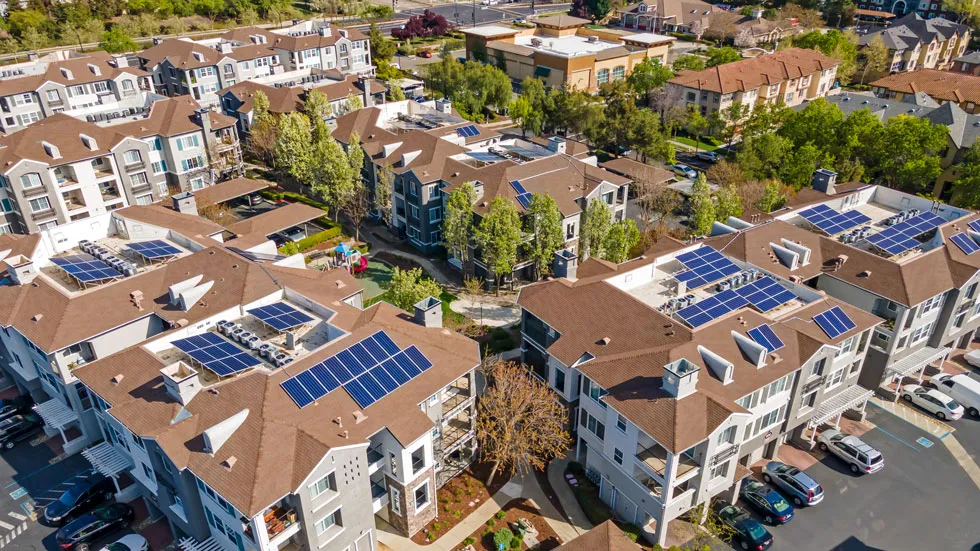
Environmental work brings another set of practical measurements. Essex’s sustainability disclosures describe efforts involving emissions, solar generation, water, and waste, alongside in-house emissions accounting software. The company reports a 25% reduction in Scope 1 and 2 emissions from its 2018 baseline. These are portfolio measures, with their own boundaries, rather than a claim that every building has reached the same result.
The West Coast wager, with conditions
By June 2026, Kleiman was pointing to Bay Area start-ups as a source of apartment demand. She identified San Francisco, San Mateo, Santa Clara, and Oakland as strong leasing markets. Her argument connected new economic activity with an old regional constraint: housing construction has difficulty keeping up. Expensive homeownership, in her account, also keeps renting relevant for longer.
In May 2025, Kleiman described Essex’s portfolio as 85% suburban and predominantly Class B. That detail gives her West Coast thesis a more precise address. The business she described extends beyond downtown towers, serving renters in communities around employment centers. An investment view about a region still has to resolve into a choice about a particular neighborhood and building.
That outlook carries a condition. In her October 2026 Hoya Hotseat discussion, she identified recession as the primary downside risk. Limited housing supply can support a market, but it does not guarantee employment or household income. The qualification belongs beside the opportunity. An investment thesis becomes more useful when its author names what could upset it.
Kleiman’s career gives this question a long working history. She has evaluated investments, advised on transactions, financed a public company, and overseen its properties. Now she is accountable for how those activities fit together. Five miles offers a useful place to begin: close enough to share resources, large enough to contain plenty of complications. The work is in making the distance count.