In the spring of 2022, roughly 22,000 people filed into a stadium in Los Angeles to watch a soccer team that had never won a match. The team was 18 months old. It had a crest, a color palette named "Sol Rosa," a jersey sponsor worth more than any in its league's history, and a cast of owners that could headline an awards show. What it did not yet have was a result. And that, in a sentence, is the strange and instructive thing about Angel City Football Club: the brand arrived before the team.
Angel City is a National Women's Soccer League club, but calling it "a soccer team" undersells the design. It was built to operate like a consumer brand with a roster attached - ticketing, sponsorship, apparel, hospitality and community investment all treated as products, all expected to carry weight. Founded in 2020 by Julie Uhrman, Natalie Portman, Kara Nortman and Alexis Ohanian, it started from a simple, contrarian thesis: women's soccer was not a charity case. It was underpriced.
The idea was a group text before it was a franchise
The origin story is nearly too tidy: a conversation between Natalie Portman and venture capitalist Kara Nortman about buying a women's team turned into an actual bid for one. Julie Uhrman, a longtime tech and media operator, took the president's chair and ran the raise. Alexis Ohanian, the Reddit co-founder, came on as founding controlling owner - reportedly after something like a hundred investor conversations that went nowhere.
What made it stick was the cap table. Angel City assembled a founding group of women investors and athletes that reads like a guest list: Serena Williams, Billie Jean King, Mia Hamm, Abby Wambach, Julie Foudy, Eva Longoria, Jennifer Garner, Jessica Chastain, America Ferrera, Uzo Aduba and more. It became, by design, the first NWSL club founded and majority-backed by a group of women. That was not only a values statement. It was distribution - a built-in megaphone pointed at exactly the audience the club needed to reach.
We developed Angel City uniquely to allow our mission and capital to coexist.
The 10% Model, or how giving became a growth engine
The line that gets quoted most - mission and capital coexisting - sounds like a slogan. In practice it is an org-design decision, and its clearest expression is the club's "10% Model." Angel City commits 10% of its sponsorship revenue to Los Angeles community programs. Here is the part operators should steal: each sponsor picks the impact area. A grocery partner funds food security; a beauty brand backs a different cause. The giving is baked into the deal, not bolted on after.
Ten cents of every sponsorship dollar is routed into the community, with the sponsor choosing the cause. It funds the mission - and it gives partners a reason to sign and re-sign. Reported impact: more than $3.5M into LA, reaching roughly 160,000 Angelenos.
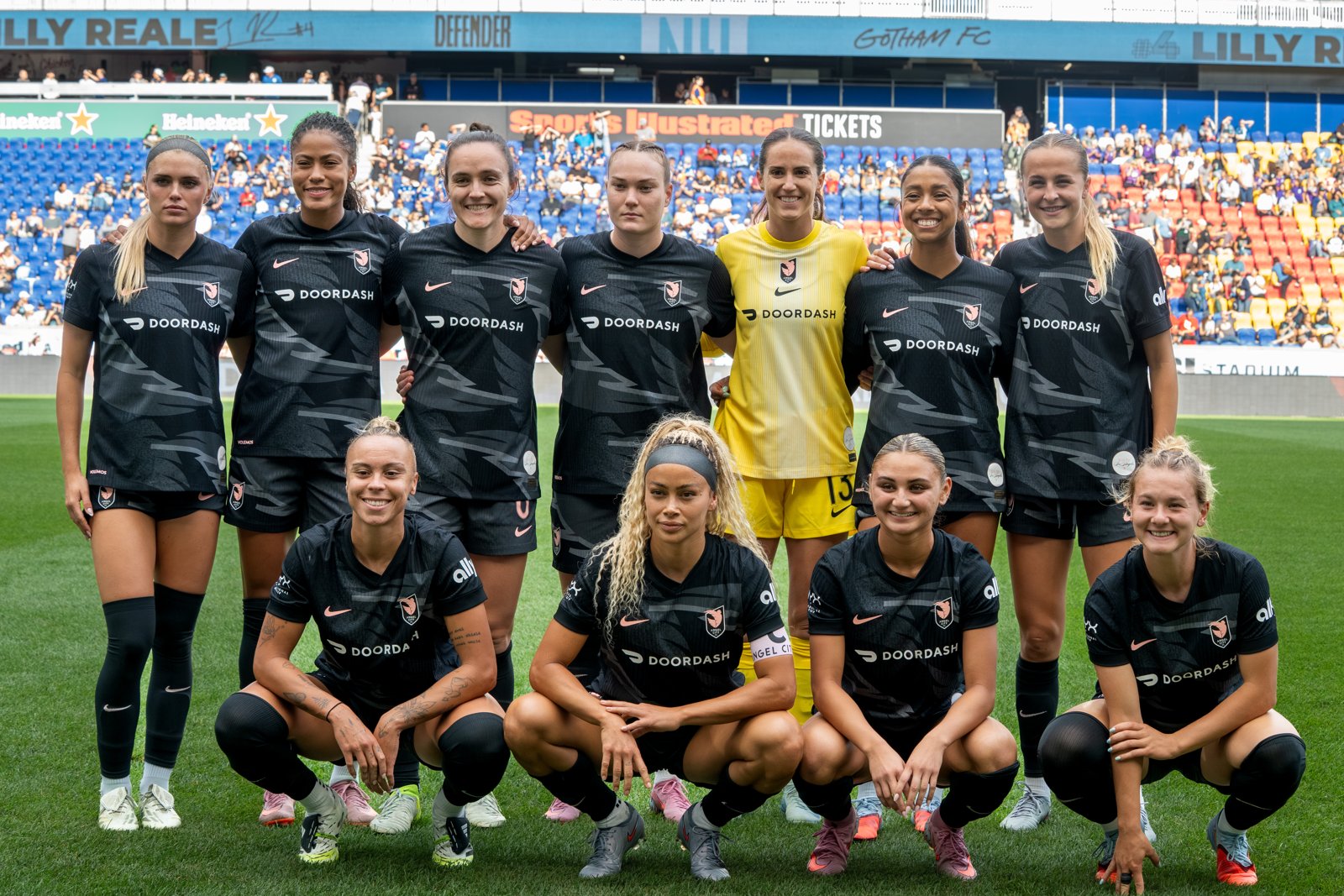
Why does that work commercially? Because it turns a cost center into a sales tool. A sponsor buying Angel City is not just buying eyeballs on a jersey; it is buying a co-branded cause story it can put in its own marketing. That is stickier than a logo placement, and it is a large part of why the club could land DoorDash as its front-of-jersey sponsor in what was reported as the biggest jersey deal in NWSL history - tied to a commitment to deliver hundreds of thousands of meals - before the team had played a single competitive minute.
What it actually sells
Strip away the founding-day glamour and Angel City is a business with several distinct revenue lines, each of which it treats seriously:
Tickets & hospitality
The core product is a matchday at BMO Stadium, packaged every way a modern venue can package it: season memberships, mini and half-season plans, single-game and group tickets, premium seating, hospitality suites and VIP experiences. The club has built the largest season-ticket membership base in the NWSL - which is less a vanity metric than a recurring-revenue engine and a captive community to sell everything else to.
Sponsorship
The 10% Model is the differentiator here, but the underlying product is straightforward: cause-aligned partnerships with brands like Birdies, NYX Professional Makeup and Sprouts. In 2026 the club began looking for a new front-of-jersey sponsor to replace DoorDash - a reminder that even a well-built sponsorship book has to be re-sold.
Apparel, merch & the direct-to-consumer line
Angel City sells kits and co-branded consumer goods direct to fans, with seasonal drops treated like product launches. Its 2026 "Flare" jersey - the club's first metallic kit, with a centered crest - is a good example of merchandise doubling as a marketing beat.
Players as assets
The least obvious revenue line is talent development. Angel City signed Alyssa Thompson, the first high schooler taken first overall in an NWSL draft, developed her, and in 2026 sold her to Chelsea for a league-record outgoing transfer fee. Read commercially, that is a player-development P&L: acquire young talent, build value, sell up the ladder.
Build the community before the product. Bake your mission into the deal terms so partners have a reason to sign. Treat merch drops, ticket tiers and even player sales as separate products with their own economics. None of this requires a Hollywood cap table - it requires deciding, on day one, that the mission and the money are the same spreadsheet.
The number that reset a category
In July 2024, a group led by Willow Bay - dean of USC's Annenberg School - and her husband, then-Disney chief Bob Iger, agreed to buy a controlling stake. The deal, completed that autumn, valued Angel City at $250 million, reported as the most valuable women's sports team in the world at the time. For context, it was roughly double the previous NWSL record set months earlier by the sale of San Diego Wave.
Why the price surprised people
A four-year-old team with no championship banner does not sell for that on results. It sells on the thesis the founders had been repeating all along - that the audience, the sponsors and the media value were real and growing - and on a set of numbers that finally backed it: roughly $31 million in 2023 revenue, the highest in the league, and a brand with genuine cultural reach. The Iger-Bay print did not just value one team. It moved the market's math for the whole category.
It's only the beginning for women's sports.
Where it sits, and where it's exposed
Angel City competes on two fronts. On the pitch, its rivals are the rest of the NWSL - San Diego Wave, Portland Thorns, Gotham FC, Kansas City Current, Bay FC. Off it, the more interesting competition is for capital and attention across the whole of women's sports, where WNBA franchises and a wave of new investor-backed clubs are all chasing the same sponsors and fans that Angel City helped make fashionable.
The honest caveats: the model leans on a category that is still young, and a valuation set in a hot market has to be defended in a colder one. Losing a marquee jersey sponsor and selling a homegrown star are the kinds of transitions that test whether the brand, not just the moment, is durable. The playbook is copyable - which is a compliment and a threat at once. What is harder to copy is the head start Angel City built by treating the mission as the business from the first day.
The short, fast history
Uhrman, Portman, Nortman and Ohanian launch the NWSL's LA expansion club, backed by a group of women investors and athletes.
The club lands the largest jersey sponsorship in league history and unveils its crest and "Sol Rosa" palette.
Angel City debuts at BMO Stadium, drawing roughly 22,000 to its home opener.
Reports roughly $31M in revenue - the highest in the league - and makes its first playoff run.
Willow Bay and Bob Iger take control at a record valuation; the club wins an ESPY for humanitarian work.
Alexander Straus joins from Bayern Munich; Chris Paul, Solina Chau and LAFC come aboard as investors.
Alyssa Thompson sold to Chelsea for a league-record fee; the "Flare" kit debuts; a new jersey-sponsor search begins.
Questions people actually ask
Who founded Angel City FC?
It was founded in 2020 by Julie Uhrman (Co-Founder & President), Natalie Portman, Kara Nortman and Alexis Ohanian, backed by a large group of women investors and athletes including Serena Williams, Billie Jean King and Abby Wambach.
Why is Angel City so valuable?
A 2024 control sale to Willow Bay and Bob Iger valued the club at $250 million - reported as the most valuable women's sports team in the world at the time - on the strength of its ticketing, sponsorship and brand revenue.
What is the 10% Model?
Angel City reinvests 10% of its sponsorship revenue into LA community programs, with each sponsor choosing an impact area tied to a nonprofit. It funds the mission and helps the club win and keep sponsors.
Where does the team play?
At BMO Stadium in Los Angeles, where it holds the largest season-ticket membership base in the NWSL.
How does Angel City make money?
Through ticketing and hospitality, sponsorships, merchandise and apparel, and player transfers, alongside its community-linked partnership model.