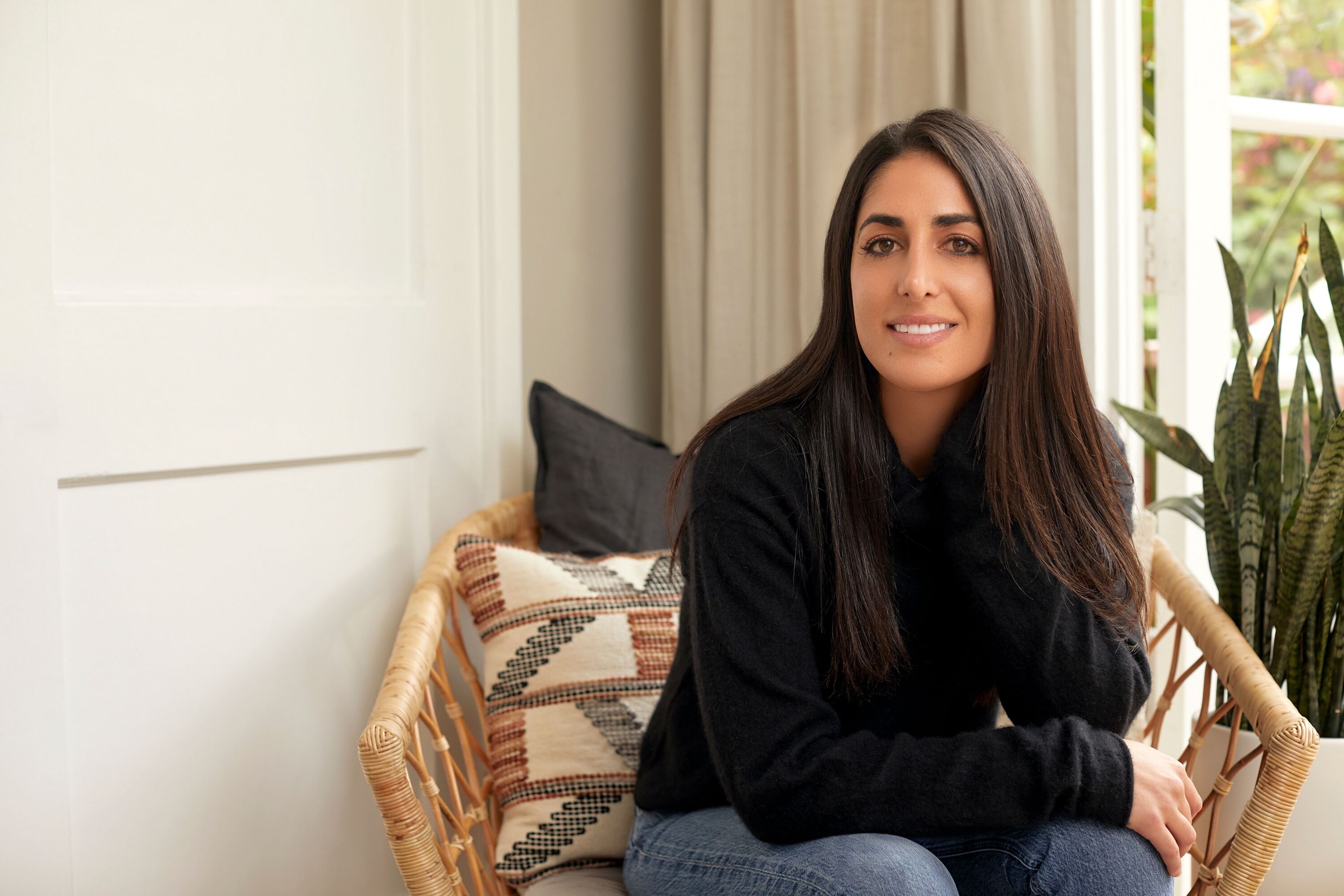
Haley Rosen, on the record — the founder who told investors no, this is not a charity.
The Profile
Haley
Haley
Rosen
She couldn't find the scores of her own former teammates. So she built the place where you can.
She couldn't find the scores of her own former teammates. So she built the place where you can.
For ten years, women's sports got about four percent of the coverage. The number sat there, immovable, like a scoreboard nobody bothered to update. Haley Rosen looked at that four and decided it was not a fact of nature. It was a market with no front door. She built the door.
Today Haley Rosen runs Just Women's Sports as its founder and CEO. What she started in January 2020 as a single Instagram account is now a multi-platform media company: daily editorial, a roster of podcasts, live programming, highlights, events, and merchandise. The company has reported more than 75 million users, and during the 2023 FIFA Women's World Cup it generated over 250 million social impressions.
The strategy is narrow on purpose. JWS covers women's sports and only women's sports. No men's scores wedged in to pad the traffic. Rosen's argument is that legacy platforms built their audiences around men's games and cannot, structurally, put women's sports first for long. Her answer was not to ask them to try harder. It was to build a separate ecosystem that starts from a different premise.
She covers athletes as athletes. The competition, the rivalries, the stakes - the things that make sport worth watching - come first. The lifestyle content, the off-the-field profiles, the soft-focus packaging she calls out as a kind of marketing that quietly tells fans these games are not the main event. At JWS, the games are the main event.
When we treat women's sports like a charity, we should not be surprised when it gets treated like one.Haley Rosen, TEDxBoston
Before the company, there was the player. Rosen grew up in Los Angeles and went to Stanford, where she earned both a BA and an MA and played midfield for the Cardinal. She turned pro, in the US and abroad, until injuries closed that chapter. She moved back to the Bay Area and took a job in tech.
Then came the small, specific frustration that started everything. Retired from the game, she still wanted to follow her friends, her old teammates, her former coaches - the people still competing. She found that she couldn't. The information was scattered, buried, or simply not produced. The careers she cared about were happening in the dark.
That gap was the whole insight. If a former pro and Stanford grad couldn't keep up with the sport she'd given her life to, the problem wasn't her. It was the plumbing. So she started posting the news herself, on Instagram, and watched a real audience show up for it.
Early on, people told Rosen to make Just Women's Sports a charity. "This isn't a real business," was the message. She disagreed - loudly, and with a spreadsheet. The reframing she pushed for is the same one her whole company runs on: women's sports is not a cause you donate to. It's a market you invest in. The funding that followed, from a roster that includes Kevin Durant and Joe Tsai, was the proof.
From a grant to a seed round to a name-brand cap table, the build was fast - and pointedly framed as a business at every step.
We celebrate these athletes as athletes and lean into everything that makes sports so captivating and fun.Haley Rosen
Investment and coverage matter, but Rosen's sharpest point is about respect: insiders too often don't treat women's sports like sports. Fix the framing and the audience follows.
Asking legacy platforms for a few more minutes was never the plan. Rosen's bet is on an independent ecosystem - one whose entire reason to exist is the women's game.
"People wouldn't watch games if all they cared about were results." The stories, the ambition, the rivalries - that's the product. Not lifestyle filler.
We've never let them tell their own stories or flaunt their own ambitions.
People wouldn't watch games if all they cared about were results.
We celebrate these athletes as athletes and lean into everything that makes sports so captivating and fun.
When we treat women's sports like a charity, we should not be surprised when it gets treated like one.
Her TEDxBoston talk lays out the case in full: not just more money and more cameras, but a change in how the people inside the industry think about the games. It's the clearest version of the argument she's been making since the first Instagram post.
► Watch on YouTubeTEDxBoston · 2022
Three needs - investment, coverage, and a shift in marketing - and one uncomfortable truth about the people who run the show.
Rosen has talked about normalizing critique by building it into a regular weekly rhythm. Make feedback routine, she figures, and it stops feeling arbitrary or personal - it just becomes how the team gets better. For a company growing this fast, the cadence is the point.
It tracks with the athlete still in her. You don't improve by waiting for the season to end. You watch the tape every week.