Andy Orth’s career begins with an odd pairing: bones and balance sheets. Before the CEO title, before the product launches, before RNA interference became a commercial category, he worked as a research associate in the Osteoporosis and Arthritis Research Group at the University of California, San Francisco. Then he moved into finance. The first detail says he could live near unanswered questions. The second says he wanted to know what those questions would cost.
Most biographies sand this sort of route into a neat ascent. Orth’s is more useful left jagged. Research led to roles in finance, analytics and consulting. There were stops at Amgen, Genzyme and Russell Reynolds. He spent six years at Biogen, where his remit eventually stretched across global commercial strategy and decision support. In 2016 he joined Alnylam Pharmaceuticals and helped build the commercial organization as the company prepared to launch its first product.
The throughline is translation. A laboratory has one set of verbs: observe, test, repeat. A finance team has another: allocate, measure, decide. Commercial work adds prepare, explain and deliver. A biotechnology CEO is expected to speak all three dialects, often in the same meeting, while everyone quietly notices the clock.
The work after the applause
Breakthroughs arrive as headlines. Launches arrive as calendars. At Alnylam, Orth became senior vice president and head of the U.S. region, with responsibility spanning business account teams, market access, marketing, patient services and operations. He led the domestic business through the launches of ONPATTRO, GIVLAARI and OXLUMO. Their scientific stories differed. The organizational requirement did not: a new kind of medicine had to become a coordinated human system.
In 2021, Krystal Biotech recruited him as chief commercial officer. He drove company strategy and growth and oversaw the global commercialization plan and launch of VYJUVEK. By then, Orth had accumulated a particular kind of scar tissue. He had watched novel platforms approach the moment when scientific confidence meets logistics, capital, education and execution. Discovery may win the standing ovation. Commercialization is the long load-out after the theater empties.
“You’re not always going to succeed. It’s expected that you’re going to have to change course frequently.”Andy Orth, on leading through uncertainty
The second half of that thought is the actual operating manual: the ideal case, he said, is that everyone remains aligned on the vision and mission. Plans change because evidence changes. Alignment keeps revision from becoming drift. In a small company, where time and money can disappear together, the distinction is existential.
A return to unfinished business
City Therapeutics offered Orth a return, not a repetition. The company had been co-founded by John Maraganore, the former Alnylam chief executive Orth already knew from their years together. City’s thesis was that RNAi still had headroom: engineer smaller trigger molecules, improve their properties and reach tissues that had resisted earlier approaches.
When Maraganore began explaining the next-generation ambition, Orth said the chance to be back in RNAi was immediately attractive. He called the remaining room across different diseases and scales “pretty, pretty tantalizing.” It is a revealing phrase, half disciplined executive and half person leaning closer to the table.
He was appointed chief executive and a director in January 2025. His assignment was broader than fundraising or pipeline narration. He would oversee cross-functional strategy, build the team and guide City from an engineering platform toward clinical and, eventually, commercial operations. In plain English: take the promising machine out of the garage without losing any parts on the road.
The office as an operating choice
Culture, in Orth’s telling, is not the cheerful paragraph at the bottom of a job listing. City uses four stated values: courage, innovation, tempo and yes. The last two are especially revealing. Tempo treats speed as a practiced rhythm, not a heroic sprint. Yes asks an organization to begin with possibility, then do the serious work of earning it.
There is also “Work from City,” the company’s playful name for working together in person. Orth has said proximity fuels creativity, deepens connection and accelerates discovery. Reasonable people can debate office policy forever, and many appear committed to doing exactly that. His point is specific to the organization he is building: when chemists, biologists, clinicians and operators need to exchange partial answers quickly, the room itself can become infrastructure.
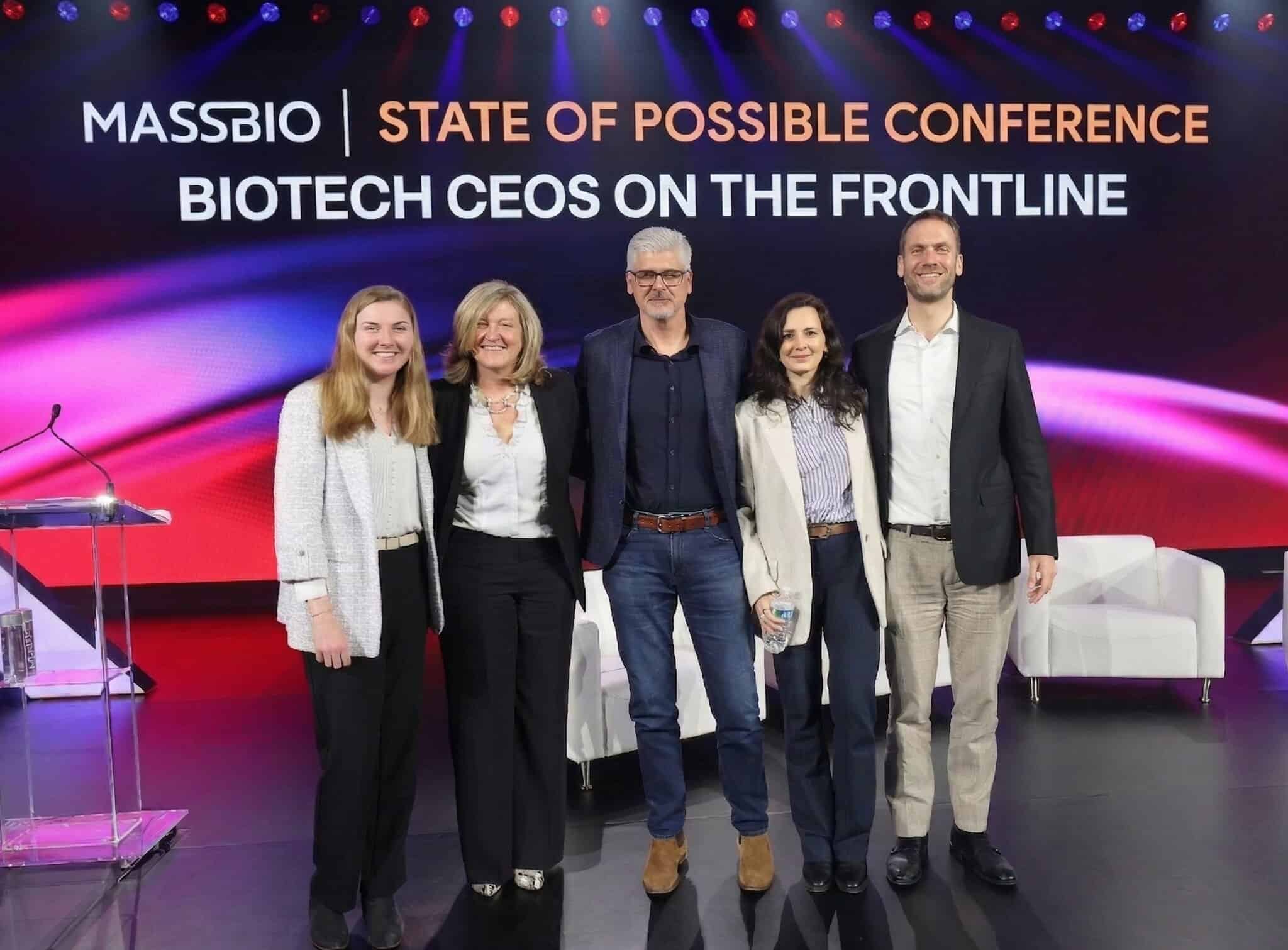
At a 2026 gathering of biotechnology leaders, Orth made the case without polishing away the difficulty. Teams will fail. They will change course. What matters is whether the people making those turns remain attached to the same purpose. This is where his emphasis on culture meets his background in decision support. Good morale is lovely. A team that can absorb unwelcome information and still make the next decision is useful.
“The ideal case is that you’re aligned on your vision and mission.”The fixed point in a moving plan
Conviction with room to move
By June 2026, City had completed a $99.5 million Series B, bringing its total capital raised to more than $230 million. It had moved its lead program into early clinical testing, advanced another toward the clinic and signed collaborations with Biogen and Bausch + Lomb. Those milestones are not proof that every experiment will work. Orth would be the first to leave room for the evidence. They are proof that the organization can turn a platform thesis into a sequence of funded decisions.
His public language toggles between confidence and contingency. People are drawn to the first programs, he has said, because they have “rock solid belief in the technology.” In another conversation, he described City as agnostic about therapeutic area and interested instead in unexplored targets that suit small RNA. “We are going where the science takes us,” he said. Conviction sits in the platform. Flexibility sits in the destination.
That balance may be the most transferable thing in Orth’s story. Founders are often advised to have a vision so clear that doubt cannot enter. Biotechnology does not grant that luxury. The biology votes. Data arrive on their own schedule and occasionally with an impolite opinion. A durable leader must be stubborn about purpose and revisable about almost everything else.
Partnerships as a test of legibility
A platform company faces a peculiar communications problem. It must describe a broad future while asking outsiders to believe in a very specific present. Too much breadth and the pitch becomes fog. Too little and a platform starts to look like one asset wearing an oversized coat. City’s collaborations offer Orth a practical answer: let other organizations test whether the technology is useful beyond the programs City can advance alone.
The Biogen relationship, announced in 2025, combined City’s RNAi engineering with a partner Orth already understood from his own career. City received $46 million across an upfront payment and a convertible-note investment, with potential milestone payments attached to later progress. A separate Bausch + Lomb collaboration put the platform to work in another specialty area. The sums matter, but the operating signal matters too. A partner has examined enough of the machine to put its own people, priorities and capital beside it.
For Orth, partnerships are also an allocation tool. City can keep advancing internal candidates while helping experienced companies use RNAi where they have a strong reason to care. That division of labor allows a 75-person company to pursue more of the map than it could cover by itself. It also imposes discipline. Shared programs need clear handoffs, credible timelines and language that travels cleanly between organizations.
This is where his years in commercial strategy become newly relevant. Commercial thinking before a product exists is not about advertising an experiment. It is about asking whether the value can be explained, whether another party can act on that explanation and whether the work survives contact with a larger system. Partnerships turn those questions into contracts, meetings and deadlines. They make the platform legible.
Orth’s undergraduate education at Wisconsin combined philosophy and psychology, an unexpectedly apt prelude for someone now paid to organize belief under uncertainty. Later came the Cornell MBA, the finance roles, the launch rooms and the CEO desk. The degrees did not predict a tidy career. They furnished two enduring questions: What do we think we know, and how will people act on it?
City’s next phase will supply plenty of answers, including some the company will prefer and others it will have to use. Orth’s aspiration is expansive: push RNAi into additional targets and tissues, advance internal programs and build more partnerships where City’s platform can solve a delivery problem for someone else. Yet his method is grounded in the ordinary disciplines of company building - hire carefully, keep the mission visible, decide with the information available and preserve enough trust to decide again tomorrow.
A breakthrough makes the future briefly look obvious. Then Monday arrives. There are budgets, protocols, partnerships, hiring plans and difficult choices waiting in the inbox. Andy Orth has built a career in that Monday morning. The science opens the door. His work begins on the other side.