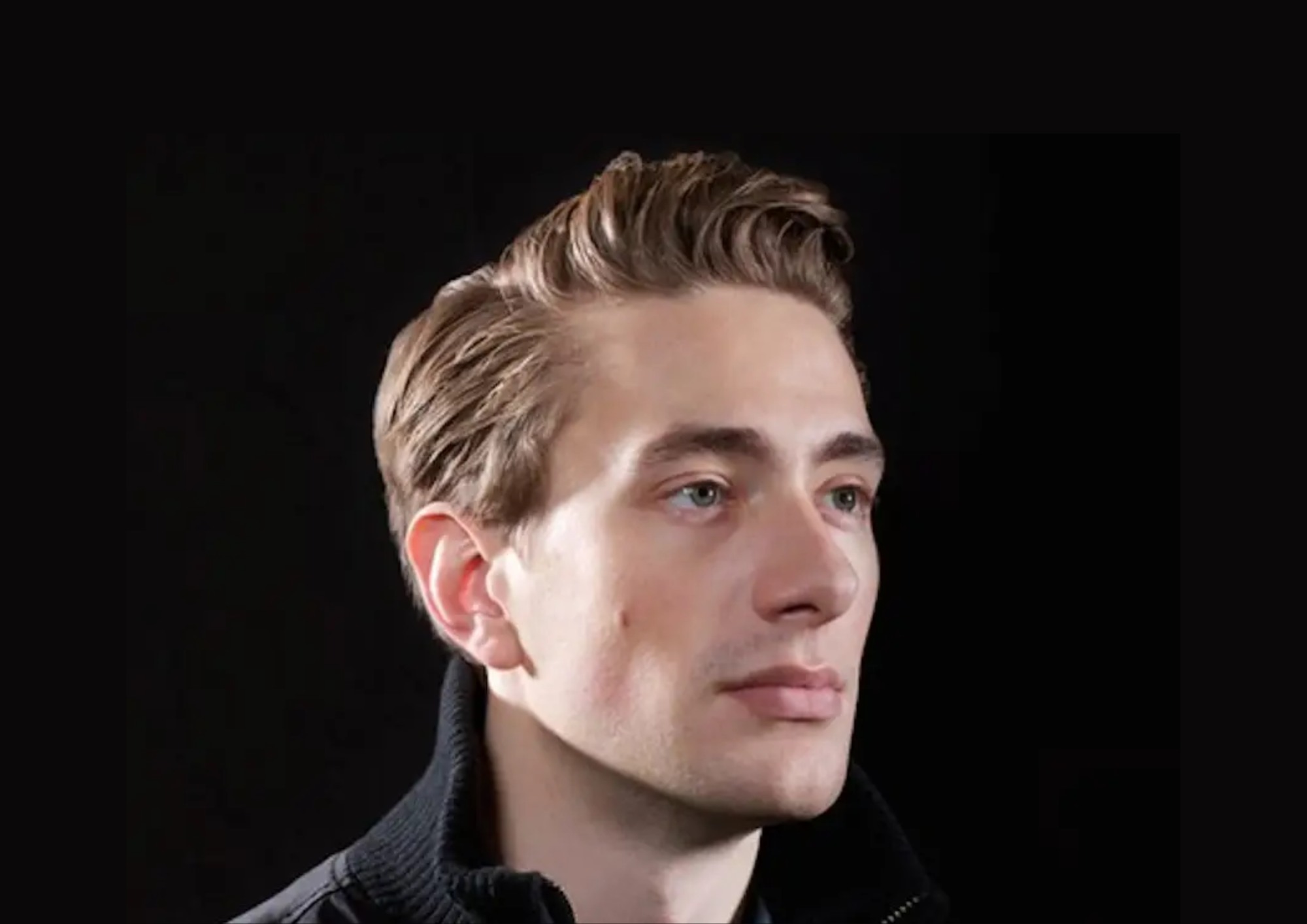
The Barista Who Bought the Internet
In 2006, a 20-year-old college dropout was pulling espresso shots in Victoria, British Columbia, for $6.50 an hour. Two web designers set up their laptops at his cafe. He asked what they were doing. Three weeks later, he had his first web design client and $500 in hand. Two months after that, $30,000 in revenue. Year one: $250,000, at margins that would make a hedge fund blush.
That dropout was Andrew Wilkinson. The company he started alone - always writing "we" in his emails to seem larger - was MetaLab. The designers who'd work for him would eventually ship the interface for Slack. His first client invoice was $500. His company's current market capitalization on the Toronto Stock Exchange is north of $100 million. He still lives in Victoria.
He never raised venture capital. He never moved to San Francisco. He never hired a McKinsey consultant or put a ping-pong table in the office. He just kept building, kept acquiring, and applied a very old playbook to a very new industry: buy good businesses, pay fair prices, hold them forever.
"Life is too short to sell to a guy named Chad who calls your team 'human capital.'"Andrew Wilkinson - Tiny.com About Page
Act I: Faking It Until He Made It
The MetaLab origin story contains a detail Wilkinson likes to repeat: he always used "we" in client communications even when he was the only employee. He charged double what he thought he was worth. Both worked. Within two months of starting, he was billing $30,000. Within a year, he'd built something that looked, from the outside, exactly like a design agency.
It became one. MetaLab grew to become one of the world's largest digital design agencies - responsible for early interfaces at Slack, Google, Uber, Coinbase, Headspace, Amazon, and TED. At its peak, the agency generated roughly $60 million in annual revenue with 60-plus employees and margins that funded everything Wilkinson did next.
He used those margins to experiment. He built Flow, a project management app that competed with Basecamp and Asana. He funded a dozen internal SaaS bets. Over eight or nine years, he watched $10 million of his own money disappear into products that never found their footing. He tells this story not with shame but with the specific enthusiasm of someone who learned exactly one thing from losing a lot of money: he was not good at zero to one.
As a teenager running OnMacTeens.com, a Mac news site he built while still in high school, Wilkinson was invited to tour one of the first Apple Store openings. He got ten minutes with Steve Jobs. He's described the encounter as "like meeting Jesus." A few years later he was making coffee for a living. The Jobs interview didn't make him rich. The coffee shop did.
Act II: Buffett, But Make It Bandwidth
The strategic pivot came in 2013. After years of watching his own internal ventures fail, Wilkinson started asking a different question: what if instead of building new companies, he bought the ones that already worked?
The model was Warren Buffett's. Berkshire Hathaway doesn't try to build companies from scratch - it finds great ones, pays a fair price, and holds them permanently. Wilkinson looked at the internet and saw the same opportunity. There were profitable, bootstrapped businesses everywhere - generating millions in annual revenue, beloved by their users, completely ignored by venture capital because they weren't growing 3x year over year.
In 2017, Tiny acquired Dribbble - the designer portfolio network, essentially GitHub for the creative industry - for approximately $5.5 million for a 70% stake. It was $5.5 million for a business generating tens of millions annually. The Buffett framework, translated to internet businesses, was working.
The acquisitions that followed read like a very specific person's internet history: Creative Market (design assets marketplace), We Work Remotely (remote job board), Castro (podcast player), Unicorn Hunt (startup job board), AeroPress (the coffee press with a cult following), Letterboxd (the social network for people who take movies seriously), and most recently, Serato Audio Research - the DJ software that runs the decks at nightclubs worldwide.
"We could apply Berkshire Hathaway's model to internet businesses - finding great companies with proven track records and holding them forever." The average Tiny deal size: $19.3M. The philosophy: buy boring, stay forever.
Act III: The Part Money Didn't Fix
Wilkinson reached billionaire status by approximately age 34, per CNBC's coverage. He chartered a superyacht for 200,000 euros a week. He bought a Porsche 911 Turbo. Neither of these things made him happy. He sold the Porsche fairly quickly. The yacht trip, he says, was isolating and pointless - strangers on empty water.
His 2024 memoir, Never Enough: From Barista to Billionaire, is the most useful document he's produced. It's not a business book. It's an examination of what happens to your brain when you get everything you thought you wanted - and it still doesn't work. The hedonic treadmill. Mimetic desire. The specific way wealth destroys certain relationships and strains others. He lost a first marriage. He went through years of anxiety. He describes discovering SSRIs in terms that suggest they changed his life more profoundly than any acquisition.
The book became a USA Today bestseller and a National Bestseller. This is not the book a billionaire writes to explain how to become a billionaire. It's the book someone writes after they've been there and needs you to understand that the map was wrong.
"Taking an SSRI and anti-anxiety medication has helped me more than having any amount of money."Andrew Wilkinson - Hampton / Moneywise Interview
Act IV: An ADHD Diagnosis and a $200/Month AI Assistant
The ADHD diagnosis came late. Wilkinson describes his pre-medication brain as Times Square - everything lit up, everything demanding attention at once, nothing staying still long enough to finish. Post-diagnosis, post-medication, he describes his brain as a quiet library. The diagnosis reframed most of his career: the obsessive startup energy, the inability to manage businesses past a certain size, the pattern of starting things and delegating them immediately. He's not lazy, it turns out. He's wired differently.
The AI assistant story is more recent. In 2024, Wilkinson replaced his full-time human assistant with a stack of AI agents - Lindy, Replit, Limitless - at a cost of roughly $200 a month. He reports the AI handles 100% of what the human assistant used to do. He's characteristically blunt about this: it worked, the math is obvious, and the only reason most people haven't done it yet is that change is uncomfortable.
"Nobody looks at a fancy car and thinks 'I want that' - they think 'I wish I was that guy.'" Wilkinson uses this observation to explain why status purchases are fundamentally social rather than personal - and why the Porsche didn't work. You don't want the car. You want the feeling the car represents. And the feeling isn't in the car.
The Pledge: Giving It Back
In 2023, Andrew Wilkinson and his wife Zoe Peterson signed the Giving Pledge - the commitment, inaugurated by Warren Buffett and Bill Gates, to give away the majority of one's wealth before death. Their philosophy is grounded in John Rawls: those who have been favored by circumstance may benefit from that luck only on terms that improve the situation of those who have not.
Zoe Peterson - who began her career working with families experiencing domestic violence in Vancouver - co-founded the Tiny Foundation with him. The foundation focuses on child welfare, investigative journalism, social justice, and medical research. In June 2024, Wilkinson donated 1,155,000 Class A Tiny shares to seed it.
His inheritance philosophy for his children is equally direct: basic security - housing, healthcare - but not wealth. Enough so they're not starting from zero, but not enough that they can avoid figuring out who they are. He describes it as something like Social Security for his kids, not a trust fund.
From Barista to Billionaire: The Timeline
The Tiny Playbook
Wilkinson has articulated his approach across dozens of podcast interviews, blog posts, and now a memoir. These are the principles behind 100+ deals.
-
01
Buy Wonderful Businesses at Fair Prices. Hold Forever.Directly from Buffett. Don't flip, don't optimize for a sale, don't run for an exit. Tiny's portfolio companies stay in the portfolio. This creates trust with sellers and compounds value over time.
-
02
Fish Where VCs Won'tProfitable, bootstrapped businesses with proven cash flow are ignored by venture capital because they're not growing 3x a year. Wilkinson calls these the best deals on the internet. They rarely show up on TechCrunch.
-
03
Look for "New Zealand" BusinessesBusinesses where revenue can grow 10x without proportional headcount growth. Software and internet businesses with natural moats - often boring ones. A government form-filling software making $30M/year is a better deal than a consumer app making headlines.
-
04
Decide in 15 MinutesWilkinson uses a Buffett-style moat analysis to evaluate most deals quickly. If the business model isn't clear in 15 minutes, it probably isn't the kind of business he wants to own.
-
05
Hire Scalers, Not BuildersHe is a zero-to-one person by his own admission. He hires operators - people who optimize and scale, not people who start. Knowing the difference between builders and scalers, and placing each correctly, is a core competency.