Biotech loves the language of arrival: breakthrough, launch, first patient, first data. Andreas Bader has built his career in the less glamorous country between those moments. It is a place of assays, manufacturing plans, regulatory questions, company formation, and the unnerving discovery that a beautiful mechanism does not automatically become a workable medicine. For more than a quarter-century, Bader has kept returning to that border. The cargo has changed - cancer genes, microRNA, engineered T cells, mitochondrial enzymes - but the job has remained recognizable. Carry the science across.
He began in Innsbruck, Austria, where he completed a master's degree in biology in 1997 and a doctorate in biochemistry in 2000. His doctoral work examined cancer-inducing genes as possible drug targets, the sort of training that teaches a durable habit: every elegant biological explanation eventually meets a rude practical question. Can you intervene?
Postdoctoral work at The Scripps Research Institute in La Jolla gave him more time inside cancer biology, followed by a junior faculty position. Then came the decisive change in scenery. In 2006, he moved to Asuragen in Austin to lead a program in microRNA therapeutics. Texas would become the geography of his operating life, while translation became its grammar.
Tiny molecules, enormous ambition
MicroRNAs are short molecules with outsized influence. Rather than encoding proteins, they help regulate networks of genes. In cancer, where several pathways can malfunction at once, that breadth was the attraction. Bader put the idea neatly in 2008: “You have to look at cancer as a pathway disease.” A therapy that could affect multiple oncogenic pathways at once offered a different logic from drugs designed around a single target.
The Asuragen program was spun out in 2007 as Mirna Therapeutics, with Bader as a scientific co-founder. He held several research leadership roles and helped carry programs from discovery toward clinical development. In 2013, Mirna began a Phase 1 study of MRX34, described at the time as the first microRNA mimic to enter clinical testing. The milestone placed a once-speculative therapeutic class into the disciplined world of human studies.
That chapter also reveals something central about Bader's career. His work sits neither solely at the microscope nor solely in the boardroom. It occupies the join. He has led research, built strategy, secured grant support, overseen development, and helped shape companies. The titles vary because the obstacle changes. Sometimes the next problem is biological. Sometimes it is organizational. Biotech has the impolite habit of making both urgent at once.
“You have to look at cancer as a pathway disease.”Andreas Bader, discussing microRNA replacement therapy
When the drug is alive
After co-founding and serving as chief executive of Orros Biotherapeutics, Bader joined Triumvira Immunologics in 2018. The modality changed dramatically. MicroRNA molecules gave way to living cells engineered to recognize tumors. He progressed through senior research leadership to chief scientific officer, and Triumvira now lists him as consulting chief scientific officer.
Triumvira's T cell antigen coupler, or TAC, is designed to redirect a patient's T cells toward a chosen tumor antigen while using the cell's endogenous receptor machinery for activation. The ambition is technically dense, but Bader's public explanation of product design is strikingly plain. In a 2023 interview about autologous and allogeneic cell therapies, he invoked the KISS principle. Too many changes to a cell, he argued, can add desired features while disrupting others that are difficult to model or control.
“Keeping it simple and playing to the strength of your effector cell is highly advisable,” he said. It is a scientist's version of editorial restraint: if nature already has a competent sentence, do not improve it into nonsense.
His comments also resist the easy tribalism of platform companies. Patient-derived autologous cells and donor-derived allogeneic cells each offer advantages and drawbacks. Autologous products return a patient's own cells but require individualized manufacturing. Allogeneic products can be prepared in advance, but introduce other biological and development questions. Bader's conclusion was practical: the right approach depends on the disease and the patient's situation. A platform is a tool, not a religion.
At Triumvira, he led research on a TAC program aimed at Claudin 18.2, a target found in several solid tumors. A peer-reviewed preclinical paper published in 2024 detailed the program's pharmacology and safety work. The significance for Bader's story is not a single candidate. It is the repeated pattern of translation: define the mechanism, test the product, make it reproducibly, and earn the next experiment.
The operator becomes a guide
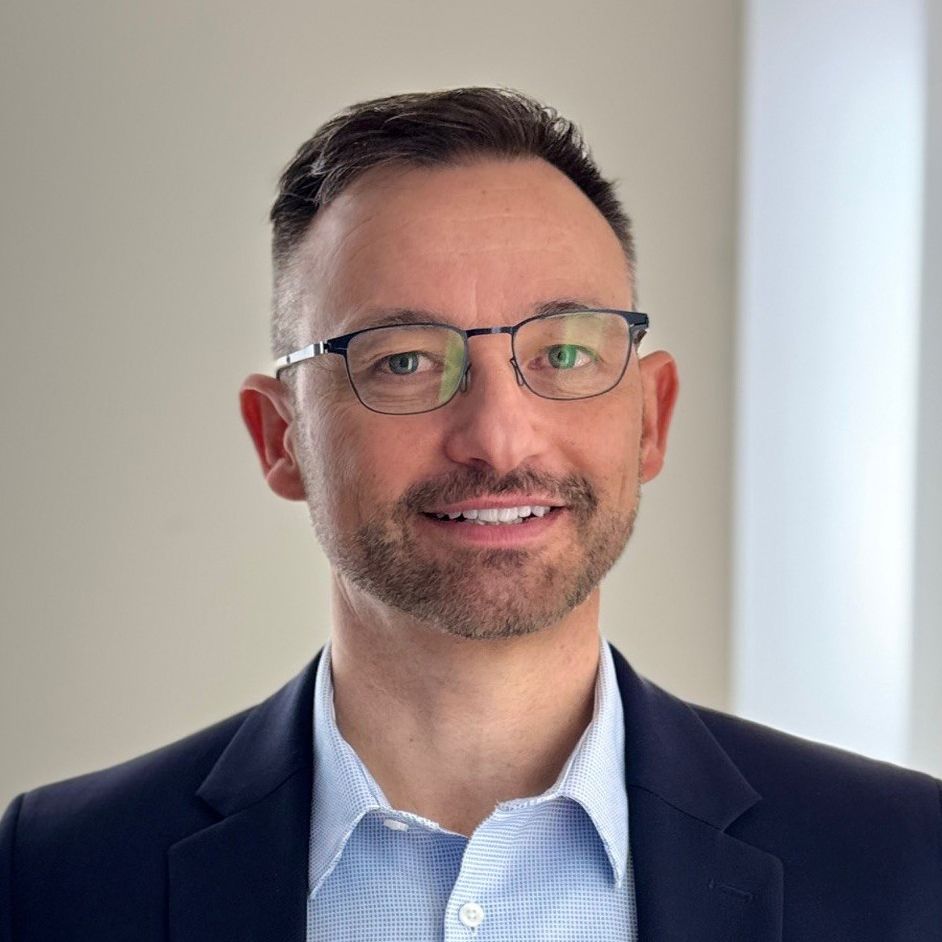
In February 2025, Bader announced that he had joined TMC Innovation at the Texas Medical Center as an entrepreneur-in-residence. The role asks experienced builders to help younger companies navigate the path from academic insight to investable, developable venture. TMC's introduction credited him with more than 25 years in research and biotech, executive leadership across multiple therapeutic programs, successful grant work, and publications cited more than 13,000 times.
There is a pleasing symmetry here. The scientist who once crossed from Austrian academia into a young Texas biotech scene now helps others negotiate the same crossing. Mentorship in this setting is not a collection of inspiring slogans. It is pattern recognition delivered before a founder spends a year answering the wrong question.
A platform becomes a company only when mechanism, manufacturing, evidence, and financing tell the same story. If one chapter is missing, the reader notices.
Bader has described the work ahead with characteristic economy, writing that he looked forward to working with “gifted innovators.” Public updates show him supporting accelerator teams, celebrating a 24-company graduating cohort, and representing the Texas ecosystem at meetings in the United States and Europe. His network now links academic laboratories, hospital systems, investors, accelerators, and drug developers. In biotech, connections are not decoration. They are part of the machinery that moves an idea.
Another company, another hard middle
Mentoring has not replaced building. Bader's newest operating role is CEO and director of Nemea Therapeutics, a preclinical company emerging from work at Baylor College of Medicine and Germany's Lead Discovery Center. Nemea is developing oral small-molecule inhibitors of mitochondrial RNA polymerase, known as POLRMT, for tumors that depend heavily on mitochondrial function.
The premise returns Bader to RNA, though by a different door. Instead of supplying a regulatory microRNA or engineering an immune cell, Nemea aims to inhibit the machinery that transcribes mitochondrial DNA. The company is initially focused on solid tumors, including metastatic triple-negative breast cancer, where resistant cancer cells may lean on mitochondrial function after conventional treatment.
Nemea won first prize at the 2025 MATWIN oncology accelerator and joined the American Cancer Society BrightEdge 2026 life-sciences cohort. In 2026, Bader presented the company at the Southeast Venture Showcase in Nashville and at a pre-seed showcase during BIO-Europe in Prague. The company has publicly described a plan to advance its lead program toward clinical entry in 2027.
That plan is still a plan, and biotech is especially talented at rearranging calendars. Yet Nemea clarifies Bader's appetite. At an age when a long list of executive titles could justify a comfortable advisory portfolio, he has chosen the exposed position at the front of a preclinical company. There are fundraising slides to sharpen, development risks to retire, and another mechanism waiting to prove it can become a medicine.
“Ultimately, however, we can only learn from clinical experience.”Andreas Bader on the limits of preclinical prediction
A career measured in handoffs
The fashionable reading of Bader's career would divide it into platforms: RNA, cells, mitochondria. The more useful reading divides it into handoffs. University to postdoc. Academic research to industry. Internal program to standalone company. Discovery to clinical study. Operator to mentor. Mentor back to operator.
Each handoff demands a change in language without a loss of meaning. Scientists need to speak milestone. Investors need to understand mechanism. Manufacturing teams need a product definition that survives contact with reality. Clinicians need evidence that makes the next risk intelligible. Bader's occupation, in the broadest sense, is translation among these groups.
His most revealing public line may be the least theatrical: “There are pros and cons to each.” It was an answer about two forms of cell therapy, but it doubles as an operating temperament. No platform abolishes tradeoffs. No clever mechanism excuses weak execution. The work is to choose the disadvantages you can manage in pursuit of an advantage that matters.
After 25 years, Bader is still making that choice. Nemea gives him a new molecule, TMC gives him a wider circle of founders, and Triumvira keeps him connected to a cell-therapy platform he helped advance. The story has no tidy finish because the work he has chosen rarely offers one. Biology proposes. Development cross-examines. The builder returns to the bridge.