Amy Jain does not like opening bananas. During a lunch with a prospective advisor, she passed one across to Daniella Yacobovsky, who peeled it and passed it back while carrying on a business conversation. No explanation was required. They had known each other for years. By the time they were explaining BaubleBar to the world, they had already worked out who handled the fruit.
The anecdote is funny because of its setting: two founders discussing serious plans with an accomplished industry figure, and a small domestic arrangement proceeding underneath. It also gives the partnership a scale a funding announcement cannot. Jain and Yacobovsky knew each other’s habits before they had employees, inventory or investors. They brought that familiarity into a business devoted to knowing what other people might like.
Jain, BaubleBar’s co-founder and CEO, had trained for a rather different career. She studied economics and political science at Yale, worked in investment banking and earned an MBA at Harvard Business School. Necklaces were a departure from the expected itinerary. The question that led her there was ordinary enough: why did two women who enjoyed shopping keep leaving the jewelry department empty-handed?
The birthday before the business
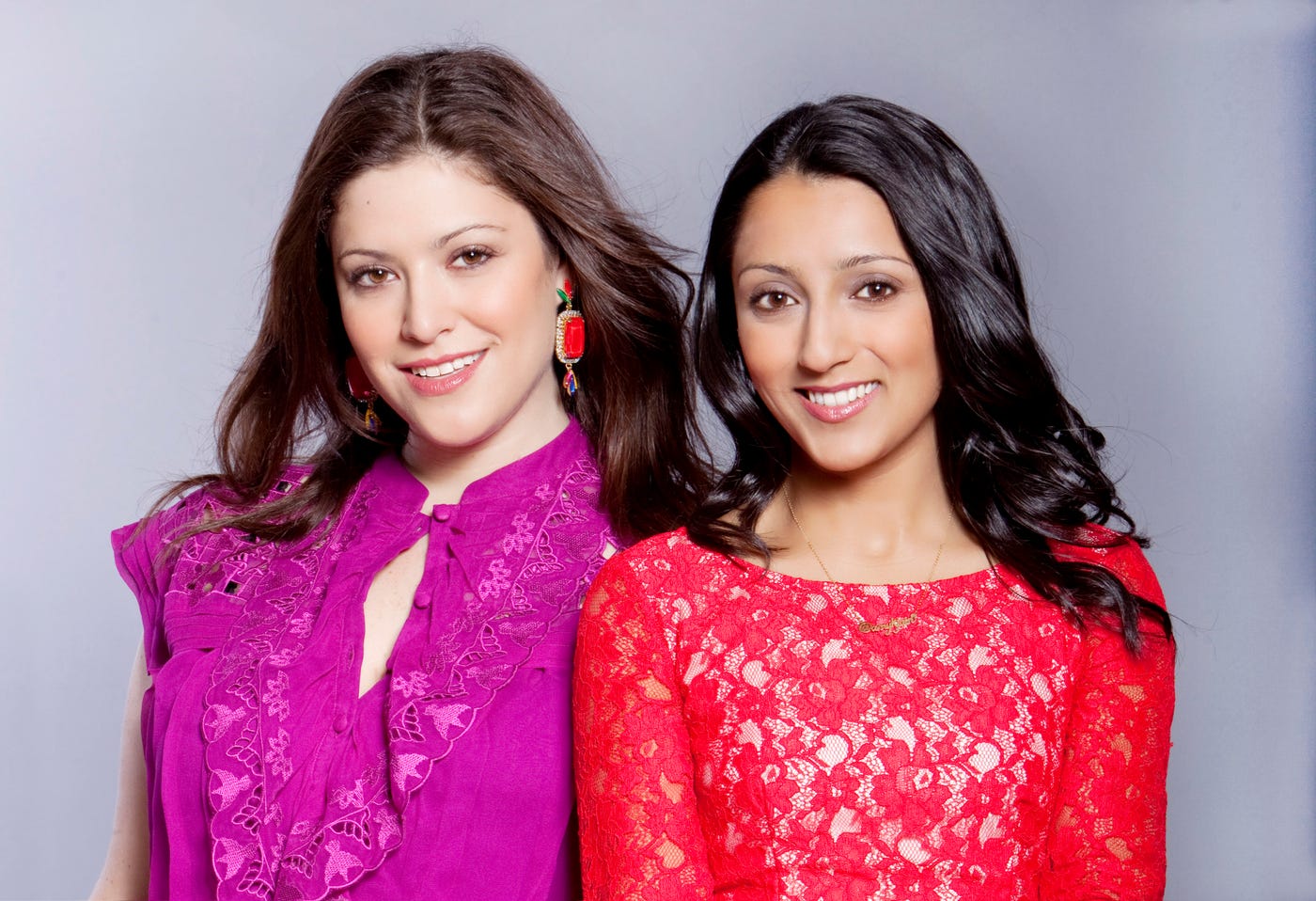
Jain and Yacobovsky met at UBS analyst training. A colleague introduced them because they shared a birthday; they went on to host a party together. Banking supplied the setting for a friendship, and also a chance to see each other work. Long before a shared company depended on their judgment, each had watched the other operate under pressure.
That experience matters to the way Jain describes their working relationship. A friend can be excellent company on holiday and an unknown quantity in a difficult meeting. These two had already occupied the difficult meeting. Their later division of responsibilities reflected interests they understood in each other: Jain gravitated toward product, operations and supply chain; Yacobovsky toward marketing and the brand’s voice.
“We joke that the things I like to do D runs away from, and vice versa.”AMY JAIN · 2015
There is affection in the nickname, and a practical allocation of labor in the joke. The person delighted by a process problem has found someone delighted by a different problem. Both problems still need solving before anyone receives an earring.
A shopping trip becomes homework
Shoe shopping was one of their ways to reward themselves after a long day. The jewelry conversation grew out of those trips. They liked accessories and considered themselves natural customers for fashion jewelry. Yet the available choices failed to persuade them. They wanted current designs at a price that made experimenting feel reasonable.
At Harvard, the idea became work they could pursue through their studies. Their second year gave them opportunities to investigate the business, gather feedback and use classmates’ connections. They also had something more valuable than a roomful of abstract advice: women around them who could react to the actual products and the proposed way of shopping.
Both founders had jobs lined up after business school. Choosing the company meant leaving a planned route whose next steps were already visible. They had done enough research to want a real answer. The early beta drew on their networks; eventually, orders arrived from people they did not recognize. Family enthusiasm is encouraging. An unfamiliar customer’s second order asks fewer favors of the imagination.
BaubleBar launched in 2011. Its early model sourced jewelry directly and sold online, reducing the costs associated with conventional retail. The arithmetic created an opportunity, but it also introduced a peculiar difficulty. A customer who saw a necklace priced well below a familiar store’s version might conclude that something must be wrong with the necklace.
Jain understood the gap between knowing the supply costs and convincing a stranger. In a 2012 explanation of the business, she described shoppers’ reluctance to trust the quality at the advertised price. Early shipping and return policies, introductory offers and the presentation of the product helped encourage a first try. A necklace could make its own case once someone held it. Getting it into that person’s hands was the expensive part of the conversation.
The unglamorous half of a necklace
Jain has been frank about arriving in retail without retail experience. She knew finance; she had to learn another trade while operating inside it. BaubleBar did not hire its first merchant until two and a half years after launch. Looking back in 2016, she acknowledged how much earlier industry experience might have accelerated the work.
“I made up a lot of words along the way,” she said. The admission punctures the tidy version of a founder’s story, where conviction seems to arrive bundled with the necessary vocabulary. Sometimes a company acquires its own jargon because the people starting it have not yet learned everyone else’s. The business then has to acquire the people who know what those jobs require.
Her operating responsibilities offer a useful way to look at BaubleBar’s cheerful exterior. Fashion jewelry has to be designed, bought, made and moved. A current trend has a limited period in which it feels current. The more a company promises variety and reasonable prices, the more carefully it has to coordinate what happens before the photograph reaches the website.
- ListenShopping behavior and customer feedback
- InterpretDesign and merchandising decisions
- DeliverSourcing, production and fulfillment
By 2015, the company had moved beyond off-the-shelf data tools to build systems suited to its own questions. The team could examine preferences across colors, metals, age groups and locations. Those observations sat alongside traditional trend forecasting. The point was to give designers a clearer idea of what shoppers were responding to, and let the business act while that response still mattered.
The same attention extended to physical retail. An early shop attached to the office let team members hear customers’ reactions directly. A store offered something a screen could only describe: the chance to pick up a piece and try it on. The founders kept experimenting with where the customer encountered the product, as well as with the product itself.
When the customer puts her name on it
A personalized phone case looks like a detour for a jewelry business until you consider where it appears. In a mirror photograph, the phone is often front and center. Jain has described how that habit helped the cases spread. An object carried all day had become part of the picture people made of themselves.
Customization expanded the company’s understanding of an accessory. A name, an initial or a particular color combination could connect products that served quite different purposes. In April 2023, when BaubleBar added personalized hairbrushes, Jain explained that ideas outside jewelry often came from watching customers or hearing what they wanted. During peak gift periods, she said, custom items could account for as much as half of e-commerce sales.
of e-commerce sales could come from custom items during peak gifting moments, Jain said in April 2023.
A DATED SNAPSHOT, NOT AN ANNUAL SALES SHAREThe founders’ lives also changed the range of things they noticed. By 2024, Jain’s daughters were among the children for whom BaubleBar’s younger assortment made sense. Yacobovsky’s boys helped illustrate why blankets belonged in the conversation too. The original young professional customer could grow older, buy gifts and encounter new occasions without ceasing to be interested in small, expressive objects.
That is a demanding way to define a business. Jewelry has a clear boundary; the things a customer enjoys giving and carrying have a much less convenient one. Expanding into another category means deciding whether the connection is convincing, then making the product work. The buyer is entitled to care more about a hairbrush than about the strategic logic that put it on the website.
A little room for belonging
Licensed collections added another form of personal expression. BaubleBar’s first licensed collection arrived with Disney in 2020. Sports and collegiate designs widened the range of affiliations customers could wear. A school or team gives a charm an existing meaning. The work is to make something someone wants to choose from all the other objects carrying that same allegiance.
In August 2026, BaubleBar’s collegiate business worked with 25 schools, up from the 12 that marked its February 2025 launch. Collegiate revenue was up more than 50 percent year to date. Yacobovsky described research into the details of individual campuses and communities, going beyond a logo to the references people recognize as their own. Roughly half of collegiate sales came through wholesale.
The in-person side has become more participatory, too. FAO Schwarz’s current custom jewelry experience lets visitors select a base and letter or character beads, then work with a BaubleBar designer to assemble their piece. A shopper can help decide what the finished object says. For a company that began by asking why the available jewelry felt unsatisfactory, that is a pleasingly literal way to invite an answer.
Jain’s career now contains a long series of translations: a shopping complaint into a school project, customer behavior into a design, an affordable price into a believable promise. Alongside them runs a friendship that began with a birthday coincidence. The banana at lunch remains a useful detail. It shows two people carrying on with the work, each already knowing which small task the other would prefer to hand across.
Follow the conversation
Explore BaubleBar, Jain on LinkedIn and her X profile. Find the company’s social accounts through its official Linktree.