Amy Elias disputes the entrance. Christopher Bedford, then director of the Baltimore Museum of Art, remembered a trustee arriving in his office with sufficient conviction to qualify as barging. Elias preferred a quieter verb. She had tiptoed, she said. “I did not barge.” On the consequential part, they agreed: she wanted the security guards to choose the art.
The proposal had grown out of a conversation with chief curator Asma Naeem about engaging the museum’s guards. Elias kept thinking about the people who spent their working days beside the collection. They watched visitors, answered questions and lived with paintings long after a passing audience had moved along. What would happen if the museum asked them which works mattered?
It was a question with a practical answer. Seventeen current and former security officers became guest curators for Guarding the Art, which opened in March 2022. Their selections made a familiar institution feel personal in unfamiliar ways. For Elias, who had spent decades helping other people communicate, the project carried an intriguing possibility: a museum might have more to say when it allowed more of its employees to speak.
One client. One employee. Plenty to do.
Long before that conversation, Elias had built a business around getting a message to produce an effect. Born and raised in Baltimore, she earned a bachelor’s degree at Emory University. In 1990, she founded PROFILES with a single client, W. B. Doner and Company. The entire staff was Elias. At least the first staff meeting was easy to schedule.
Public relations can sound abstract until someone asks what the client actually needs. Elias’s answer was concrete: a restaurant needed customers, a school needed students, a cause needed contributions. A mention in the press had to serve a purpose beyond the pleasure of seeing one’s name in print. “We don’t get them attention for attention’s sake,” she said in 2011.
The firm expanded into media relations, crisis management, events, social media and branding. Its work reached national newspapers and broadcasters, while its identity remained tied to Baltimore. A 2019 biography placed Elias at the center of the agency’s crisis response as well as its strategic direction. That combination requires two different tempos: deciding where an organization should go, and answering the urgent question of what it should say right now.
Her civic commitments widened the setting. Alongside the agency, she served on the boards of the Baltimore Museum of Art and Center Stage. The arts brought her into institutions where public attention matters, but where the question of who gets heard can matter just as much.
“We don’t get them attention for attention’s sake.”
Amy Elias, 2011
The interview that looked twenty years ahead
In 2003, Elias interviewed Amy Burke Friedman for a job at PROFILES. The applicant was 22. Elias was already talking about someone who would stay, learn, develop and eventually take over. Burke Friedman later recalled that she had scarcely been thinking on that timescale. She was considering a job; Elias was considering the future of the company.
There is something disarming about discussing succession with a junior candidate. It makes the distant corner office part of the conversation before the new employee has found the stationery. It also gives a concrete meaning to a promise that employers make rather casually: there is room to grow here.
Burke Friedman joined as a junior account executive. In 2015, the agency’s twenty-fifth year, she became president. On January 1, 2023, she became CEO. Elias’s announcement paired the change with a continuing consulting role and work for selected clients. The handover followed roughly two decades of working together.
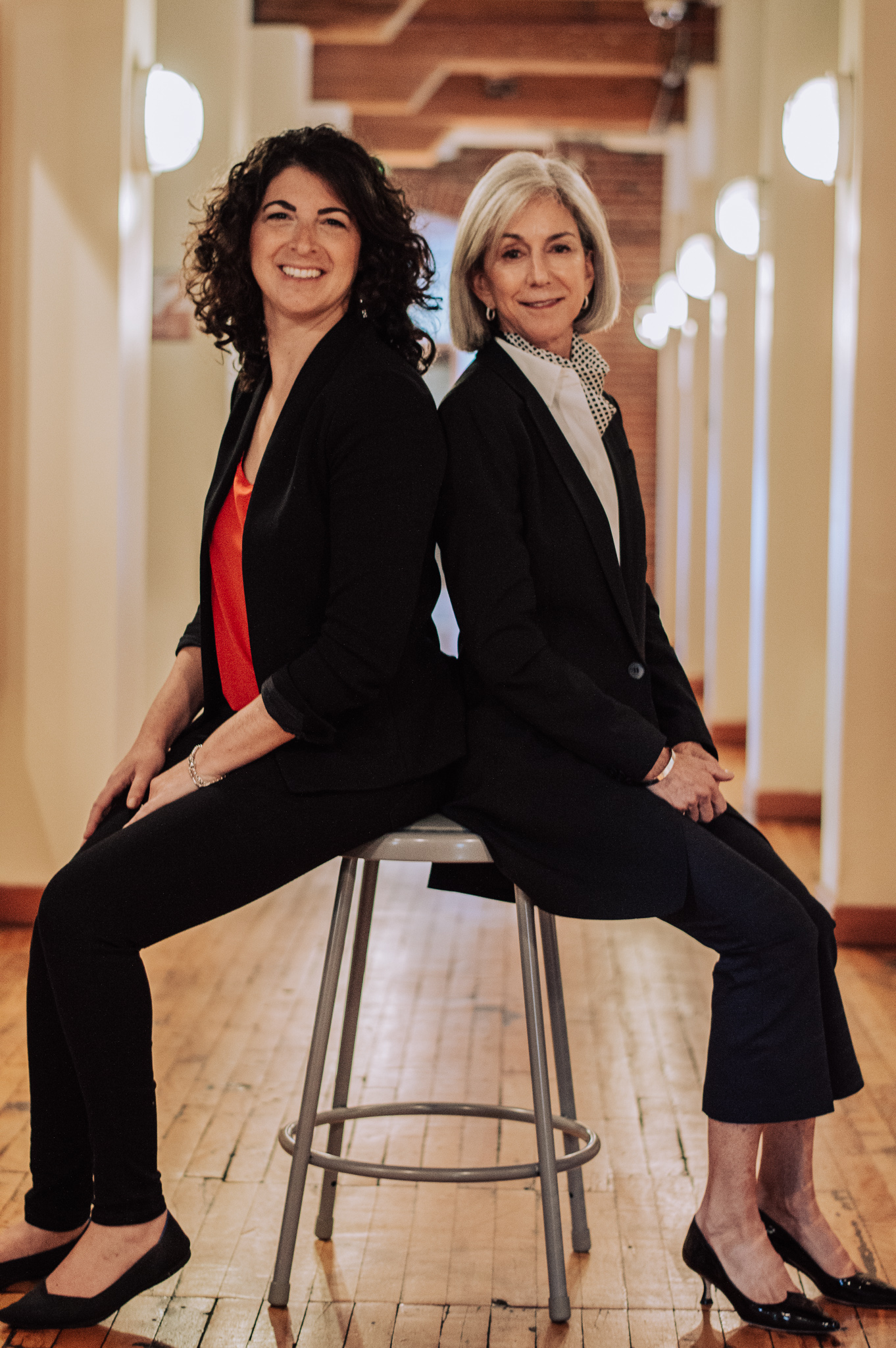
Mentorship at PROFILES also spread beyond that pair. In 2017, Elias described Burke Friedman mentoring Bridget Forney, who in turn mentored a college student later recruited by the firm. Advice was moving through several people and across the boundary between college and employment. A founder’s influence could continue even when she was no longer the person delivering every lesson.
This is one way to read the succession: as a test of whether the organization could develop judgment in other people. The new title arrived after years of practice. Burke Friedman credited Elias’s mentoring with preparing her for it. The company’s continuity had a human explanation.
Demanding, with an ear open
Elias described her leadership approach in four words: “Be demanding and listen.” She expected diligence, imagination and close attention to detail, while making room for colleagues’ ideas and reactions. The combination can be uncomfortable. High standards are easy to announce; listening means accepting that the useful answer may come from somewhere else.
Her own account of starting out helps explain why the development of others mattered. Looking back in 2020, she remembered finding few women in leadership whom she could approach as mentors or role models. By then, she described PROFILES as an entirely female company. Recognition of her work, she believed, could give the women around her a picture of what was possible.
She also treated refusal as a reason to act. Asked that year about her most significant professional accomplishment, she answered: “When I learned not to take no for an answer.” The remark supplies a useful companion to the tiptoeing anecdote. Whatever the speed of her entrance, she was prepared to bring an idea into the room.
The record of honors includes the Daily Record’s Top 100 Women, Most Admired CEOs, Influential Marylanders and 2017 Icon Honors. Yet the more revealing measure of her leadership may be the colleague who stayed long enough to become her successor. An award describes a moment; that working relationship occupied a substantial part of both women’s careers.
The guards had been looking all along
At the museum, the invitation gave a different group the chance to exercise judgment in public. Guarding the Art ran from March 27 to July 10, 2022. The guest curators worked with museum departments and received mentoring from art historian Lowery Stokes Sims. Participants were paid for their time, supported by a lead grant from the Pearlstone Family Foundation.
They brought lives that extended well beyond their job descriptions. Among the guards were artists, musicians, writers, chefs and scholars. Rob Kempton, who had joined the security team in 2016, welcomed the chance to put his studies to work in a gallery. Elias saw the selections as a route into the guards’ own stories: viewers could discover the person through the artwork that person had chosen.
Baltimore, 2022
Phoenix, 2024
One officer’s everyday familiarity could become another visitor’s point of entry. Dereck Mangus selected a painting depicting the Mount Vernon neighborhood where he lived. Kellen Johnson’s choices reflected his interest in music. These were personal reasons to look, available to an audience without a specialist vocabulary.
The guards could explore the collection beyond the works normally encountered on their rounds. The process brought their preferences into contact with the practical business of making an exhibition. What belonged beside what? How would a visitor encounter the objects? Having a choice meant having decisions to make, with experienced colleagues available to help.
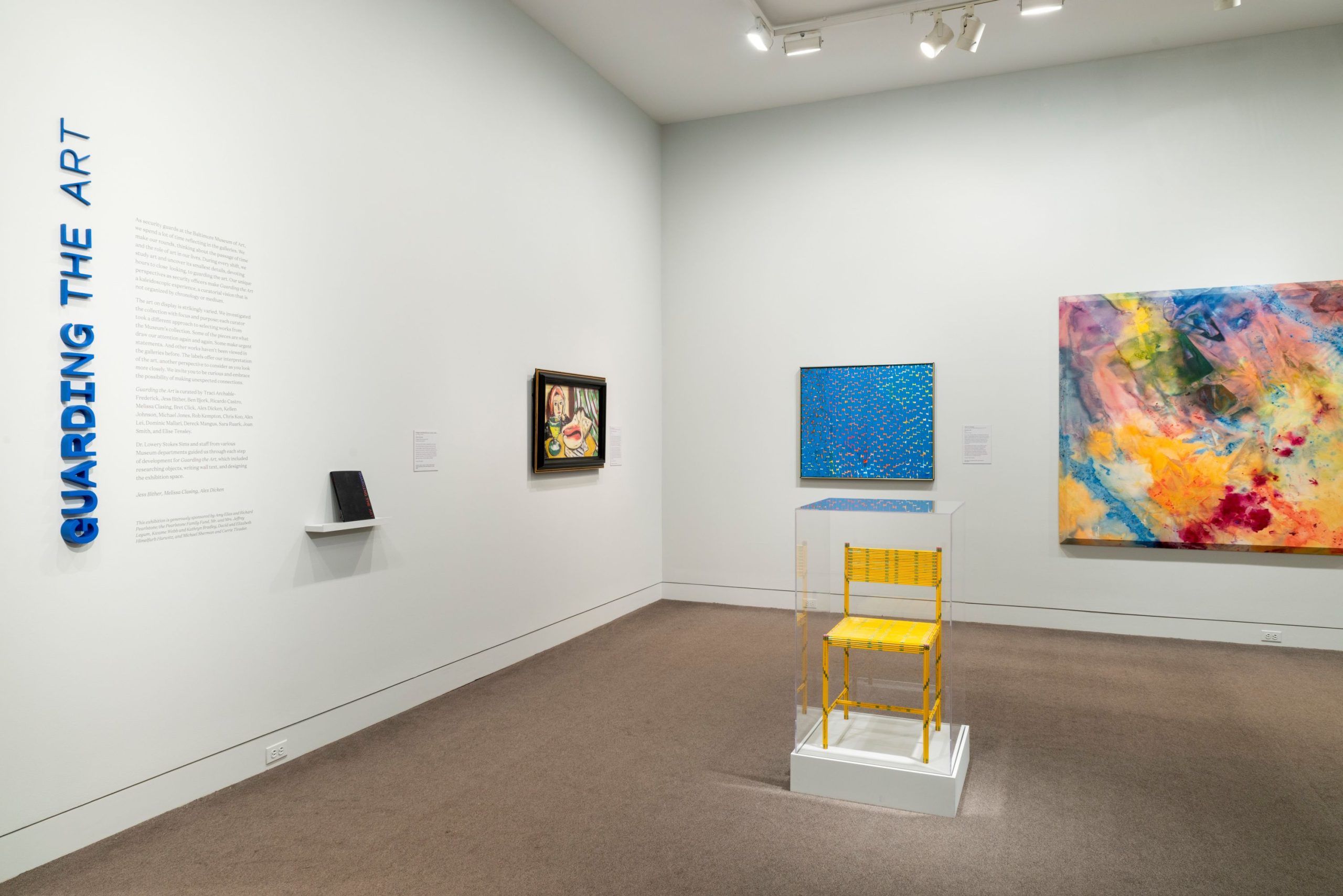
The show also had room for a joke. Ben Bjork chose Jeremy Alden’s 50 Dozen, a chair made from pencils that would break if someone sat on it. A guard who spends long hours standing could appreciate the provocation. The sculpture offered the suggestion of rest with an unusually pointed condition attached.
An idea catches a flight to Phoenix
Elias wanted the exhibition’s approach to travel. Its Baltimore run could demonstrate a method other museums might use with their own collections and employees. That ambition produced Guarding the Art: A Frontline Perspective at Phoenix Art Museum in 2024.
Phoenix developed its own exhibition, with 13 guest curators drawn from security, retail and events roles. They collaborated with museum teams and mentoring curator Susana Torruella Leval. The participants worked on interpretation, labels and a catalogue, extending their contribution into the ways visitors would encounter the selections. The exhibition ran from January 19 through November 24.
That change of city is a telling part of Elias’s story. The concept did not depend on finding an identical group of people or borrowing the same objects. Another institution could ask its own frontline employees the question and get an exhibition that belonged to them. The invitation was repeatable; the answers were personal.
Her continuing museum work places this chapter alongside the business she founded. The BMA’s fiscal 2027 board lists Elias as a vice president. The former CEO’s public life now includes an idea that has crossed the country and a leadership role in the institution where it began.
Who gets the next turn?
Set beside one another, the agency handover and the museum exhibition suggest a consistent interest in what other people can do when given time, attention and responsibility. At PROFILES, the timescale was twenty years. At the museum, the starting point was a question about people already present in the galleries.
Elias had spent her career considering how organizations reached an audience. In these chapters, she also helped change who stood before that audience. A junior employee became CEO. Guards became guest curators. Each outcome required other people’s work and judgment. Her contribution was to see room for them, then help make that room usable.
The argument over her entrance remains a pleasing footnote. Tiptoe or barge, she arrived with something worth discussing. The guards had been there all along.