In 1999, Amitai Ratzon was in New York selling advertisements for the Jewish Yellow Pages. He had finished his army service, and a friend had suggested the job. There was no grand theory of enterprise software involved. He wanted to earn a living, enjoy the city and get to New York Knicks games. The future chief executive of a cybersecurity company began with an assignment that could be understood without a slide deck: persuade a stranger to buy an advertisement.
He remembers doing well enough to be offered responsibility for an office at 23. He also remembers enjoying the selling. When he returned to Israel to study law and business, he carried that discovery with him. A legal career was available; he had been accepted at Gornitzky & Company. As the internship approached, however, the attraction of managing a sales team proved stronger. The law had an orderly route ahead. Sales had already given him a reason to get moving.
That choice is a useful entrance to Ratzon's story. His career has repeatedly involved crossing into unfamiliar territory with experience that did not look, at first, like the prescribed qualification. Years later, he would become CEO of Pentera without having previously worked in cybersecurity. The connecting skill was finding customers for something they had yet to understand.
The territory nobody was fighting over
At SuperDerivatives, which sold financial technology, his territory included Scandinavia and Iceland. Ratzon recalls that it was considered peripheral, and that his lack of fintech experience helped explain the assignment. He treated the slight as encouragement. The response was to learn the domain and become a productive seller. Geography had supplied an opening; preparation would have to supply the rest.
By 2025, when he discussed those early days with entrepreneur Yoav Hadad, the memory had become part of his advice to younger founders. Expertise had to be acquired, and doing the work beyond one's familiar surroundings was part of the job. He was participating in the Growth+ initiative, which paired experienced business leaders with early ventures. The old salesman was still explaining why persuasion matters before a company has anything resembling a comfortable position.
His subsequent roles took him through Earnix and CallVU. At the latter, he was vice president of global sales, appearing at FinovateSpring in 2016 to present its mobile digital engagement product alongside a colleague. The record is pleasingly practical: a succession of businesses, buyers and demonstrations. Before he sold security validation, he had spent years selling software into other people's working days.
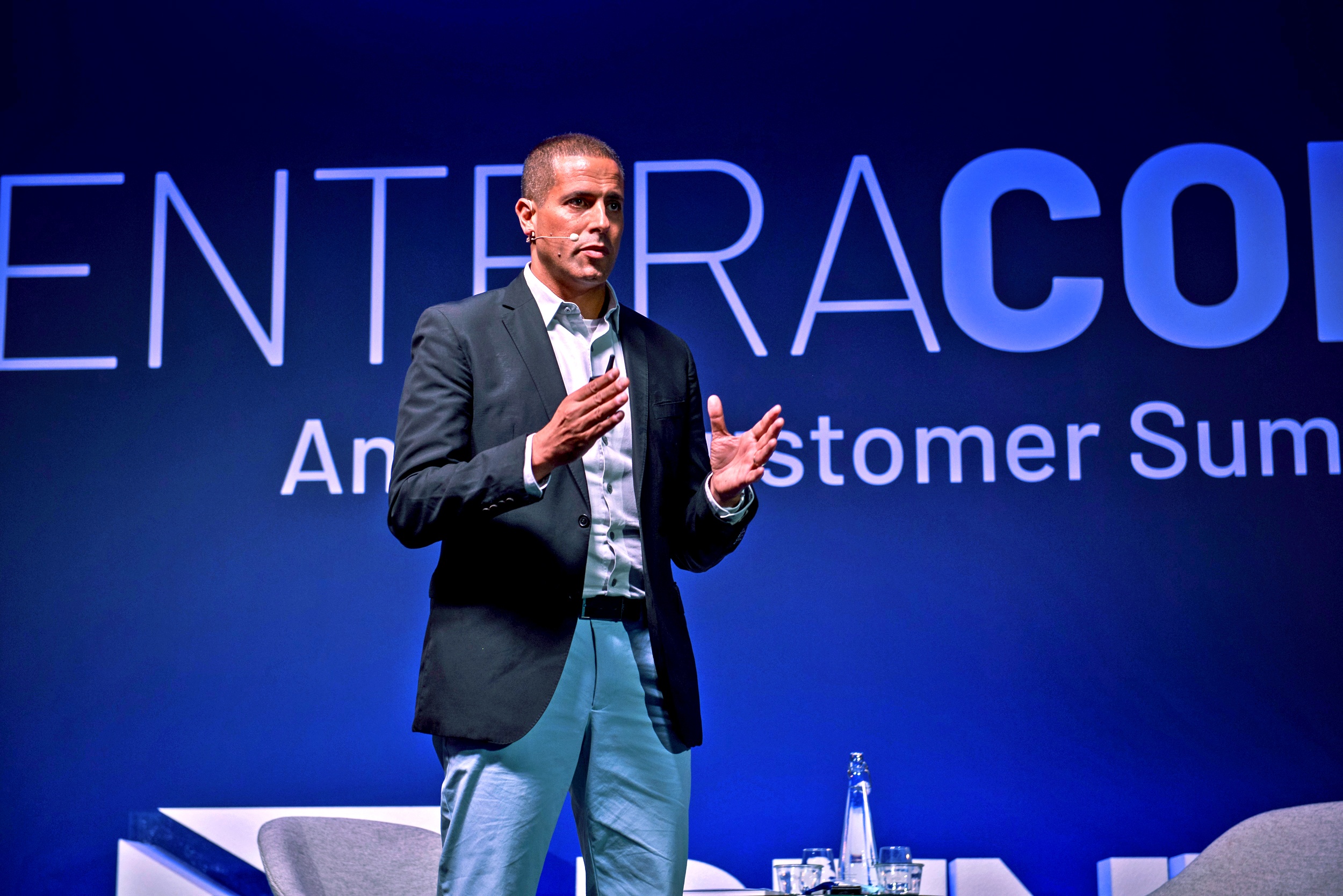
Lunch with the other half of the job
Pentera began in 2015 under the name Pcysys. Its technical founder, Arik Liberzon, had been doing a little of everything: research, hiring, fundraising and product leadership. As the business developed, that arrangement became difficult to sustain. Liberzon wanted to remain close to the technology. Bringing in someone to lead the business would give him room to do so.
Arik Faingold helped bring Ratzon into the picture. In September 2017, Ratzon and Liberzon met for lunch at an Asian fusion restaurant. There is something reassuringly ordinary about that setting. A significant corporate partnership was being considered over a meal, by two people deciding whether their separate ambitions might fit together. Ratzon took the chief executive role in 2018.
The arrangement depended on a distinction both could accept. Liberzon had the technical depth; Ratzon brought commercial experience. Each wanted the responsibilities the other was happy to hand over. When Liberzon later explained his decision, he described appointing a professional CEO as a way to protect his own involvement in the product. Delegation, in this case, allowed the founder to stay near the work that had started the company.
Ratzon's place in the partnership also complicates the familiar story of Israeli cybersecurity ventures emerging from military technology units. He had served as an infantry officer. His subsequent apprenticeship was in sales. In 2022 he argued publicly for the value of workplace experience alongside technical training. A product needs people who can bring it into a market, build a sales organization and understand how buyers make decisions. Those skills have their own learning curve.
New York
Directory advertising
CallVU
Global sales leadership
Pentera
Chief executive
Pentera reports
$100M+ ARR
A buyer's awkward question
What was Ratzon asking customers to buy? Pentera tests whether an organization's defenses can withstand attack techniques. Security teams can discover a vulnerability without knowing whether an attacker can actually exploit it in their particular environment. Validation investigates that next question. It brings the conversation closer to what could happen inside the customer's systems.
For a salesperson, the proposition carries an unusual burden. The customer must trust software that deliberately challenges infrastructure. Ratzon has described early prospects rejecting the idea. A convincing presentation could only take the company so far; confidence depended on showing that testing could be performed safely. The product's behavior had to carry the argument.
His explanations often return to the distance between a list of possible problems and a smaller set of issues that can lead to compromise. He talks about vulnerabilities together with configuration mistakes and the ways an attacker might connect them. The business question becomes which repairs deserve attention first. An enormous list can look thorough while leaving the person holding it uncertain about Monday morning.
Can an attacker get through?
- 01 Map the environment
- 02 Test attack paths
- 03 Prioritize proven exposure
- 04 Repair, then retest
Conceptual workflow, not a performance benchmark.
Ratzon's commercial background matters here because the purchase involves a change in habits. A buyer is being asked to make recurring testing part of ordinary security work. That requires explaining the result in terms people can use. A demonstration has to answer the question that brought the customer into the room, then give the team something useful to do when the meeting ends.
The basketball court follows him indoors
Ratzon grew up in Jerusalem, admiring Michael Jordan. He remembers joining organized basketball relatively late, taking two buses to games and getting only a few minutes on court. Eventually, he worked his way into the starting lineup. It is an anecdote about the unglamorous part of ambition: traveling all that way before anyone thinks you deserve much playing time.
In his own telling, the desire to perform well preceded his business career. His childhood academic target was 95 or above. A 94 irritated him because it felt nearer to 90 than 100. Numbers, apparently, could offend him before recurring revenue entered the picture. These memories help explain the competitiveness he describes without requiring a heroic origin. He says he came from a supportive family. The pressure to improve was his own.
Yet his earliest writing as CEO emphasized teams, recruitment and giving capable people freedom. The basketball analogy extended beyond scoring. In a July 2018 essay, he linked startup performance to product-market fit, rapid demonstrations of value, access to talent and a team able to execute. The preference for winning had to be translated into an organization in which other people could do their jobs.
“Convincing people to believe in you is the hard part.”
Amitai Ratzon, April 2025
By 2022, he was publicly thanking employees working across 18 countries and describing a schedule divided among customers, partners and investors. The language of culture was attached to a dispersed operation. A company could have a shared ambition while its staff spent the day in very different places. For its CEO, keeping those people connected had become work of its own.
When the number becomes yours
In London in 2018, Ratzon listened to George Kurtz describe CrowdStrike reaching $100 million in annual recurring revenue. At the time, the number seemed distant from Pentera's circumstances. In January 2026, Pentera announced that it had crossed the same threshold. Ratzon remembered the London talk. A figure once heard from the audience had become part of his own company's account of itself.
Annual recurring revenue
ARR describes recurring revenue on an annualized basis. It is a different measure from cash raised, valuation or personal wealth. That distinction matters in a career built around sales. Investment provides resources for the next stage; recurring customer spending tells a different story about the business already operating. Pentera's announcement paired the revenue figure with more than 1,200 enterprise customers in over 60 countries.
The financing had continued too. In March 2025, Pentera announced a $60 million Series D led by Evolution Equity Partners, with participation from Farallon Capital Management. The company put total funding at $250 million and set out an ambition to pass $200 million in ARR. That target described the next stretch of the business, rather than a milestone already achieved.
Growth also brought additional expertise. Pentera acquired EVA Information Security in November 2025, adding AI red teaming and penetration-testing services. In March 2026, it announced Hagit Ynon as CFO, bringing financial leadership experience from WalkMe and NICE. For Ratzon, the organization around the original technical-commercial partnership was becoming broader. The job increasingly involved choosing who could carry the next responsibility.
The next demonstration
Ratzon's 2026 agenda returns to a familiar concern: what a customer can verify. At RSA, he discussed AI's effect on attack and defense, and the work involved in turning findings into repairs. Faster testing can produce more information. Someone still needs to assign the work, remove duplicates and establish whether the repair succeeded. A growing pile of findings is an awkward souvenir from a successful test.
In June, Pentera introduced an MCP server connecting its testing actions and data to AI security workflows. In July, it announced a partnership with Recorded Future to connect threat intelligence with validation. Both developments followed the same practical sequence: identify a relevant concern, test whether it applies in the environment, then act on the result. The tools change; the demand for useful evidence persists.
There is a pleasing continuity between the early directory salesman and the executive explaining those systems. Ratzon has spent his career asking people to consider a purchase, a partnership or a shared ambition. His 2022 stated preference was to keep building Pentera as an independent company. The work ahead is larger than the old sales territory, but the conversation still begins with someone who needs a reason to believe.