Arik Liberzon learned something useful from a chess grandmaster: the position in front of you looks different from the other side of the board. Vladimir Liberzon, the Russian and Israeli player he called his uncle, helped him acquire the habit of anticipating an opponent’s next moves. Years later, Arik would apply that habit to corporate computer networks. A defender could admire the arrangement. An attacker would look for the route through it.
The idea also offers a way into his working life. Liberzon founded a cybersecurity company, then chose to let someone else run its business. He spent years close to the technology as CTO. In May 2026, he announced that he had finished his day-to-day executive chapter while remaining on the board. Each decision changed his position. The company he helped create could keep playing.
A lesson from Uncle Vladimir
In a 2018 essay, Liberzon described chess as a hobby with consequences beyond the board. What interested him was the sequence: a move creates an opening, the opponent responds, and an apparently sound position becomes less comfortable. He credited Vladimir with helping him see those connections. The family influence was practical rather than decorative. It gave him a way to consider defense and attack together.
There is a certain comedy in importing this into enterprise software. A company may own an impressive collection of protective tools. The person trying to get inside has no obligation to admire the collection. They need a workable sequence. Liberzon wanted software that could search for that sequence, offering a security officer something like a chess partner who examines the position from an inconvenient angle.
That is his analogy, and it explains his taste for the problem. The individual weakness matters because of what it permits next. The drama lies between the moves.
The pleasure of finding the way in
Before founding the business, Liberzon led a red team in the IT branch of the Israeli Defense Forces. Its assignment was to test highly secured networks. A red team approaches defenses as an adversary would, under authorization, so the people responsible for those defenses can discover what needs attention. His professional education included the awkward business of finding trouble in systems intended to prevent it.
He talked about that work with unmistakable enjoyment. In a 2019 interview, he described the appeal of getting through something a group had spent years building. “It’s thrilling,” he said. The attraction was the combination of disciplines, the clues collected during an attack and the need to put them to use as the next step appeared.
That enjoyment matters to the portrait. His public account of cybersecurity begins with curiosity and a puzzle. It is easy to imagine security work as an endless queue of problems. Liberzon also describes the intellectual pleasure of following one far enough to understand it.
“It’s thrilling.”
Arik Liberzon, on the work of an authorized attacker, 2019
A résumé with more than one vocabulary
Liberzon’s education crosses fields that usually occupy different pages of a prospectus. He holds a bachelor’s degree in aerospace engineering from the Technion, an MBA from Tel Aviv University and a master’s degree in finance from Ben-Gurion University. His academic background also includes doctoral work at Ben-Gurion; finance professor Haim Kedar-Levy lists him among his completed PhD students.
None of those qualifications needs to serve as a secret explanation for his career. They are interesting on their own terms. Aerospace engineering, business administration and finance each ask different questions about a system: how it behaves, how it is organized, how resources and risk are understood. A biography can acknowledge that breadth without pretending a diploma inevitably produces a startup.
By the time he began building Pentera, he had both technical experience and business education. The later choice to concentrate on the product was therefore a preference about his work, rather than a reason to assume he had never encountered the business side.
The idea people doubted
Liberzon co-founded the company in 2015 with technology entrepreneur Arik Faingold. It was initially called Pcysys. His starting point was a frustration from military service: even with people dedicated to penetration testing and red teaming, there was more work to do. He began considering whether the attacker’s perspective could be carried into software and made available at a different scale.
Looking back in 2023, he recalled that people understood the value of automation. Their doubts concerned whether this particular work could be automated. A human attacker responds to discoveries. Could a program do that while leaving the business running? The demand was easier to believe in than the proposed machinery.
The uncertainty was specific enough to be useful. It set the engineering task. A product had to do more than repeat a checklist; it had to act on what it found. And customers would need confidence that testing a weakness would not become a problem of its own.
Lunch, with a vacancy at the top
In September 2017, Liberzon met Amitai Ratzon for lunch at an Asian fusion restaurant. Faingold had been looking for a CEO and thought Ratzon should meet the technical founder. Ratzon later recalled two optimists, both around 40, discussing what they could build together. It is a satisfyingly ordinary setting for a consequential arrangement. No ceremonial unveiling was required. Lunch would do.
Their skills fit different parts of the job. Liberzon had created the product’s logic and written its code. Ratzon brought sales and commercial experience. “Arik didn’t want to be CEO,” Ratzon later said. He took the role in January 2018.
The partnership also helped assemble the wider leadership team. Liberzon knew the technical people they needed; Ratzon knew people from marketing and sales. Aviv Cohen and Ran Tamir became part of that early group. The business could acquire capabilities through other people, rather than require its founder to develop a new professional identity for every department.
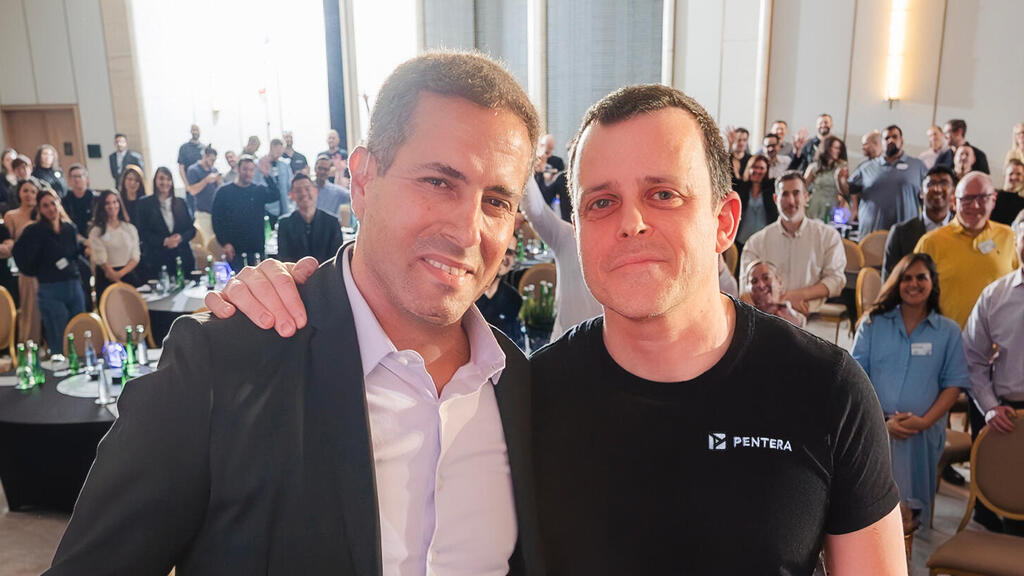
The title could wait. The product could not.
Liberzon explained his reasoning in January 2025. During the early years, he had handled fundraising, hiring, research and product leadership himself. As the company grew, that arrangement became difficult to sustain. He had to choose where to spend his own time and where to bring in another person. He chose technology and product development.
His argument went beyond the familiar advice to delegate. A founder working inside the technology can speak directly with developers and researchers. Candidates can judge the seriousness of the work through that conversation. A professional CEO, meanwhile, can bring commercial expertise and a view of the business less tied to having created the product.
He remained involved in business decisions alongside Ratzon. The choice was about a division of work within a partnership. Founder, in this account, is a relationship to the company; CEO is a job that someone has to perform. Confusing the two would have made the arrangement considerably harder.
Liberzon
Technology, research and product vision
Ratzon
Business leadership and commercial execution
Permission to prove the point
The sales task carried its own intellectual difficulty. Ratzon recalled going out with Liberzon to persuade early prospects that the software could safely challenge their infrastructure. Customers were being asked to let a young company test the defenses around something they depended on. A polished explanation could only go so far.
In Ratzon’s later account, the first enterprises willing to try it helped establish credibility. Blackstone’s investment in the Series A added another kind of confidence. The company’s method was to test what an attacker could actually exploit in a particular environment, giving a security team a narrower set of problems to address.
That makes trust part of the product’s story. The technical founder had to help persuade people to permit the experiment. They needed to see useful evidence emerge while their systems continued operating. For Liberzon, the puzzle had acquired another participant: the person deciding whether to let the software near the board.
The numbers eventually caught up
By March 2025, Pentera announced a $60 million Series D led by Evolution Equity Partners, with Farallon Capital participating. It was serving more than 1,100 customers and had expanded from a single product into a platform. Those milestones gave the early idea a business history: customers, capital and a growing collection of things to maintain.
On January 6, 2026, Ratzon announced that Pentera had crossed $100 million in annual recurring revenue. His recollection of 2018 was less comfortable: the company was still in stealth, and the team was trying to establish its approach. It officially went to market in 2019. He also described the work of making software usable by people who were not penetration testers and building safety into the platform.
The elapsed years are worth keeping in view. The lunch preceded the public launch. The launch preceded the revenue milestone by years. A founder’s conviction can start the work; the intervening calendar still has to be filled.
A different seat, and another beginning
In his May 26, 2026 announcement, Liberzon said he had decided to step down as CTO and begin another chapter. He would continue serving on the board and supporting Pentera strategically. He expressed pride in the company’s growth and gratitude to the people involved. He also made clear that he wanted to build again.
The change leaves a useful distinction in his story. Choosing a particular role helped him build Pentera. Leaving that executive role later could coexist with continued responsibility for its future. The next project was not named in that announcement; his enthusiasm concerned finding another problem worth solving.
A chessboard makes every piece visible. A company is less obliging. Jobs expand, colleagues arrive, and the person who began the enterprise has to decide where to sit. Liberzon’s career offers an unusually clear account of making that decision deliberately. The next move belongs to him.
Keep the conversation going
Read Liberzon’s writing, follow his public updates, or watch him discuss the work.
- Pentera website
- Arik Liberzon on LinkedIn
- His essay on choosing the CTO role
- His chess and cyber warfare essay
- His 2019 interview
- The lunch and partnership
- The early customer trust problem
- His May 2026 transition announcement
- Pentera’s $100M ARR announcement
- Doctoral supervisor’s academic record
- Watch the founder fireside chat on YouTube
- Watch the May 2025 Nasdaq conversation
- Watch the NYSE TV conversation
- Watch the Techstrong TV interview