Three companies arrived with the same question. Each had asked customers how likely they were to recommend a business. Each had collected the number. Each was now looking at the words underneath it and wondering what, exactly, they meant. Alyona Medelyan was running a natural language processing consultancy. Repetition, in her line of work, was something to pay attention to.
The requests came in 2015. The problem was concrete: understand what drove a Net Promoter Score, the customer loyalty measure commonly shortened to NPS. A company could count its advocates and detractors. Explaining their answers was another matter. The comments were sitting there, carrying clues about what customers liked and what they wanted changed.
Medelyan’s first version of the solution was a Python script. She presented its output in a PowerPoint deck, assembling the slides herself. There was no elaborate interface to admire. The work had to earn its place by helping someone understand the feedback. This was the beginning of Thematic, the company she co-founded with Nathan Holmberg and still leads as CEO.
An algorithm did the analysis. Alyona assembled the presentation by hand.
The languages before the code
Long before those customer conversations, Medelyan had been interested in words. She grew up in Kerch, on Ukraine’s Crimean peninsula, and studied German and English. In the late 1990s, artificial intelligence caught her attention because of what it might do with language: analyze it, translate it, create it. The spell-checking and proofreading already available in word processors offered an everyday glimpse of that possibility.
At the University of Freiburg, her studies ranged from medieval German linguistics to artificial intelligence. An exchange semester in New Zealand helped convince her to pursue a doctorate at the University of Waikato. She completed her PhD in Computer Science in 2009. Its title, Human-competitive automatic topic indexing, gives a fairly precise description of the problem that occupied her.
Topic indexing asks which subjects a document is about. A librarian might assign subject headings; a researcher might choose keywords; someone publishing online might add tags. Medelyan investigated how software could perform that work. It is an apparently small act of interpretation with a considerable consequence: people can judge whether a document is useful without reading every word.
Her open-source tool Maui emerged from that research. It identifies topics in text, including keywords, vocabulary terms and concepts associated with Wikipedia articles. Her publications often appear under the name Olena Medelyan. Among them is the co-authored survey Mining Meaning from Wikipedia, which examined how the encyclopedia could support language processing, information retrieval and the organization of knowledge.
The Chinese question
During a 2008 internship at Google in New York, Medelyan encountered a useful complication. She was integrating her algorithm into Google’s systems when her manager asked whether it could work in Chinese. Her immediate answer was reasonable enough: she did not speak Chinese.
The reply was practical: find somebody who did. She tested the work in Ukrainian, German and Russian, used Google’s internal language processing tools, and collaborated with a Chinese-speaking colleague. The result was software that could work with a language its creator did not know. Years later, she returned to that memory while describing Thematic’s experiments with multilingual feedback.
The internship also sits inside a longer story of help received. Google sponsored her doctoral work. Medelyan has credited her supervisor Ian Witten with convincing the company to support her. Research, in this telling, involved both an algorithm and people willing to make the next step possible. A colleague could supply language knowledge. A supervisor could open a door.
After the PhD, she worked at Pingar, first appearing on a 2010 conference program as a software engineer in research and development and later becoming Chief Research Officer. Pingar worked on automated metadata and knowledge discovery. The subject remained recognizable: helping computers extract useful information from text, and helping people find what they needed.
“Often us, technologists, overthink.”
Alyona Medelyan
An algorithm meets a buyer
The commercial lesson took longer. An early idea for a high-performance NLP library attracted international inquiries, but no sales. Meanwhile, the customer experience prototype called Thematic produced a rather different reaction. One company said it wanted to buy the following month. Two others signed expressions of interest. People were telling her where the business might be.
Medelyan took an enterprise sales course. For a technical founder, learning how to lead a customer discussion was part of learning how to run the company. By March 2017, Thematic had reached an early target: monthly recurring revenue sufficient to support two full-time salaries within twelve months. It was a wonderfully ordinary ambition for an artificial intelligence business. Rent does not accept a promising algorithm.
The first proposal presented its own puzzle. As a consultant, she knew how to charge for hours. Pricing a new solution was unfamiliar. A sales coach helped her think about its value to the customer, estimating it at around $100,000, and advised her to quote the highest amount she felt comfortable presenting. She did. The company accepted. She has not publicly specified that first price in the account.
In 2024, she announced Thematic’s first $1 million contract. The larger customer had tested the product for more than a year. Her reflection also returned to the original buyer, which was still a customer roughly nine years after that first proposal. The two relationships give the milestone some texture: a large agreement at one end, and a long-running customer at the other.
- 2015
- Repeated customer requests become a prototype.
- 2017
- Recurring revenue supports two full-time salaries.
- 2024
- Alyona announces the first $1M contract.
Milestones describe different measures, not a revenue growth chart.
Two founders, more than two jobs
Holmberg was her husband before he was her co-founder. He had worked at Serato, the music software company. Medelyan asked him to leave his job and build Thematic with her. Their combined technical experience helped make the product possible; running the business required them to bring in other kinds of expertise.
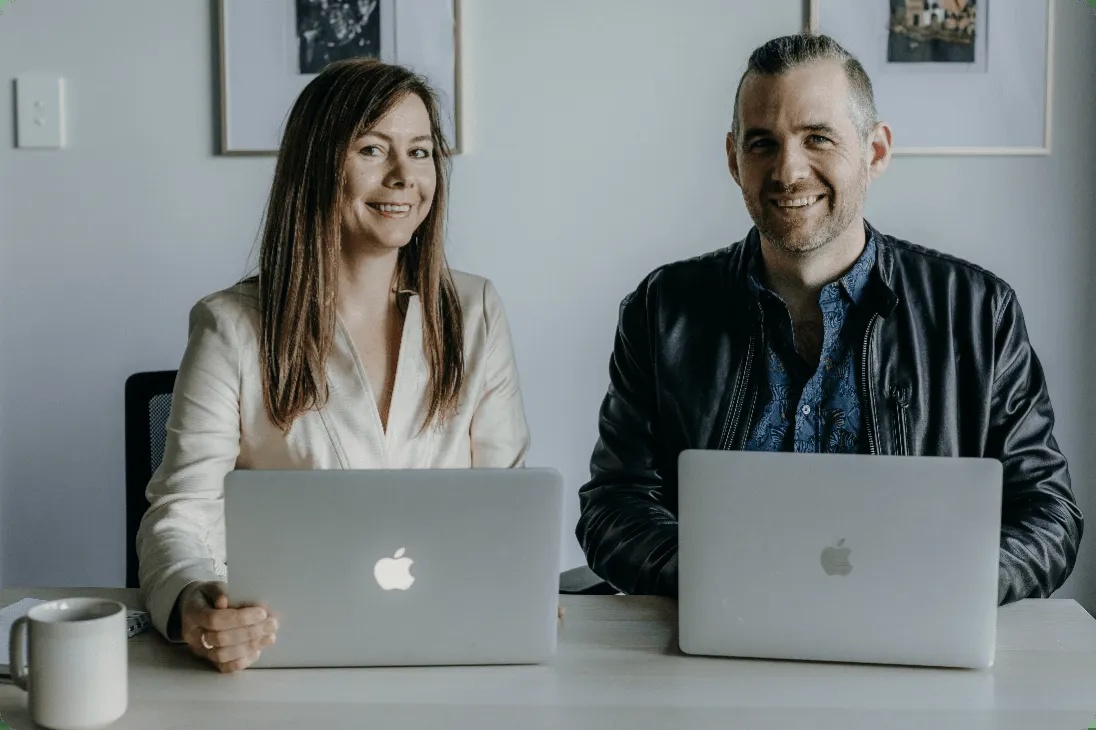
Thematic joined Y Combinator’s Summer 2017 batch and raised US$1.2 million in seed funding led by AirTree Ventures. In 2018, Medelyan described a company with twelve employees across two countries and customers on four continents. The family moved to the United States as the business expanded. Today, her personal site places her back in Auckland with Holmberg and their two children.
Growth did not make every function easy. Both founders were technical, and the first hires included customer success, content marketing and research. Hiring salespeople proved difficult. Medelyan has described attempts that failed and a period in which the founder and customer success team supported sales themselves. A business could have working software and still have plenty to learn about selling it.
A plausible answer needs a paper trail
Thematic’s subject has stayed close to Medelyan’s research interests, while the technology around it has changed. Customers can inspect the themes the system finds, rename them and reorganize them. The human reviewer remains part of the process. An answer is more useful when the person receiving it can see how it was made.
That idea was already visible in a 2016 study involving feedback from 250 students at a Swiss business school. Four people identified leading themes in the responses, and Thematic’s output was compared with theirs. The study discussed differences between human judgments and included a manual refinement stage. It offered a concrete way to examine the analysis, including where it needed adjustment.
Generative AI added new ways to ask questions and summarize results. It also made convincing language easier to produce. Medelyan has warned that a system can latch onto particular comments and generate an account that sounds plausible while being inconsistent or incorrect. For a manager choosing what to fix, the difference matters.
- ReadBring customer comments together.
- GroupDiscover themes and let people refine them.
- InspectFollow an insight back to the comments.
- ActUse the evidence to choose an improvement.
A conceptual view of feedback analysis, not a measurement of product performance.
Her more recent writing widens the concern. If five teams use AI to create five different stories from the same dataset, giving everyone access to analysis may also give an organization more ways to disagree. She argues for shared analysis infrastructure. The ambition to spread insight comes with the practical question of how people keep working from the same evidence.
In March 2026, she wrote about Thematic’s Scoring Agent, which infers synthetic scores from existing feedback. These are estimates derived from language, rather than ratings a customer actually supplied. The workflow asks people to define what they want to measure, validate examples and then track results. The recurring theme is recognizable: make the words useful, and keep a person able to check the interpretation.
Back to the classroom
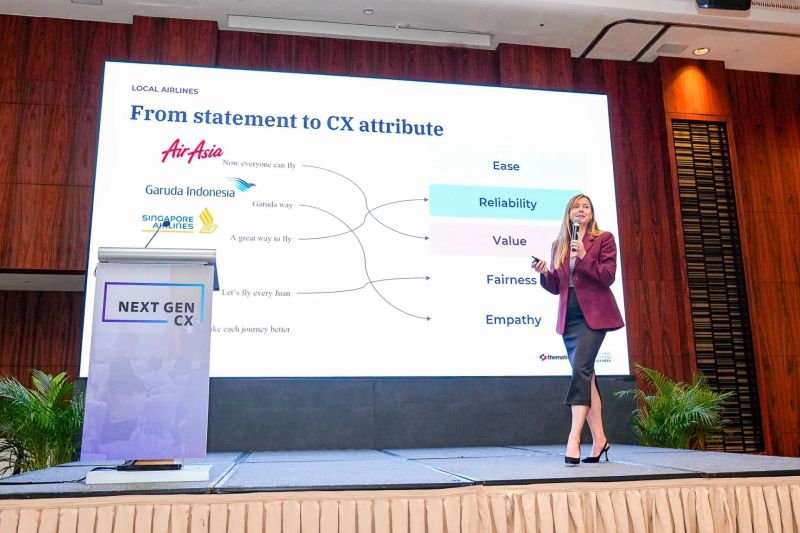
Medelyan now teaches women business owners to use AI in their everyday work. Her sessions cover writing, planning and research, along with checking the output and understanding where the tools go wrong. A hands-on session at The Node in Devonport, Auckland, is advertised for November 5, 2026. She has also taught at Waikato and given a practical lecture for academyEX.
There are interests beyond the software. Her earlier personal biography lists painting, travel and certified hairdressing. It also links to a fire poi performance accompanied by Witten’s clarinet. The doctoral supervisor and the researcher turn out to have had another collaboration available, one requiring rather less indexing and rather more room to swing.
Across these different settings, she keeps returning to language and the people using it. Customers have something to say. Researchers have a method to share. Business owners have a new tool to learn. The first Thematic presentation was assembled by hand because somebody needed an explanation. Years later, that need still gives her work its direction.
Follow the words further
Explore Alyona’s work, writing and conversations.
- Alyona’s personal website · LinkedIn · X · GitHub
- Thematic · Thematic’s blog · AI classes for women business owners
- The early sales lessons: CIO interview
- A conversation about customer feedback and AI
- Building the first product: the Relay interview
- Watch: Understanding Human Language with Python
- Watch: NBR’s interview with Alyona
- Watch: RANZ conference conversation · The fire poi performance