In 2009, Alisa Bowen was thinking about elevators. Reuters had news to deliver, but its readers had an inconvenient habit of going underground or stepping into metal boxes where their phones lost reception. An application that stored stories for later could keep the news available. It was a small, practical answer to a small, practical irritation. Seventeen years later, the executive explaining that feature would become chief executive of Fubo.
There is a useful way to read that journey. Follow the audience as it leaves one screen for another, and Bowen keeps appearing somewhere nearby: at Reuters, at The Wall Street Journal, at News Corp Australia, at Disney. Her titles change. The underlying problem has a familiar shape. People want something worth their time, delivered in a way that fits their lives. Getting paid for providing it is the other half of the assignment.
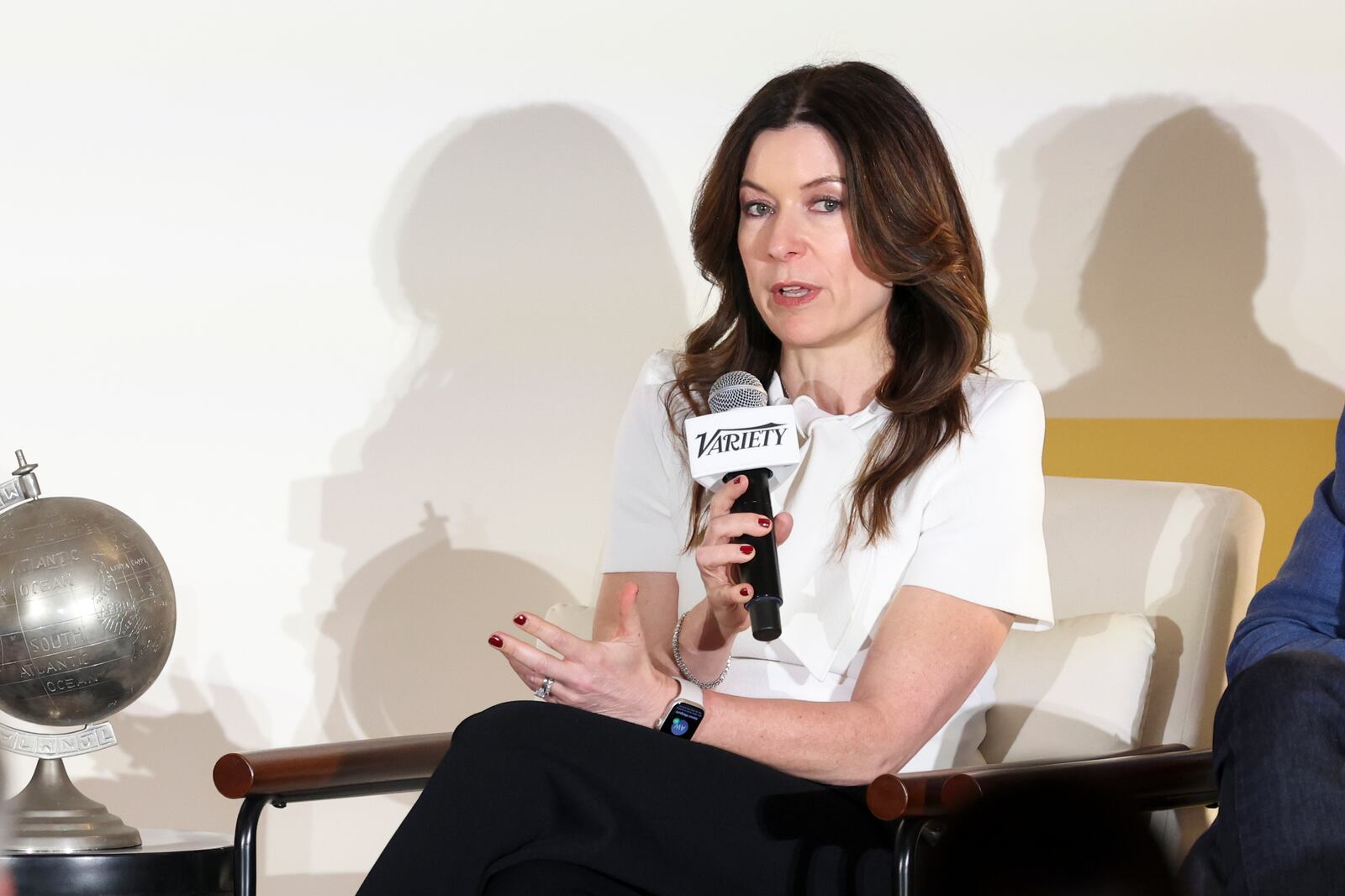
Fubo appointed her CEO effective July 10, 2026, succeeding co-founder David Gandler. She arrived after the business had combined with Hulu + Live TV, with Disney holding a majority stake. That gave the appointment an unusual intimacy. Bowen had spent nearly a decade inside Disney, most recently as president of Disney+. She knew the neighboring house because she had helped build parts of it.
The news had to leave the building
Born in Australia, Bowen initially wanted to become a journalist. She studied public relations at RMIT and later earned an MBA with distinction at London Business School. Her early work was in communications; her subsequent career moved toward the machinery that gets journalism to its readers. The ambition to work with media survived the change of department.
She joined Reuters in 2001. Over almost ten years, her responsibilities included product development, Reuters.com and consumer publishing, working in London and New York. In June 2010 she became global head of business operations. News organizations were trying to find their place on a growing collection of devices, each arriving with its own habits and commercial promises.
Her 2009 explanation of mobile applications was pleasingly concrete. Offline reading mattered. So did browsing news through photographs, watching video and keeping track of markets. Reuters was also working with Nokia on mobile journalism tools, bringing reporting workflows into discussions about capturing, editing and uploading video. A phone was becoming both a place to consume the news and a tool for making it.
The same year, Reuters.com reorganized its offering around subjects and themes, drawing on the wider company's professional information. Bowen described the redesign as a way to build deeper business knowledge. Distribution and presentation belonged in the same conversation as the material itself. A room full of information is only useful if someone can find the door.
- 2001Reuters
News on new devices - 2010Dow Jones
Digital products - 2013News Corp
Subscriptions & technology - 2017Disney
International to streaming - 2026Fubo
Live television
A newspaper learns to remember
Bowen became general manager of The Wall Street Journal Digital Network in December 2010. Its scope reached beyond WSJ.com to properties including Barron's and their mobile applications. By 2012, as Dow Jones' chief product officer, she was discussing a deceptively ordinary ambition: a reader should be able to begin on one device and continue on another.
That meant remembering where someone had stopped. It also meant imagining a news service that understood what its subscriber had already read that morning before presenting the evening edition on a tablet. Bowen described personalization as an ambition that would take time. The distinction matters: these were proposed improvements, rather than a claim that every piece was already working.
The example offers a revealing measure of her work. A reader does not applaud a synchronized bookmark. A reader simply gets on with reading. Successful product operations can make quite a lot of labor disappear from view. Their absence is noticed more quickly than their presence, usually when the page has forgotten everything the customer just did.
Bowen's Dow Jones responsibilities also extended across consumer and enterprise products. That range put the requirements of individual readers alongside those of professional information users. It is an early version of a tension that follows her into streaming: a single business can serve several audiences without those audiences wanting the same thing from its products.
Back to Australia, then into Disney
In 2013, Bowen joined News Corp Australia to lead digital product and development. She later served as chief technology officer. Her work there included the shift toward digital subscriptions and new advertising offerings, bringing questions of technology, payment and audience behavior into the same portfolio.
A 2016 appointment she announced helps explain the organizational side of that work. Mark Drasutis took broader responsibility for digital consumer products, bringing engineering, platforms, product management and delivery together with innovation. The aim was to give important ideas the development resources to become actual products. In corporate life, an idea with no route to delivery can enjoy a surprisingly comfortable retirement.
Bowen left for Disney in 2017. Her initial brief covered digital media and technology for international operations, including broadcast systems, content operations and publishing across Europe, the Middle East, Africa, Asia Pacific and Latin America. It was a substantial geographical education before Disney+ became a global streaming business.
By 2019, she was working in streaming operations. In September 2022, Disney named her president of Disney+. At that point, the service reached 154 markets and had reported 152.1 million subscriptions at the end of Disney's fiscal third quarter. Those figures describe the platform she helped roll out with a wider team. They also describe the number of places where a seemingly simple product decision could become complicated.
Disney+'s reach at Bowen's September 2022 appointment as president. A snapshot of the service, not a personal scorecard.
The appeal of getting it done
“I like to describe myself as the co-pilot, not the pilot,” Bowen said in 2024. It is an unexpected introduction from someone who would soon run a public company. Yet it fits the work she described: supporting creative teams and arranging the conditions in which their work could succeed.
Her colleagues supplied a similar portrait. Joe Earley emphasized her willingness to get on with the job rather than become absorbed in office politics. Hulu's Lauren Tempest described someone concerned with the quality of a decision rather than ownership of the idea. These are colleagues' assessments, but their agreement is instructive. Both pointed to the usefulness of having Bowen in the room.
She had another source of audience feedback at home. In 2024, she described an older daughter interested in anime and animation, and a younger daughter who kept her informed about social media. A household can provide a useful reminder that an audience segment is made up of people with quite specific tastes. The corporate slide rarely captures the full force of a teenager's opinion.
A global service has local complications
Bowen's international experience shaped how she discussed Disney+. In 2024, she emphasized the importance of understanding differences in viewing habits, tastes and regulation. She also talked about flexibility in content and pricing, and the place of sport in the service's development. A platform can travel widely while still needing to understand where it has arrived.
Her emphasis on practical outcomes is a compact account of an operating philosophy, with very little room left over for grandstanding.
“There's always room for a little more pragmatism and a little more focus on outcomes.”
Alisa Bowen, 2024
News remained part of the picture. In July 2025, discussing ABC News' growing presence on Disney+, Bowen said coverage of major events had brought additional reach beyond linear television. The service was adding a short daily news program, What You Need to Know. Her career had begun around news and moved into entertainment; the products were now meeting on the same screen.
The live game changes the clock
At Fubo, the customer has an especially definite timetable. A film can wait until tomorrow. A live game acquires a different meaning once somebody has told you the score. Packaging, access and availability therefore become part of the entertainment itself. The service has to make a complicated collection of programming feel manageable before the whistle blows.
September 2026 brought a concrete example of the direction Bowen was describing. Fubo launched My Local Sports, allowing subscribers in select markets to add regional sports coverage to its lighter Fubo Sports plan. Availability and pricing varied by market. The promise was greater choice in how fans assembled a package around their teams.
On October 22, Fubo announced seven new regional sports distribution agreements for the coming NBA season. These are company developments during her tenure, rather than evidence that one executive personally negotiated every contract. They show the practical terrain of the job: local coverage, programming relationships and a subscription proposition customers can understand.
Bowen's stated priorities include growth, profitability and value for subscribers, advertisers and content partners. Those interests must coexist in the same business. Her earlier work suggests a useful perspective on that assignment: look closely at where the customer meets the product. Sometimes that point is a subway ride and a saved news story. Sometimes it is a television, a local team and a game about to start.