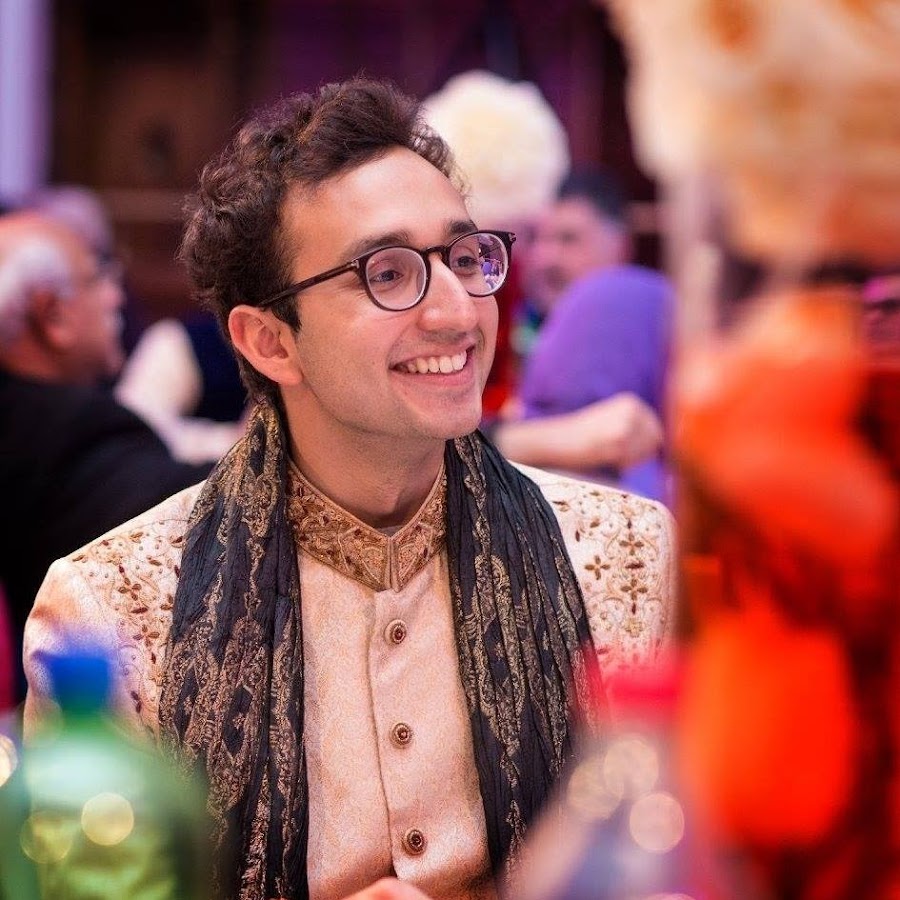
Ali Abdaal is mid-edit when most people are mid-coffee. There is a Notion doc somewhere with a spreadsheet inside it, and inside that spreadsheet is a hypothesis: that the right way to live a productive life is to feel good first, and let the output sort itself out. He has written a book about this. He has sold hundreds of thousands of copies. He has wrestled the idea into thirty-five languages and onto a thousand bedside tables. He keeps testing it on himself.
Today he is one of the most-watched productivity creators on the internet, with more than six million subscribers on YouTube and a fan base spread across Instagram, LinkedIn, TikTok, X and a Spotify chart. He runs the Part-Time YouTuber Academy, hosts the Deep Dive podcast, and presides over an operation that does eight figures of revenue from a small team in London. The strange part is that none of this was the plan.
The plan, briefly, was medicine. Abdaal arrived at Emmanuel College, Cambridge, in 2012 with a place to read medicine and an unusual side project: a small business that helped sixth-formers get into med school. Inside the Cambridge medicine course, he developed a quiet obsession with what he called the most time-efficient ways to revise. He treated his own brain as a system to be optimised. The hours he liberated, he poured into a YouTube channel, started in 2017, where he filmed himself explaining how to study.
That should have been a footnote. Cambridge medics produce a great many side projects and very few of them survive contact with the wards. Abdaal qualified as a doctor in 2018, started an NHS junior post, and kept filming - desk videos shot on days off, productivity essays edited on night-shift sofas, an apps-on-my-iPad video that, somewhere along the line, broke containment.
By 2020 he was running two careers at once: NHS doctor by day, creator by anything-after-that. He launched the Part-Time YouTuber Academy in late 2020 - a four-week cohort that taught working professionals how to start a channel without quitting their jobs, because he was doing precisely that. The first cohort earned around $294,000. Subsequent cohorts pushed total revenue past $1.7 million in a single year. When he eventually retired the live version, the final intake reportedly cleared $200,000 in the first ten minutes. He calls it the Lifestyle Business Academy now. The maths still works.
In 2022 he stopped practising medicine. Not as an abdication, more like a graduation. The decision allowed him to write the book that had been forming in interviews and podcast episodes for years.
Feel-Good Productivity arrived in early 2024 and went straight onto the New York Times and Sunday Times bestseller lists. The thesis is heretical, in a quiet sort of way. Most productivity literature begins with friction: discipline, grit, accountability, the cold shower. Abdaal begins with joy. His argument, drawn from psychology and his own pile of self-experiments, is that positive emotion is not the reward for productivity but its precondition. Feel good and you do good. Do good and you feel better. The loop is the point.
He organises the book around three energisers. Play, which gives stressful work a sense of game. Power, which is the personal kind: the feeling that you have agency over what you do. And people, because doing the work alongside friends almost always beats doing it alone. None of these are revelations. The trick is that he has built a career on taking the obvious thing and holding it still long enough for the camera to catch it.
Listen to him for any length of time and the same texture emerges. He cites studies but doesn't bludgeon you with them. He name-checks Marie Kondo and Cal Newport in the same breath. He once told an interviewer that his guiding question is not how to be more productive, but how to enjoy whatever he is already doing. The phrase that follows him around - the secret to productivity isn't grind, it's feeling good - is repeated often enough to have become a slogan, but he means it.
The Deep Dive podcast, started in 2021, is where he stress-tests the thesis on other people's lives. The format is long and unhurried. Founders, authors, athletes, comedians. He asks questions in the slightly excitable register of someone who genuinely cannot believe his luck. Guests have included Steven Bartlett, James Clear, Tim Ferriss, Mark Manson, Grace Beverley. Episodes routinely run past two hours. He treats it as research.
The business behind all of this is small by the standards of the noise it makes. A team in London, mostly under fifteen, building courses, shipping videos, editing the book club, managing the podcast feed, fielding the calendar. He has been candid about wanting to keep it that way - what he sometimes calls a lifestyle business, with full intent, none of the dismissive shrug the term sometimes carries. The point is not scale for its own sake. The point is to enjoy the work.