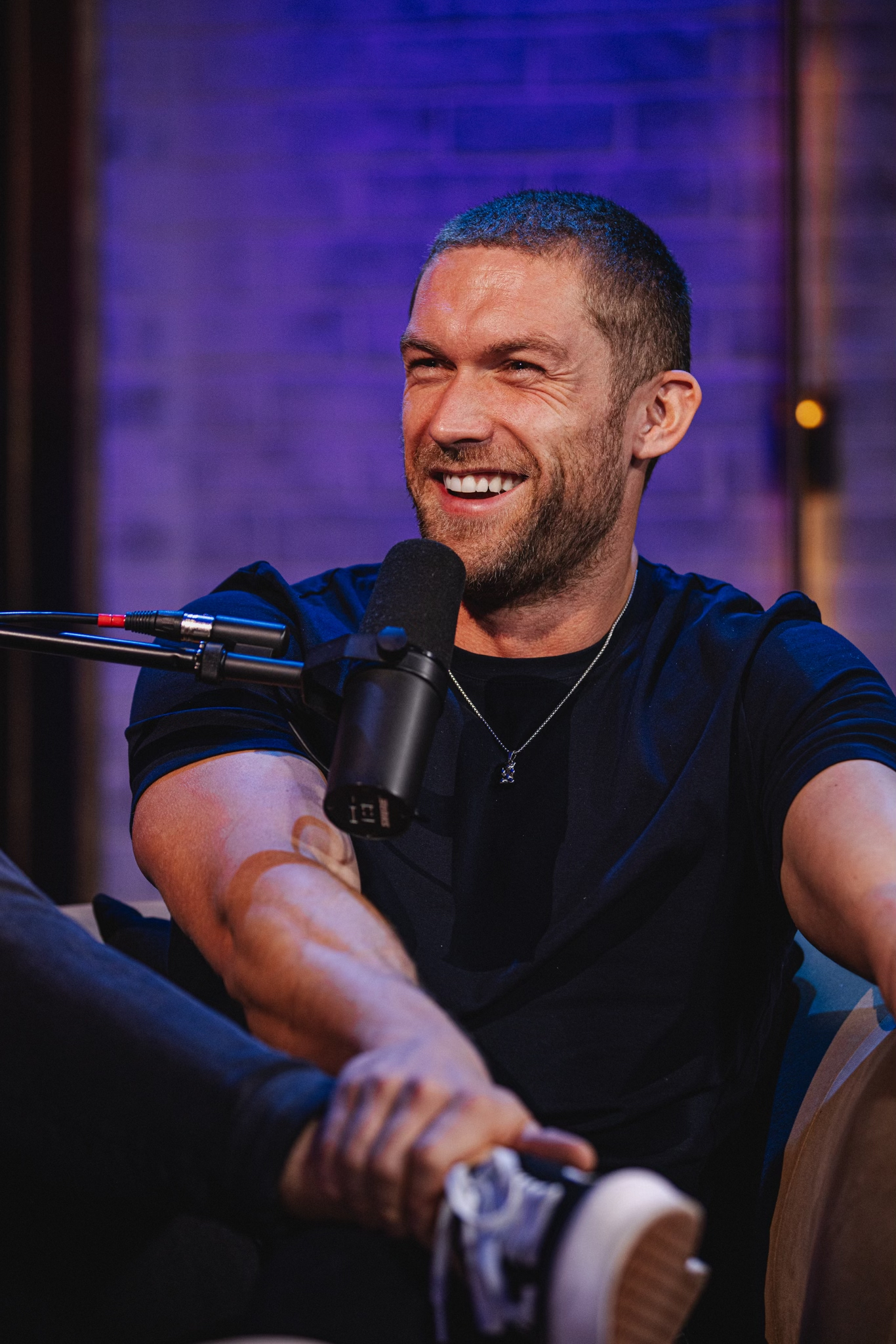
There is a particular kind of curiosity that requires a microphone. Chris Williamson found his late, then made up for it weekly.
He records most weeks from a studio in Austin, then ships the episode out under a name that sounds like a self-help book your uncle gave you - Modern Wisdom. The audience does not care. They have downloaded it more than four hundred million times. They watch it more than a billion times on YouTube. They read his Monday newsletter at breakfast, exactly three minutes, no longer. Williamson, thirty-eight, has built a small media empire on the radical idea that other people are interesting if you let them finish a sentence.
The current rhythm is monastic. Read the guest's books cover to cover, sometimes more than one. Mark up the margins. Sleep. Wake. Lift. Drink a Neutonic, the nootropic energy drink he co-founded because the existing options either tasted like petrol or required a sugar coma to follow. Sit down. Press record. Ask the question the back-cover blurb forgot to address. The format is not new. The discipline applied to it is.
01The Strange Specific
Williamson is from Stockton-on-Tees, a town in the North East of England that does not appear on inspirational posters. He was born in February 1988. As a child he played cricket - properly, for the Durham Academy, the kind of youth setup that turns lanky boys into actual cricketers. He did not become an actual cricketer. He went to Newcastle University instead, picked up a degree in Business Management, then stayed for a master's in International Marketing because, by his own telling, university was a good place to keep going.
While studying he started running nightclub promotions, which is a delicate way of describing the job of standing in a Newcastle queue at one in the morning making sure a thousand people have a reason to come back next Friday. He was good at it. He was tall, sharp-jawed, talkative, and could read a room. The skill set has not been wasted.
02The Detour That Became the Route
In 2012 he appeared on Take Me Out, an ITV dating show that involved standing in front of a row of women who turn off their lights if they are not interested. In 2015 he turned up on the first ever series of Love Island, listed in the credits as a nightclub promoter and model. He lasted less than three weeks. He has been candid since that he did not feel he belonged there - which is a useful thing to feel, at the right age, in the right pair of swim shorts, on national television.
The discomfort metabolised into a question. If reality TV is not the thing, what is the thing? In 2018, sitting in Newcastle and reading more or less constantly, he started Modern Wisdom. The early episodes are not slick. The early audio is not great. The early guests were friends and acquaintances and the occasional bigger name who took pity. He kept going. He kept reading. The booking process, by his own account, became a sustained campaign of polite persistence - emails that landed, followed by emails that landed better, followed by guests who told other guests that this kid actually does the homework.
What the rolodex now looks like
The list is the punchline. It also explains why his audience trusts the booking choices: the through-line is curiosity rather than tribe. He will record with someone whose worldview you find offensive in the morning and someone you quote at dinner by the evening. The show argues, implicitly, that taking ideas seriously is what disagreement is for.
03The Craft
Most podcasters interview. Williamson studies. The difference is visible in the pacing of his episodes - long, unhurried, organised. He has talked openly about preparing for an interview by reading the entire back catalogue of an author rather than just the new book they are touring. He builds a rough running order and abandons it the second a better thread appears. He listens for the thing the guest has clearly said before, and then asks the version of the question that pushes one step past it.
The result is that authors who have toured the same book for six months end up saying something they had not said yet. That is the trick. The audience comes for the famous guest and stays because Williamson refuses to let the conversation collapse into a press release.
04Neutonic, the Side Door
By 2023 Williamson had what creators are now expected to have - a product. Neutonic is a nootropic productivity drink he co-founded, sold in cans, the kind of thing that lives next to the laptop. It is genuine business rather than affiliate-link theatre; he discusses formulation, supply, and pricing with the same plain-English interest he applies to the books on his desk. He has been clear that podcasting paid for the lifestyle long before the energy drink did. Neutonic is the second act, not the rescue plan.
05How He Speaks
Williamson writes in the rhythm he speaks in. Short. Considered. Loaded. The Monday newsletter is called 3 Minute Monday, abbreviated 3MM, and arrives every week with three ideas, three quotes, a video, a book. People forward it. He keeps it tight on purpose: the constraint, he has said in interviews, is the point. If it can fit, you read it. If you read it, the ideas do their work.
The quotes he is associated with are largely his own one-liners pulled from long-form conversations, the kind of sentences that get screenshotted and shared without attribution and end up reattributed to Marcus Aurelius. He has accepted this with a degree of patience.
The traits that you are most ashamed of are often just the dark side of something light.
Advice doesn't land evenly. It finds the path of least resistance.
No one can beat you at being you.
The magic you're looking for is in the work you're avoiding.
People want trailblazers with odd idiosyncrasies they can fall in love with.
Life lessons from the smartest people on the planet.
06Where He Sits Now
Austin, Texas. The shift from Newcastle to Austin happened gradually, the way these things tend to: a few guests there, a studio rental, a season, then a base. He has performed live shows under the Chris Williamson Live banner, taking what was an audio experience back into a room of strangers who have heard him for so long they almost expect him to recognise them. He does not. He waves anyway.
The work pattern, by his own description, is repetitive and not particularly glamorous. Train. Read. Record. Edit. Ship. Repeat. He has been open about the loneliness of building an audience while not having time to maintain the friendships that an audience does not replace. He treats it as the trade. He is not romantic about it.
The arc, in years
07The Library Theory
If you asked Williamson what he is actually doing, he would probably push the question back to the audience and ask what they think he is doing. So here is the answer he has not given. He is running a public library at speed. Each episode is a 90-minute, free-to-borrow card catalogue of a thinker's best ideas, read aloud, with the librarian asking the questions a smart reader would ask. The reason people return is the same reason people return to a library. They trust the curator.
That trust is the whole asset. It is what lets Neutonic sell, what lets Modern Wisdom Live sell out, what makes the Monday newsletter open at rates that would humiliate most newsrooms. It is also fragile, and he seems to know it. He talks often about not chasing controversy for clicks, about steady reps beating viral spikes, about doing the show his way for as long as the audience wants to hear it.
What he is in the business of
08The Williamson Method, As Practised
Wake early. Lift heavy enough to be tired. Read until the next interview overlaps with the last one. Write in three-minute increments. Record. Ship. Talk about the work in public the way most people talk about the weather - constantly, and with relief.
The persona is consistent. There is no obvious distance between the Chris Williamson on a Modern Wisdom episode and the Chris Williamson on a stage in Austin or in a clip on TikTok. He says the same things in private, by all accounts, that he says on the microphone. This is the rare creator brand that does not collapse when you stand close to it.
09The Quietly Unfashionable Bet
Most of the people Williamson came up with in 2018 podcasting are now hosts of much shorter, much louder shows. He went the other way. Episodes got longer. Questions got slower. The bet he made was that audiences would gladly trade ten minutes of hype for ninety minutes of substance if you respected their attention. The bet keeps paying. There is no obvious reason it would stop.
What he wants next, he has said in pieces here and there across the catalogue, is more of the same - better. More guests he has not had the courage to ask yet. Books he has not finished reading. Time to think. The drink company, the live show, the newsletter - those are the visible outputs. The underlying production, day after day, is just a man with a stack of books and a microphone, refusing to be in a hurry.
It is unfashionable. It is working. The strange specific, in this case, is that Chris Williamson is what you get when reality TV does not work, university kept going, and somebody finally asked you a good question.