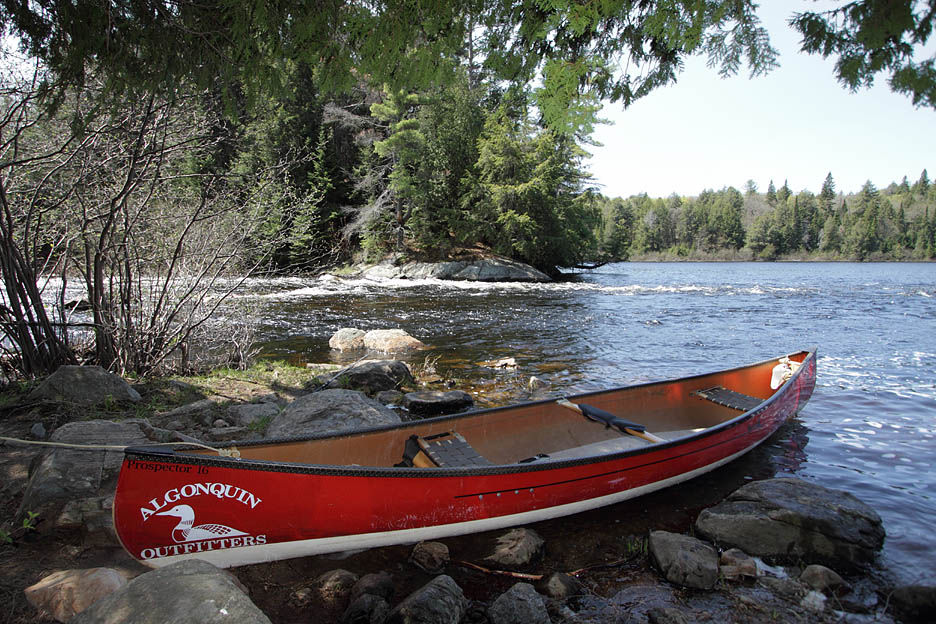
At the beginning, there were 40 cedar-canvas Chestnut canoes, a scrap of land outside Algonquin Provincial Park and two men making a practical bet. Bill Swift Sr., an engineer with a chronic case of canoe fever, and Dave Wainman, a former park ranger, opened Algonquin Outfitters at Oxtongue Lake in 1961. They had considered Cache Lake, inside the park. Then a friend offered land near the western gate, where the operating costs were lower. Romance pointed into the wilderness. The spreadsheet pointed just outside it. The spreadsheet won.
That choice explains more about the company than the usual family-business mythology. Algonquin Outfitters has survived by being sentimental about the outdoors and unsentimental about friction. It noticed what made a canoe trip heavy, confusing, risky or tedious, then built a service around the problem. The result is a hybrid that looks like a retailer from the road but behaves like a local operating system: equipment, food, routes, permits, guides, delivery, access-point stores, restaurants and a water taxi stitched into one trip.
01 / The productThe canoe is only the visible part
For an experienced paddler, renting a canoe can be a transaction. For a first-timer, the canoe is the start of a nervous interrogation. Which route fits three days? Where does the car go? How much food is enough? Can the boat reach the access point? What happens when the wind rises on Opeongo? The company's best product is a credible answer delivered before uncertainty becomes a reason to stay home.
Customers can rent a single canoe or kayak, reserve camping equipment, buy technical clothing, arrange campground delivery, take a guided day trip, book a complete multi-day package, or hand the details to an outfitter. Its published Ultimate package includes gear and food plus route planning, advance permit booking, basic accommodation before and after the trip, and an optional first-day orientation. A guide can accompany the group for one day or the whole route. At Lake Opeongo, a water taxi jumps paddlers across the park's largest lake. At Canoe Lake and Lake of Two Rivers, the company also feeds people.
The current published starting price per person for a two-day Ultimate outfitting package, with a two-person minimum. Tax, park passes and transportation are extra. The useful lesson is not the number. It is that a frighteningly open-ended project has been turned into a legible purchase.
This is what other operators can copy: map every moment when a customer might turn around. Sell a bridge over each one. The bridge can be a checklist, a delivery, an expert call, a bundle or a human guide. Products get compared on price. A finished outcome gets compared with anxiety.
02 / The wedgeMake the hard thing lighter
The literal breakthrough was weight. Algonquin Outfitters says it was the first local outfitter to put lightweight Kevlar canoes into its rental fleet. Anyone who has carried a canoe over a long portage understands the upgrade without a marketing funnel. Less weight means less misery, fewer physical barriers and more ambitious routes. In the 1980s, the Swift family pushed the idea further by creating Swift Canoe Company. The Kipawa model was designed with Algonquin tripping in mind and remains in production.
A lighter canoe did not merely improve the product. It expanded the customer's idea of where they could go.
That is the company's cleanest strategic move. It paired gear innovation with unusually specific terrain knowledge. Big outdoor chains can stock a wider wall of jackets. Booking platforms can aggregate activities. A local rental competitor can undercut a day rate. But the combination of a large lightweight fleet, staff who understand individual routes, equipment positioned near access points and the ability to fix a problem on departure morning is harder to reproduce.
This expertise attracts families and first-timers, but it also serves schools, Scouts, youth groups, camps, tour operators and experienced paddlers who would rather spend their preparation time elsewhere. Media productions have used the company's boats, water taxis, staff and location knowledge. The same asset is sold at several levels: advice for the shopper, logistics for the traveler and infrastructure for the institution.
03 / The mistakesWhat failed first, and what changed
Not every experiment deserved a sequel. The original Oxtongue store included a snack bar serving burgers and fries. It vanished; the exhaust fan remains. That small comic relic matters because it shows a company testing adjacent demand without turning every trial into destiny. Food would eventually make sense at high-traffic park concessions, where hungry paddlers arrive by design. It made less sense as the defining business of a young outfitter outside the gate.
Physical reality forced another change. When Highway 60 was paved and expanded in the late 1970s, the original building had to move. The company bought more land, shifted the structure and added to it repeatedly. A charming origin story became an actual logistics problem. They moved the shop.
The more consequential weakness was seasonality. For roughly its first 30 years, Algonquin Outfitters had one location and a summer-shaped business. Around 1990, Oxtongue Lake stayed open through winter and stocked warmer sleeping bags, cross-country skis and snowshoes. The Huntsville store, added in 1994, brought bikes and snowboards into the mix. Later locations at ski hills and in cottage-country towns broadened the calendar again.
How a summer identity learned four seasons
The business did not escape its niche. It deepened the relationship with the same psychographic customer: somebody who would rather be outside. Canoes led to camping equipment and clothing. Cold weather led to skis and snowshoes. Town stores added bikes. Ecommerce extended the shelf beyond the drive north. The method is portable: when demand is seasonal, look for a second season before chasing a completely different customer.
04 / The moatA business embedded in a place
Algonquin Outfitters won the contract to operate the Lake Opeongo concession in 1989. In 2023, after an open tender, Ontario Parks selected it to operate the historic Canoe Lake Store. The newer operation combines rentals, complete outfitting, camp retail and a restaurant overlooking the lake. It is both a revenue stream and a privileged handoff point between intention and wilderness.
The company now reports 11 locations across Algonquin Park, Muskoka and the Haliburton Highlands. Some are seasonal. Some serve residents all year. Their inventory and personality vary because a ski-hill customer and a paddler at Cedar Lake are not experiencing the same emergency. That local adaptation is inefficient in exactly the way expertise often is. It requires people who know why the visitor is there.
Scale also introduces tension. In-park concessions are contracts, not permanent property. A broad physical network carries inventory and staffing costs. Tourism depends on weather, household budgets and park access. The very specificity that makes the company trusted around Algonquin limits how neatly it can be copied elsewhere. This is not a venture-capital story about multiplying the same box across a continent. It is a place-based company making itself more useful in the place it knows.
05 / The flywheelCommunity work that fits the product
The civic layer is unusually coherent. Algonquin Outfitters and Huntsville Festival of the Arts invite people to turn blank wooden paddles into art, then auction the results for regional cultural groups. The company reported that the project had raised C$104,600 cumulatively by the end of the 2025 edition. Its Pack It Out initiative, launched in 2024 and promoted with Leave No Trace Canada, rewards visitors who remove backcountry litter. Annual coat drives, local sports sponsorships and a stated C$25,000 commitment to Huntsville Hospital Foundation keep the activity close to home.
These programs are not random virtue confetti. Paddles become canvases. Customers become stewards. Stores become coat collection points. The brand remains attached to the practical life of the region during the weeks when tourists are not lining up at the dock. The culture described by the company - three generations of Swifts, staff who stay for decades, advice built from lived trips - would sound like copywriting if it were not visible in the operating choices.
The canoe is rented by the day. Trust compounds across generations.
The most useful takeaway is almost embarrassingly plain. Algonquin Outfitters does not ask customers to become experts before buying. It places expertise next to the transaction. It does not stop at selling a boat when the boat still has to reach a lake. It does not treat winter as a betrayal of summer. And it does not confuse every adjacent idea with a good one. Sometimes the burger counter disappears. Sometimes the building moves. The route changes; the promise stays recognizable: we know this place, and we can help you get out there.