A child can reach a mountain lake and find the afternoon’s principal attraction at the water’s edge: a stone, preferably throwable. An adult may have come for the mountain. Both have arrived somewhere worth visiting. Kristin Tillack’s work lives in the space between those two ideas of a successful trip.
The Colorado-based founder of Raising Hikers writes about taking children outdoors, co-authored 50 Hikes with Kids: Colorado and plans trips as a Fora travel advisor. Across those roles, her subject is the family in motion. A beautiful place has to become a day people can actually enjoy together. There are maps to read, bags to pack, preferences to reconcile and small travelers with opinions about the itinerary.
Anyone can admire a photograph of a waterfall. Getting everyone into the car requires another set of talents. Tillack brings a background in child development, business ownership and hands-on family travel to that less photogenic part of adventure. She is interested in the experience on the other side of the preparation, including the freedom to stop when something catches a child’s eye.
The career that took the scenic route
Her professional life began with a plan to teach. After completing a teaching degree in Southern California, she found teaching jobs scarce and moved to Washington. It was her first move out of state. The job she found in the Seattle area involved helping families find nannies, giving her an introduction to consulting, managing people and running a small business.
She later started a business of her own. By 2021, she was describing a second geographical leap: moving to Colorado, managing the earlier business remotely and developing Raising Hikers. At the same time, she was working on a Colorado hiking book. The thread through those changes was her interest in children, now joined to a personal enthusiasm for the outdoors.
There is a sensible continuity in that apparently wandering career. Families need someone who can understand their circumstances and turn a complicated choice into a workable arrangement. A nanny placement and a family holiday are different assignments, but each rewards attention to the people involved. Tillack’s path gave her practice in that attention before it gave her a travel-advisor title.
- Southern CaliforniaTeaching degree
- WashingtonFamily services and business ownership
- ColoradoRaising Hikers, writing and travel planning
Learning to like the journey
Tillack grew up in the San Diego area and has said she was not raised in an outdoorsy family. College widened her horizons through a summer group trip to Papua New Guinea and a semester studying in Spain. Travel, hiking and backpacking became shared interests with her husband, Bryce. Parenthood brought a decision to keep adventure in the family’s life.
“We travel to hike,” she has said. Her family’s cast includes two children, a labradoodle called Jasper and a vintage Boler trailer affectionately named Rusty. That last detail gives the travel story a pleasingly domestic scale: even the accommodation has been admitted to the family.
Her approach includes letting children help choose activities. The purpose is to build an attachment to the outdoors that lasts beyond an outing organized by a parent. A child who has helped choose the day has something of their own invested in it. The destination becomes a shared decision, with room for different interests along the way.
The distinction matters when writing about family adventure. A photograph records a moment. A family remembers how the day felt, including whether anyone listened to them. Tillack’s work pays attention to both.
Fifty starting points, with the details attached
Published in 2023, 50 Hikes with Kids: Colorado pairs Tillack with author Wendy Gorton. The guide offers fifty family-oriented hikes, with maps and scavenger hunts that draw attention to what children can discover along the trail. Its format brings the decision down to a manageable scale: choose a place, understand the walk and look for something interesting.
Route descriptions include directions, distance and elevation gain. Bathroom access and places to eat nearby belong in the same conversation. Those details might seem modest beside a mountain panorama, but they are the difference between an attractive suggestion and an outing a caregiver can organize. The scenery does not answer questions about lunch.
In discussing the book, Tillack has acknowledged that even her own experienced young hikers sometimes need persuading. Her favorite family route is Crater Lake near the Maroon Bells, where a steady climb leads to a lake. The appeal includes a challenge, a view and an arrival children can appreciate on their own terms.
A guidebook can make that choice easier without dictating every minute of the walk. Once everyone reaches the trail, curiosity takes over. The map supplies a route; the scavenger hunt invites a closer look.
There may be a trail jail
Tillack’s writing about teaching children to hike has the practical voice of a parent who has tried an explanation and lived with the results. Her son once became concerned that leaving the trail might bring consequences from a park ranger. In his imagination, there was a “trail jail.” A simple instruction had acquired a considerably more elaborate enforcement system.
The wider lesson is straightforward: prepare, stay on designated trails, treat other hikers kindly and give wildlife space. She also encourages families to collect litter and leave a trail better than they found it. Children can participate in packing and learn the manners of sharing an outdoor place.
Then comes the additional lesson in a post promising five things: have fun. Games, scavenger hunts and spontaneous dancing get a place beside the rules. It is a small editorial joke with a useful point. A list about raising hikers would be incomplete if it forgot why anyone should want to go hiking again.
“My kids, they’re big hikers, but they still need to be convinced sometimes to go on a hike.”Kristin Tillack
Snow changes the assignment
Her winter writing gives the same attention to practical trade-offs. In a collection of seven Colorado winter hikes, she describes the extra preparation, gear and snacks the season requires. The attractions are specific: a frozen lake, a mining ghost town, an ice cave, a waterfall or Breckenridge’s wooden troll, Isak Heartstone.
The winter list includes advantages and drawbacks for individual routes. Dream Lake brings mountain views and wind; Roxborough offers foothills access and the possibility of mud. This is a useful way to write about a destination. The appealing detail and the inconvenient detail occupy the same page, allowing a family to make its own choice.
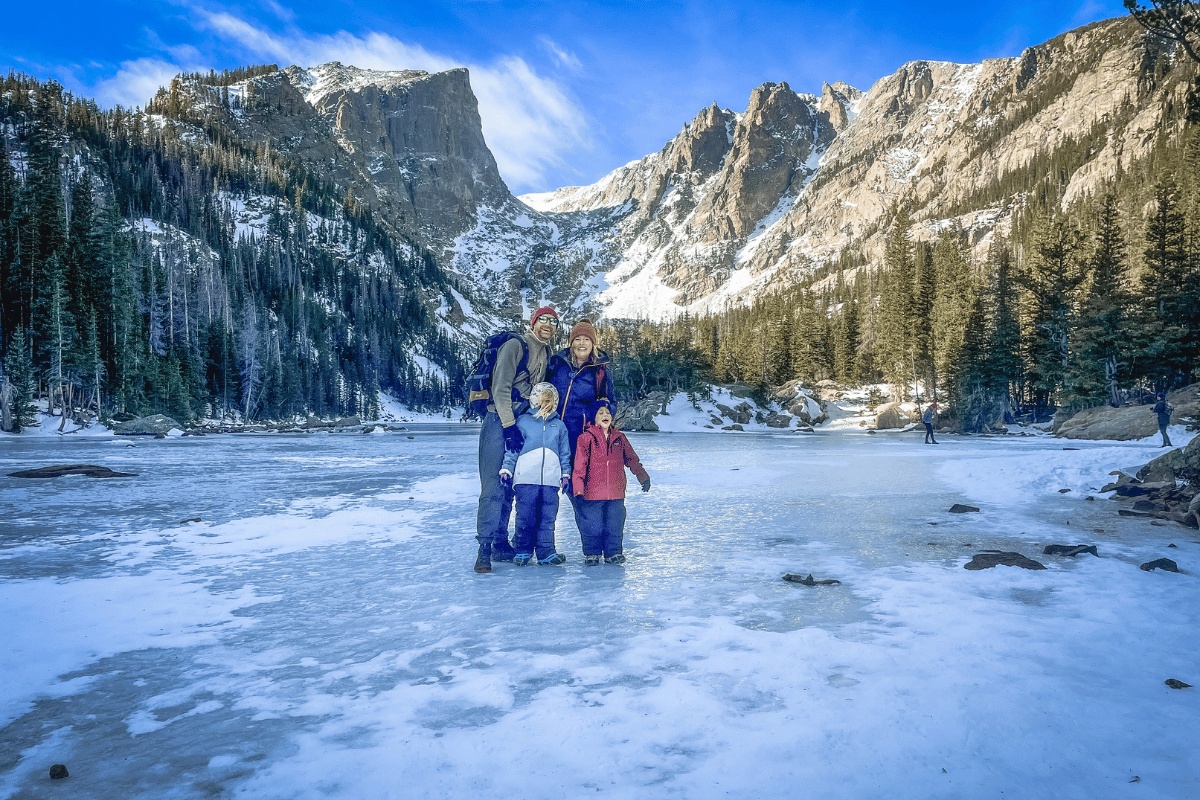
Short walks can have a strong destination. A troll in the woods gives children something concrete to anticipate, while a frozen landscape changes the character of a familiar outing. Her winter recommendations show how much variety can fit within a relatively small journey. The family does not have to measure the value of the day in miles.
The parts between the views
A family trip also contains meals, tired legs and the question of what happens after the main attraction. Tillack’s Grand Teton camping account includes an afternoon swim and dinner beside Jackson Lake at Colter Bay. Her family brought cooking equipment to the lakeside picnic tables; she also suggests pizza for visitors staying elsewhere, followed by ice cream.
That is an itinerary built around an entire evening. Children can play by the shore while adults eat and enjoy the setting. The lake serves several purposes at once. It provides the view, the activity and the place to linger, rather than simply another stop to photograph before moving on.
Her carrier reviews deal with another ordinary reality: sometimes a young hiker needs a lift. She describes years of carrying children and occasions when even an older child needed help. Her Seven Falls account is similarly candid about a forgotten item and the drawbacks of a busy attraction. These details give the advice its human scale. Experience includes the things a packing list should have caught.
Grit, reward and a well-made plan
Today, Tillack describes her travel style as “Grit & Reward,” pairing outdoor experiences with the comfort of a luxury stay. Her Fora specialties span family travel, European adventures, African safaris and US national parks. She reports visiting more than thirty countries. Her current work takes the organizing skills behind a family hike into trips with more moving parts.
Her Iceland winter account shows that planning meeting an unpredictable destination. She had questioned whether the limited daylight would justify the trip. Afterwards, she described seeing the northern lights with her naked eyes on three of eight nights and enjoying the country even beyond the aurora. The published five-day route gives the journey a structure while acknowledging that the sky keeps its own schedule.
Outside the travel spreadsheets, her interests include karaoke, reading, board games and dress-up parties. Dark chocolate and Tillamook ice cream make her list of favorites. The planner leaves room for pleasure in her own life, too.
Across the book, the blog and the advisory work, Tillack returns to a familiar problem: getting people with different needs into the same adventure. The task starts with details and ends somewhere more interesting. Ideally, everyone has a reason to enjoy being there. Someone may have come for the mountains. Someone else may still be looking for the perfect stone.