The first lesson was not about ships. It was about voices. For more than eight years, Alexus Torres spent her working days on the telephone with people who were thrilled, hesitant, overwhelmed or one objection away from hanging up. They wanted a holiday, but first they had to survive the choices. Which sailing? Which room? Which upgrade? Which expense would be remembered fondly, and which would merely appear on the statement?
At Royal Caribbean, Torres learned to hear what lived underneath those questions. High-volume sales supplied the tempo: inbound guests, outbound calls, firm targets, repeated rejection and another conversation already waiting. The setting could have produced a fine allegiance to the script. Instead, she came away suspicious of scripts. A real conversation, she concluded, rarely follows one.
She also came away good at the measurable part. Torres has reported a 73 percent closing rate, experience upgrading trips and time spent training new agents. Yet the more interesting achievement was quieter. The work taught her to ask for the sale without apology, remain present when the answer was no and speak in rooms where she once felt inclined to shrink.
“Sometimes the best training isn't labeled as training.”Alexus Torres
Her corporate career became an accidental apprenticeship. Every call was a small laboratory in confidence: listen, clarify, guide, close, begin again. By the time that chapter ended in a layoff, Torres had learned one cruise brand inside out and, more important, had learned how travelers behave when anticipation collides with uncertainty. A brochure can describe a balcony. It takes a person to understand why this particular family needs one, or why their money would be happier elsewhere.
The departure
A hard goodbye, then a wider map
Leaving Royal Caribbean was, in Torres's telling, the hardest goodbye of her career, made stranger because she did not get to say goodbye at all. One morning she walked into her office and faced the blunt entrepreneurial prompt: “What now?” She allowed herself a short interval to absorb the loss. Then she started building.
By April 7, 2026, she was all in on Echelon World Travel, a boutique advisory based in Eugene, Oregon. The name was secured. Quotes were going out. Follow-ups were happening. There was a first client, a prospect list and a marketing event on the calendar. None of this had the cinematic polish usually applied to a founder's origin story. It sounded more like work, which is generally how a real business introduces itself.
Echelon gave Torres a larger atlas. Instead of selling one brand, she could match clients with cruises, resorts, hotels, theme parks and city stays. Through Fora Travel, where she became a Certified Travel Advisor in April 2026, she gained access to a booking platform, supplier relationships and the Virtuoso network. She subsequently completed specialist programs for Aruba and La Paz. The point was not to collect attractive nouns. It was to increase the chance that a recommendation actually fit.
She now specializes in cruises, family and multigenerational travel, Disney, all-inclusive stays, Alaska, the Caribbean and couples trips. Her own family of five gives the work a domestic realism. A family holiday is leisure only after somebody has considered the pace, the budget, the transfers, the competing preferences and the ancient diplomatic crisis known as choosing dinner.
Torres does not propose a rigid hour-by-hour regime. She prefers what she calls “the bones of the trip”: enough shape to prevent half a day from dissolving into debate, enough flexibility for the trip still to feel alive. This is itinerary design as the removal of friction. Travelers keep the pleasant decisions. Someone else has already reduced the tedious ones.
The route to Echelon
The method
Good service is a collection of small rescues
Travel advising can sound abstract when rendered in the usual language of curation and transformation. Torres's first client review is usefully concrete. For a Nashville trip, she built a day-by-day itinerary around the traveler's interests, helped choose excursions, sent local recommendations with exact addresses and checked in while the trip was under way. When a train was nearly sold out, she secured the last available ticket.
There, in one modest save, is the profession's case for itself. The traveler did not need a manifesto. She needed the train. Attention becomes valuable at precisely the moment a plan threatens to become a problem.
Torres's pricing makes that labor visible. Her Fora profile lists a free initial consultation and a standard planning fee of $300 per week for in-depth, personalized work, with adjustments for complexity, group size and customization. Trips begin at $350 per night. The fee is a declaration that research, coordination and judgment are not decorative flourishes around a booking. They are the service.
The consultation is where her years on the phone reappear in a friendlier costume. Before proposing a hotel or sailing, she can establish the travelers' goals, preferred pace and tolerances. A couple seeking stillness should not be handed the same week as a family whose children regard stillness as a clerical error. A multigenerational group may need fewer transitions, more room categories and a daily plan that respects several definitions of morning. These distinctions are less photogenic than a pool, but they decide whether anybody enjoys the pool.
Then there is value, a word frequently mistaken for price. Torres's connection to Fora and Virtuoso can bring room upgrades, breakfast, resort credits, earlier check-in or later checkout at participating properties. She presents those benefits as a way to improve a trip already under consideration, not as permission to spend without judgment. The old sales instinct is still present, but it has been reassigned. Its job is to protect the experience.
“I build the solid foundation so your vacation actually feels like a vacation.”Alexus Torres
Her sales philosophy has changed with the breadth of her inventory. At Royal Caribbean, excellence meant knowing one product deeply. Independence requires the reverse discipline: refusing to recommend the familiar merely because it is familiar. Torres describes studying cruise lines and resort brands she once admired from outside, interested in each one's personality, culture and guest experience. “The best recommendations don't come from surface-level familiarity,” she says. “They come from real immersion.”
That is why a cruise-versus-all-inclusive comparison, in her hands, begins with temperament rather than prestige. Some travelers want to wake in a new port, watch a show at night and unpack only once. Others want to plant themselves beside one pool and resign from logistics. Both can be excellent. The advisor's job is not to crown a winner. It is to notice which description makes the client exhale.

The next port
Becoming a beginner on purpose
Torres is still early in the life of Echelon World Travel. That fact supplies the story with tension and proportion. There is no long founder mythology to polish, no decades-old company to reverse-engineer into destiny. There is a recent layoff, a new credential, a growing list of specialties and the ordinary nerve required to turn expertise into one's own invoice.
Her ambitions are visible in the curriculum she is making for herself. The former single-brand expert is studying a market of many brands. She is learning resort cultures, destination distinctions and the small incompatibilities that separate a famous option from the right one. She is also continuing her education at Lane Community College. Curiosity, in this phase, is not a personality accessory. It is operating capital.
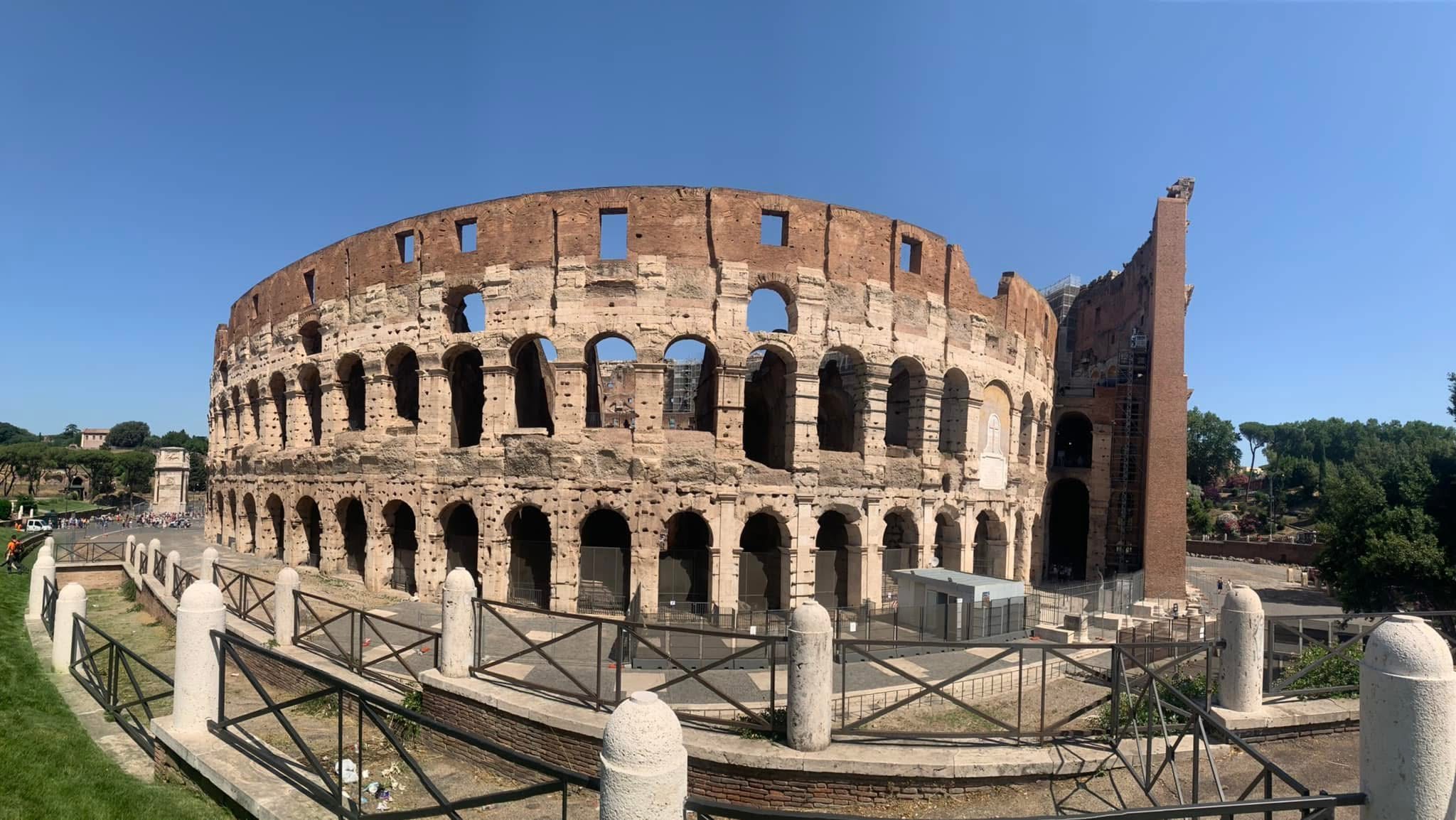
The destination programs for Aruba and La Paz are small markers of that expansion. So is the contrast between the two photographs in her public travel gallery: Rome, built in stone and historical layers, and an Alaskan glacier that makes human timetables look delightfully silly. Her listed interests range just as widely, from Disney and the Caribbean to cruises and couples trips. A broad portfolio creates a new responsibility: to know when first-hand depth ends, where further research begins and which supplier can fill the gap.
The useful connection between her old job and the new one is advocacy. Torres says that selling improved when she stopped concentrating on what she needed to sell and concentrated instead on what the person needed to feel. Belief replaced performance; guidance replaced pressure. The claim has commercial logic. Clients who feel protected return, refer friends and entrust an advisor with larger decisions. Kindness and strategy are sometimes found sharing a cabin.
Nearly a decade on the phone gave Torres a formidable stock of answers. Independence has given her permission to ask a broader class of questions. Which ship fits your family? Where should you spend, and where should you not? Do you want a new horizon each morning or one handsome spot that quickly becomes yours? How much structure will make the week feel free?
These are not glamorous questions. They are better than glamorous. They are useful. Somewhere between Eugene and the next departure, Torres is building a company out of them, one itinerary and one human voice at a time.