The family holiday has a mischievous habit of beginning before anyone leaves home. It begins in the group text, the school calendar, the half-remembered passport expiry date and the argument over whether a hotel pool counts as a destination. By the time four people reach an airport, the trip has already become a small company. Someone is operations. Someone is finance. Someone has lost a charger. For Gena Carlstrom, this is not background noise. It is the assignment.
Carlstrom is a luxury travel advisor in the San Francisco Bay Area and the founder of Smart Luxe Family Travel. She is also a mother of four, a former marketing executive and a traveler who says she has visited more than 40 countries. Those facts fit together more neatly than they first appear. Family life taught her that every itinerary contains competing clocks. Marketing taught her to ask what the customer actually needs. Travel gave her a field in which a well-timed reservation can rescue an afternoon.
Her version of luxury is unusually interested in ordinary human limits. She likes boutique and luxury hotels with character and a strong sense of place. She values cultural immersion and memorable food. She also believes that no holiday feels complete without a beach or a pool. This is not a contradiction. The point of going somewhere remarkable is not to spend every hour proving that you saw it.
The campaign brief becomes an itinerary
Before Carlstrom planned journeys, she planned campaigns. Her career began at Pfizer, where her roles moved through a corporate leadership program, oncology access, market research and analytics, respiratory marketing and women's health. She later worked on QuickBooks Online at Intuit, moved into product marketing at the accounts-payable software company Stampli and became director of consumer marketing at Aimmune Therapeutics.
The corporate nouns are different, but the useful muscles are the same. Research before recommendation. Make a complicated product legible. Coordinate people who answer to different calendars. Listen for the request behind the request. A former colleague at Intuit remembered her focus on customer insight. Another described a short-deadline project in which Carlstrom worked across partner teams, developers, an agency and legal colleagues to launch a marketing hub in time for a major customer event.
That is good training for a multi-generational holiday, which is essentially a cross-functional launch with luggage. The child wants motion. The grandparent wants a sensible route. The adults want a real dinner and, with luck, a conversation. Everyone says they want authenticity until authenticity requires three connections and a steep path in the rain.
There was a civic chapter, too. From 2004 to 2006, Carlstrom served on the board of the Coalition for Asian American Children and Families. She chaired its fundraising committee and wrote its annual report. The record is brief, but it adds another clue to her operating style: she has long been willing to do the work that joins a public purpose to a practical document. In 2014, her marketing work received four DTC National Advertising Awards across web, print and television in the pulmonary category, including a bronze television-campaign award across categories. Long before the travel credential, the pattern was coordination followed by communication.
“I bring creativity, insider access, and a strategic and logistical eye to every journey.”Gena Carlstrom
Carlstrom joined Fora Travel as an advisor in 2023 and earned its Certified Travel Advisor credential that November. The move did not erase her earlier profession. It gave it a more personal canvas. Her public profile describes trips for anniversaries, graduations, birthdays, college tours, wellness retreats and families spanning several generations. The connecting idea is not extravagance. It is attention.
One career, four useful lenses
The itinerary leaves a little air
Read Carlstrom's destination guides and the philosophy becomes visible in the details. Her Maui plan allows the volcano, the Road to Hana, snorkeling and beach time to coexist. It also advises families to buy snorkel gear at an ABC Store rather than rent it at the hotel, then pass it to another visitor before leaving. Glamour may sell the postcard; knowing where to get the mask is what gets a child into the water.
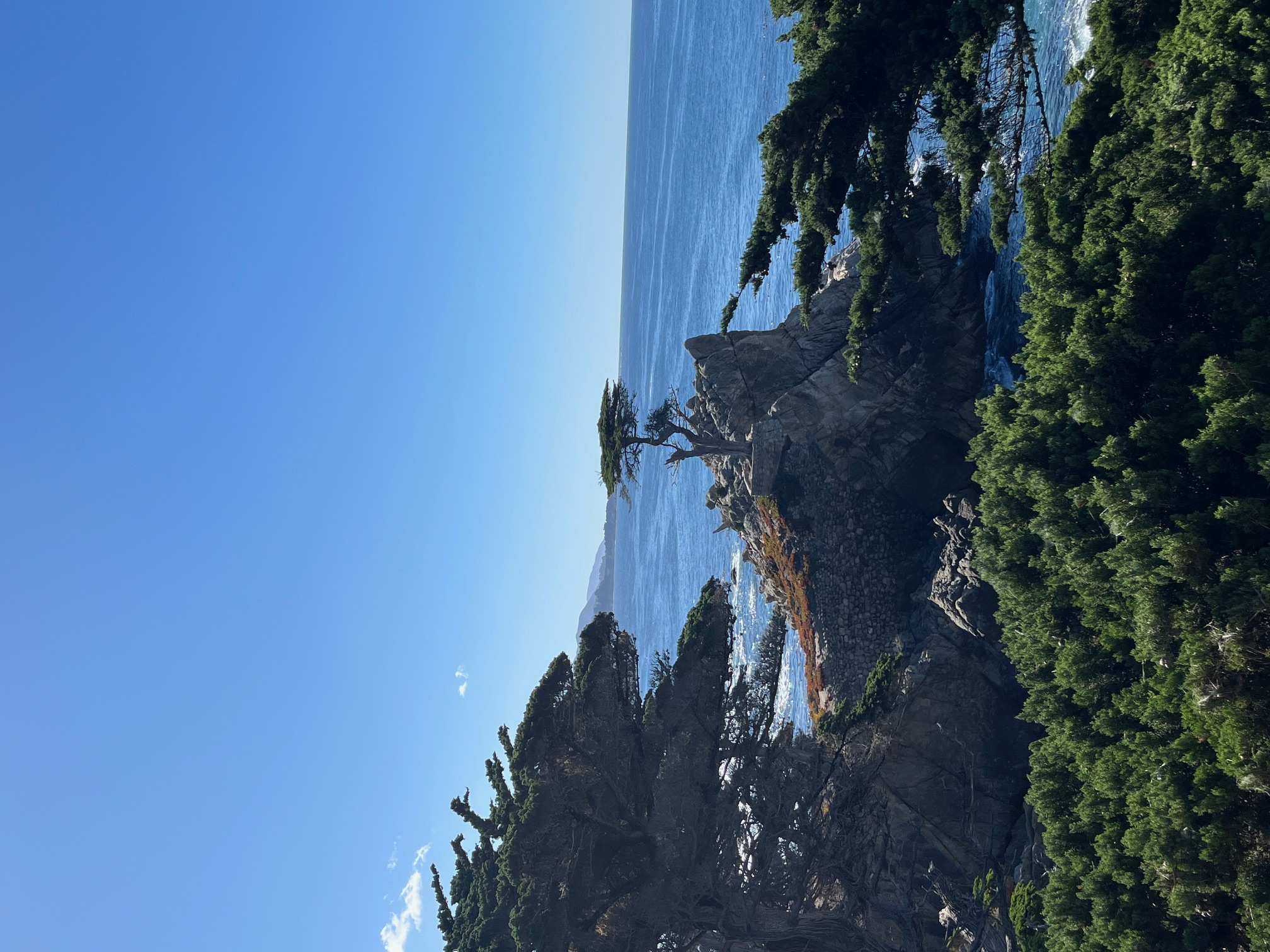
At Northstar in Lake Tahoe, she pairs skiing, snowboarding and snowshoeing with an ice rink, live music, s'mores, hot chocolate and a free gondola ride. Her Carmel-by-the-Sea guide makes room for vineyards and the 17-Mile Drive, but also coffee, honey, a toy shop and an unhurried walk along the shoreline. The rhythm matters. Every ambitious outing gets a softer counterweight.
This helps explain why her Silicon Valley staycation guide feels less like a consolation prize than a practical theory of rest. Busy parents may not have the time or appetite for an airport. A short drive, a good meal and a room from which nobody has to clear the breakfast dishes can still alter the week. Carlstrom's recommendations favor places where the transition from logistics to leisure is short.
Clients notice that invisible work. One family returning from Japan credited her with urging them to book early during peak season, then helping reduce a long list of possible cities to Tokyo and Kanazawa. The resulting mix of museums, temples, samurai classes and a geisha performance worked for children ranging from 12 to 21. Another client praised the balance of kid-friendly activities and relaxation in Paris. A repeat traveler highlighted dinner reservations, activity reminders and quick responses.
The Carlstrom test
Does the plan work for the family in front of you, not the imaginary family in the brochure? Does it create connection without scheduling every minute? Is there a pool? If the answers are yes, the itinerary may survive contact with reality.
A sense of place, with the driveway checked
In May 2026, Carlstrom described a growing appetite for villas that offer privacy without cutting guests off from local life. Discussing a property in the Dominican Republic's Samaná peninsula, she said her clients wanted to unplug somewhere that still felt authentic. Beaches, a local baseball game and a meal in town were part of the appeal. High-end travel, in this reading, should bring a place into focus rather than turn it into wallpaper.
She also offered a less romantic warning. Villa scams have become harder to detect, she said, and a photograph rarely reveals the practical traps: a punishing driveway, uneven paths, a layout that fails children or grandparents. This may be the clearest expression of her method. Beauty counts. So does whether everyone can reach it without mutiny.
“My clients want to unplug in a setting that actually feels authentic.”Gena Carlstrom
The phrase “sense of place” can sound like hotel copy until it meets a real decision. A property can be isolated enough to promise serenity and so isolated that every outing becomes a campaign. A villa can have twelve bedrooms and nowhere for a grandparent to walk comfortably. A celebrated restaurant can be exactly wrong after a long travel day. Carlstrom's judgment lives in those distinctions.
Her route into travel also explains her ease with the unglamorous side of service. At Pfizer, Intuit and software companies, metrics, launches and coordination were visible parts of the work. In travel, much of that labor disappears behind the experience. A transfer arrives. A room is appropriate. The reminder comes before the deadline. The client simply shows up. When the plan works, nobody applauds the spreadsheet.
The quiet ambition of an easy day
Carlstrom's stated aspiration is to balance adventure, relaxation and meaningful connection across the seasons of family life. There is an appealing modesty to that ambition. She is not trying to turn every child into a junior anthropologist before lunch. She is trying to arrange conditions in which curiosity has a chance.
Her own public story contains the expected travel-advisor ingredients: many countries, favored hotels, a talent for logistics. The more interesting thread is continuity. Her earlier career asked her to understand customers at scale. Her present work asks her to understand them around a table. Both require evidence, empathy and a suspicion of easy assumptions.
The profession also gives her a recurring view of a family as it changes. A college tour is not a beach holiday, yet it may contain the same people only a season apart. A milestone birthday can become a multi-generational reunion. Children who once needed the simplest possible day become young adults with strong opinions about food, art and how long anyone should remain in a museum. Designing across those shifts requires more than a list of preferred hotels. It requires memory, revision and the tact to know when an old formula no longer fits.
There is wit in the idea that the polished outcome of all this expertise might be an afternoon by the pool. But that afternoon is not empty. It is where children replay the morning, adults stop consulting the clock and a family occupies the same place without moving toward the next one. A crowded itinerary can produce proof of travel. An intelligent one leaves enough air for a memory.
Carlstrom says her favorite part is seeing happy clients return year after year. The return matters. It suggests that the job is not merely to reveal a destination, but to learn the travelers. The first trip supplies the preferences. The next one begins with better questions.
A soft landing is not the opposite of adventure. It is what allows adventure to continue tomorrow.