The first question was almost embarrassingly plain: who would visit the websites she had built? Aleyda Solís was working as a web designer and front-end developer. She knew how to make pages. She wanted to know how people would arrive at them. So she studied ecommerce, moved to Salamanca, Spain, and took a job as a web manager at an online marketing agency. There, search engine optimization entered the picture. Eventually, she was offered an SEO position. She describes the beginning with cheerful economy: “So, it was purely by coincidence!”
Coincidence can open a door. It cannot explain what someone does for the next twenty years. Solís has stayed with the same underlying puzzle as the web around it has changed: what is a person trying to find, what stands in the way, and which fix matters first? Today she runs Orainti, a boutique consultancy advising companies on international, ecommerce, marketplace and SaaS search. She also writes SEOFOMO, hosts Crawling Mondays, and builds free routes into a discipline whose jargon can make a newcomer feel as if the meeting started without them.
Her work is unusually public for someone whose day job often involves private client problems. There is a Spanish-language book, two learning roadmaps, a newsletter, a video series, conference talks and detailed checklists. Yet the activity she names as her favorite is the least theatrical of them all: an audit. She likes digging into how a site is configured, tracing a failure to its causes and consequences, then ranking the remedies by likely impact. A useful answer, in her telling, has to survive contact with the actual website.
From Nicaragua to the search console
Solís was born in Nicaragua and later built her career in Spain. Salamanca has a special place in her account of that move. She studied and worked there for four years, began doing SEO there, and wrote later about returning to its university entrance and central square with affection. The city was more than a line on a résumé. It was where a technical curiosity found a profession.
The path was neither a tidy career plan nor a sudden reinvention. She had trained as a systems engineer and studied ecommerce. The work of building sites gave her a close view of the machine; the marketing agency gave her a reason to ask what the machine was for. International SEO would eventually become one of her specialties. It makes sense for someone whose own professional life crossed countries and languages, though the work itself is far more exacting than simply translating a page. Markets differ in what people ask, which businesses they trust and how they act after a result appears.
In a 2012 year-end reflection, she described finishing one professional phase, joining SEER Interactive, speaking at MozCon, BrightonSEO and SMX London, helping organize a free event in Madrid, and going back to Nicaragua to visit people she loved. The itinerary moves from conference stages to friends and family without trying to make the personal part sound like a footnote. She thanked colleagues, the Madrid Geek Girls and the broader Spanish search community. Her career was growing through relationships as well as technical work.
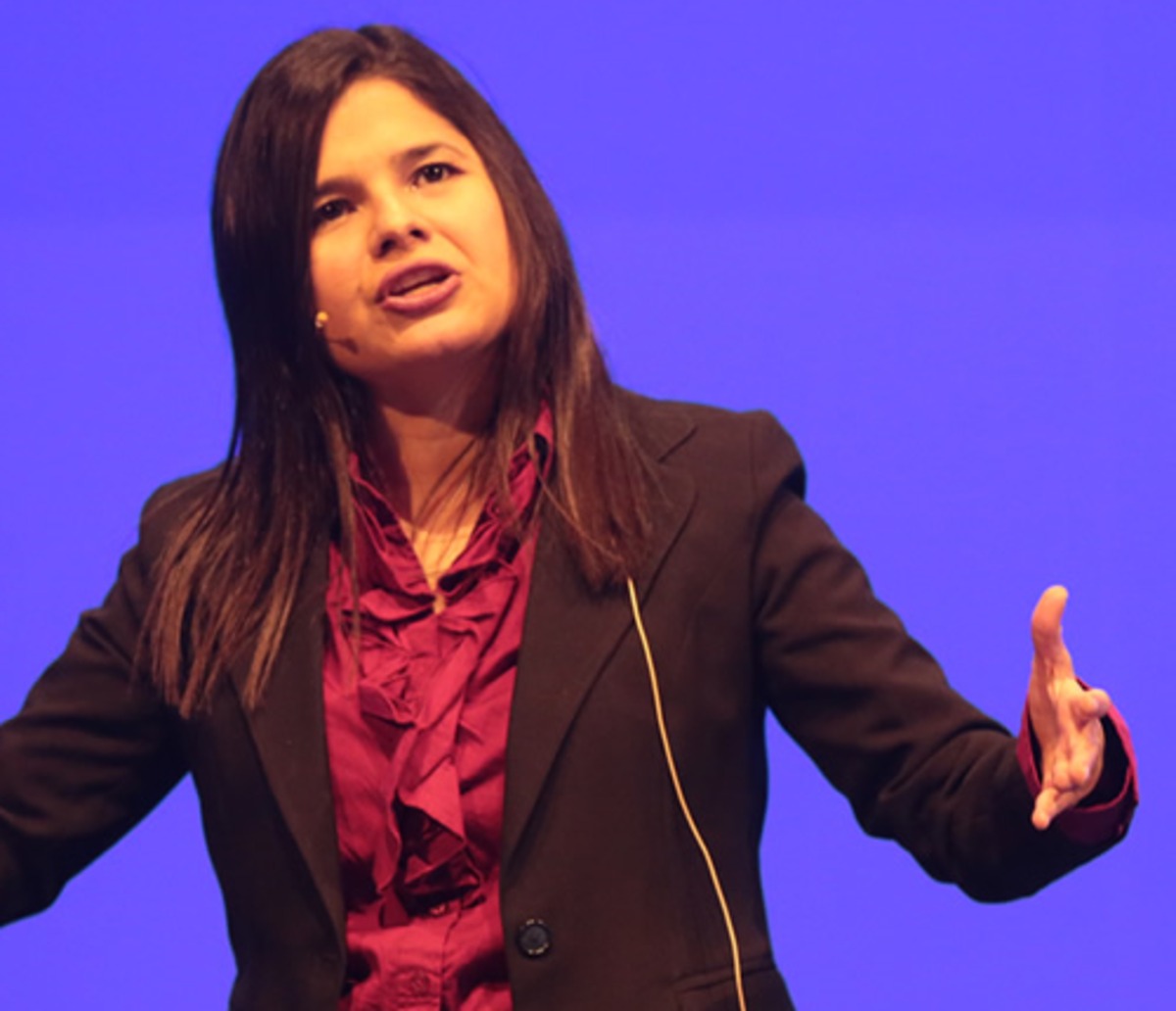
The consultant who kept the magnifying glass
In 2014, she founded Orainti. “Boutique” is the word she uses for the consultancy, and her explanation of why she did not want to build a conventional agency is unusually revealing. She wanted to keep doing the audits herself. The joy was in the investigation: page architecture, technical settings, content, a business objective that seemed clear until the evidence complicated it. Delegating all of that away would have meant giving up the part she liked most.
That preference shows in the rules she offers about SEO. A perfectly optimized website, she argues, does not exist. People change how they search. Engines change their features. Competitors move. Even a carefully improved site remains part of a moving system. Her phrase for the work is a “forever marathon,” which is less glamorous than a magic growth trick and much more useful to anyone responsible for next quarter’s decisions.
“Context and prioritisation is all for SEO.”Aleyda Solís on setting priorities
The emphasis is on priorities because resources are finite. A technical recommendation can be correct and still be the wrong first move for a particular company. An audit has to take in content, business goals, staffing, competition and the cost of implementation. Solís has argued that a search project succeeds when it helps achieve business or marketing goals, not merely when its recommendations sound clever. She has made the same point in talks, writing and client work for years: diagnosing a problem is only the beginning; choosing what to do is the job.
The career has brought formal recognition. She received the European Search Personality of the Year award in 2018. Her 2016 book, SEO. Las Claves Esenciales, gave Spanish readers a guide to the fundamentals. She has since said she was proud of the book but found writing it around client work, speaking and travel difficult. That admission is more interesting than a neat triumphal story. Publishing a book took persistence; it was not automatically a pleasant afternoon with a keyboard.
A map for anyone willing to learn
For many people, Solís is familiar first through a resource rather than a consulting project. SEOFOMO gathers news, guides, tools, jobs and events from a fast-moving field. Her site now says more than 45,000 people subscribe. The newsletter has grown into a hub, including news and job listings. It serves a simple need: professionals cannot read everything, yet missing a consequential change can matter by Monday morning.
LearningSEO.io takes a different approach. It organizes free guides and tools into a route through the subject, so a beginner can see what to study next. LearningAIsearch.com applies that instructional instinct to AI search. Crawling Mondays puts her in conversation with other specialists on video and podcast platforms. These projects do more than repeat one another. A newsletter keeps people current; a roadmap helps them start; interviews let disagreements and uncertainties show in real time.
The public teaching also reflects her view of opportunity. In an interview, she described remote work as a way to open professional growth to people outside wealthy countries and large cities. She co-founded Remoters.net, a remote work hub. In the same interview she urged women entering SEO to create their own opportunities, and recalled a job interview at 23. The interviewer wondered whether her youth would make IT managers discount her. She replied that they would be impressed once she began talking and demonstrated what she knew. She believes that answer helped her get the job.
Her advice to newcomers is concrete: build and optimize your own website. It is a small laboratory, a place to test claims before repeating them to a client. The principle travels well beyond SEO. If a field is full of grand predictions, make something, observe it, and allow the evidence to embarrass a cherished theory.
A new search surface, an old discipline
In 2026, the questions facing search professionals broadened. An AI answer may mention a company without sending a visitor to its site. It may draw on a third-party review, a publisher or a product page. A brand may be present, absent, linked or described badly. Measuring the result is not as simple as checking a rank. Solís has been publishing frameworks that ask teams to define the customer journeys they care about, document where they appear, inspect the sources influencing those appearances and measure what happens afterward.
Her September 2026 AI search checklist makes that progression explicit. Its twelve steps sit across three layers: presence, readiness and impact. Teams first identify important prompts and establish a baseline; then they diagnose technical, content, brand and outside-source gaps; finally they check whether changes produced a useful outcome. It is a sequence designed to slow the temptation to do the fashionable thing first. Before writing another page, a team has to decide what it is trying to influence and what evidence would count as progress.
Her order: establish what appears, fix the plausible gaps, then test the result.
Crawling Mondays has followed the same turn. In July 2026, she launched an AI Search Roadmap series with specialist guests to work through research, strategy, technical questions, measurement and the work of putting recommendations into practice. The guest list is long, but the format matters more than the roll call. A changing field benefits from people comparing notes, especially when the neatest answer is usually the one that needs testing.
That year she also joined Dave Peiris as a co-founder of Finchling, a news-monitoring tool aimed at helping public relations teams find timely opportunities. She explained the connection plainly: strong PR has long mattered to SEO, and outside attention has become even more relevant to how brands appear in AI answers. She continues to run Orainti and work on SEOFOMO. Finchling adds another angle on the same problem of being discoverable and credible.
The question stays open
A person who built websites, studied their traffic, founded a consultancy, wrote a book, assembled learning maps and started a video series could easily present the whole thing as a straight line. Solís’s own telling has more bends: an accidental first SEO job, affection for Salamanca, a demanding book, a favorite task that remains close to the details, and the professional friendships she has made along the way. She has said she likes food, travel and padel; that human inventory belongs beside the dashboards and checklists.
What ties the work together is an appetite for a better question. Why is this page invisible? Which market is it trying to serve? Which recommendation can a team actually carry out? Does an AI mention lead to anything a business values? These are practical questions, and they keep changing as the web changes. The answer she gives new practitioners is reassuringly unsentimental: build something, test it, and look again.
Follow the work
Explore her writing, learning resources and video conversations.
Personal siteOraintiSEOFOMOLearningSEO.ioLearningAIsearch.comCrawling Mondays videosLinkedInXBluesky