Before Alexander “Zander” Isaacson had an electric-vehicle charging company, he had a recruiting problem. He was a senior at Penn State, putting together a venture community, and the people he needed were scattered across other schools, other interests, other rooms. A finance student could find plenty of finance students. Finding someone who could build something required leaving the room.
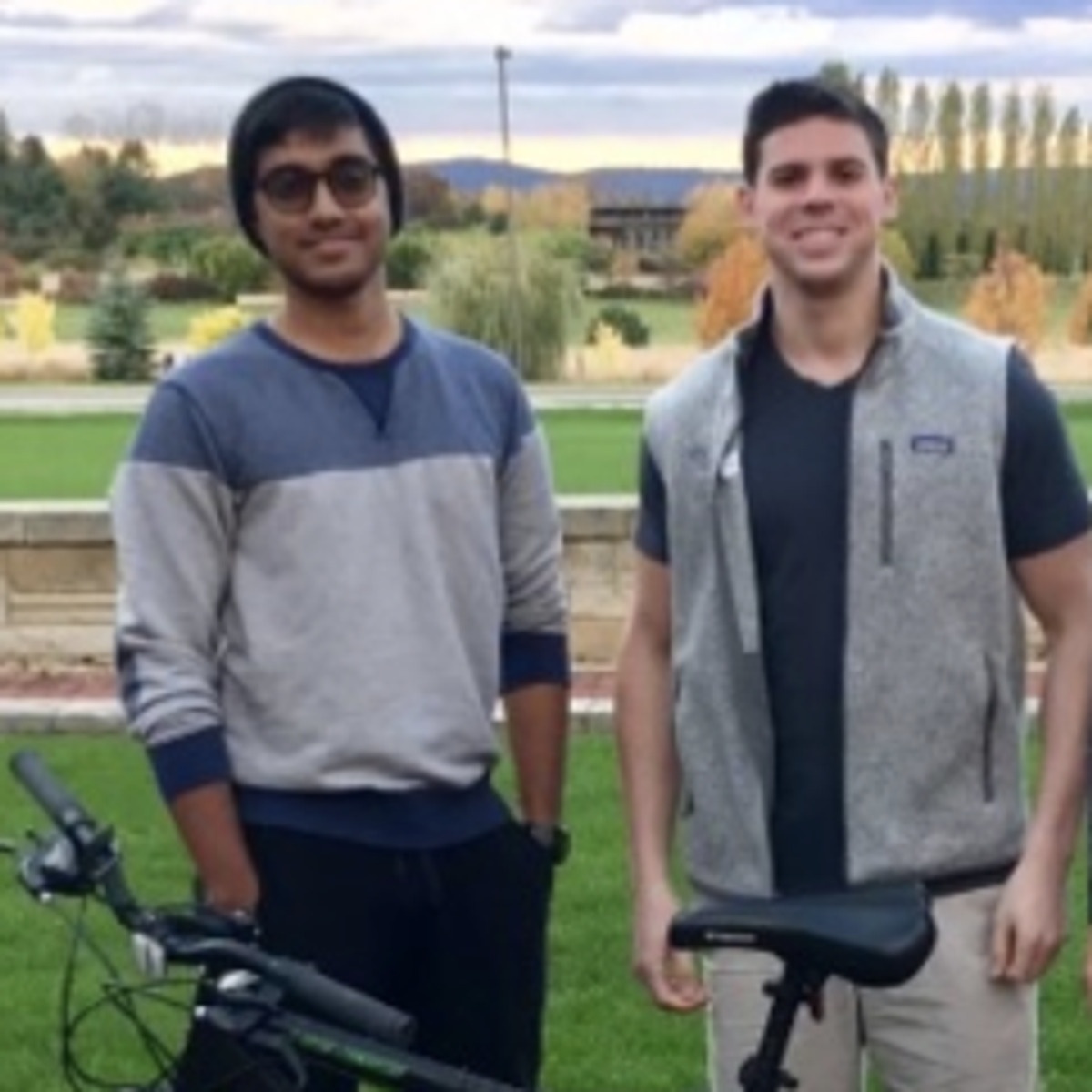
One of the people he brought in was Nikhil Bharadwaj, an engineering student making electric bikes. Isaacson invited him into the startup accelerator and innovation hub he had founded. That invitation eventually became part of the origin story of Xeal. At the time, it was simply a student asking another student to join.
The distinction matters. A co-founder looks obvious in retrospect, once the photograph has two names beneath it. Beforehand, there is only a person with an interesting project and the possibility of a conversation. Isaacson’s career has repeatedly turned on his willingness to have that conversation.
The club before the company
He grew up in South Florida and wrestled in high school. Penn State offered a different contest: getting into the Nittany Lion Fund, the student investment fund that could help open a route to Wall Street. His first attempt failed. He tried again and got in as a sophomore. Rejection, in this case, was a delay rather than an instruction.
By senior year, he had another project. Happy Valley VC would connect students with startups and venture capital. “I just wanna build a foundation,” he later recalled. It is a revealing ambition for a student nearing graduation: create something other people could keep using after he had left.
There was a conventional career taking shape alongside it. He worked as a sales and trading summer analyst at Citi Global Markets, graduated from Smeal in 2018, and joined Torreya Partners in New York as an M&A investment banking analyst. His early professional biography has the reassuring rhythm of a finance résumé: fund manager, summer analyst, degree, bank.
Then an unexpected job title appears. At Penn State Startup Week in April 2019, Alex Isaacson was billed as CFO of EVE Energy Ventures, leading business development for a company working on the relationship between vehicles, chargers and the grid. The shift was already under way. He was moving from examining businesses to helping make one function.
His banking work had also exposed him to technology and licensing deals, including work involving a Formula E racing team. Electric racing offered a much livelier introduction to the sector than a spreadsheet. It suggested that the car itself could become a computing platform, with possibilities extending beyond getting a driver from one place to another.
A parking space is a demanding classroom
The young business began with a problem that required no grand theory. People shared chargers at apartments and workplaces. They needed to know when a charger would be free. The early platform let them reserve sessions, while software considered the building’s available electrical capacity and energy costs. A calendar could bring some order to a parking lot.
That early approach also explains why Isaacson needed to understand property owners. The driver wanted a charged car. The owner had an electrical system, an installation budget and an electricity bill. A useful business had to make those interests coexist. In its first year, the company was testing its technology with employers, public agencies and property managers.
By 2019, the founders were selling commercial chargers. Real use brought a harsher lesson: when an internet connection or server failed, a charger could lose the ability to process a payment. The electricity could be there, the car could be there, and the driver could still be stuck. A parking space is quite capable of dismantling a pitch deck.
For Isaacson, that failure was personal in the ordinary working sense. Customers complained to the company he was running. Their anger reflected dependence on a product that had become part of getting through the day. Selling charging equipment meant accepting responsibility for what happened after the sale, including the evening when something stopped working.
A simplified view of the approach: the essential exchange can happen at the charger, without a live connection to a distant server.
Xeal’s response became Apollo, a protocol that used encrypted tokens on smartphones to authorize charging and payments locally. Isaacson described the ambition as making smart devices self-reliant. It was a change in where the essential decision happened. The person standing beside the charger should be able to start a session without waiting for permission to travel across the network.
That explanation needs a practical boundary. Local authentication addresses a connectivity dependency; a charger still needs electricity and functioning hardware. The appeal lies in removing one avoidable reason for failure. A customer need not admire the architecture to appreciate getting home on time.
An $11 million Series A followed in 2021. In November 2022, Xeal announced a $40 million Series B led by Keyframe Capital. By then the company had moved its headquarters to New York while keeping its engineering lab in Venice, California. Isaacson was working across the worlds the product joined: property, finance, energy and software.
Recruiting people who can teach you
Success introduced another version of his college recruiting problem. A growing company needed people with experience its founders had yet to acquire. In 2023, when Xeal welcomed former ChargePoint executives Joan Dunne and Michael DiNucci, Isaacson recalled exchanging notes with Eric Roseman during an early meeting. They saw the recruits as their “Moneyball team.”
“The best part of building a startup is choosing the people you want to learn from and grow with.”
Zander Isaacson, on recruiting, 2023
There is less swagger in that formulation than in the usual founder mythology. The attraction was being around someone who could teach him. An organization gets more capable when its leader can recognize the missing experience and persuade its owner to join. The invitation had acquired employment terms, but the underlying impulse was familiar.
The social work continued after people arrived. Since 2019, the team had taken time away together each year. A Puerto Rico retreat included jungle hikes, food tours, time in Old San Juan, personal goal setting and a collaborative exercise in reinventing Xeal. The itinerary left room for both the company and the people obliged to think about it.
Isaacson admitted being nervous as the team grew from ten people in 2021 to more than thirty in 2022. Would the atmosphere survive? His public reflection credited the group, and organizer Dina Lemberger, for keeping it alive. Head count is an easy number to announce. Preserving the reason people enjoy working together is harder to put on a slide.
He could also laugh at himself. After his recognition in the 2025 Forbes 30 Under 30 Transportation & Mobility class, he joked publicly about mixing up Confucius and wrestling coach Dan Gable while discussing a motivational quotation. The enthusiasm had survived. The attribution required a small repair.
The title changes; the questions remain
In April 2025, Isaacson joined Benjamin Birnbaum and Diallo Powell for a live conversation about EV infrastructure. It made him the first repeat guest on Dare to Disrupt. The discussion put charging beside the larger questions of financing physical infrastructure, scaling a company and making space for electric vehicles in cities.
From banking to building an EV-charging business in California.
From chief executive to a new chapter, after six years at Xeal.
Three months later, he announced that he had transitioned out of the CEO role. His July reflection described more than six years of building, with 350-plus partnerships and chargers live in more than 400 cities. Those were his reported measures of the company’s progress, offered alongside thanks to the team, partners and wider community.
He described the decision as difficult and said he was taking time to reflect and explore what came next. There was no attempt to make the change sound effortless. A founder’s relationship with a company can outlast the job of running it. Co-founder remains a description of what happened, even when CEO becomes a former title.
By 2026, he had moved into a partner role at Cold Start Ventures. It brings his career back into contact with the venture world he first organized around as a student. The intervening years add something a campus fund could never supply on its own: experience of being responsible for the product, the customer and the payroll.
His stated interests still reach beyond the charging stall. In late 2024, he described electric vehicles potentially supplying stored energy back to the grid or to other vehicles. That is a vision of a more coordinated energy system, rather than a claim that every parked car already performs the service. He sees resources that could do more when connected usefully.
There is an echo of the student organizer in that ambition. Bring people with different abilities into the same room. Give them a concrete problem. Find out what they can do together. Isaacson’s story began with a fairly modest act: asking someone to join. The company that followed shows how much work can fit inside that invitation.