The first clue was not hidden in a spreadsheet. It came roaring into Jacksonville beneath a teal helmet. In 1995, the Jaguars played their first NFL season, and Alan Trager understood that a city acquiring a football team would soon acquire all the rituals around it: the arguments, the hope, the Sunday wardrobe. He and his brother Mitchell opened Football Fanatics in Orange Park Mall. Their proposition was admirably concrete. Jacksonville had fans. Fans needed shirts.
This was not Alan's first encounter with either business or devotion. He had earned a business degree from the University of Florida in 1975 and worked as chief financial officer of a mid-sized retail chain in the Southeast, with responsibilities that also extended into information technology and marketing. Nor was fandom a costume he put on for the shop. His father began taking him to Florida Gators games when Alan was five. He later described the attachment as being "more like a religion." If commerce is easier when the merchant recognizes the customer's appetite, Trager had been studying this one from the bleachers.
The timing was exact. Trager said the brothers might never have opened the business had the NFL not come to Jacksonville. There is something refreshing in that admission. Founder legends are usually sanded into prophecies. Trager's began with a local change he could see plainly and a willingness to put inventory in its path.
“If we didn't have NFL in Jacksonville we may never have opened this business.”Alan Trager, 2001
A store learns to travel
Football Fanatics was a physical shop, but it did not remain confined by the mall doors. The company shipped its first online order in 1998. In the bland language of corporate timelines, that is a milestone. In practical terms, it meant a Jacksonville retailer had found a way to reach the displaced supporter who still cared deeply about a team hundreds of miles away. The internet did not make the merchandise meaningful. It made the shelf reachable.
By 2001, the brothers had locations in the Orange Park and Avenues malls, employed 25 people, and handled internet orders for the Jaguars. They also became the team's official store. Alan did not wait for the franchise to wander in. He approached Jaguars executives with the idea and, by his account, started knocking on doors.
The pitch rested on more than local enthusiasm. Trager said the company had tried from the beginning to deal positively with customers, suppliers, and everyone across the negotiating table. He believed those standards fit the way the Jaguars wanted to conduct business. That sounds almost quaint beside the usual language of disruption. It was also an operating system: useful products, reliable service, durable relationships.
Retail rewards this sort of unglamorous coherence. A fan wants the right jersey, in the right size, before the feeling that inspired the purchase cools. The merchant must forecast demand without knowing which team will surge, which player will matter, or whether a season will end in confetti or recrimination. The customer sees a cap. The operator sees purchasing, licensing, warehousing, software, fulfillment, and returns. Trager's earlier path through finance, technology, and marketing was unusually well matched to the puzzle.
The family counter becomes infrastructure
The family business grew around complementary roles. Alan served as chief executive. Mitchell became chief strategy officer. Mitchell's son Brent joined in 1997 to manage the second store and later became chief operating officer. Years afterward, Brent called his uncle a hero and credited him with three lessons: think about the big picture, do not sweat small things, and build for the long term.
Those lessons suit a company moving from shopkeeping to infrastructure. Fanatics was no longer merely selling its own stock. It was operating online stores for leagues, teams, colleges, and media brands. The company had to make the emotional chaos of sports behave like dependable commerce. Its expanding assortment was both an advantage and a complication. Every new partner and product widened the selection while increasing the burden on technology and logistics.
In 2011, the Tragers sold the company to GSI Commerce, the e-commerce operator led by Michael Rubin. Two weeks after the deal closed, eBay agreed to buy GSI for $2.4 billion. Fanatics and two other businesses were then spun into Rubin's new private company, Kynetic. Corporate ownership changed quickly; the Jacksonville operation kept growing.
The next year, Fanatics agreed to acquire Dreams, a rival in licensed sports merchandise and memorabilia. In a letter to partners, Trager emphasized what the combination could fund: more ideas, a larger inventory, broader assortment, mobile and e-commerce technology, and regional fulfillment. The list is revealing. It is not a founder's misty declaration of destiny. It is the working vocabulary of a retailer who knows exactly where customer delight gets built and where it gets lost.
Consider the difference between a general store and a sports store. The general store can stock what people need every week. The sports store lives at the mercy of events. A backup quarterback becomes a local hero on Sunday; by Monday, thousands of people want his name across their backs. A favorite is traded. A championship creates an appetite that no cautious forecast could satisfy. A losing streak turns confident inventory into a very colorful accounting problem. The business must be sentimental in public and ruthlessly attentive in private.
Fanatics learned to make that volatility useful. Its online reach allowed it to carry a depth of assortment that a mall unit could never display, while its partner relationships put the company near the moments that caused demand to jump. The model served the hometown supporter, but it was arguably even better for the exile: the Gators graduate in Seattle, the Jaguars loyalist in Chicago, the college fan whose local shop devoted every rack to somebody else's team. Geography had once chosen the merchandise available to them. E-commerce loosened geography's grip.
That transition is easy to describe now because online shopping has become ordinary. It was less obvious when the brothers sent their first internet order in 1998. Many retailers treated a website as a brochure with ambitions. Football Fanatics treated it as another counter and eventually as the more consequential one. The move did not require abandoning what the family knew about stores. It required translating those lessons. Selection became searchable data. Helpful service became responsive systems. The stockroom grew into a fulfillment network. The basic promise remained intact: when a fan cared urgently, the right thing should be there.
What remains after the handoff
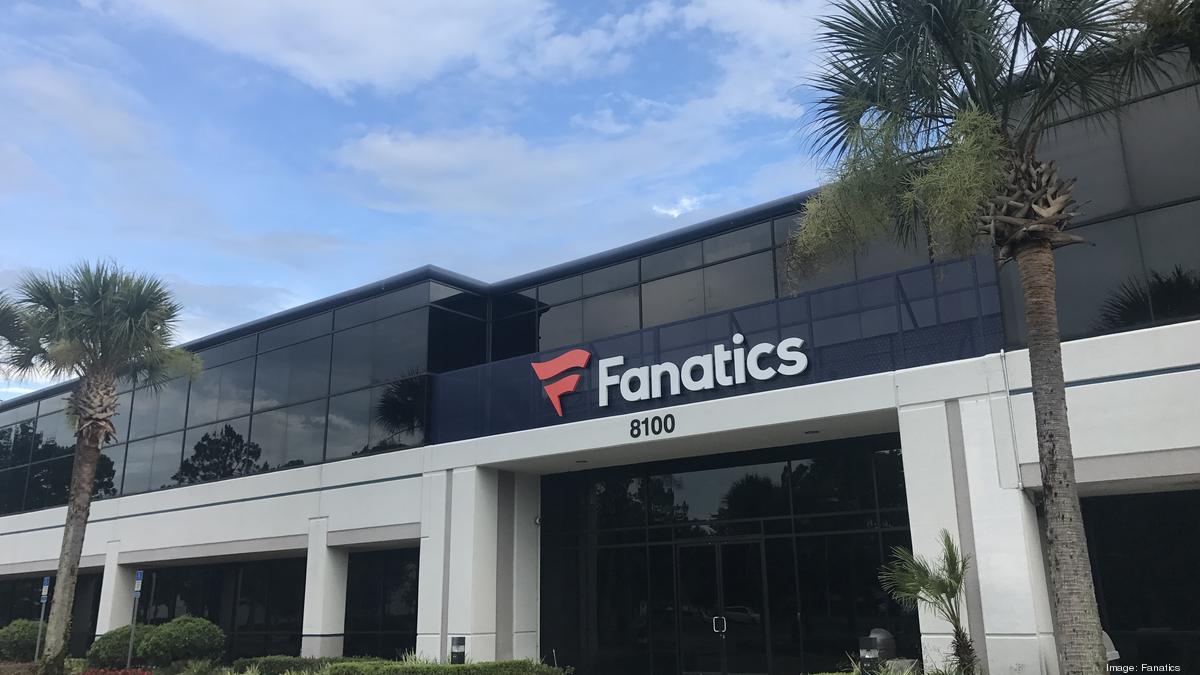
When Fanatics announced Trager's retirement in April 2014, the company said the single Jacksonville shop had become a billion-dollar sports e-commerce business. Doug Mack, previously CEO of One Kings Lane, would replace him. Trager would remain on the board and work with Mack through the transition.
Rubin's farewell to him was specific. He thanked Trager for building a strong, customer-centered foundation. Foundations rarely appear in photographs. They are visible later, in what a company can carry without collapsing. By then, Fanatics sold hundreds of thousands of officially licensed items and powered stores for major professional leagues, organizations, teams, and more than 150 colleges and sports media companies.
It is tempting to read the numbers backward and assume the billion was hiding in the first cash register. It was not. In 1995, there was a new football team, an experienced retailer, a brother, and a mall unit. In 1998, there was a first online order. In 2001, there were 25 employees, two shops, and a partnership won by knocking on a team's door. Each step was legible at its own scale.
The useful magic was sequence: recognize the demand, earn the relationship, widen the shelf, then teach the shelf to travel.
Trager's public record after retirement is quiet. That suits a career whose durable insight was never particularly noisy. He did not invent sports fandom, the internet, or Jacksonville's desire for an NFL identity. He connected them early, then operated the connection with discipline.
Sports merchandise is sometimes dismissed as decoration. The fan understands otherwise. A jersey can be a flag, a memory, an inheritance, or a public declaration that optimism has survived another season. Alan Trager knew the customer because he was one. The boy taken to Gators games at five eventually built a company around that peculiar, renewable faith. The scale changed. The feeling did not.