Monday is a difficult day to make attractive. It has neither Friday’s promise nor Saturday’s permission to linger. Aaron Walters has given it a useful assignment. At Altar’d State, the fashion retailer he co-founded, Monday comes with a commitment: 10% of net proceeds from stores and online go to nonprofit organizations. A routine shopping day becomes an appointment the business keeps with its communities.
That small piece of the calendar opens a larger story. Walters is a retailer whose work has included a Walgreens stockroom, a buying desk in Houston and a men’s merchandise business at Walmart measured in billions. He arrived at entrepreneurship knowing that products must move, customers must return and a shop’s good intentions will not unpack the deliveries. His company would need to sell clothes well enough to keep doing everything else it promised.
He founded Altar’d State with Brian Mason in Knoxville in 2009. The business eventually grew beyond its original fashion boutiques into a family of brands. Yet the question behind it remained personal: what could Walters do with a career he had become good at? His answer involved keeping the retail experience and changing what he wanted it to accomplish. The result can be followed through fairly ordinary things: a weekday, a hiring conversation, a store visit.
A stockroom before a storefront
Walters began at Walgreens as a stockroom manager and advanced to managing a store. There is something pleasingly practical about that beginning. The later chairman had already worked at the end of retail where a box is still a box, regardless of the ambitions printed on the company stationery. Receiving merchandise and running a shop gave him contact with the work that sits beneath a polished sales floor.
His path then took him to Foley’s in Houston, where he became a buyer. Colleagues named him Buyer of the Year. At Walmart in Bentonville, Arkansas, he went on to run a $2 billion men’s business. Goody’s brought him to Knoxville as vice president and divisional merchandising manager for menswear. His career was moving through several versions of retail, from a single store’s daily needs to merchandise decisions on a much larger scale.
The educational route had its own change of address. Walters attended Sam Houston State University for three years before graduating from Lamar University in Beaumont, Texas, in 2000. By the time he founded his own company, the apprenticeship included both formal study and years inside established businesses. A women’s fashion boutique might look like a departure from menswear. The underlying questions about selecting products and understanding a shopper were familiar territory.
His Goody’s role included reorganizing its men’s division. In 2009, after the company closed its Knoxville operations, he became president of Hybrid Apparel, a business spanning design, sourcing, production and distribution. That same year brought the founding of Altar’d State. The move into his own venture came after exposure to several parts of the trade, including the unromantic business of keeping merchandise flowing.
- 01WalgreensStockroom → store manager
- 02Foley’s & WalmartBuying & menswear
- 03Goody’sDivisional merchandising
- 04Altar’d StateCo-founded in 2009
Knoxville, 2009
Walters and Mason opened their first Altar’d State store in Knoxville’s Turkey Creek area. The year belongs in the story: 2009 was hardly a setting designed to flatter a new retail venture. They were building a business during the financial crisis, with a purpose rooted in their Christian faith and a desire to give back. There would still be rent, merchandise and a customer to persuade.
Walters has described the early period as a sharp change in his own circumstances, including sleeping on a friend’s couch and borrowing money. Those details give the founding story a human scale. An experienced executive could understand a business on paper and still find himself dependent on somebody else’s spare furniture. A founder’s title offers very little protection from an uncomfortable night.
Faith supplied part of his reason for taking that risk. He has spoken about wanting a career connected with giving and community, rather than measuring his progress solely through promotions and compensation. That ambition did not require him to abandon his accumulated retail knowledge. It asked him to put it to work in a business where the purpose of growth would include people outside the organization.
The name carried the founders’ faith into the storefront. Altar’d State connected a religious reference with their wish to alter the retail industry. Its familiar mission, Stand Out. For Good., gave the idea a compact public form. By 2019, the company had passed 100 boutiques. The early Knoxville shop had become a national operation, and its promise needed a way to travel with every additional location.
A promise with a weekday attached
Mission Monday makes that promise specific. The current program gives 10% of Monday net proceeds to nonprofits, including purchases made online. Within a seasonal theme, each store chooses an organization from its community. That local choice is an important part of the arrangement. A company can set the rule centrally while the people working in a particular place decide which nearby relationship to build.
There is also a provision for time. Employees receive four paid hours of volunteering each month. A charitable mission reaches the schedule as well as the transaction. Taken together, the donation and volunteer programs describe two kinds of participation: money generated through the shop, and people going out into the community. Both depend on ordinary operating decisions being made repeatedly.
The distinction between a recurring commitment and an occasional announcement matters here. Monday returns whether the week has been glamorous or dull. A store team has to understand the program, customers have to hear about it and a nonprofit has to be selected. Walters’s personal interest in giving acquires a set of tasks that other people can carry out. That is how a founder’s intention becomes part of a larger company’s routine.
It also makes the shopping experience easier to connect to a place. A boutique is physically present in a community; its associates and guests encounter the same schools and local organizations. Giving a store a choice of partner acknowledges those relationships. The percentage alone is only one part of the design. The person choosing the recipient, and the person arriving to volunteer, help explain the rest.
The invitation into the family
Walters’s approach to people comes into view in the account of Ty Tastepe, who joined Altar’d State to lead information and digital work. The recruitment process involved lengthy conversations with Walters that went beyond a conventional interview’s list of questions. Tastepe described a chief executive who wanted to know the person he was inviting into the company’s family. It is a revealing description of the time Walters chose to spend before making the hire.
Tastepe also explained the commercial assignment: bring more attention to digital operations after a period of focus on physical store growth. The family language existed alongside a demanding business brief. A company opening boutiques needed systems, people and a better connection between online and in-store shopping. Walters’s leadership story includes choosing expertise that could help the business carry its experience into another setting.
Outside the company, the relationship with Coprodeli in Peru gives the philanthropic work a longer horizon. Walters serves on Coprodeli USA’s board. In 2018, he joined Padre Miguel Ranera, president of Coprodeli Peru, and José Lozano, its US program director, in committing to a project involving more than 15 schools, outreach centers and communities over four years. These were named partners and a defined undertaking, with education among its central concerns.
Coprodeli’s 2023 account describes Altar’d State as its principal donor since October 2013, alongside child sponsorship and volunteer missions. School construction and expansion appear in that account too. The partnership connects a Tennessee retailer’s daily business with work in another country. It gives Walters’s wish to contribute a setting beyond his own stores, and makes the connection depend on an organization with its own people and local knowledge.
A founder’s intention becomes part of the company’s routine.
An operating idea, one Monday at a time
More rooms in the house
By July 2022, Stand Out For Good, the parent company, described a portfolio of 127 Altar’d State stores, 35 Arula boutiques, six Vow’d boutiques and three Tullabee boutiques across 39 states. Those are dated figures, but they show how far the venture had moved from a single fashion shop. The company was serving several shopping occasions and categories while retaining a shared purpose.
That month it announced a new contemporary home business and appointed Tana Ward as brand president, leading a San Francisco team. Ward brought senior experience at retailers including American Eagle Outfitters and Restoration Hardware. The company also announced Leila Heydari’s appointment to lead Altar’d State’s new Los Angeles design office. Expansion meant adding specialized leadership as well as adding products.
For Walters, the home business extended a relationship with the guest into another part of everyday life. His public explanation emphasized the contemporary lifestyle that customers were seeking. There is commercial logic in that move: a retailer that understands someone’s taste in clothing may see another opportunity in the objects they choose for a room. The appointment of an experienced leader gave the new category a person responsible for developing it.
The company’s employee decisions offered another view of its priorities. In 2023, it announced that stores would close for the whole of Christmas Eve, with Walters emphasizing time at home for teams after their seasonal work. It was a tangible choice about opening hours. Alongside volunteer time and community donations, the closure placed the company’s values into another familiar retail document: the trading calendar.
Back where the shopping happens
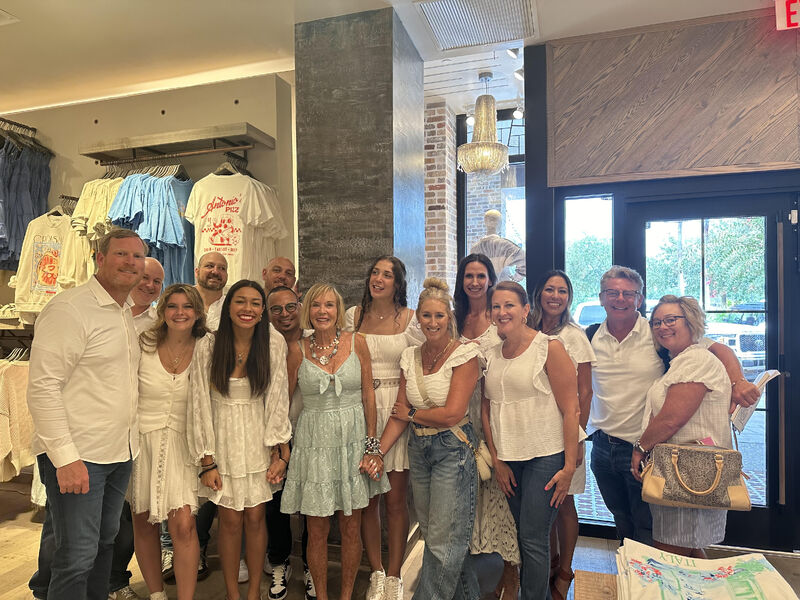
In 2024, Walters was traveling with the store operations team. In Destin, they surprised a guest named Cheryl with an Altar’d State shopping spree. A subsequent visit to Lakeside in Louisiana brought another surprise for a guest named Patty. The photographs and announcements put the chief executive back among the people whose ordinary encounters make up the company’s retail business.
These visits suit a career that started close to the shop floor. A title can grow several words longer while the useful questions remain small: who came through the door, what happened when they asked for help, why might they return? The Destin photograph contains the executive, the team and the guests in the same frame. There is room for a founder’s story without making everyone else disappear from it.
Knoxville now supplies a fresh address. In September 2026, ASR Kress LLC, registered to Walters, bought the Kress Building at 419 South Gay Street for $6 million. The transaction closed on September 17. Altar’d State’s planned arrival in the downtown building adds another local chapter to a business whose reach has expanded well beyond Tennessee.
Walters’s story keeps returning to the relationship between an ambition and its practical form. Retail gave him a profession, then a means of supporting work he cared about. Growing the company required experienced colleagues; giving required partners and repeatable commitments. He sums up one part of his outlook with a plain instruction: “You need to find that passion.” Monday provides a useful test. It asks the business to turn up again, sell its merchandise and keep the appointment.