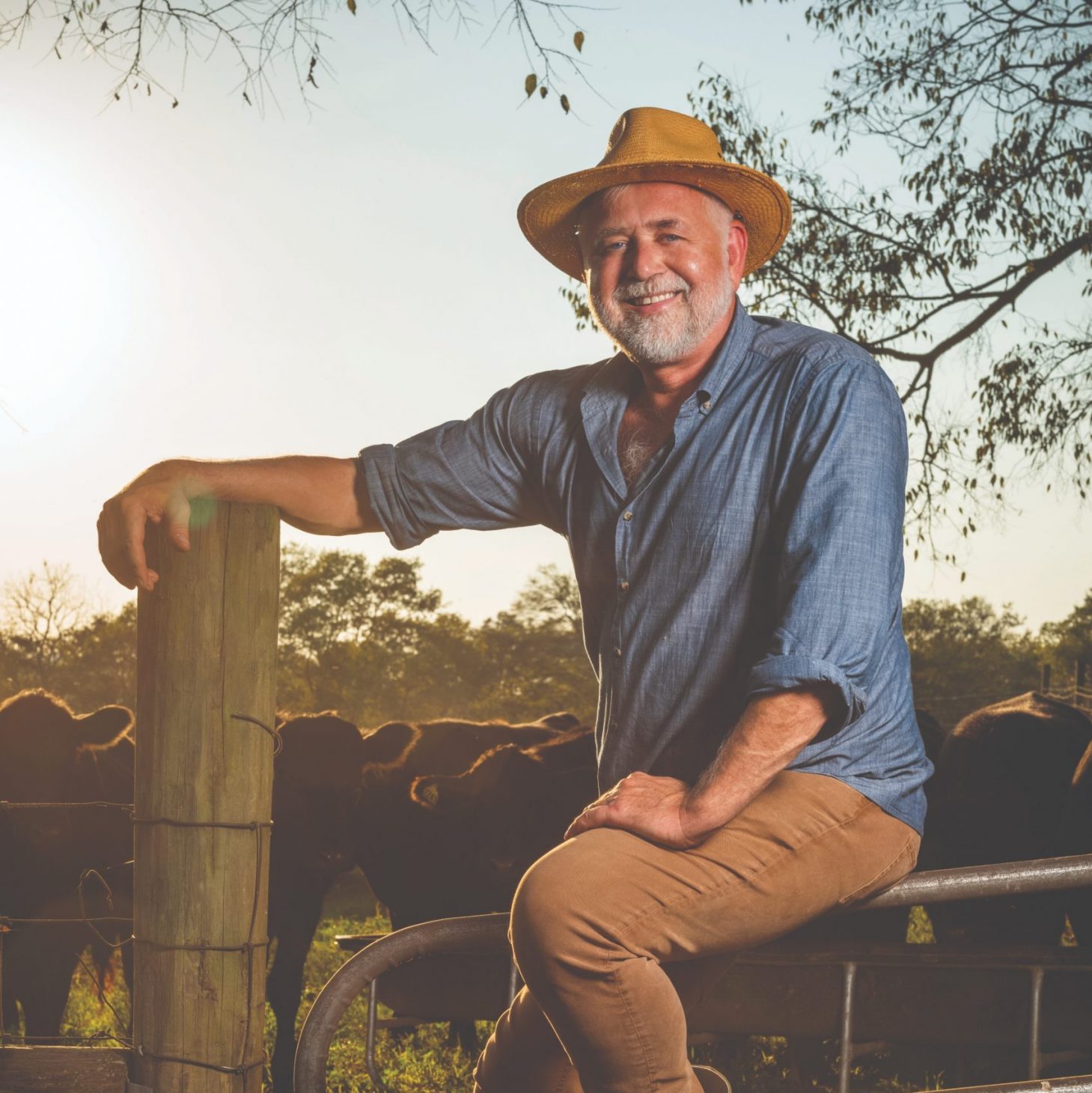
The tomato in John Dyke's memory is not round enough for a catalogue. It has shoulders, creases and the sort of complexion that would alarm a supermarket planogram. He calls these heirloom specimens “ugly tomatoes,” with affection. They are the taste of a working farm in Greeneville, Tennessee, where he grew up tending the family garden, herding cows and farming tobacco. Years later, living in East Nashville and selling medical equipment, he missed them. Homesickness arrived wearing tomato juice on its chin.
The missing tomato became a retail thesis. Dyke kept driving across the Cumberland River to Sunshine Grocery on Belmont Boulevard, a natural-food shop with bulk spices, organic produce, sandwiches and the conversational hum of a neighborhood clubhouse. In the aisles he repeatedly met people from his own side of town. East Nashville's demand was making a round trip. Dyke wondered whether the groceries could travel instead.
He had no natural-food résumé to brandish. What he had was farm memory, sales experience and the beginner's permission to ask basic questions. For four or five years he attended industry expos and seminars, spoke with anyone willing to explain the trade and studied relationships between independent stores and local growers. The preparation did not make him an expert. It made him sufficiently informed to risk being wrong in public.
“I was in my 30s the first time I felt like I'd found my passion.”John Dyke
The first turnA store shaped at the checkout line
In 2001, Dyke opened the first Turnip Truck near Five Points. The building had housed an H.G. Hill grocery a century earlier, which pleased his sense of continuity. He had studied how those old stores sat along commuters' routes home and bought seasonal goods from nearby farms. His new shop was contemporary in inventory but old-fashioned in its understanding of convenience: be where the neighborhood already moves, and know the people who supply the shelves.
The name carried a wink. A turnip truck is usually where some poor, credulous soul has recently fallen from. Dyke reclaimed it for farm intelligence. The joke invited shoppers in; the produce made the argument. In the parking lot, the store hosted one of Nashville's early neighborhood farmers markets. Producers who normally sold under a temporary tent gained a regular audience. Customers gained names and faces to attach to dinner.
The romance came with invoices. Dyke has said the first year or two brought costly errors. He poured in his savings and fought to keep the place alive, serving as owner, buyer, operator and greeter. He also gave customers an unusual degree of authorship. His formulation was plain: he owned the store, but customers could shape it. Listening was not a focus-group exercise. It happened in the aisle, with a shopper pointing at a gap.
farm
shelf
table
feedback
Learning to let goThe three-legged stool
The Turnip Truck grew carefully. A second store opened in the Gulch in 2010, and suddenly one founder's attention had to exist in two places. Dyke was still buying, tending employee relationships and carrying knowledge that lived mostly in his own head. Scale exposed the danger of competence: the better he became at doing everything, the more everything waited for him.
He brought in neighbors Kim Totzke and Adam Williams, whose experience running operations for the bakery Provence gave them a practical command of systems. The division of labor developed a pleasing agricultural sturdiness. Dyke could imagine and experiment. Williams, as finance chief, could determine how to pay for it. Totzke could turn it into repeatable operations. She described the trio as a three-legged stool. The metaphor lacks Silicon Valley gloss and possesses the crucial virtue of staying upright.
For Dyke, delegation was a difficult education. Trusting others meant accepting that the company could no longer run as an extension of his own gestures. It also allowed the original curiosity to survive. A founder trapped in approvals has little time to visit a strawberry farm or notice what has changed in the produce section. The leadership structure did more than support expansion. It protected his proximity to the work that had supplied the idea.
A city rearranges itselfThirty trees and a flattened warehouse
Expansion produced experiments as well as stores. At the Gulch location, Dyke planted 30 fruit trees in an attempt at hyperlocal agriculture. Development eventually erased them. It is a melancholy little parable: an orchard planted inside a building boom will eventually receive a zoning lesson. Yet the episode reveals a useful feature of Dyke's character. He prefers to make a value physical enough that it can succeed, fail or get bulldozed.
The larger test came in March 2020. A tornado tore through Middle Tennessee, damaged the East Nashville store and flattened the warehouse holding equipment intended for a new Charlotte Avenue location. Refrigeration, registers and other fixtures were lost. Dyke spent roughly three days searching the debris for pieces that could be saved. New employees had already been hired. Their commitment to the company weighed in his decision to proceed.
The team found replacements, accepted scratches and opened on March 27. The building carried rooftop solar, reused an existing structure and extended a no-plastic-bag policy adopted years earlier. Its polish could wait. The store's purpose could not. This was not grit as a motivational poster. It was purchasing equipment twice, coordinating labor and opening the doors with a few visible dings.
Five stops on a 25-year route
Five Points - the neighborhood shop opens in an old grocery building.
The Gulch - a second store adds prepared-food counters and an urban format.
Historic Edgefield - the East store moves into a larger Woodland Street flagship.
Sylvan Park - Charlotte Avenue opens after tornado losses disrupt its equipment.
Midtown - the 23,500-square-foot fourth store opens near Vanderbilt.
The full-circle aisleSunshine, revisited
The fourth Turnip Truck opened in January 2025 in Midtown near Vanderbilt. Its 23,500-square-foot plan widened the company's format, and its address provides the story with suspiciously tidy symbolism. The site is associated with the original Sunshine Grocery, the shop that first showed Dyke what a natural-food store could feel like. A quarter-century after borrowing its lesson, he returned with a store of his own.
By 2026, Turnip Truck reported relationships with more than 75 local farmers and artisans. Its four stores aimed to source from within roughly 200 miles when possible. The distance is close enough for seasonality to remain an active force. A ripe tomato can be picked later, travel less and arrive with its personality intact. Local also gives the retailer less room to hide behind a distributor. When the grower is a neighbor, sourcing becomes a relationship rather than a line item.
Dyke still turns up stocking produce, sometimes after visiting a farm. It is a charming image, but more important, it is an information system. Shelf work reveals what arrives late, what bruises, what customers ask about and which abundance needs a quick use in the kitchen. The work keeps him near the consequences of executive decisions. Grocery is a business in which philosophy eventually becomes a box that must fit in a cooler.
“I wake up every day still learning something new in this business.”John Dyke
What remains unfinishedThe useful imperfection
The stated project for 2026 was movement toward zero waste. The ugly tomato returns here as an operating challenge. Produce ignored for its appearance can become sauce, stew or a prepared dish. Kitchens can convert irregular supply into something useful. Packaging, scraps and daily store operations make the ambition harder than the slogan. That difficulty is the point. A value earns its place in a business by surviving contact with a prep list.
Dyke has also spoken about more stores, shared kitchens and warehouse capacity, though his history suggests that growth is interesting to him when it serves a particular neighborhood. The company supports local parks, tree replacement and efforts around food security. It has worked with a Nashville re-entry organization to provide jobs and workplace experience. In each case, the store functions as a civic room with cash registers.
There is no clean finish to this story, which seems appropriate. Farms run in seasons. Neighborhoods change. Trees disappear. Equipment gets dented. A founder learns to trust a team and then discovers a fresh thing he does not know. The Turnip Truck's durable idea is not that local retail can preserve a city in amber. It is that a store can keep renegotiating its promises at human distance.
Twenty-five years after the first opening, Dyke's enduring symbol remains the tomato that refuses cosmetic discipline. It is wrinkled, ripe and inconvenient to standardize. It tastes like somewhere. It asks the buyer to know the farmer and the shopper to value substance over symmetry. In other words, it behaves very much like the business he built around it.