The room was full of Arabs, and the jokes were in English. Ibraheem Alkhairallah, then working his way through Saudi Arabia’s stand-up scene, decided to change that. He switched to Arabic. The audience responded. Among the people watching were Alaa Fadan and Ali Kalthami. They had been filming creative people and making short videos; here was a useful demonstration of what happened when the material spoke directly to the people in the room.
It is a pleasingly modest place to begin a film-studio story. Somebody adjusted the language of the jokes. Fadan and his collaborators paid attention.
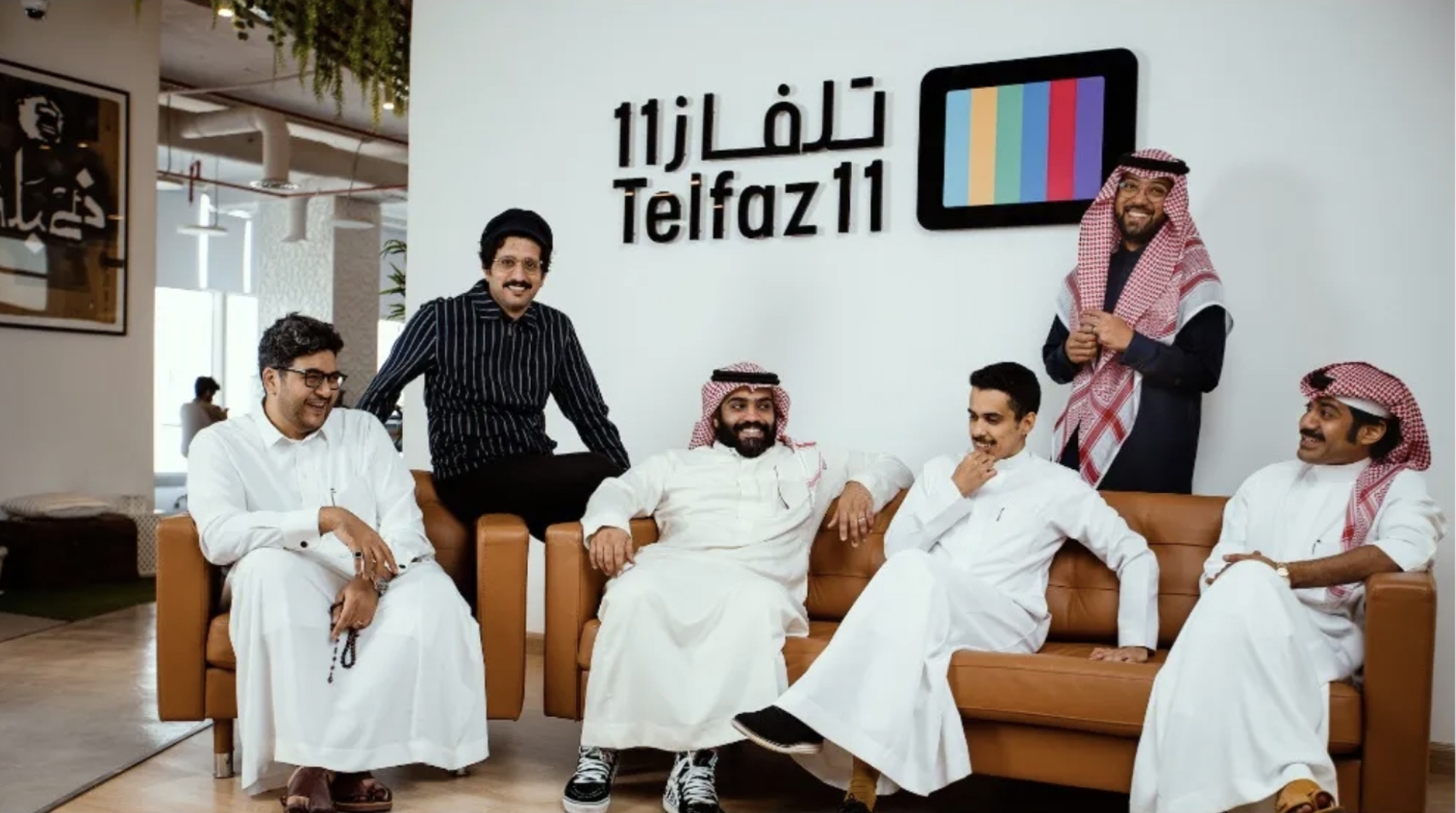
In 2011, Fadan co-founded Telfaz11 with Kalthami and Alkhairallah. The company would eventually make films for Netflix and Saudi cinemas. Its early proposition was closer to home: give local talent a way to reach local viewers, and make work those viewers wanted to pass around.
The hobby needed a payroll
Before the studio, Fadan had a career that made sense on a conventional résumé. He studied at Pennsylvania State University, earning a bachelor’s degree in information science and technology, and master’s degrees in information science and business administration. He worked in project management at Mobily, the telecommunications company.
That background matters because a creative company must organise people, money and time as well as ideas. Fadan brought experience in strategic projects to a business whose output might be funny, but whose obligations were perfectly serious. A joke can be spontaneous. A production schedule generally prefers advance notice.
Outside that professional track, he and his future collaborators were encountering people with abilities their day jobs scarcely used. In his account of the early years, the problem was painfully practical. There were artists, filmmakers and animators doing impressive work on the side, without an obvious way to turn it into their main occupation.
They initially documented creative people. Comedy offered another route to a public audience, helped by the rapid adoption of YouTube and social media. A sketch could introduce a performer and give viewers a reason to share the work in the same few minutes.
“Comedy travels much further on social media.”
Alaa Fadan, 2021
The observation explains something about his approach. The work needed a means of circulation. Talent that stayed within a small circle could be admired; talent that reached an audience had a chance of sustaining a business.
The audience hiding in plain sight
Telfaz11’s early advantage was an understanding of Saudi youth. Much regional television addressed a broad Arab audience. The studio’s online work could be much more particular, using the speech, situations and humour familiar to its viewers.
Fadan has described that gap as the reason the company’s content caught on. Young Saudis had screens, internet access and plenty to watch. They also wanted material that reflected their own social world. The studio could serve that desire without first persuading a television network to make space for it.
YouTube supplied a direct route from creator to viewer. It also supplied feedback. For a young production company, that relationship was useful: people could watch, react and share while the team continued developing its craft. The audience became part of the working environment, rather than a distant group to be imagined before a broadcast.
The name retained a little of this starting point. Telfaz means television in Arabic. The number 11 marks the founding year. For a company that began by finding viewers online, it was an agreeably cheeky way to claim a place in the screen business.
Seven years before the cheque
By 2018, Telfaz11 had spent years building that relationship. Its $9 million Series A, led by STV with participation from VentureSouq, arrived after the company had developed an audience and a body of work. The proposed uses were concrete: build capacity, improve the business and expand into neighbouring markets.
Fadan’s advice to other founders was to concentrate on the product before fundraising. Demonstrated demand gave investors something firmer to judge. He also put emphasis on choosing the partner, and on beginning the process before cash became urgent. That is advice from somebody who understands how a calendar can quietly become a negotiating opponent.
The geographical expansion took a tangible form in September 2019, when Telfaz11 launched its Dubai office. Fadan described the UAE as a commercial hub and a place to build relationships with agencies and brands serving regional markets. The studio’s entertainment work and its commercial work could develop alongside one another.
There was already experience of taking Saudi films abroad, including a presentation at Saudi Film Days in Los Angeles in 2017. The next stage required business relationships as well as screenings. An office made the expansion a daily operation.
- 2011Telfaz11 founded
- 2018$9m Series A announced
- 2020Netflix short-film collection and feature agreement
- 2021Last Scene Films acquired
- 2023NEOM production partnership announced
Selected milestones. Announced agreements are distinct from completed productions.
Six windows onto a larger screen
In February 2020, Netflix announced that six short films from Telfaz11 would be available in 190 countries. Released as Six Windows in the Desert, the collection arrived on February 27. It offered several Saudi filmmakers a shared point of entry into an international catalogue.
The selection included 27th of Shaban, about a date in the early 2000s, and Wasati, which revisits an attack on a theatrical performance. These were stories with recognisable local settings and distinct creative perspectives. The collection gave viewers elsewhere an opportunity to encounter them together.
Later that year came an agreement to produce eight new feature films for Netflix. The two arrangements marked different steps. One brought an existing group of short films to a wider audience. The other established a pipeline for new feature work, with the longer development and production commitments that entailed.
February 2020
November 2020
Fadan’s operational concerns were becoming more substantial too. In 2020, he described simplifying the company’s offerings, concentrating on two business lines and imposing tighter financial discipline. The ambition depended on keeping the organisation able to deliver.
He could be less solemn about his own discoveries. Asked what had surprised him that year, he offered a small culinary announcement: “I’m a fantastic cook.” It is a useful interruption in a conversation full of business processes. Even a studio CEO is allowed a side project with a more immediate audience.
A studio learns to make room
In December 2021, Telfaz11 acquired Last Scene Films, the Riyadh independent production company founded by Mohammed Alhamoud. Wael Abumansour had joined that company as an executive producer. The acquisition added a team with experience in arthouse features, documentaries and short films.
Last Scene’s debut feature, Last Visit, had premiered at Karlovy Vary in 2019 and won a jury prize at Marrakech that year. The people joining Telfaz11 already knew a route through film development and international festivals. That experience could sit alongside the group’s background in online entertainment.
A studio growing into features needs more than the ability to repeat a successful sketch. It needs people who can develop different kinds of work, sustain longer productions and find appropriate audiences. Bringing another production company into the group was one way to widen those capabilities.
Fadan’s credits also reflect his involvement in the films themselves. His public biography lists executive-producer work on Sattar, Raven Song and AlKhallat+. The titles occupy different territory, from wrestling comedy to other forms of Saudi fiction. His company was developing a slate with room for different voices.
A wrestler, a courier, a wider world
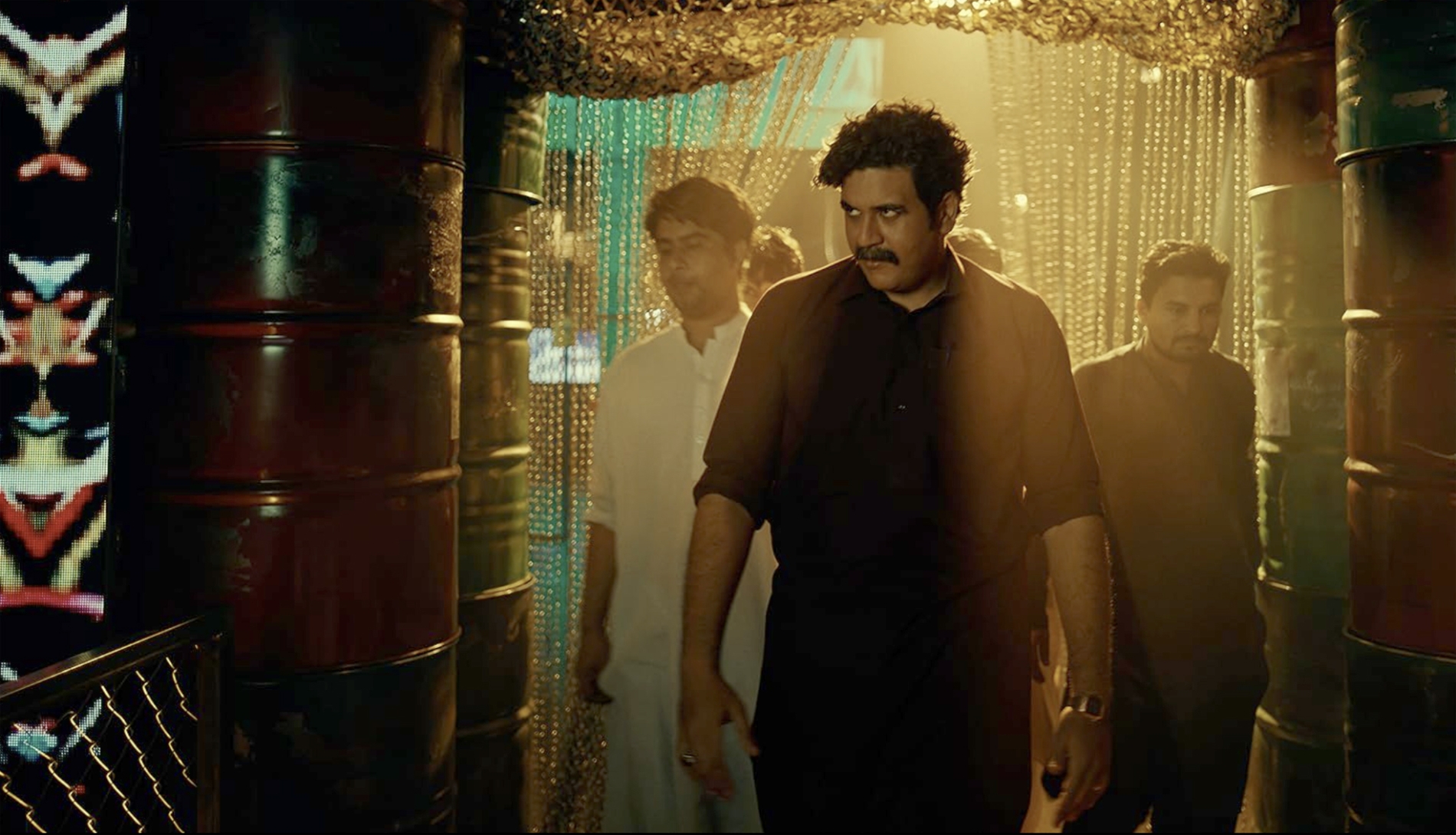
Sattar gave that theatrical ambition a conspicuous test. Following its release in late 2022, the comedy set a Saudi film box-office record. A story built around freestyle wrestling had found a paying audience at home. For a studio with online roots, the reception offered evidence that its work could draw viewers into cinemas.
Other recognition arrived in 2023. Fast Company Middle East included Fadan, Kalthami and Alkhairallah in its Most Creative People in Business selection. The shared recognition is appropriate to a venture that has depended on collaborators with different creative and commercial responsibilities.
That September, Night Courier, directed by Kalthami, and Naga, directed by Meshal Aljaser, featured at the Toronto International Film Festival. The studio’s international presence was becoming visible through individual films as well as distribution agreements.
Fadan’s stated priorities remained local. He wanted to build the studio’s place in its home market while developing the possibility of international co-productions gradually. He described a role between the people making the work and the people watching it: “we want to be an intermediary between our creators and the viewers”.
That position requires listening in both directions. A creator needs room to develop a particular voice. Viewers decide whether they want to spend time with it. Fadan’s business lives between those needs, where the next commission has to become something an audience will actually choose.
The next scene needs somewhere to happen
The production partnership announced with NEOM in June 2023 extended the practical side of that ambition. The announcement envisaged up to nine film and television productions over three years, alongside a planned physical presence at the media hub and activities supporting talent development.
The agreement concerned places to work and people to work with, as well as a slate. Locations, facilities and experienced production teams all affect which stories can be attempted. A company that wants creators to build careers must think beyond the first opportunity to the opportunities that follow it.
By September 2026, Fadan was discussing another part of the group: SHIFT, its creative services and advertising arm. Adel Alsayeh was appointed managing director to lead Saudi operations. Fadan emphasised SHIFT’s understanding of audiences and supported bringing creativity, technology, media and performance closer together.
The appointment brings the story back to the business surrounding the work. Films, branded productions and regional partnerships place different demands on a studio. Fadan’s role includes making those activities function together, so that a creative idea has an organisation capable of carrying it through.
The original audience is still a useful place to end. People in a room heard a joke in a familiar language and responded. Years later, Fadan’s company has more ways to reach them, and more people involved in the attempt. The central task remains specific: help somebody make a story worth watching, then give the people who might love it a chance to see it.
More from Fadan’s world
- Telfaz11 - official studio website
- Alaa Fadan on LinkedIn
- Alaa Fadan on Instagram
- Alaa Fadan on X
- Watch: Must see (Saudi) TV
- Watch: FILMART 2024 interview
- Telfaz11’s YouTube channel
- Read: the founding team in conversation
- Read: a career portrait
- Read: local stories and international audiences
- Read: product and fundraising advice
- Read: Six Windows in the Desert
- Read: the Last Scene Films acquisition
- Read: the NEOM production agreement
- Read: SHIFT’s September 2026 appointment