Akshay Ghulati was talking about the future of logistics when his coffee became part of the argument. At the India Economic Conclave in December 2025, he mentioned a Nespresso delivery on its way to his office through Blinkit. He hoped nobody would call to ask where to leave it. A discussion of supply chains had acquired a very ordinary deadline: the arrival of a drink.
The detail suited his subject. A delivery can be inexpensive or expensive, domestic or international, eagerly awaited or barely noticed. The buyer still wants it to turn up properly. Ghulati’s work at Shiprocket sits in that awkward space between a seller’s promise and a customer’s door. The software can be elegant. The parcel has to arrive.
Today he is Shiprocket’s co-founder and CEO of International Shipping, based in New Delhi. The qualification matters: Saahil Goel leads the company as managing director and CEO; Ghulati leads its international shipping business. His particular question is how an Indian merchant can reach a foreign customer without having to become an expert in everything that happens between them.
A respectable CV meets a less respectable problem
Ghulati’s education followed a familiar business-school route: economics at Wharton, then an MBA at Harvard Business School, where he graduated in 2009. His professional background includes A.T. Kearney, the Parthenon Group and Amazon. Before joining the business that became Shiprocket, he worked in the UK, including as a senior manager in Amazon’s pan-European Fulfilment by Amazon operation.
That background makes the change of setting interesting. At Amazon, fulfilment belonged to a large, established commerce system. In India, independent sellers were still assembling the pieces required to trade online. A small merchant needed customers, a storefront and a way to get an order delivered. Possessing one of those things did little to excuse the absence of another.
He joined in early 2016 as chief business officer. His arrival preceded the 2017 launch of Shiprocket as the shipping platform now associated with his name. The distinction gives the story its texture. He did not join a finished logistics business and simply enlarge it. He arrived during an earlier attempt to help merchants sell, when the team was still working out which problem deserved its attention.
In his later account of that period, the project was Kraftly, an open social-commerce marketplace. A seller could photograph stock with a smartphone and make it available online. The appeal was easy to understand: products from small shops and local markets could find buyers beyond the places where they happened to be displayed.
The flea market was a useful classroom
There is a revealing snapshot of Ghulati’s work in 2017. Kraftly was appearing at La Feria, a flea market in Chandigarh, and sponsoring a fashion show at the National Institute of Fashion Technology. Upcoming designers could encounter the platform there. Shoppers could see products in person, then return to the website afterwards.
He explained the attraction of the flea market in practical terms: it allowed the business to show its unusual products to the people who might buy them. Kraftly also timed marketing around superhero films and Comic Con when relevant merchandise was available. This was commerce at the level of a stall, a conversation and a customer’s particular enthusiasm.
Those details help restore the human scale of a career now described with executive titles. The task was to persuade someone to sell, or someone else to buy. A good spreadsheet could guide the effort. It could hardly substitute for discovering whether a person actually wanted the object in front of them.
Kraftly’s evolution also supplied a harder lesson. Ghulati later described a marketplace drifting from its original interest in distinctive products towards more generic merchandise. The team reconsidered the business. In that account, he had left his Amazon career for the venture and then helped question the direction it had taken. The willingness to revisit a decision is one of the more consequential details in his public story.
After the sale came the obstacle
The shipping pivot addressed something less glamorous than discovering unusual products: small merchants struggled to obtain reliable delivery. KartRocket, the earlier storefront business, and Kraftly belonged to the company’s path towards Shiprocket. The team’s attention moved to the infrastructure that an independent seller needed once an order existed.
The attraction of that problem is almost embarrassingly straightforward. A shop can win a customer and still lose the relationship during delivery. A tracking query, a failed handover or an awkward return lands back with the merchant. Customers rarely apportion disappointment according to the contractual responsibilities of everyone involved. They remember the shop they paid.
Ghulati’s chief business officer remit included strategy, marketing and customer-facing functions. In June 2020, the company announced his elevation to co-founder. Goel publicly described his commitment to building the business for the long term. The title followed several years of work; it gave formal recognition to a relationship already tested by changes in direction.
“My journey at Shiprocket over the last four years has been filled with learning and growth.”Akshay Ghulati, on becoming a co-founder in 2020
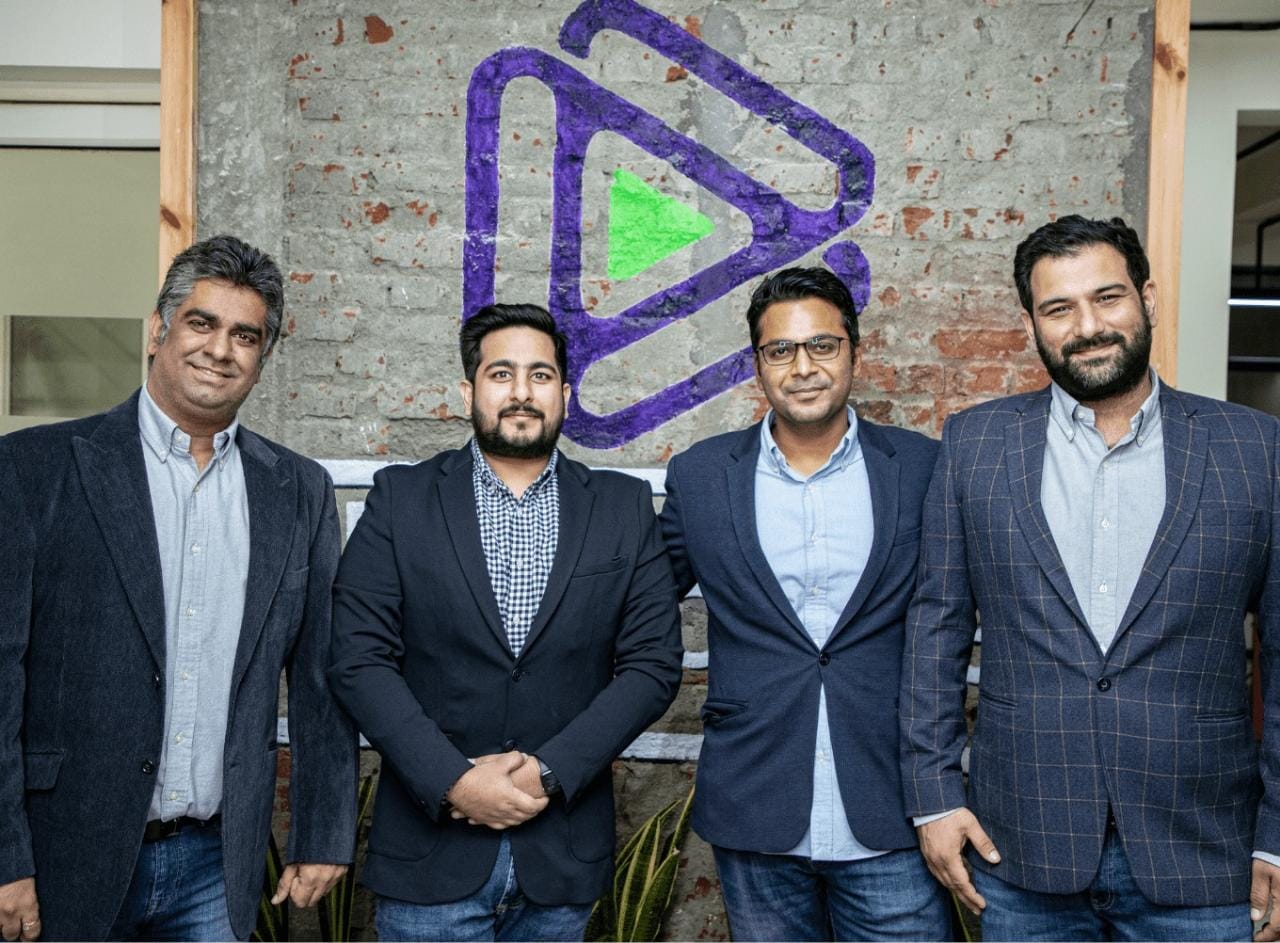
A co-founder photograph puts him beside Vishesh Khurana, Saahil Goel and Gautam Kapoor. It is a useful corrective to the solitary-founder version of business history. Shiprocket’s development required people responsible for different parts of the same transaction. Ghulati’s business and international focus sits within that wider division of work.
The border has its own paperwork
By 2022, Ghulati was discussing the international extension of this work. Shiprocket X launched in June that year, following preparation that included months of dealing with customs and exports. His description of the difficulty was admirably economical: “It is very complex.” A buyer abroad was reachable through a screen; the parcel still had a border to cross.
He also described sellers who wanted to control their own customer experience overseas, rather than rely entirely on marketplaces. That ambition made delivery part of a larger relationship. The merchant wanted the repeat purchase, the customer’s trust and a return on the effort of entering another market. Shipping had to serve those purposes.
A 2023 appearance on The Indian Dream explored how Indian brands could go global. The conversation’s agenda ran through choosing markets, pricing, compliance and testing an overseas opportunity. That sequence is revealing. International expansion becomes a series of decisions a merchant can investigate, rather than a grand announcement followed by a hopeful trip to the courier counter.
Ghulati took up the international shipping CEO role in April 2024. In September 2025, ShiprocketX introduced delivered-duty-paid enablement for US and Canadian shipments alongside HSN Vision, a tool designed to identify product classification codes from uploaded images. The announcement addressed a particularly unromantic threat to a sale: uncertainty about duties and tariffs.
One parcel. Several separate questions.
- Identify the productHSN Vision proposes a classification from a product image.
- See the chargesDuty and tariff calculations are presented at booking.
- Arrange the shipmentDDP enablement supports upfront duty handling for the announced markets.
The promise was that sellers could see the applicable charges when booking. HSN Vision was presented as a way to reduce classification errors and the time spent identifying codes. These were announced capabilities, not proof that every export difficulty had disappeared. Their significance lies in the choice of problem: uncertainty becomes expensive long before a parcel is lost.
A network needs someone to answer the door
Ghulati’s interest in access also appears in his comments on the Open Network for Digital Commerce. In 2023, he welcomed ONDC’s ambition to make demand more accessible to small businesses while acknowledging the challenge of bringing online and offline activity together. A digital order still requires a physical operation to honour it.
In the same period, he spoke about building a profitable company capable of an eventual IPO. His emphasis then was on making the business ready, rather than putting a listing on the immediate roadmap. The remark belongs to its date. It captures a concern that runs alongside expansion: a service merchants depend on must itself be able to keep operating.
His work has also extended into founder conversations. ACLR8’s February 2024 podcast described him as a visiting partner working with portfolio companies. The episode covered profitability, product-market fit and collaboration among technology businesses. It suggests another setting for his experience: helping younger companies think through the commercial decisions that sit behind an attractive product.
The coffee returns, as parcels tend to do
At the December 2025 conclave, Ghulati discussed the damage a late or poorly packaged order can do to a seller. His coffee aside made the same point with less ceremony. Even someone professionally occupied with logistics would prefer the delivery to complete itself without an extra negotiation over the telephone.
He also questioned the environmental consequences of many small, immediate deliveries, while recognising changing buying habits. Convenience creates expectations. Once a customer becomes accustomed to a service, the next seller has to contend with that standard. The international version adds customs and local delivery arrangements to the same pressure.
In early 2026, his public recruitment post described plans to scale marine freight and imports on the cross-border platform. The scope was widening beyond the small export parcel. He sought analytical people as well as relevant domain experience, an indication of the work still being assembled around the international business.
The recurring ambition is to make overseas selling more approachable for Indian businesses. His route towards it has included business school, Amazon, a marketplace, a shipping pivot and the detail of tariff calculations. Each stage has brought the question closer to the merchant’s desk. A customer somewhere else wants an order. Ghulati’s job is to make that distance manageable, right through to the door.