The dress was supposed to be a prop. At a ShopShops livestream from a New Jersey Spanx store, hosts demonstrated how shapewear could disappear beneath a wedding gown. A viewer in China bought the gown itself: $2,300. The detail, reported by Forbes in 2018, captures the peculiar appeal of shopping with another person’s eyes. Sometimes the thing you want is standing beside the thing being sold.
- ShopShops connects shoppers, live hosts and sellers of designer goods.
- Its original travel-directory concept gave way to interactive video shopping.
- Pre-owned luxury is now the focus; Komehyo Holdings brought it into the group in December 2025.
Ordinary ecommerce is rather good at answering a question you already have. Type a brand, choose a colour, sort by price. ShopShops makes room for a different habit: wandering. A host walks through a store, holds something up, answers a question and finds the next item. Viewers can talk back and buy. The shop assistant, the excursion and the checkout inhabit the same small screen.
The map was the wrong product
Liyia Wu founded ShopShops in New York in 2016. Her original idea was a shopping directory for travelers, a Yelp-like guide to stores abroad. She knew both sides of the journey: before ShopShops, she had operated a Beijing boutique importing American designers and created a fashion label of her own. She understood the pleasure of finding a store that did not exist back home.
But knowing where a shop is does not necessarily persuade someone to use an app. In a 2023 interview, Wu described trying different models and running unsuccessful user-acquisition tests. Those experiments convinced her the directory would not work. The response was to bring the destination to people sitting at home, through livestreams.
The experiment was small enough to be awkward. Wu told Future Commerce that the initial team numbered five and that she and her partner became the first hosts. They tested livestream selling on an Alibaba platform. The founders were learning the job while performing it. A directory could be built behind a desk; this version required someone willing to pick up the merchandise.

A boutique with three sets of customers
The resulting business serves three constituencies. Shoppers want discoveries and answers. Sellers want access to buyers beyond the neighbourhood. Hosts supply taste, product knowledge and the ability to keep a conversation moving. A merchant may own the bag; a presenter makes its particulars legible to someone thousands of miles away.
Today, the app lets viewers follow hosts, reserve a place at upcoming streams, receive notifications, chat and purchase without leaving the experience. Its assortment includes designer handbags, clothing, watches, jewellery and other finds. For a collector, the attraction is access to unfamiliar stock. For someone buying a first pre-owned bag, it is the chance to ask a human being what the photographs leave unresolved.
“I believe the future of shopping is definitely live and video.”Liyia Wu · Future Commerce, 2021
That puts ShopShops between luxury resale and live entertainment. The RealReal, Fashionphile and Vestiaire Collective are alternatives for finding secondhand designer goods; Whatnot and Talkshoplive are alternatives for shopping through a broadcast. ShopShops’ particular emphasis is the host-led trip through fashion inventory. Its operating expertise lies in combining retail knowledge with presentation and cross-border selling.
The bill behind the bargain hunt
The business makes money through commissions. In 2018, Forbes reported a 20% cut of livestream sales, with some of that covering logistics and shipping to China. C.O. Bigelow’s owner described no upfront dollar cost to his store and modest staff preparation. That was an early arrangement. Current seller terms leave commissions and other charges to the relevant agreements.
The economics favour a seller who has enough margin to pay for the audience and fulfil the order. They also explain why the camera is only the visible part of the operation. Payments, shipping, returns and disputes still need handling after the entertaining person has signed off.
In June 2021, ShopShops announced a $15 million Series B co-led by LightShed Ventures and Acrew Capital. Reported funding then totalled $35.1 million. The company had launched a U.S. beta in December 2020, extending a model initially built around Chinese shoppers to another audience.
Bloomingdale’s Outlet provided a concrete demonstration in November 2022: ten holiday livestreams over six weeks, from stores in Paramus and Woodland Hills. Each event would run at least two hours and feature 30 to 60 shoppable products. Gift suggestions and styling advice gave viewers a reason to stay. The outlet’s scattered bargain racks became scheduled programming.
The camera has its limits
Pre-owned luxury changes the questions. The logo matters, but so do worn corners, interior stains and hardware. ShopShops grades condition across six categories, from Brand New to Fair. A sensible buyer asks the host to show the awkward bits. A closer look can resolve uncertainty about wear; a charming performance cannot establish authenticity.
ShopShops explicitly distinguishes its Verified Seller badge from certification of an individual item. Buyers can purchase Entrupy authentication for supported handbags; the platform also works with Legit App and accepts Real Authentication certificates. Authenticity concerns must be raised within three business days of receipt, with the seller tag intact. These details deserve attention before the buy button does.
Vintage and pre-owned purchases are generally final sale. Optional Seel Return Assurance offers a seven-day return route for eligible orders shipped within the United States. The format therefore suits people who enjoy live discovery and can make considered decisions during it. Anyone needing leisurely comparison or unconditional returns should read the terms closely.
Japan’s resale shelves meet the live feed
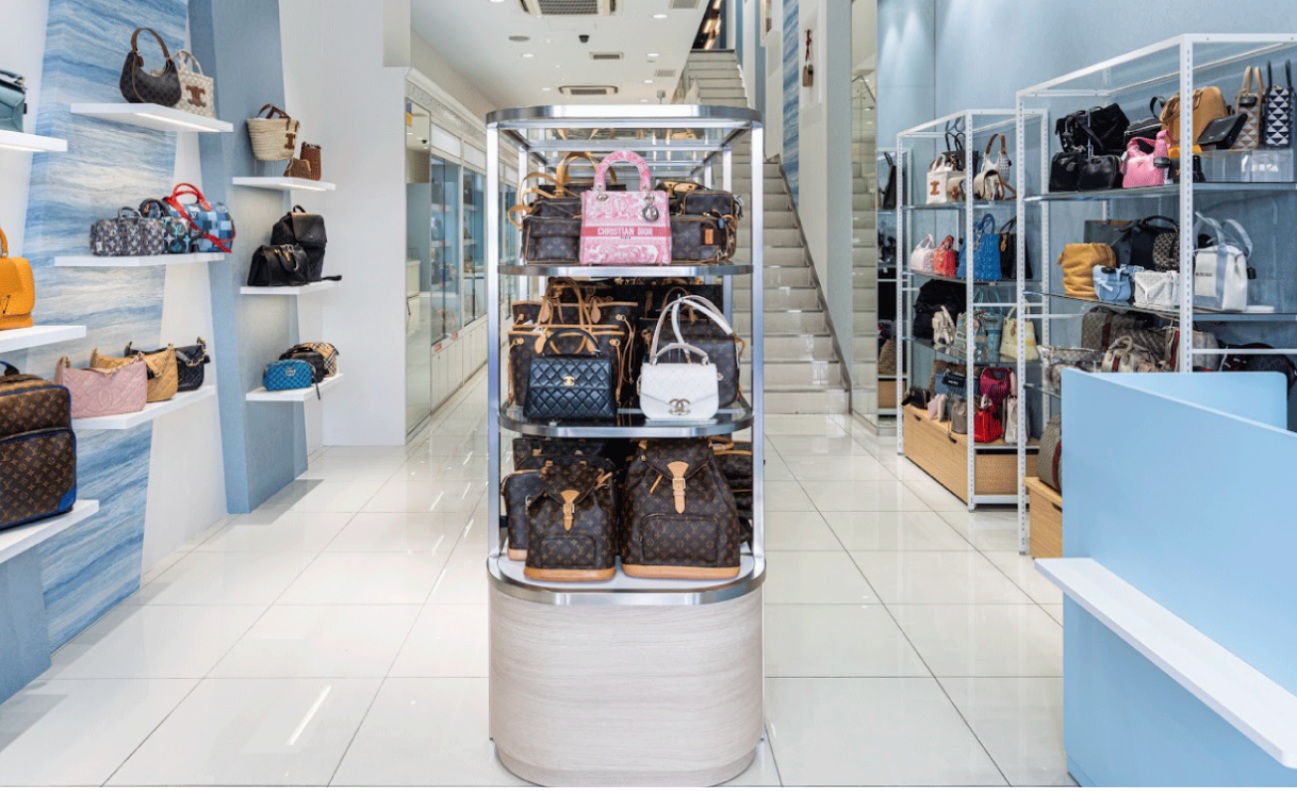
In December 2025, Komehyo Holdings acquired shares in iShopShops and brought the company into its group. The Japanese luxury-reuse business described expanding global sales channels, particularly into the United States. The fit is understandable: resale needs distribution, and live shopping needs interesting stock.
For other retailers, the useful idea is quite copyable. Let a knowledgeable person demonstrate real inventory, invite specific questions and make purchasing straightforward. It requires stock worth discussing, a host who listens and margins that survive the service costs. ShopShops’ first insight remains its sharpest: the customer did not merely need directions to the store. She wanted someone to open the door.
Go window-shopping
Visit ShopShops or get the app. Follow the live feed on Instagram, TikTok, LinkedIn, X and Facebook.
Hear Wu on Future Commerce, watch her retail interview, revisit the early cross-border experiment, or read the Bloomingdale’s series announcement.
Before checkout: authentication, condition and returns. Follow the ownership chapter through Komehyo’s announcements and the financing through the 2021 funding report.