AJ Shewki had a spectator problem. Inside a virtual reality game, a player could be ducking, reaching, turning, making a small performance out of a room. On a conventional stream, the audience got the view from the player's eyes. Much of the performance disappeared. The person wearing the headset understood the excitement. The person watching a screen had been given a rather less informative ticket.
Shewki came to this as a gamer. He competed under the name Dr Doom, a handle that has survived into his working life as LIV's co-founder and CEO. It is a useful name for an industry gathering: memorable, economical, and unlikely to be confused with the head of procurement. The problem he chose to work on, though, was unusually hospitable. He wanted to let other people see what was happening.
LIV began in 2016. Its early mixed reality capture tools put a real player into footage of a virtual world, making the relationship between movement and game visible. You could see a person and the consequences of their actions in the same picture. A gesture acquired context. For viewers, that changed the job from deciphering a moving viewpoint to following somebody playing.
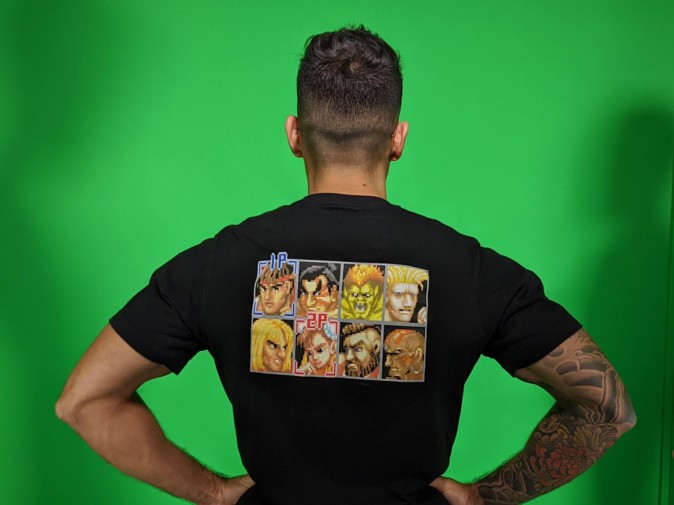
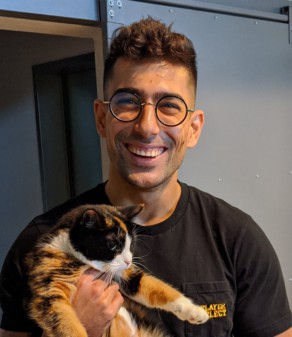
Dr Doom, in a Street Fighter shirt
An office visit published in January 2020 catches Shewki in a more domestic register: smiling with a cat, and wearing a Street Fighter T-shirt. LIV was working out of a converted brewery building in Prague, with sofas and a green screen. His nickname came from the fighting-game character he used while at university. The professional identity had carried a little of the student gaming room with it.
The setting suited the work. A green screen is a fairly literal admission that a scene can be assembled from separate places. LIV was making that assembly useful for players and audiences. Shewki's early effort to stream VR on Twitch had exposed the difficulty; building tools became a way to solve a problem he had encountered himself. His route into this business ran through the activity the business hoped to serve.
A camera earns its place
By 2019, LIV was describing a broader ambition: helping viewers participate in a live game rather than simply observe it. Its technology had already reached more than 150 experiences, and the company reported 1.5 billion views of videos made with its tools. That figure measured the audience for the resulting work, not the number of people using LIV. The distinction matters when a business lives several steps away from its eventual viewer.
The company also collected backers with close ties to games and VR, including Oculus founder Palmer Luckey and Beat Games co-founder Jaroslav Beck. Their involvement put Shewki among people who understood both hardware and the things people wanted to do with it. Building the camera required relationships with the people building the world around the camera.
In 2022, an $8.5 million Series A led by BITKRAFT brought in investors including Samsung Next, Sony Innovation Fund, Amazon Alexa Fund, Credo Ventures and Olive Tree Capital. Samsung Next pointed to an existing community of more than 13,000 active creators. It also described LIV technology appearing in television productions and official Oculus Quest launch trailers. The same underlying problem could arrive wearing a streamer's headset or a television producer's schedule.
For Shewki, distribution remained a practical negotiation. LIV needed developers to put its tools into applications that people actually played. In his account of the Gorilla Tag release, he spelled out the dependency: the company gained exposure through games, and earning a place in those games meant solving the developers' problems. A camera could be clever and still sit unused outside the door.
A simplified view of the developer-to-player-to-viewer path.
Seven years, then a very busy record button
The partnership with Meta brought a change in that equation. LIV became the official capture solution for Meta Quest through a multi-year agreement, while Meta moved away from its own mixed reality capture tooling. Shewki's team had spent years developing capture technology; now its relationship with the headset platform offered a route to people using standalone devices. The ambition was to let players record without assembling a PC-based production setup.
Another Axiom's Gorilla Tag supplied a particularly consequential doorway. LIV Creator Kit put camera tools inside the game, available to Quest and SteamVR players. In his launch post, Shewki thanked the developers by name and wrote about the responsibility of putting LIV's work inside theirs. Alongside the gratitude came the sort of live counter that makes a software launch difficult to leave alone: more than 3,000 videos in the first five minutes.
Soon afterward, he reported more than 1.3 million unique users and 14 million videos recorded in less than three weeks. These were launch-period figures, published by Shewki, rather than a standing measure of today's business. He described growth of more than 200 times. Years of integrations had met a game with an audience large enough to change the numbers very quickly.
The most revealing detail was the object itself. A player could pick a perspective, record a moment and carry on playing. A complex technical system had become something as comprehensible as a camera. Shewki's business benefited when players needed very little explanation. The record button had acquired the casual familiarity that the engineering behind it could never afford.
Less than three weeks after the camera launch. Historical launch figures, not current totals.
Professional goofing around
Shewki's public voice can move briskly between product economics and gamer enthusiasm. Announcing a presentation at Dubai's 1 Billion Followers Summit in January 2025, he argued that adults could underestimate VR by judging it through their own experiences. He was interested in the younger players and creators growing up inside it. That gives his camera project a generational purpose: make tools for the people already using the medium on their own terms.
His account of LIV Productions offers another view of the same idea. In a 2024 hiring post, he described the studio assembling more than ten people inside a game server to act out scenes for trailers. Bodies animated characters. Video production involved coordination, patience and, in his phrase, “(professionally) goofing around.” The joke works because the production still has to arrive on time.
The studio connected LIV's technology to finished creative work. Shewki pointed to its VAIL VR release trailer as an example, made using the company's capture tools. Here the camera was part of a working production process, with people directing, performing and editing. It gave LIV a close encounter with the demands that a useful tool must survive after the demonstration ends.
Recognition brought out a different sort of candour. When LIV appeared in a Times Square billboard video linked to a GamesBeat and Lightspeed award, Shewki admitted the appeal of the attention. He then directed the credit toward colleagues, naming the people doing the work. The image was large; his account of who had earned it was deliberately crowded.
“It ain’t sexy. Heck, it ain’t even fast. But it’s worth doing.”AJ Shewki, on earning a place inside games
The next job is keeping the camera working
The growth story acquired a harder chapter in early 2026. Shewki announced that LIV was parting with seven team members, with contracts ending in January and February. He described a VR market losing capital and said the company needed to focus its resources. He also took responsibility for the departures and used the announcement to introduce affected colleagues to potential employers.
His response combined continued work in VR with expansion toward adjacent uses, including AR applications and PC games outside VR. The camera remained the core product. Some other initiatives would be set aside. That is a less celebratory picture than a launch counter, and a more complete picture of the CEO's job: choosing where a small company can keep building, and accepting the consequences of the choice.
A separate decision showed the limits of one attempt to earn revenue. LIV removed the subscription requirement for camera streaming in December 2025 after feedback from users. The company said streaming would no longer be where it monetized. A feature that helps people broadcast also depends on people deciding to use it; charging for access had become a question the company was willing to revisit.
By February 2026, LIV's developer guidance described two distinct routes: an in-game camera kit with on-device recording and streaming, and PCVR mixed reality tools that place real people in virtual scenes. The difference preserves the history of Shewki's work. One route carries the green-screen idea forward; the other makes the camera part of the game itself. Developers choose according to the experience they want players to have.
The newer kit also changes who has to handle the recording machinery. Developers integrate the tools; players can then use cameras inside the application and save their recordings on the device. That division of work gives Shewki two audiences to satisfy. The developer needs a dependable integration. The player needs a moment worth filming and a camera that is ready when it happens.
There is a pleasing reversal in the career of a competitive gamer who has spent years improving the view for everybody else. Shewki's early question survives the platform agreements, launches and difficult staffing decisions. Somebody is having a remarkable time inside a headset. Somewhere else, somebody is watching a flat screen. Give that second person a better place to stand, and the first person's game becomes a story they can follow.