Consider an aircraft part sitting in a warehouse. Somewhere else, an aircraft cannot fly without it. The part might weigh very little; its absence can weigh on an entire schedule. Now substitute a transplant organ and a waiting surgical team. These are different problems until you look at the delivery clock. Both require someone to organize a succession of small, unforgiving handoffs.
Airspace, the Carlsbad logistics company, sells that organization. It combines routing and dispatch software with the people and transport network needed to move urgent cargo. The interesting question is where it finds time to save. An airplane has a schedule. A dispatcher, a pickup and a booking process have room for improvement.
- Urgent cargo: organs, aircraft parts and critical components.
- Software chooses the route; a managed operation runs it.
- The customer buys time, visibility and help when a handoff fails.
A filing cabinet full of wrong turns
Nick Bulcao had already worked in logistics when he bought First Delivery, a Phoenix courier business, in 2014. It served freight forwarders handling urgent shipments. He discovered a business that needed better visibility, and inherited something useful: years of records documenting service failures. Those records gave software engineer Ryan Rusnak a concrete starting point.
The founders had met through Craigslist, where Rusnak posted his résumé while looking for work in Southern California. In a 2018 interview, Bulcao said they had a minimum viable product within six months, launching in January 2016. The early brief came from errors already made. A founder elsewhere could copy that method tomorrow: collect the failures before writing the feature list.
“There was no technology or transparency in a space that desperately needed and wanted it.”
Nick Bulcao · Qualcomm Ventures interview, 2021

The flight starts at the pickup
Next Flight Out sounds like an airport decision. In practice, the route begins wherever the package happens to be. A driver must reach the pickup, find the right person, collect the goods and meet an airline’s acceptance cutoff. After landing, another ground journey remains. A plausible flight can become an impossible route when any one of those details is wrong.
Airspace automates route selection, quoting and dispatch, then follows the shipment through delivery. Its services include urgent ground transport, commercial flights, on-board couriers, charter arrangements, cold chain and dangerous-goods options. The common thread is coordination across modes. Customers can choose routes around speed, price and risk, rather than manually stitching together each leg.
That distinction places Airspace between software vendors and traditional transport intermediaries. It sells an executed shipment supported by its own technology. The driver network includes independent contractors and agent partners; commercial airlines supply flight capacity. Its expertise is making those separate participants behave like a coordinated service.
A departure board cannot see your package
There is an awkward possibility in air cargo: the plane takes off, but the package does not. Knowing the aircraft’s location will then tell you very little about your shipment. Airspace’s AirTrace offering, launched in 2021, connects package tracking and environmental measurements to the same platform used to manage the delivery.
Location, temperature, humidity and shock data help distinguish a successful journey from a reassuring-looking itinerary. Airspace says its operations team can identify a failure to load, locate the cargo and rebook it before the airline flags the problem. That is the useful part of visibility: a person receives information early enough to act.
The customer portal, shareable tracking links and API or EDI connections extend that information to the shipper’s existing workflow. For a lab or medical-device business, fewer status calls can matter alongside transit time. Airspace’s technology is also a way to stop several people from repeatedly asking the same question.
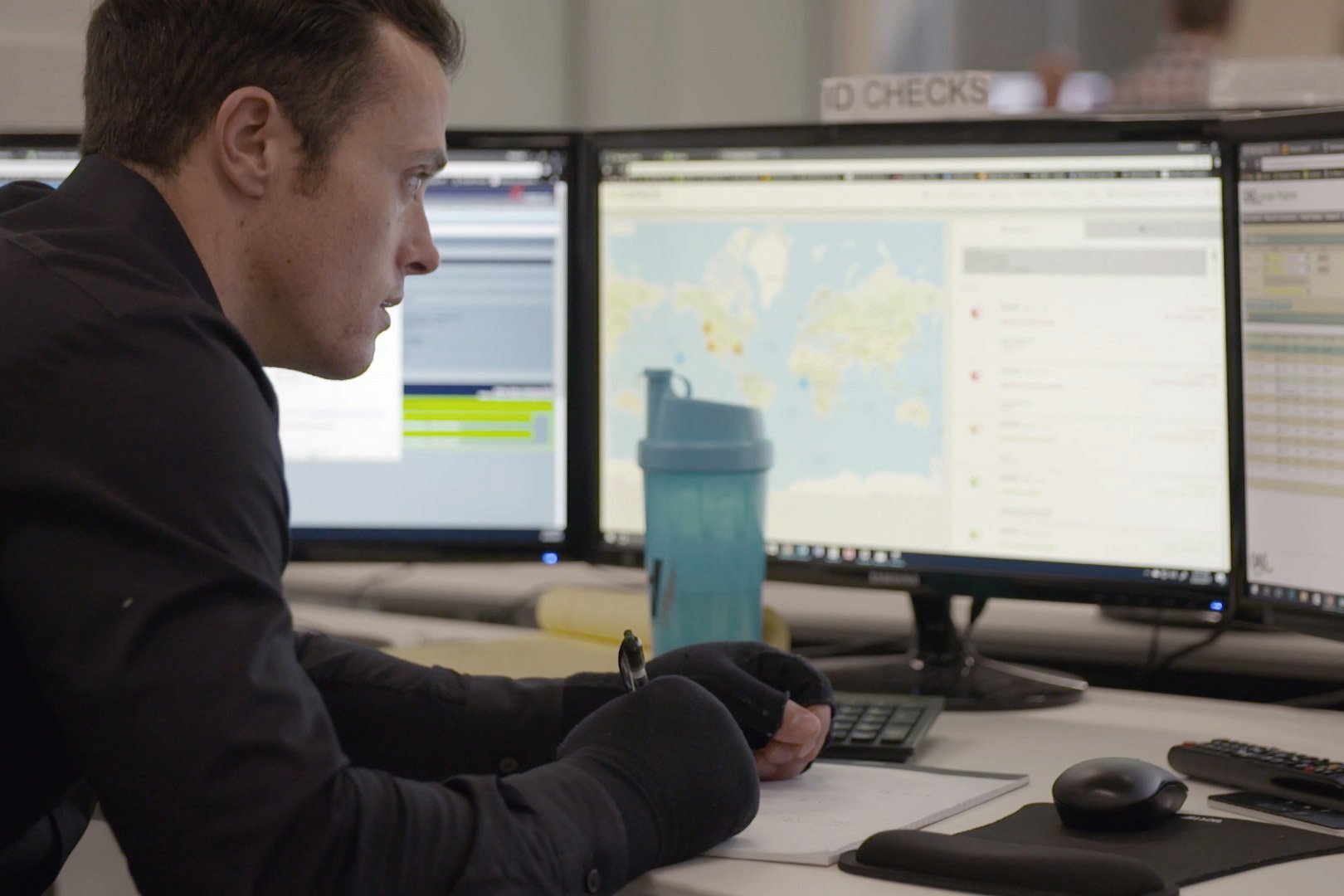
The expensive thing is waiting
Airspace’s customers include Labcorp, Quest Diagnostics, the American Red Cross, Donor Network West and Frontier Airlines. Healthcare, aerospace and manufacturing share a commercial peculiarity: the cost of a delivery can be modest compared with the consequence of its failure. That explains the niche better than a general promise of faster shipping.
The business charges for managed shipments, quoted around the route and requirements. A buyer should compare that quote with the cost of delay and the cargo’s handling needs. Ordinary replenishment with a flexible deadline offers less reason to pay for urgent coordination. A routing engine also cannot create airline capacity or erase customs requirements; those constraints belong in the decision.
The same logic explains Airspace’s February 2024 expansion announcement covering Malaysia, Vietnam and Singapore. Qualcomm subsidiary RF360 Europe was using the service between Asia and Europe. Semiconductor factories depend on a steady flow of materials, while chips cross borders during production. The value proposition travels wherever waiting becomes expensive.
controllable on-time delivery
shipments completed
Airspace-reported website figures. “Controllable” is the company’s qualification; these are not service guarantees.
Capital buys the next handoff
Building that service required capital as well as code. Airspace announced an $8 million Series A and $20 million Series B in 2018, followed by a $38 million Series C in January 2021. In May 2022, it announced another $70 million, led by DBL Partners and co-led by Telstra Ventures and HarbourVest Partners.
The 2022 plan included expansion in Europe and Asia, expedited freight and more work in semiconductor, automotive and clean-technology markets. It also put sustainability into the investment case. Airspace now offers route emissions information and greener routing choices. The decision becomes more useful when a customer can compare carbon, cost and urgency on a particular shipment.
Scale does not remove the small operational tasks. Airspace describes cross-functional work between logistics staff and its engineering, design and product teams. Its stated values include transparency and innovation. The practical test of those words comes at the desk: does the information help someone make the next pickup or recover the missed flight?
Keep the exception in view
The lesson for other businesses is precise. Record where a process fails. Automate decisions that repeat. Give exceptions to someone with enough information and authority to respond. Airspace applies that sequence to urgent transport, where a missed handoff can consume the advantage purchased by a fast flight.
For a prospective customer, the useful starting point is a real shipment: its deadline, dimensions, handling requirements and consequence of delay. Ask for routes and a quote, then inspect the tracking and recovery process. The company’s appeal rests on those details. Somewhere between the warehouse and the airport, a few ordinary minutes become the whole job.
Follow the shipment
Explore the service, meet the founders or watch a real order take shape.