An auto part is a small thing until it fails to arrive. Then it becomes the thing an assembly line is waiting for. A box of berries presents a different problem: it keeps getting older while everyone sorts out the paperwork. In both cases, the distance traveled tells only part of the story. The consequential question is what happens between one pair of hands and the next.
- OnBoard coordinates air, ocean and road freight, plus the work around it.
- Its bet: local expertise across Latin America, connected by shared systems.
- Röhlig bought a 10% minority stake in 2025, extending a much older relationship.
This is the territory occupied by OnBoard Logistics Group. Based in Miami, the freight forwarder arranges international transport for importers and exporters, then connects that movement to customs, storage and distribution. You can buy a place on a plane. Making that place useful requires a booking, the right documents, suitable handling and somebody expecting the goods at the other end.
A region is not a rulebook
OnBoard’s market is particularly good at exposing the difference. Latin America looks like a coherent region from a distant corporate office. At a customs desk, coherence gives way to national requirements. The company’s services include tariff classification, document review and coordination with authorities. These are consequential details for a business whose cargo must cross several jurisdictions before reaching a customer.
Pablo Martinez, its founder and CEO, came to this problem through a much longer logistics career. He traces his entrepreneurial beginnings to Uruguay in 1990, with Urucargo. OnBoard followed decades later. Miami offered a base from which to serve the region. His competitive ambition was to combine a smaller company’s flexibility with the standards and negotiating strength expected of a larger one.
The distinction matters when choosing a forwarder. Global firms such as DHL Global Forwarding, Kuehne+Nagel and DSV offer alternatives, alongside regional independents. OnBoard’s proposition sits between those choices: a connected regional operation with people who understand individual markets. That positioning is a promise customers can test by asking who handles a difficult clearance and who takes responsibility when the itinerary changes.
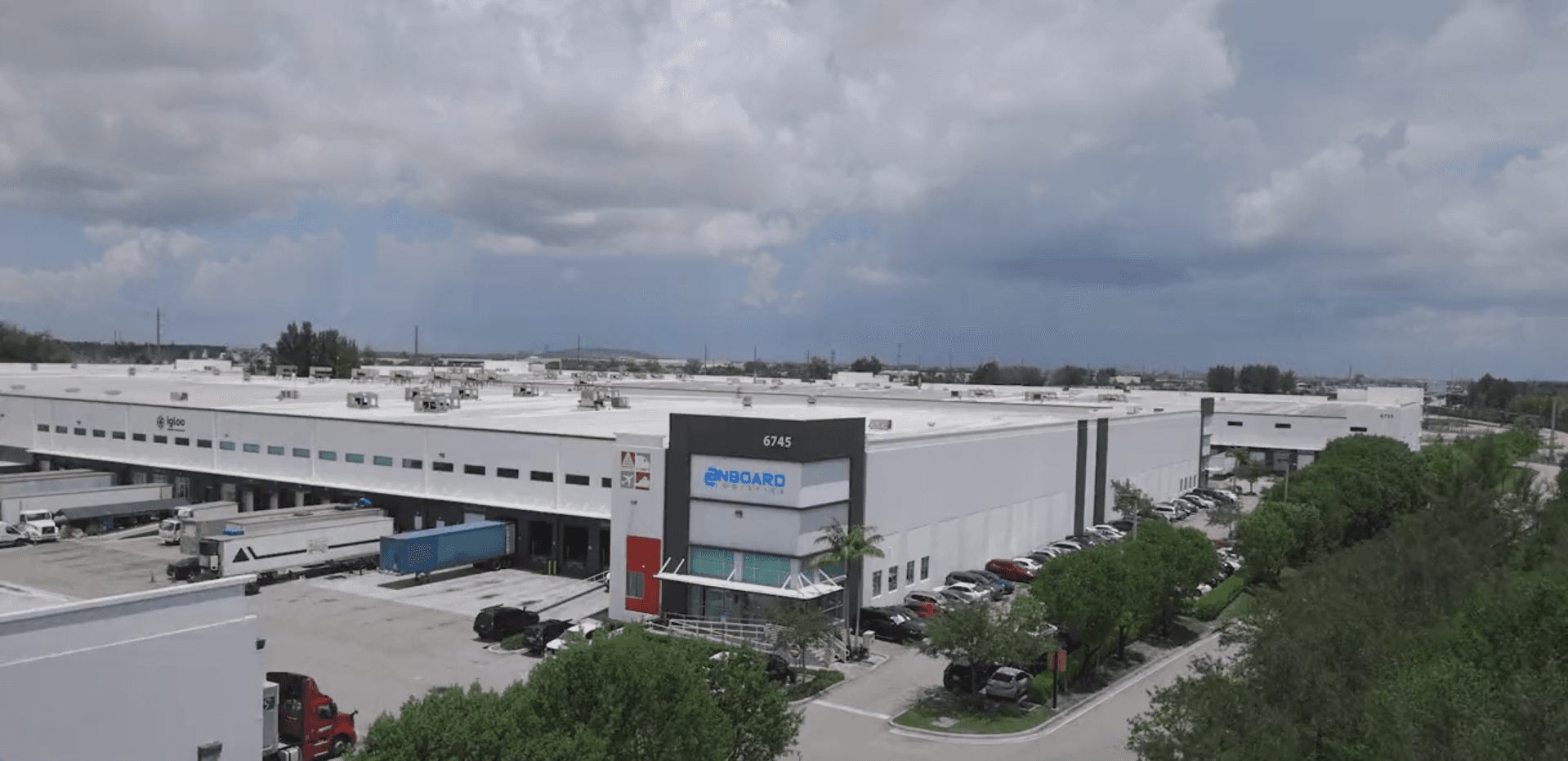
The office behind the shipment
There is considerable practical machinery behind the promise. Air services include weekly consolidations and airline block-space agreements. Ocean freight includes full containers, shared containers and oversized cargo. Road transport links ports and airports to warehouses and delivery points. A customer can combine those services rather than arrange each connection separately.
The warehouse supplies the pause button. OnBoard offers short- and long-term storage, inventory management, consolidation and cross-docking, which moves goods through a facility toward their next destination. Its current warehouse list includes Miami, Atlanta, Chicago, Panama, Paraguay and two Chilean locations. Miami’s listed 75,000 square feet gives the regional strategy a physical footprint.
- 01Pickup
- 02Air / ocean / road
- 03Customs
- 04Store / distribute
- 05Delivery
Specialization changes the plan. Automotive customers need vehicles, components and urgent spares delivered into production and after-sales networks. Perishables require speed and temperature control. Pharmaceuticals and other sensitive goods may need thermal packaging, refrigerated equipment and recorded conditions. The service is useful when those requirements need to survive every transfer, including the unglamorous ones.
When the systems became the bottleneck
Expansion brought an internal coordination problem, too. A CargoWise customer case describes legacy systems and manual workflows that struggled as OnBoard grew. The pandemic exposed the limitations. In 2020, the company began implementing CargoWise, centralizing operational information while accommodating different currencies and regulations.
The vendor’s account includes striking company-reported results: a 300% warehouse productivity increase after dimensioning machines were connected to CargoWise and other software. It also describes peer-led training. Those details belong together. Equipment can measure a box; colleagues must agree how to use the record it creates. The figures are testimony in a vendor case study, rather than independently audited performance measures.
“People were initially hesitant about the new system.”
Janery Saenz, in the CargoWise customer case
The transferable idea is straightforward: give teams a shared record and let experienced employees help colleagues adopt it. Copying the software alone leaves the harder organizational work untouched. The approach depends on people entering usable information and retaining the local knowledge needed to act on it.
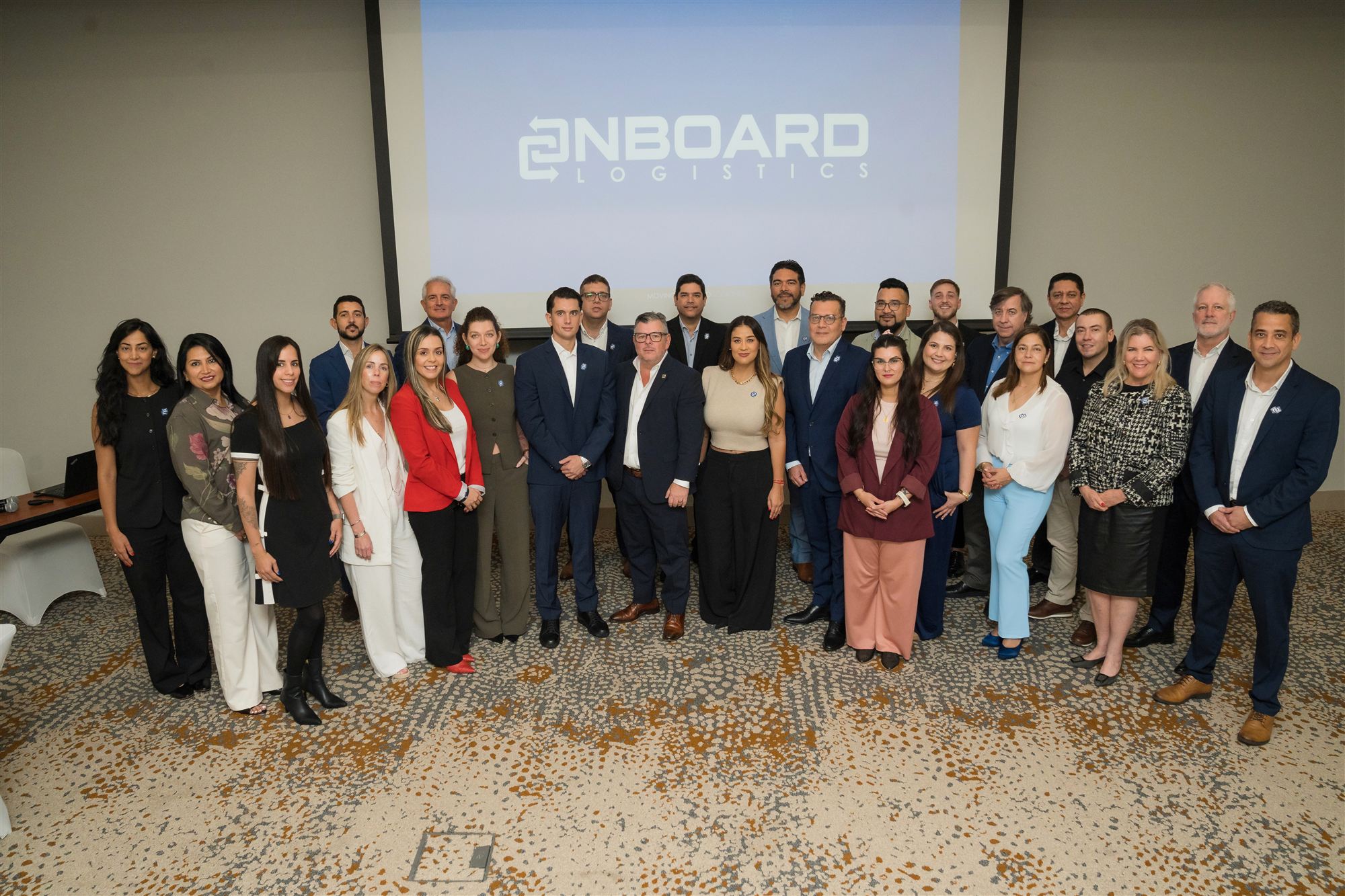
A partner buys a small piece
In October 2025, Röhlig Logistics acquired 10% of OnBoard. The relationship with Martinez went back to 2006, when his previous company represented Röhlig in several South American markets. The deal formalized an existing connection. Both businesses used CargoWise One, making their shared operating system part of the commercial rationale.
OnBoard said the minority investment would preserve its agility while providing access to Röhlig’s global expertise. In September 2026, it announced that Michael Gerding, previously Röhlig’s regional CEO for Latin America, would become its vice president of global strategy and sales from October 1. The relationship now connects ownership, operations and commercial leadership.
Ask what the price includes
OnBoard sells tailored logistics proposals. For a buyer, comparing the transport rate is only the beginning. Ask whether the proposal covers collection, customs work, storage, specialist packaging and final delivery. Ask which events trigger additional charges. A quote becomes useful when its boundaries are clear.
Its LATAM Cargo partnership supplies one specific cost claim: OnBoard says customers pay no additional charge for the stated air-freight carbon offsets, with the partners splitting the contribution equally. Offsetting accounts for emissions through external projects; the aircraft still burns fuel. That distinction deserves to travel with the claim.
The same practical scrutiny applies to the entire service. A tracking screen can show progress, but it cannot create airline capacity or waive a customs requirement. OnBoard’s proposition makes most sense for businesses managing repeated cross-border movements with several connected tasks. The test is simple: when the box stops moving, does the next person already know what to do?