Imagine two trucks leaving a depot in Artesia. One has a handsome logo. The other has the same logo, printed in the right ink on the right vinyl, fixed with an adhesive chosen for painted metal, laminated against sunlight and installed without a bubble at the door seam. On day one, the trucks look identical. On day one thousand, they tell you which company understood the assignment.
That second company is the sort of company Airmark has spent nearly eight decades trying to be. It is a custom printer, technically. But “printer” misses the interesting bit. Airmark makes an image behave on a physical object - a fire engine, a refuse truck, an aircraft placard, a control panel - after the object has left the calm of the design studio.
The logo is the easy part
Airmark's catalog begins with familiar objects: decals, labels, signs, banners, overlays, nameplates and vehicle wraps. Underneath that list is a materials cabinet. Paper. Aluminum. Foil. Polyester. Polycarbonate. Polystyrene. Vinyl. Foam. Permanent adhesives, removable adhesives, opaque adhesives and adhesives meant to tolerate temperature swings. The customer is not really choosing a sticker. The customer is describing a small environmental problem.
Will it sit indoors or bake in sun? Must it come off next season or remain for years? Is the surface smooth, textured, stainless steel or plastic? Will moisture or corrosive chemicals reach it? Airmark's public descriptions return to these questions because this is where the first failure usually begins. Ink can be accurate and artwork can be elegant, yet a poorly matched substrate or adhesive will quietly make both irrelevant.
The invisible specification
One job, fewer loose ends
The differentiator is not a secret ink formula. It is the chain of responsibility. Airmark offers design assistance, proofing, prototyping, manufacturing and installation. That sequence matters when a fleet has many vehicles, many installers and exactly one identity. Each handoff is a chance for color to drift, scale to change or a technician to interpret a drawing differently. Airmark's pitch is that the same shop can keep the brief intact from screen to street.
From idea to moving object
Airmark's published workflowFor emergency vehicles, the stakes sharpen. Rear chevrons are conspicuity equipment as much as branding. Airmark says it manufactures safety chevrons to NFPA 1901 requirements, uses reflective and non-reflective 3M materials, and can arrange installation in any state through approved installers. The same matched-component approach carries warranties described as reaching ten years. A local sign shop may produce a lovely panel. Airmark competes by making the panel part of a repeatable, documented system.
Its buyers reflect that bias toward consequence: fleet operators, fire departments, public agencies, OEMs, aerospace and military customers, waste and recycling operators, rental services, laundries and retailers. According to an aerospace supplier directory, early customers included Lockheed, Douglas, Boeing and Northrop. The names are glamorous; the work probably was not. Placards and identification graphics are valuable precisely when nobody has to think about them.
A business measured in repeatability
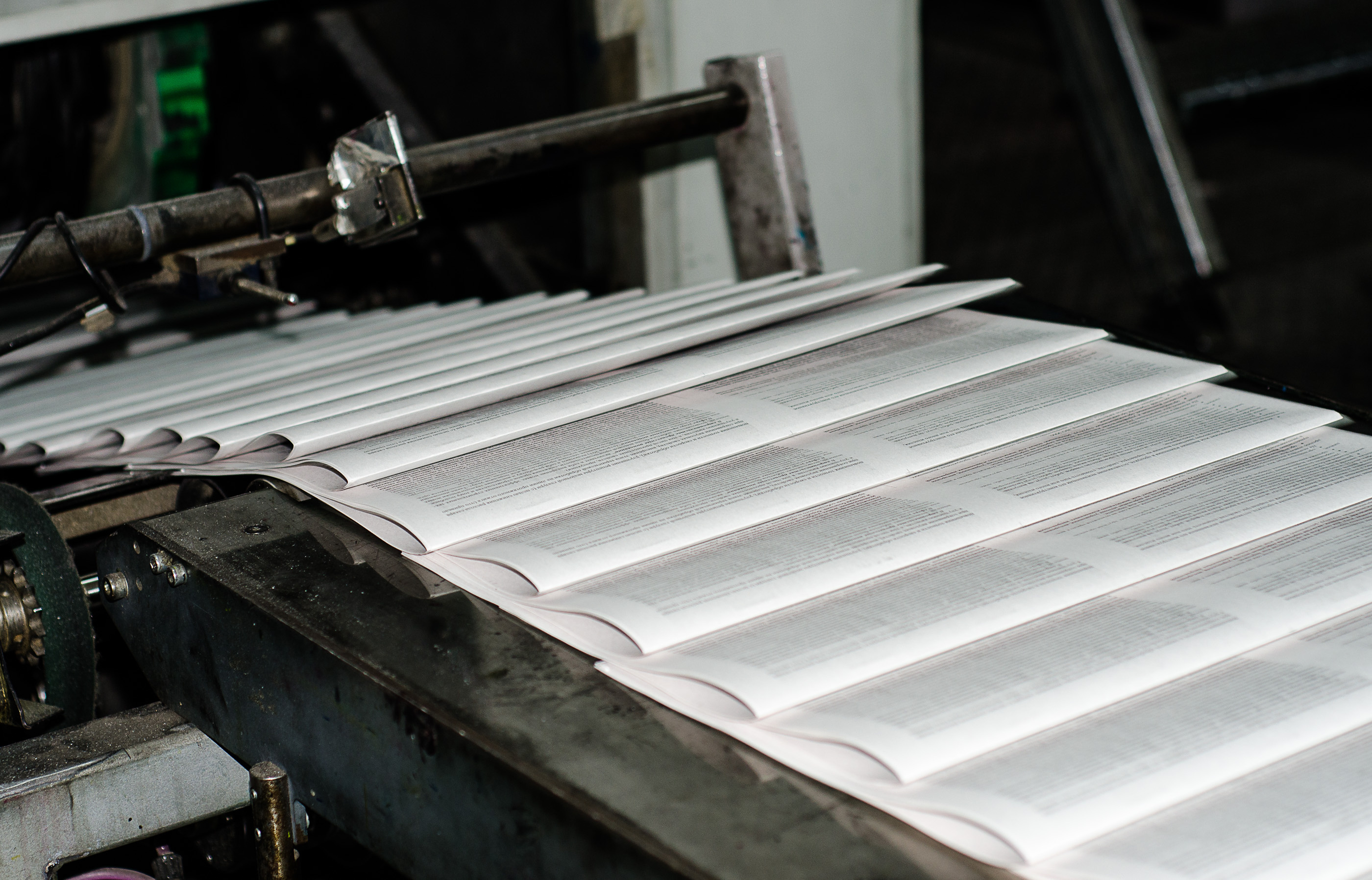
Airmark's model is project-based B2B manufacturing. It can prototype one object, print a short run or support a longer production program, then add finishing such as die cutting, embossing, bar coding, serialization, lamination or polyurethane doming. The economic promise is simple: pay one supplier to solve the whole graphics problem and reduce the cost of rework across many assets.
Prices are custom. One public marker shows the scale without pretending to be a rate card. In 2011, the Port of Long Beach approved Cal Plate, identified there as Airmark, for an on-call signage contract amount of $75,000. That was a ceiling for a public-service relationship, not the price of a wrap. It does, however, show where Airmark fits: above the one-off decal counter and below mass anonymous printing, in the territory where a buyer pays for availability, specification and consistent execution.
This is the part any reader can copy. Start with the environment, not the artwork. Approve a physical prototype. Specify components as a system. Decide who owns installation. The method works best when many objects must look alike for years. It is less useful for a temporary indoor poster, a tiny one-off job or a buyer who needs the cheapest mark for next weekend. Durability has value only when failure has a cost.
The old shop joins a bigger map
Airmark began in 1948 and later became part of Cal Plate, the printing-plate and die maker at the same Artesia address. An investment bank also records an earlier sale of Cal Plate and Airmark to a private investor, though it does not publish the date or terms. Then, in December 2025, DFC Manufacturing Group acquired Cal Plate. Again, the price stayed private.
The rationale was more visible. DFC has manufacturing locations across the United States. Cal Plate brought Western facilities, printing plates, dies and Airmark's custom decals. Cal Plate regional manager Rich Borelli said the combination offered greater operational depth and geographic reach while preserving the company's craftsmanship and customer relationships. In industrial businesses, “reach” is not an abstract strategy word. It can mean a replacement part arriving sooner or an installer being available three states away.
The acquisition gives Airmark a new corporate frame, but its enduring idea remains pleasingly small: every graphic has to touch something. Software companies can pretend the surface does not exist. Airmark cannot. It has to know the curve of the door, the heat of the afternoon, the cleaner used on Tuesday nights and whether the fleet manager wants the mark gone in six months or readable in ten years.
That is why the company's most interesting product is not the bright truck rolling down the freeway. It is the chain of quiet decisions underneath - decisions that, when made correctly, disappear completely.