Consider the tractor that is already paid for. It starts. It pulls. Its owner knows its habits. Then somebody offers a new machine with a smarter guidance system, better controls and a price that requires a serious conversation. AGCO has built a substantial wager around the space between those two machines: the one a farmer owns and the one the farmer is being asked to buy.
- AGCO builds Fendt, Massey Ferguson and Valtra machinery.
- Its PTx technology can upgrade compatible equipment across brands.
- The test is practical: better work from the assets a farm already has.
This is a company that sells tractors while offering customers reasons to keep their existing equipment. Through Precision Planting and PTx Trimble, it sells tools intended to improve planting, guidance, spraying and other jobs without requiring a wholesale fleet replacement. For a machinery manufacturer, that makes the equipment wearing someone else’s badge an interesting sales opportunity.
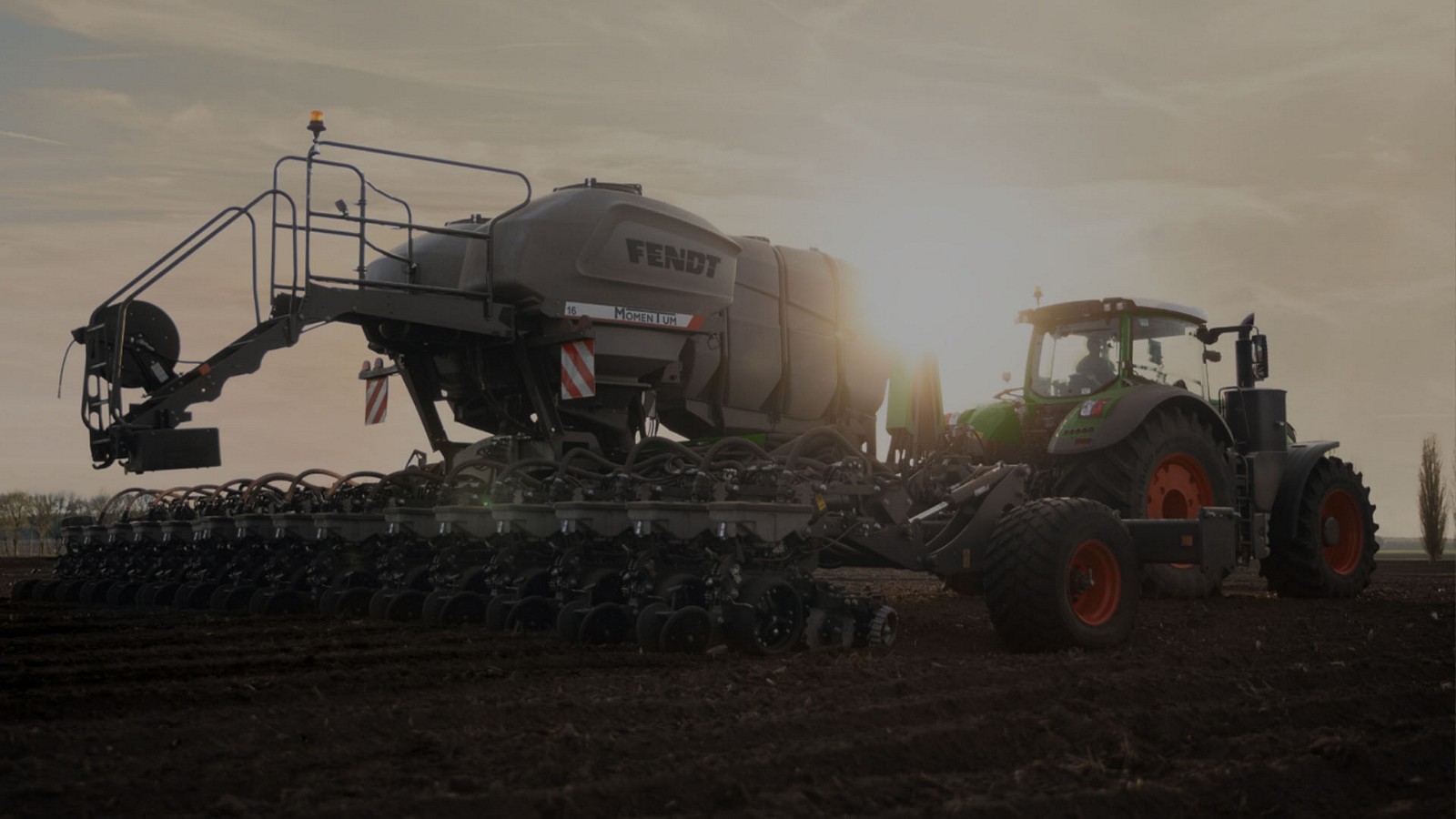
A company assembled in the workshop
AGCO began in 1990 with a management buyout of Deutz-Allis. Robert Ratliff and his partners inherited an equipment business, then started adding others. Hesston arrived in 1991. The worldwide Massey Ferguson holdings followed in 1994, Fendt in 1997 and Valtra in 2004. The corporate name may be less familiar than the names painted on its machines. That is partly the point: established brands carried established customer relationships.
The result is a portfolio covering tractors, combines, hay equipment, planters, sprayers and engines. Customers include farmers, agricultural contractors and other equipment manufacturers. In its 2025 sustainability reporting, AGCO described roughly 2,800 dealers and distributors serving 140 countries. This is a physical business: manufactured equipment, replacement parts, people who can diagnose a fault when the weather finally permits fieldwork.
Deere and CNH are its principal worldwide machinery competitors. AGCO’s particular pitch combines its own equipment brands with precision tools for mixed fleets. Competitors also sell precision technology; the distinction is where AGCO is placing its investment and how explicitly it courts equipment it did not manufacture.
The portfolio also leaves room for a less futuristic answer. In February 2025, AGCO announced a supply agreement with Italy’s SDF for Massey Ferguson tractors up to 85 horsepower. Deliveries into the distribution network were to begin through a phased transition that year. The aim was a refreshed range for farmers who need straightforward utility equipment. It is a useful counterweight to the autonomy demonstrations: a farm machinery company has to serve the customer seeking a dependable smaller tractor alongside the customer trying to automate a demanding harvest operation. Both purchases have to justify their place on the farm.
Two billion dollars for the connection
In 2017, AGCO bought Precision Planting’s equipment business. Its products offer an unusually clear explanation of precision agriculture. A planter moves across changing soil. Different rows encounter different conditions. Applying the same pressure everywhere can leave seeds too shallow or compact the soil around them. DeltaForce uses hydraulic control to adjust downforce by row. The innovation lives in an adjustment repeated across a field.
Then came the larger transaction. In April 2024, AGCO closed the PTx Trimble joint venture, combining Trimble’s agricultural technology business with AGCO’s JCA Technologies. AGCO acquired 85%; Trimble retained 15%. The $2 billion purchase was financed with newly issued notes, a term loan, other borrowing and cash. The tools included guidance, connected farming and autonomy capabilities, sold through both factory installation and retrofit channels.
for AGCO’s 85% stake
The strategic appeal is straightforward. A farmer’s purchasing history need not become a technological dead end. Guidance and control systems can create another route to a customer who is satisfied with the underlying machine. For AGCO, the addressable market extends beyond the next buyer of a Fendt or Massey Ferguson.
That same year, the company agreed to sell most of its Grain & Protein business to American Industrial Partners for $700 million, subject to adjustments. The sale closed in November and included GSI. Management described the change as a sharper focus on machinery and precision technology with attractive growth, margin and cash-generation prospects. A company built by collecting businesses was now choosing which ones to leave behind.
The first thing to give was demand
The financial backdrop complicates the story. In 2025, sales fell 13.5% to $10.082 billion. Some of that decline reflected the divestiture; weaker equipment demand also mattered. In 2024, AGCO recorded a $507.3 million loss on the Grain & Protein sale and $369.5 million in impairment charges. Portfolio simplification came with visible accounting costs.
Those figures do not demonstrate that retrofits failed. They show how difficult it is to transform an industrial company while customers are spending cautiously. For the second quarter of 2026, AGCO reported sales of $2.6 billion, down 1% from a year earlier, while continuing to manage production and dealer inventories. Technology investment still has to live inside the machinery cycle.
“Farmers judge technology by what it returns, not by what it promises.”
Eric Hansotia · AGCO Tech Day, October 2026
At its October 2026 Tech Day, AGCO showed the intended destination: connected mixed fleets, targeted spraying and OutRun retrofit autonomy for tillage and harvest logistics. It also discussed FarmENGAGE and the Panorama data platform. The company said the demonstrated solutions were either commercially available or progressing toward availability. A demonstration and a machine ready for your farm remain different purchasing propositions.
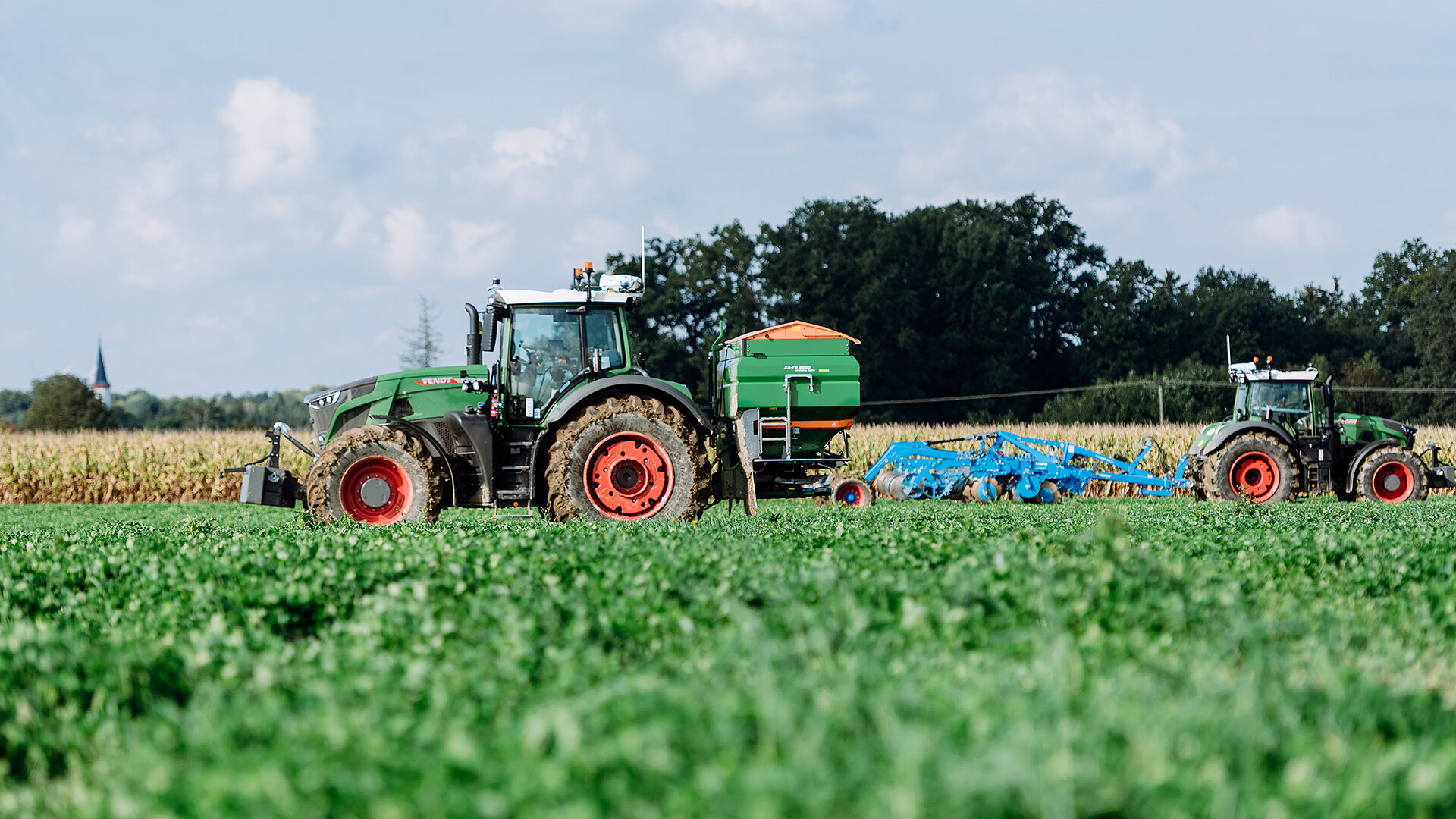
The service truck is part of the product
There is another, less photogenic piece of this strategy. FarmerCore, launched in 2024, brings sales and support closer to farms through mobile service, local parts access and digital tools. Its Service and Information Portal initially gave North American farmers access to equipment records and operator manuals. The business earns money selling equipment, upgrades and parts; helping customers keep those purchases working supports that relationship.
AGCO’s stated culture puts farmers first, encourages employees to raise difficult questions and emphasizes teamwork. The useful test of those words is mundane: can a dealer support the equipment when needed? An elegant interface has limited value if a farmer cannot get an installation right or resolve a fault during planting.

For a buyer, the lesson is to price the bottleneck before replacing the asset. Ask a dealer to verify compatibility, quote the installed system and explain the support. Estimate savings against acres actually worked. A retrofit can disappoint when utilization is low, the machine is incompatible or service is too far away. AGCO’s proposition becomes compelling when the existing tractor still has useful work ahead of it. Sometimes the next purchase belongs inside the machine already in the shed.