A restaurant buys an advertisement on Uber Eats. Orders rise. Somewhere, a dashboard turns green. But the owner has another till, the one beside the counter, and a less comfortable question: did the advertisement create business, or persuade an existing customer to order dinner through a different door?
That question sits at the center of Affinity Solutions. The company turns bank-direct credit and debit card transactions into evidence about consumer spending. Its customers want to find buyers, understand competitors and measure advertising. The interesting part is how often those ambitions require looking outside their own business.
- See beyond your checkout: understand customers’ spending across competing brands.
- Buy against behavior: build audiences from recorded purchases.
- Ask about extra sales: compare advertising exposure with a control group.
The other door
In October 2026, Uber Advertising launched cross-channel incrementality measurement powered by Affinity. Uber already ran experiments on Sponsored Listings inside its delivery platform. Affinity added a view of physical restaurant spending, using de-identified, aggregated findings from card transactions.
Jake Kastner, Uber’s global head of measurement strategy, described the starting question as whether a sale on Uber Eats cannibalizes an offline order
. It is the sort of question that can make a successful campaign look rather different.
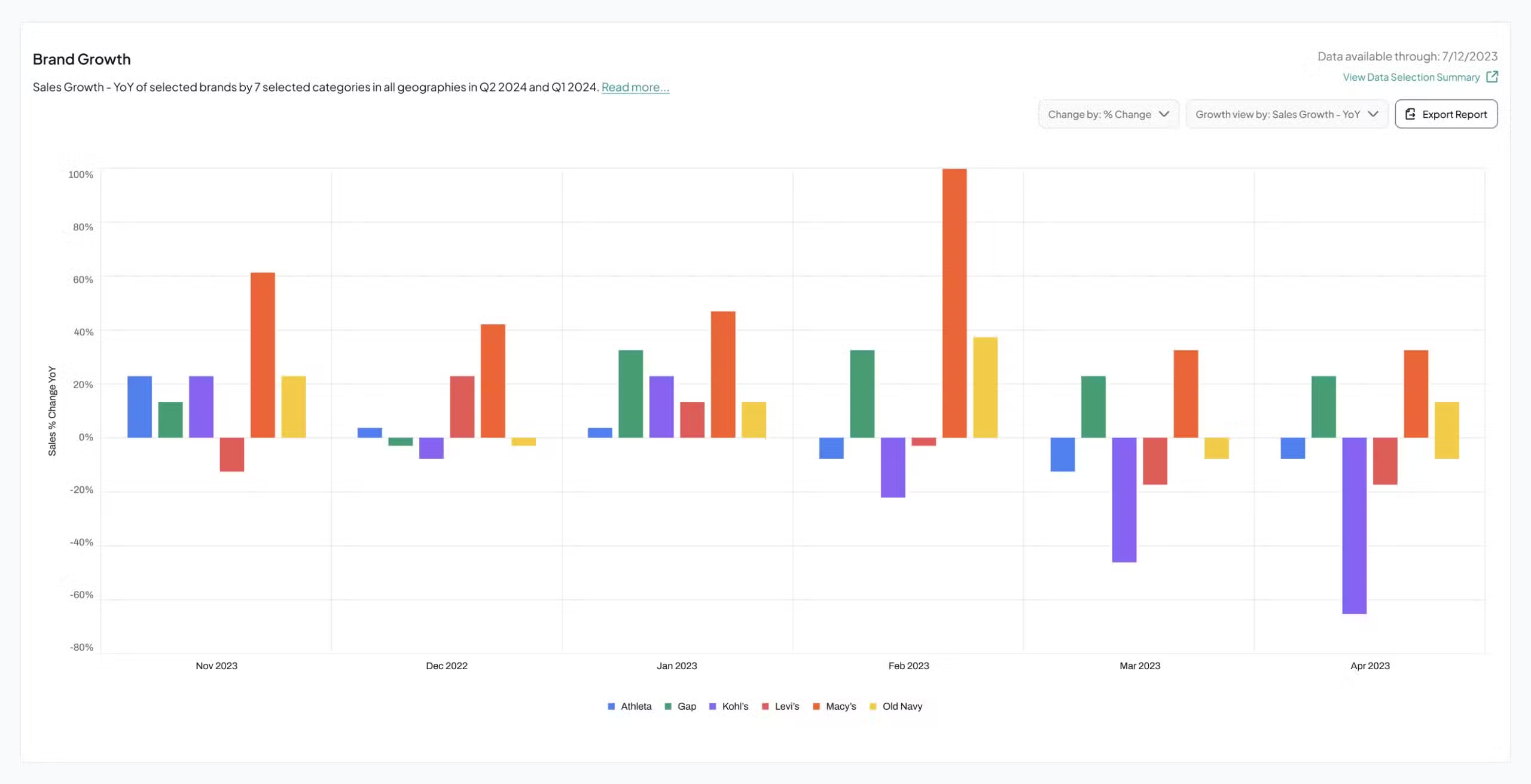
The joint report described a 40% sales lift on Uber Eats and 27% across measured channels, including 5% at physical locations during campaigns. Those are reported findings from this work, rather than a forecast for the next restaurant. Their significance is the wider perimeter: the measurement followed spending beyond the app that sold the advertisement.
The wallet has a memory
A retailer’s own records contain a peculiar blind spot. They show what a customer bought there, beautifully. They say much less about the shopping trip next door. A regular shopper might still visit every week while quietly moving the expensive part of the basket elsewhere.
Affinity’s Consumer Purchase Insights addresses that missing context. It analyzes market share, cross-shopping and customer segments. In an anonymous supermarket case published by the company, a regional chain discovered that spending was shifting toward smaller regional competitors, including among its valuable customers. It changed pricing and sharpened targeting; Affinity says the market-share decline reversed.
The useful lesson is the order of operations. Find the spending shift before choosing the remedy. A broad discount answers a different question from a campaign aimed at customers whose share of wallet is slipping.
Consumer Purchase Audiences carries purchase behavior into targeting. Consumer Purchase Lift handles measurement. Card-Linked Engagement and Consumer Bank Campaigns bring personalized incentives into banking relationships. Consumer Insights Studio, developed with NRF and Pyxis by Bain & Company, packages merchant, geographic and demographic analysis for decision-makers.
A coupon grew up
Founder and CEO Jonathan Silver’s company was working on relationship marketing long before today’s arguments about advertising attribution. A company-issued announcement places its founding in 1998. At FinovateSpring 2012, Affinity demonstrated Coupon-on-a-Card, designed to apply an offer at checkout. The purchase was already the organizing event.
Building the business took capital. Chestnut Hill Ventures provided $14.5 million in financing announced in June 2012. A year later, Finovate reported another financing of more than $21 million. These historical rounds describe investment in the company, rather than a customer’s campaign budget.
Comet, launched in April 2023, extended that purchase-centered approach into media measurement. Today Affinity sells enterprise data and analytics through applications, APIs and managed services, alongside merchant-funded campaigns. Its expertise combines bank relationships, transaction enrichment, merchant identification, audience matching and measurement. Each piece matters: a transaction is useful only when it can be interpreted and connected to the decision at hand.
The next question after “Did they buy?” is “Would they have bought anyway?”
The control group earns its keep
Consumer Purchase Lift matches advertising exposure files, including a control group, with purchase records. It compares spending and conversion between groups. Adding campaign costs allows incremental return on advertising spend to be calculated. That sequence is something a marketer can copy even without buying Affinity: define the outcome, build the comparison, then examine the money.
to purchases
and control groups
to calculate iROAS
The distinction is consequential. Someone who saw an advertisement and bought a mattress might have needed a mattress anyway. A deterministic purchase record establishes an observed transaction; estimating causation still depends on the comparison. As an analytical matter, weak matching, an unsuitable control or a small observable audience can undermine the conclusion.
Cardlytics offers a close alternative in bank-transaction intelligence and card-linked advertising. Retailer loyalty and point-of-sale records offer another route, often with product detail. Affinity’s pitch centers on cross-brand spending visibility and connections into media and enterprise systems. Which approach helps depends on whether the question concerns an item, a merchant, an audience or an additional sale.
Bigger is a starting point
Affinity also powers the CNBC/NRF Retail Monitor. In October 2026, its underlying panel expanded from 26 million to 120 million annual cards. The update added demographic weighting and Bayesian calibration against Census retail data. More observations still required a method for representing the population.
That caution travels with the product. A card panel cannot directly observe every cash purchase or every unrepresented card. Merchant-level spending does not automatically reveal every item in a basket. The data is powerful when its coverage matches the question; treating coverage as universal makes the answer less useful.

Meet the buyer where they work
The latest distribution moves are practical. October’s U.S. and UK Consumer Purchase Suite applications put insights, activation and measurement inside Snowflake accounts. June’s Comcast partnership brought purchase-based audiences into TV advertising. A Salesforce Data 360 Clean Room integration, announced in September, is expected in early 2027.
For buyers, the attraction is fewer handoffs between an observation and a campaign decision. For everyone else, the restaurant’s original question remains useful. Before celebrating the green dashboard, check the other till.
Follow the purchase
Explore Affinity Solutions, Consumer Purchase Lift and the newsroom. Follow LinkedIn or X.