Before a rebate becomes money in someone’s pocket, it is a small administrative mystery. Was the product eligible? Did the purchase happen inside the offer window? Does the receipt prove it? Advertising Checking Bureau, usually called ACB, makes its living resolving questions like these. The drama is modest. The consequences reach the customer.
- The job: run the rebates, sales rewards, advertising funds, and compliance checks connecting brands to local sellers.
- The customer: manufacturers and brands with dealers, retailers, distributors, or other channel partners.
- The useful idea: build approval, evidence, payment, and support into the same program.
A newspaper problem, with a long afterlife
Walter B. Katzenberger founded ACB in New York in 1917. Its original purpose was wonderfully literal: serve as a central clearinghouse for newspaper advertising copies. Publishers had run the ads. Agencies needed evidence. ACB organized the proof. A century before a dashboard could announce a campaign’s performance, someone still had to establish that the advertisement had appeared.
That origin explains the company better than its bureaucratic name does. ACB sits where a brand’s intention meets a local seller’s execution. A manufacturer can promise to help pay for advertising, but someone must translate that promise into guidelines, review the work, examine the claim, and arrange reimbursement. Scale multiplies every one of those steps.
The services address different people. A consumer rebate rewards a purchaser. A sales incentive rewards a channel participant. Co-op advertising helps a local seller promote the brand. Brand compliance checks whether the resulting advertising follows the rules. ACB offers all four, giving a manufacturer a way to coordinate the incentives around a sale without confusing their purposes.
Over the following decades, ACB added co-op advertising administration, then rebate and sales incentive programs. Its own history places the latter expansion in the 1990s. In 2021, it introduced the Channel Resource Platform, or CRP. Newspaper copies had given way to online submissions and reporting. The underlying question survived: what happened, and what payment does it justify?
The mattress salesperson and the missing step
Consider a mattress showroom. A brand wants the retail sales associate to recommend its products. A sales incentive, often called a SPIFF, attaches a reward to an eligible sale. The associate needs a usable program; the manufacturer needs reporting and a reliable way to administer rewards.
This is the setting for ACB’s relationship with Serta Simmons Bedding. In November 2024, the companies announced that ACB was managing SSB Rewards, which had launched in late June. The program rewarded retail sales associates for selling eligible products. ACB supplied an online resource, configurable processes, customized reporting, payment services, and dedicated support.
Then the relationship widened. In September 2025, ACB announced expanded work on the Beautyrest and Serta co-op programs, previously managed by another vendor. Dealers could put advertising funds toward media packages including search, social, display, and streaming ads. They also gained access to guidelines, available funds, claim submission, status tracking, and marketing performance reports.
“Dealers are utilizing funds more strategically”
Chris Geruso · Serta Simmons Bedding · September 2025
The expansion connected two activities around the same retail transaction: helping a store attract shoppers and rewarding associates for eligible sales. It also gives the reader something firmer than a generic customer logo. A named manufacturer first hired ACB for rewards, then expanded its remit into dealer advertising.
Software with someone on the other end
CRP provides the common view across those programs. ACB describes customizable dashboards, on-demand analytics, integrated reporting, and connections between programs. For dealers in its automotive offering, the portal supports online prior approval and claim entry. For brand managers, the attraction is visibility across activity that would otherwise require separate reporting.
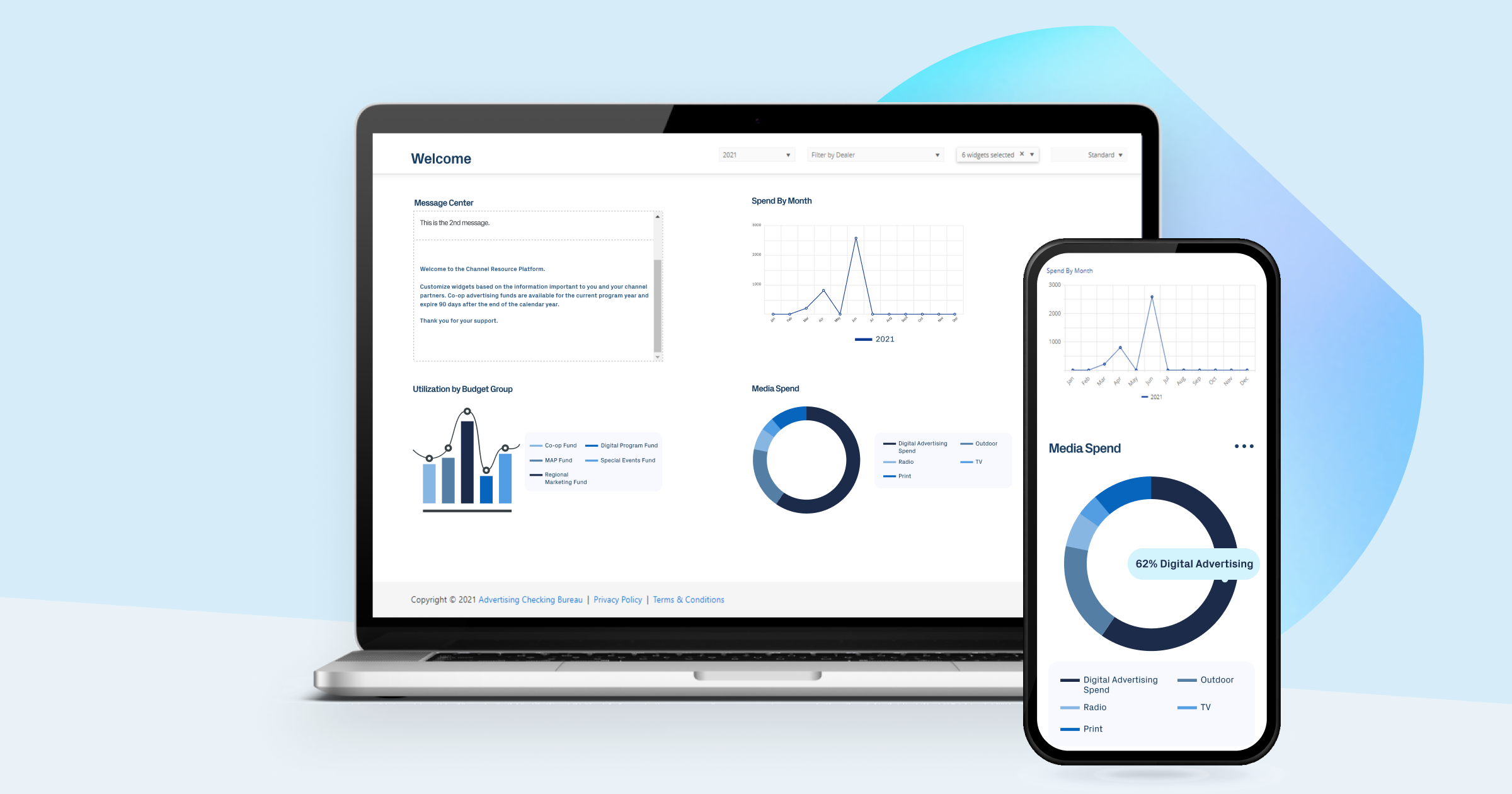
Yet the platform comes wrapped in labor. ACB says its operations, including IT and customer service, are entirely U.S.-based. It offers account management, program setup, communication, and training alongside technology. A rebate participant’s question can become a support conversation. An ad that misses a guideline can receive digitally annotated feedback.
That combination places ACB in the market for outsourced channel marketing operations. Ansira occupies overlapping territory and acquired BrandMuscle and SproutLoud in July 2024. ACB’s pitch emphasizes the administration of incentives, claims, and compliance alongside its configurable platform. Buyers should compare the actual work included: software access, campaign execution, payment handling, and participant support can represent very different assignments.
For a buyer, the cost calculation should include the work being handed over. Compare administration charges with the internal time spent checking claims, answering questions, maintaining reports, and resolving exceptions. Keep the reward pool separate from the provider’s fee: dollars issued to participants are program funds, not a measure of ACB’s revenue. The sensible comparison is the cost of operating a defined program at an agreed service level. A cheaper portal that leaves the client to handle every exception would require a different staffing calculation.
The expertise has a human timescale, too. Cindy Henry joined ACB in May 1990. In June 2026, the company promoted her to general manager of Memphis operations after leadership roles spanning payment services, billing, accounting, co-op administration, and incentives.

The useful number is the exception
ACB reports a 97% decrease in claim exceptions over two years for an unnamed lubricant company. It also reports an 18% cost reduction for an unnamed global corporation in its automotive material. These are company-reported client outcomes. Read them as examples of what ACB measures, with the scope and baseline left unspecified.
Over two years. An individual program result, not a forecast.
A historical Mitsubishi program administered through ACB illustrates the distinction behind such work. Its 2014 guidelines said prior approval established that ad content met co-op requirements; payment still depended on submission procedures and documentation. The advertisement could pass while the claim failed. A good-looking campaign and a reimbursable campaign were separate achievements.
The practical lesson is portable: clarify eligibility before spending, show participants what evidence they need, and make claim status visible. A business with a substantial dealer network has reason to value that machinery. A small promotion with few participants may have less need for extensive outsourced administration. Either way, money promised in a marketing meeting becomes useful only when the person expecting it can complete the steps.