Adam Pettit had a business before he had finished high school. As a sophomore in the Bay Area, he started providing Apple IT support, carrying a family enthusiasm for the company’s computers into paid work. His father was an Apple enthusiast. The son found customers. Some teenagers discover a favorite brand; Pettit discovered that other people needed help using it.
An Apple habit becomes a business
There is something pleasingly practical about that beginning. A computer can inspire devotion and still require somebody to make it behave. Apple’s promise of simplicity does not automatically extend to a company trying to manage hundreds of machines. Pettit’s career would develop in that gap, where an elegant object meets a distinctly inelegant administrative afternoon.
After college came a consulting firm. In 2009 he co-founded Interlaced, an Apple-focused managed services provider. The company was acquired in 2018. By then, he had spent years inside the work that would become his next business: helping organizations deploy and manage their Apple computers.
The next company, Kandji, brought together Pettit, his brother Wesley Pettit and Mark Daughters in 2018. Adam became CEO; Wesley took the product role. Their starting advantage was familiarity with the customer’s day. They had already been the people responsible when a fleet of computers required attention. The problem arrived with a work history attached.
- 2009Co-founds Interlaced
- 2018Co-founds Kandji
- 2022Introduces Device Harmony
- 2025Kandji becomes Iru
The trouble with doing it yourself
Pettit’s explanation of Kandji’s origins was remarkably unromantic. The founding team had used the enterprise device management products available to them and found too much work left over. Keeping machines configured correctly meant scripts, elaborate workflows and repeated intervention. Each workaround solved an immediate problem while adding another thing to maintain.
“Too much time had to be spent in the weeds,” he said in 2021. The complaint concerned the daily mechanics of the job: administrators were spending time constructing the machinery that should have been helping them. Strategic projects had to wait while someone attended to another necessary detail.
Kandji’s answer was to package recurring jobs into automation. Its October 2019 public launch announced $3.4 million in seed funding and commercial availability after an extended development period. First Round Capital led the seed round, with Josh Kopelman as lead partner. The proposition gave a familiar business task a different shape: set the required condition, then have software help maintain it.
By October 2020, Kandji had announced a $21 million Series A led by Greycroft, with Okta Ventures and B Capital participating. Hundreds of paying customers were already using the product. Pettit was also talking about access and onboarding. Even at this stage, the device was becoming an entry point to a larger set of responsibilities.
The appeal is easy to understand without reading a product specification. A new employee wants to start work. The administrator wants the computer ready, the applications installed and the settings correct. Neither particularly wants the occasion to become an exhibition of scripting ability. Successful automation leaves less to admire because less needs to be done.
A password is a surprisingly large subject
In April 2021, Kandji announced a $60 million Series B led by Felicis Ventures. Its platform included self-service functionality, single sign-on and an API for connecting to other systems. The expanding product list followed the jobs around the computer: getting people started, giving them access and keeping the environment manageable.
Passport, released that October, addressed a small but stubborn indignity. A person could have a password for the Mac and another credential relationship with the company’s cloud identity system. Passport checked Mac login credentials against the organization’s identity provider, aiming to make the experience coherent. Pettit pointed to the support tickets generated when users could not tell which password belonged where.
This is an unusually revealing choice of problem. A login failure occupies a few words in an incident report and a disproportionate amount of the affected person’s attention. For an administrator, multiply it across a workforce. Pettit’s product decisions repeatedly return to these exchanges between people and systems, where modest friction becomes a recurring bill.
By December 2021, he was discussing a $100 million Series C announced the previous month and a new London office. The company reported more than 1,000 customer organizations across over 40 industries. Managing devices remotely had become a larger part of the customer’s working life. Kandji’s market now extended well beyond the places its founders could visit in person.
Two teams, one computer
The scope widened again with Device Harmony in 2022. Device management and information security could look at the same computer through different tools and reach the same incident with different information. Kandji proposed connecting those views. In Pettit’s explanation, a security notification should arrive with context that the IT team could also see and act on.
The organizational detail matters as much as the technology. Someone who discovers a risk and someone who can fix it need a workable conversation. Every missing detail creates another request, another wait, another opportunity for a task to be passed along. Software has a talent for producing a great many messages about the work it was supposed to simplify.
In April 2023, Kandji made its endpoint detection and response product generally available. It could identify and quarantine malicious files, stop malicious processes and present threat events in a workflow. Pettit framed the release around connecting the recognition of a risk with its remediation. The old support-business concern remained visible: how much useful work can an administrator actually complete?
That same month, he appeared on Andy Raskin’s podcast, The Bigger Narrative, to discuss the larger story behind Kandji’s next phase. There is a practical challenge in explaining a widening business. Customers who recognize a company for one job need to understand why it is taking on the next one. The product has to earn the expansion, and the explanation has to keep up.
“The stack is the problem.”Adam Pettit · October 2025
Two kinds of money, two different jobs
The July 2024 financing announcement supplied a useful glimpse of Pettit as an operator. General Catalyst committed $100 million, divided into $50 million in Series D equity and $50 million in go-to-market investment through its Customer Value strategy. Product and engineering investment had one source of capital; scaling sales and marketing had another.
General Catalyst’s investment team singled out that allocation of capital for attention. Pettit and his colleagues had considered how different funding sources should serve different purposes. The distinction is less glamorous than a single large headline number, but it tells a reader more about the construction of the business.
The announcement valued Kandji at $850 million. The company also reported that annual recurring revenue had increased by more than 600 percent since its 2021 funding round and that its customer base had grown nearly fourfold. Those are company figures tied to a particular period. They describe the scale the team had reached before the next change in its brief.
Pettit’s public emphasis remained on customers and careful expansion. In a July 2024 interview, he described investment in initiatives with a strong expected return and a business that could grow sustainably. A founder who began selling support now had to allocate resources among products, people and markets. The work had changed considerably; the need to make the arithmetic sensible had survived.
A shorter name, a wider brief
On October 22, 2025, Kandji became Iru. The announcement introduced six integrated products spanning workforce identity, endpoint management, detection and response, vulnerability management, compliance automation and a trust center. Windows and Android entered the management offering alongside Apple. Pettit had moved from a defined specialty to a broader promise about how an organization should operate.
“The stack is the problem,” he said at the launch. The phrase compresses the new argument into five words. Companies had accumulated tools to answer individual needs; Iru proposed bringing several responsibilities together around shared information. Its Context Model was designed to connect users, applications, devices, policies and events, with AI capabilities drawing on that context.
The customer explanation was concrete. Pettit said roughly one in five customers was Apple-only, while many others used a separate product for Windows or Android. Requests for Windows support were recurring. Broadening the platform meant following those customers into the rest of their environment, a considerable undertaking for a business identified so closely with Apple.
For Pettit, the expansion also raised the standard of proof. A company selling simplicity across more categories has more complexity of its own to manage. Customers still need the routine jobs performed dependably. The broader the promise, the more persuasive a quietly completed task becomes.

Miami, and the work still to do
Pettit’s own working geography had shifted to Miami by the Iru launch. Earlier in 2025, Kandji announced an East Coast headquarters at The Plaza Coral Gables, adding to offices in California, London, Sydney and Japan. The office opening gave physical form to a business whose product was built to manage work at a distance.
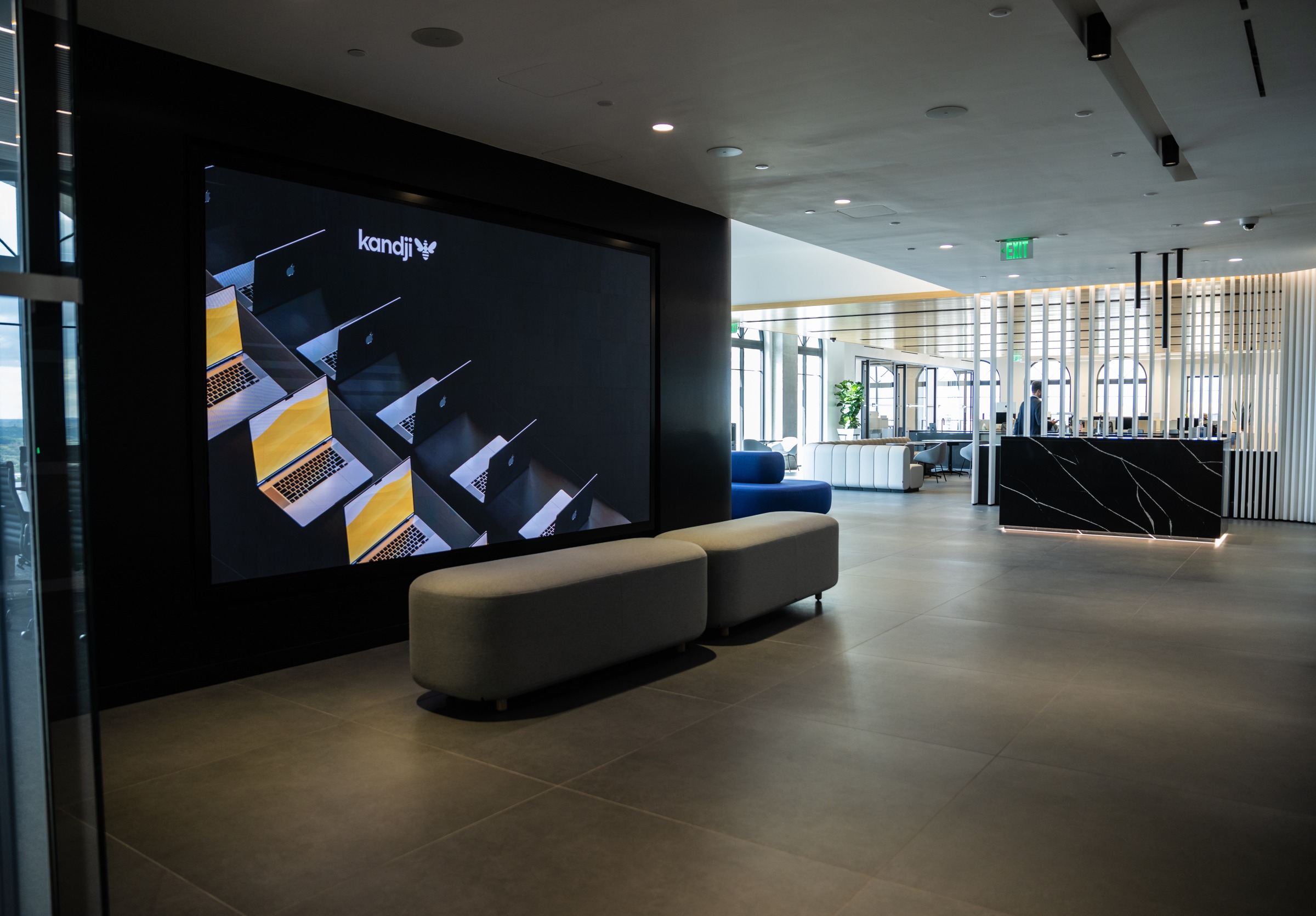
Expansion continued into 2026. In April, reporting on Miami’s office market described an Iru lease of nearly 92,000 square feet across two Coconut Grove properties. That is an office commitment rather larger than a teenage support operation. It is also a reminder that selling software still involves assembling people somewhere, with all the ordinary decisions that entails.
On April 1, Iru announced that it had passed 6,000 customers globally. It also announced gold for mobile device management and silver for cybersecurity user experience at the 2026 Cybersecurity Excellence Awards, plus inclusion in Forbes’ America’s Best Startup Employers list. The paired product awards fit the concern running through Pettit’s public work: useful security has to be usable by the people responsible for it.
Across the changes in name, geography and product scope, his career retains a recognizable subject. People buy computers to accomplish something. Someone else has to keep those computers ready. Pettit has built his businesses around that second group, first by doing the work for them and then by trying to reduce it. An administrator who finishes the day with fewer loose ends would be a fitting customer to ask how the project is going.