Before Ada Lingzi Liu was selling software to creative teams, she was drawing a dog with two heads. The creature belonged to an MTV2 illustration project: alert ears, a cheerful expression, several possible color schemes. It is an agreeable place to begin a founder’s story. The dog had personality. It also had revisions.
Her early portfolio is full of the work that precedes a finished image: visual development, environments, textures, motion graphics. Years later, as the founder of Share Creators and co-founder of Blueberry AI, Liu would be concerned with what happens around those images. Who has the current file? Can a colleague open it? Where did the earlier version go? An imaginary creature can cause remarkably ordinary office trouble.
A panda before the pitch deck
Liu grew up in China. In her account of choosing a creative career, an animated film occupies a memorable place: Kung Fu Panda helped inspire her to pursue digital art in the United States. The attraction makes sense alongside the work she subsequently collected in her portfolio. Animation offered an encounter between drawing and technology, with a finished world on the other side.
She studied animation at Tianjin Academy of Fine Arts from 2009 to 2013, then computer art at the School of Visual Arts in New York from 2013 to 2015. Those subjects brought together different ways of constructing an image. A character might begin as a drawing and become something with volume, texture and movement. Each step involved its own tools and decisions.
Her portfolio biography described training in traditional and 3D animation, with interests in concept design, environments and texture. It also recorded a 2013 concept-art internship in NetEase’s game department in China and an internship in MTV2’s on-air design department. The MTV2 work included backgrounds, animations and an After Effects toolkit for What’s Good. These were images made for use, with a program, a format and other people waiting for them.
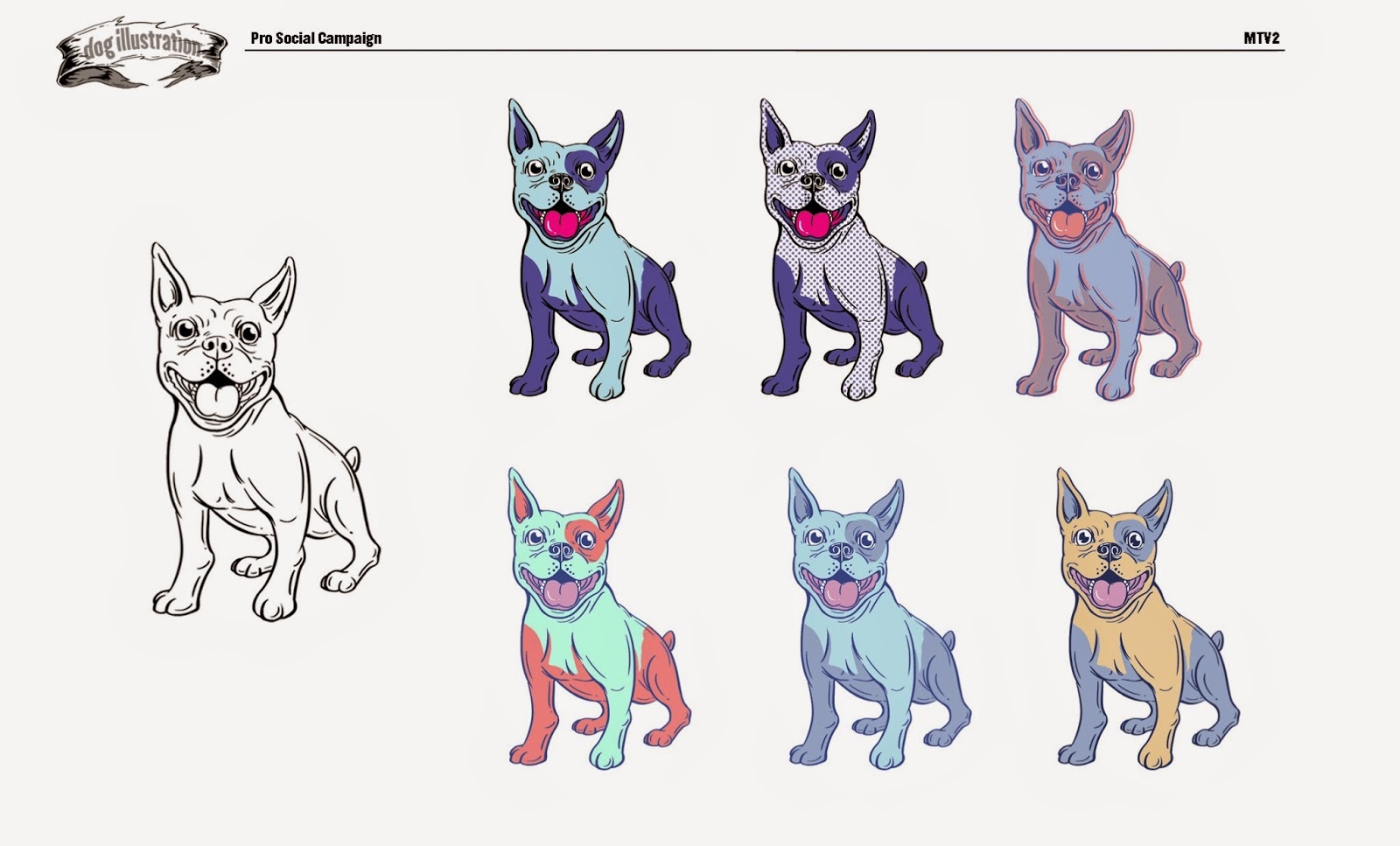
There is a practical education inside such assignments. Drawing the thing is one task. Making it useful to a production is another. A toolkit has to be used again; a background has to work behind something else. Her portfolio preserves that earlier professional vocabulary, before asset management and software subscriptions entered the conversation.
Making a game travel
Liu subsequently worked in game art at NetEase in San Francisco. Her experience connected Chinese game production with North American audiences, a combination that became relevant as Chinese studios looked overseas. A game could have a substantial team and an established domestic audience while still needing help presenting itself somewhere new.
She founded Share Creators in 2018 as a design consultancy. The work placed her between the people making games and the people those games hoped to reach. International expansion involved visual judgments as well as language. The character on an advertisement, the scene in an app-store screenshot and the style of a promotional image all helped explain the invitation to play.
In a presentation about art styles in game globalization, Liu argued for beginning with the intended audience and the game’s features. She described a familiar design mistake: making an attractive picture that fails to communicate the gameplay. That is a particularly expensive kind of beauty when the image is supposed to persuade a stranger to try something.
The argument gives her artistic background a commercial application. A designer has to understand what deserves emphasis and what a viewer needs to recognize. A team taking a game into another market faces the same questions with additional uncertainty. Which visual conventions travel? Which depend on familiarity? What will a player understand before reading a word?
Share Creators built a business around those decisions and the production work accompanying them. Its later software ambitions would receive more attention, but the service business matters to Liu’s story. It brought her into repeated contact with clients, their schedules and the complicated material required to deliver a finished piece of creative work.
The studio becomes a customer
By the time of its 2023 financing announcement, Share Creators reported more than 150 employees working remotely. That figure describes a business in which collaboration was a daily operating requirement. The studio had to coordinate creative work across people who could not simply lean over the same desk.
Large files and uncertain versions became problems serious enough to justify a research and development team. Liu assembled one to build Blueberry, the digital asset management platform. The product grew from requirements inside the design business; clients’ interest helped carry it beyond that original setting.
- 01 / MakeGame art and visual design
- 02 / CoordinateFiles, feedback and versions
- 03 / BuildTools for the studio’s needs
- 04 / OfferSoftware for other teams
In January 2023, the company announced $5 million in financing from 5Y Capital and Foxit. The announcement described plans to expand the customer base and develop business across the United States, Europe and Asia. It also made clear how closely the software’s purpose followed the consultancy’s experience: designers needed to know which files to use and to share substantial digital material securely.
There is an appealingly modest starting point here. A company making art has to spend part of its working day arranging the conditions under which art can be made. Once enough people are involved, that arrangement becomes a substantial job. Liu had an opportunity to see the cost from inside the business paying it.
Investors: 5Y Capital and Foxit
For a founder trained in images, the move into software also changed the unit of work. A commissioned illustration answers a particular brief. A tool has to serve repeated situations, including ones its makers will never personally supervise. Listening to clients becomes part of deciding which difficulties are shared widely enough to build around.
A quiet person with a public job
One of Liu’s instructors, digital matte-painting teacher David Mattingly, left a recommendation describing her as quiet and praising her drawing and painting skills. He had taught her at the School of Visual Arts in spring 2014. The description offers a small human detail alongside the formal education: a student whose assignments attracted attention even when she did not seek it in conversation.
The later career required more public explanation. In October 2021, she joined Forbes Business Council. She published on game internationalization and remote collaboration, two subjects closely connected to her working experience. Her professional identity had widened from making images to explaining how a creative business could function across markets and locations.
That public role continued through industry events. At ChinaJoy’s global game industry summit in July 2023, she discussed her team’s asset management software and the production difficulties behind it. Her professional posts later promoted Blueberry’s presence at GDC and the AI Summit New York. A studio founder eventually has to leave the studio and describe the work to a room.
That visibility can bring less comfortable encounters, too. In March 2026, Blueberry AI’s GDC event listings became the subject of a public dispute. Liu responded that the company had compiled information from public event listings to help developers find gatherings during the conference. She also said the team was reviewing the project internally. The episode put a community-facing activity, rather than the asset management product, under scrutiny.
It was a different sort of work from the illustration portfolio: explaining intentions, answering criticism and taking responsibility for something published under a company’s name. Her response returned to the intended audience, developers trying to organize their conference week. Even a list of events has people on the receiving end, and expectations about how the work should be done.
“I had no plan to become a founder.”
Ada Liu, 2025
The remark sits comfortably beside the early portfolio. Her career contains identifiable choices and accumulating experience, without requiring an entrepreneurial destination at the beginning. Studying animation did not come with an instruction to build business software. Running a creative company supplied new information, and a new set of demands.
The creative decision stays human
AI brought another set of possibilities into that working environment. At ChinaJoy, Liu spoke about its use in exploring environments and characters, while emphasizing the difficulty of maintaining accuracy and control over style. Generating an image leaves decisions about its suitability with the people making the game. A production needs consistency as well as possibilities.
That concern follows naturally from art direction. A game’s images must belong together. They have to express an intended world and survive decisions about audience, gameplay and production. Adding more candidate images can make selection more consequential. The person deciding what belongs still has work to do.
By 2025, Liu was discussing Blueberry AI as its co-founder and CEO, extending the career that began with making creative material into the tools surrounding it. Her stated ambition has remained close to an artist’s working day: reduce the communication overhead and repetitive tasks so designers can spend more time designing.
The early dog drawings are a useful reminder of what that time buys. Someone has to choose the expression, adjust a shape, compare the colors and decide when the creature is ready. Liu’s businesses have carried her into software, financing and industry stages. The work at the other end still contains an artist considering an image. Perhaps the dog needs another revision.